Confidential Information Memorandum
A confidential information memorandum (CIM) is the 50–150 page document a seller's advisor sends to screened buyers after an NDA. This guide covers what goes in it, how it differs from a teaser and a pitch deck, and how to distribute it without losing control of it.
What is a Confidential Information Memorandum?
A Confidential Information Memorandum (CIM) is a comprehensive document that provides detailed information about a company for sale, including financial data, operations, market position, and growth opportunities. These documents are essential tools in mergers and acquisitions, private equity transactions, and business sales.
CIMs serve as the primary marketing document to attract serious buyers while maintaining strict confidentiality. They provide potential acquirers with the information needed to evaluate the business and make informed investment decisions.
Virtual Data Rooms like Papermark play a crucial role in modern CIM distribution by providing secure platforms for document sharing, access control, and engagement tracking.
Types of CIMs - Understanding different CIM structures and their purposes
- M&A CIM
- Comprehensive document for mergers and acquisitions, focusing on strategic fit and synergies.
- Private Equity CIM
- Focused on financial performance, growth potential, and exit strategies for PE investors.
- Management Buyout CIM
- Designed for internal management teams seeking to acquire their company.
- International CIM
- Adapted for cross-border transactions with additional regulatory and cultural considerations.
- Industry-Specific CIM
- Tailored for specific industries with relevant metrics, regulations, and market dynamics.
- Teaser CIM
- Abbreviated version with limited information to generate initial buyer interest.
The CIM Process - A systematic approach to successful CIM creation and distribution
Phase 1
Information Gathering & Analysis
Collect comprehensive financial, operational, and market data to support CIM creation.
Phase 2
CIM Creation & Review
Develop compelling narrative, financial analysis, and professional presentation of company information.
Phase 3
Distribution & Engagement
Securely distribute CIM to qualified buyers and track engagement for deal optimization.
CIM Components Key sections that make up a comprehensive CIM
Executive Summary
High-level overview of the business opportunity and key highlights
- • Company overview and mission
- • Key financial highlights
- • Growth opportunities
- • Investment thesis
Financial Information
Comprehensive financial data and analysis
- • Historical financial performance
- • Revenue and profitability analysis
- • Cash flow projections
- • Key financial metrics
Market Analysis
Industry overview and competitive landscape
- • Market size and growth trends
- • Competitive positioning
- • Regulatory environment
- • Market opportunities
A Confidential Information Memorandum (CIM) Example
Below is an excerpt from a typical CIM. A full CIM includes detailed sections on company overview, market analysis, financials, operations, management, and growth opportunities. This example demonstrates the professional structure and depth of information expected in a CIM.
Executive Summary (Excerpt)
Acme Corporation is a leading provider of industrial automation solutions, serving over 1,200 clients worldwide. With a 20-year track record of innovation, Acme has achieved consistent revenue growth and industry-leading margins. The company's proprietary technology platform, strong customer relationships, and experienced management team position it for continued expansion in the $15B global automation market.
- 2024 Revenue: $48.2M (CAGR 12% since 2020)
- EBITDA Margin: 28%
- Key Markets: North America, Europe, Asia-Pacific
- Growth Drivers: New product launches, strategic partnerships, and expansion into emerging markets
CIM Distribution How to share a CIM with multiple buyers securely
Send a blind teaser first, release the CIM only after a signed NDA, and give each buyer its own view-only, watermarked link that you can track and revoke. Never email the CIM as an attachment: once a PDF is sent, you cannot recall it or see who read it.
- 1
Send a blind teaser to the long list
An anonymous one- or two-page summary shows who is interested before anyone learns the company's name.
- 2
Screen buyers and sign NDAs
Only screened buyers get the CIM, and only after the NDA is accepted. Gate the link so nobody reaches page one without it.
- 3
Create one link or group per buyer
Every open is attributed to a named buyer, and buyers never see each other's identities or activity.
- 4
Set the CIM to view-only
Keep downloads and printing off until a buyer is shortlisted, because a downloaded CIM cannot be revoked.
- 5
Turn on dynamic watermarks
Overlay each viewer's email, IP address, date and time on every page, so a leaked page shows where it came from.
- 6
Track who read which sections
Page-level analytics show which buyers studied the financials and which only opened the first page.
- 7
Move the shortlist into the data room and revoke the rest
Expire CIM links at the IOI deadline and open Stage 2 data room groups for the buyers that advance.
The full playbook, with the settings for each step, a comparison of sharing methods, what to hold back from the CIM and a teaser-to-IOI timeline, is in how to share a CIM with multiple buyers securely. For which pages to watermark and how to trace a leaked page back to a bidder, see how to watermark documents for acquirers.
CIM guides
- CIM Distribution PlaybookThe 7-step workflow for sharing a CIM with multiple buyers securely.
- NDAs Before the CIMHow to gate a CIM and data room behind a signed NDA.
- CIM and Contract RedactionRemove names and identifiers before documents reach buyers.
- CIM Data RoomSecure, modern data room for sharing CIMs and diligence documents with buyers.
Secure CIM Data Rooms
Create a professional, secure data room for your CIM distribution. Papermark is a secure, modern data room built for confidential information memorandums and the diligence that follows:
- Advanced Security: AES-256 encryption at rest, TLS in transit, email verification with a one-time code, and granular access controls ensure only authorized parties can view your CIM and supporting documents.
- Dynamic Watermarking: Automatically apply custom watermarks to every page, deterring unauthorized sharing and tracking document distribution.
- NDA Enforcement: Require recipients to sign a non-disclosure agreement before accessing sensitive materials.
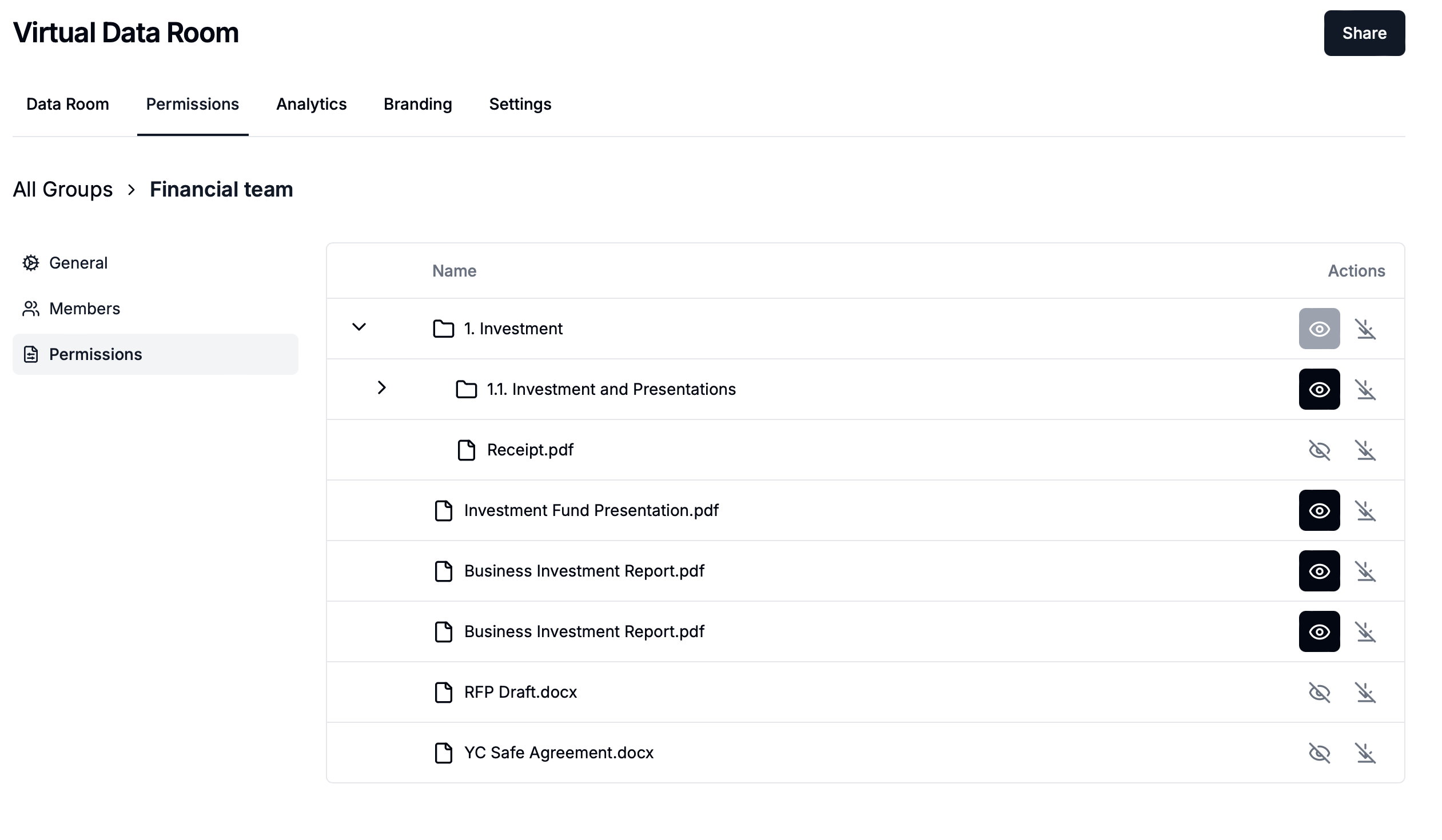
- Granular Permissions: Set view and download rights at the document or folder level for each buyer group.
- Audit Trails & Activity Tracking: Monitor every action—see who accessed which document, when, and for how long. Export detailed activity reports for compliance and deal management.
- Document Expiration & Access Revocation: Set time-limited access and instantly revoke permissions as needed.
- Bulk Upload & Organization: Easily upload and organize all CIM-related files, supporting folders, and due diligence materials.
- Buyer Q&A: Buyers submit questions privately and you review answers before publishing them to one buyer or all bidders (Data Rooms Plus and above).
- Custom Branding: Present your CIM in a professional, branded environment tailored to your organization.
- Compliance: SOC 2 Type II and ISO 27001 certified, GDPR compliant, with data hosted in Frankfurt and an exportable record of every view.
- Mobile & Global Access: Access your data room securely from any device, anywhere in the world.
Papermark's data rooms empower you to manage sensitive documents, track buyer engagement, and maintain full control throughout the CIM distribution and deal process.