BlogFundraisingHow to send a pitch deck investors actually open
How to send a pitch deck investors actually open
·4 min read
Marc Seitz
You spend weeks perfecting your pitch deck, then hit send. Days pass. Silence. You have no idea if investors even opened it—or if they forwarded it to competitors. Most founders send PDFs as attachments and lose control the moment they hit send. Here's how to share your pitch deck so investors actually open it, you know exactly who's interested, and you can follow up with the right people at the right time.
Quick steps on how to share pitch deck with investors
Prepare your pitch deck: Ensure it's concise, compelling, and well-designed.
Select sharing method: Consider the benefits of sharing by link or PDF.
Share securely as a link: Use Papermark to share deck as link
Send your pitch deck: Via email or other channel available
Track the analytics and activity: You can get all the analytics for the view of the deck
Start conversation: Use Q&A Conversations to engage with investors
Follow up: Engage with investors who showed interest in your pitch deck.
A pitch deck is a concise presentation that gives investors a quick overview of your business, the problem you're solving, your solution, market opportunity, and why they should invest. A strong pitch deck typically includes your introduction, problem statement, solution, market opportunity, business model, traction, team, financial projections, and funding requirements. Keep it to 15-20 slides maximum to maintain investor attention.
If you're struggling to create an effective deck, Pitch Deck Creators can help design the perfect one for your fundraising needs.
Why share your pitch deck as a link?
Track investor interest on your pitch deck
No credit card required
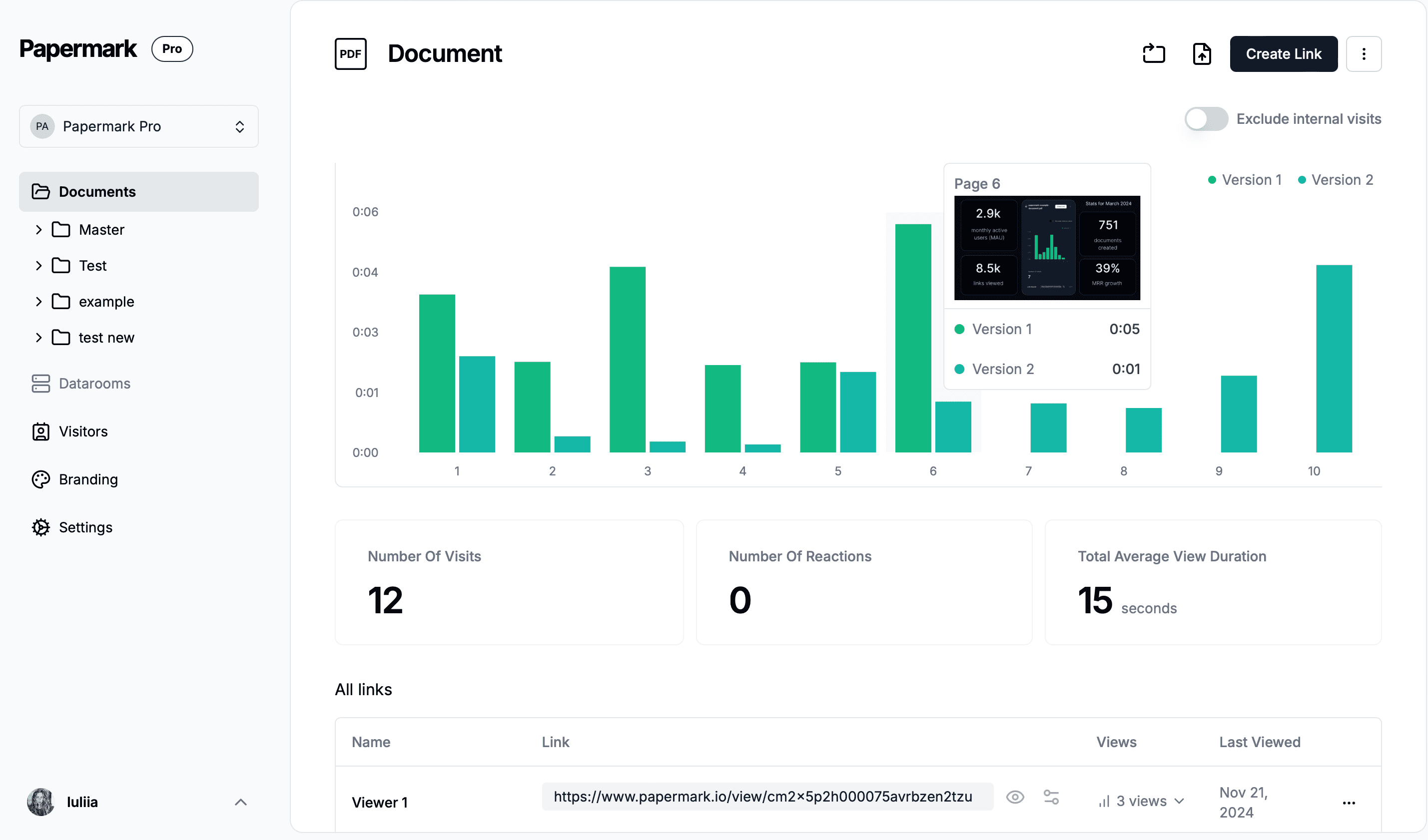
Page by page analytics
Get notified on investor views
Capture investor emails
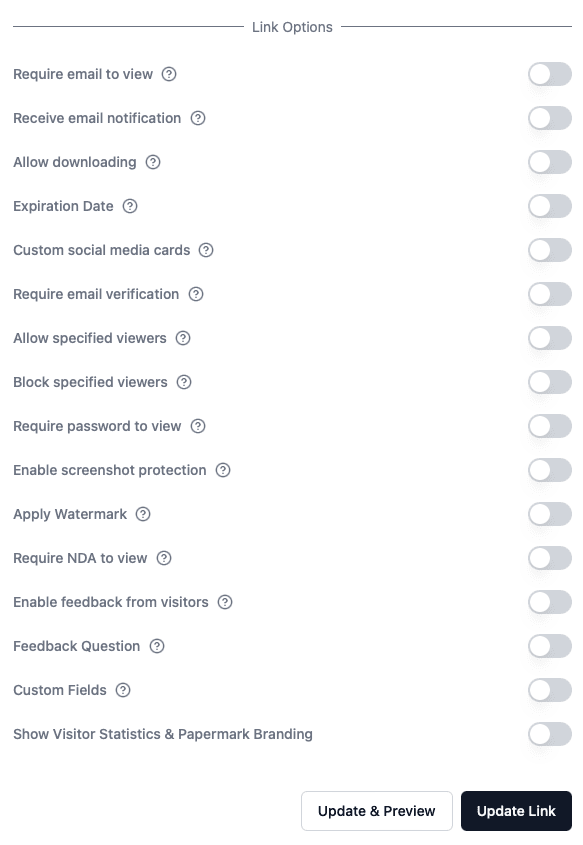
Watermark each deck copy
Prevent screenshots
Allow specific investors only
Require NDA before viewing
Enable Q&A with investors
Sharing your pitch deck as a link instead of a PDF attachment gives you complete control over your fundraising process. You can track who viewed your deck, how long they spent on each slide, and capture their email addresses automatically. Links also allow you to revoke access at any time, update your deck without resending, and bypass email attachment size limits.
Most importantly, you get detailed analytics that show which investors are genuinely interested—data that's impossible to gather from email attachments. This intelligence helps you prioritize follow-ups and tailor your outreach to investors who've shown real engagement.
Step 1: Prepare your pitch deck
Before sharing, ensure your pitch deck is polished and investor-ready. Keep it to 15-20 slides maximum, use high-quality visuals that align with your brand, and clearly articulate your business model, problem, solution, and market opportunity. Get feedback from trusted mentors or peers before finalizing, and double-check for typos or grammatical errors. Export your deck as a PDF to preserve layout and design integrity.
Step 2: Find the right investors
Access open investor database with over 8000 investors around the world
Database Overview: Familiarize yourself with the database's layout and filtering options. Papermark's investor database includes:
as investor type (e.g., angel investors, venture capitalists, private equity), sectors of interest, investment stages, and geographical focus.
by round
search by country
search by name
Pair this with OpenVC to tap into 10,000+ verified investors and 400+ curated lists, then send tracked Papermark links to the short list that matches your stage and geography.
Step 3: Upload and share your deck
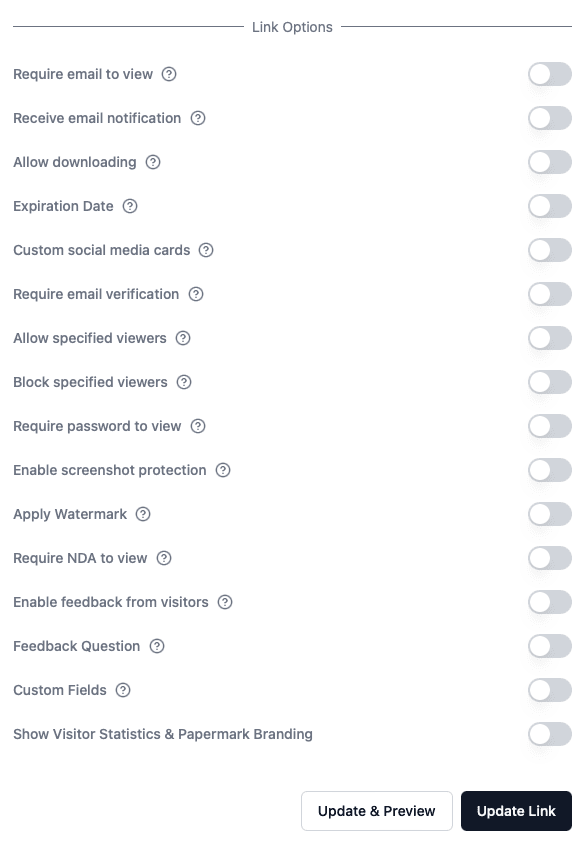
Log into your Papermark account and upload your pitch deck PDF. Papermark will generate a secure, shareable link. Configure your link settings to control access—decide who can view, whether downloads are allowed, add password protection if needed, and set expiration dates for time-sensitive rounds.
Copy your Papermark link and include it in a personalized email to each potential investor. Draft a brief, compelling message that encourages them to view your presentation.
Step 4: Track investor engagement
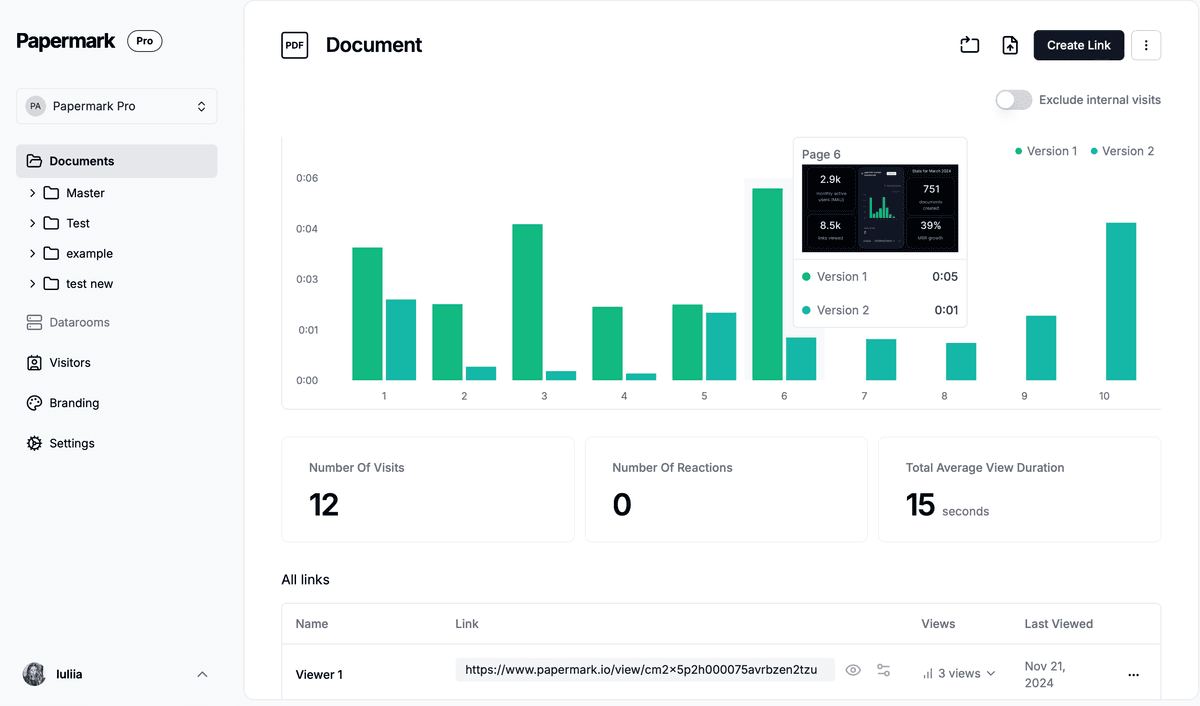
Papermark provides detailed analytics showing who viewed your deck, how long they spent on each slide, and their overall engagement. Track viewer emails, see which slides captured the most attention, and monitor actions like downloads or shares. This data helps you identify genuinely interested investors and time your follow-ups perfectly. You can revoke access to your link at any moment if needed.
Real-World Example: Scaling Investor Outreach
See how Yuno successfully sends pitch decks to investors and tracks engagement across their 20-person team:
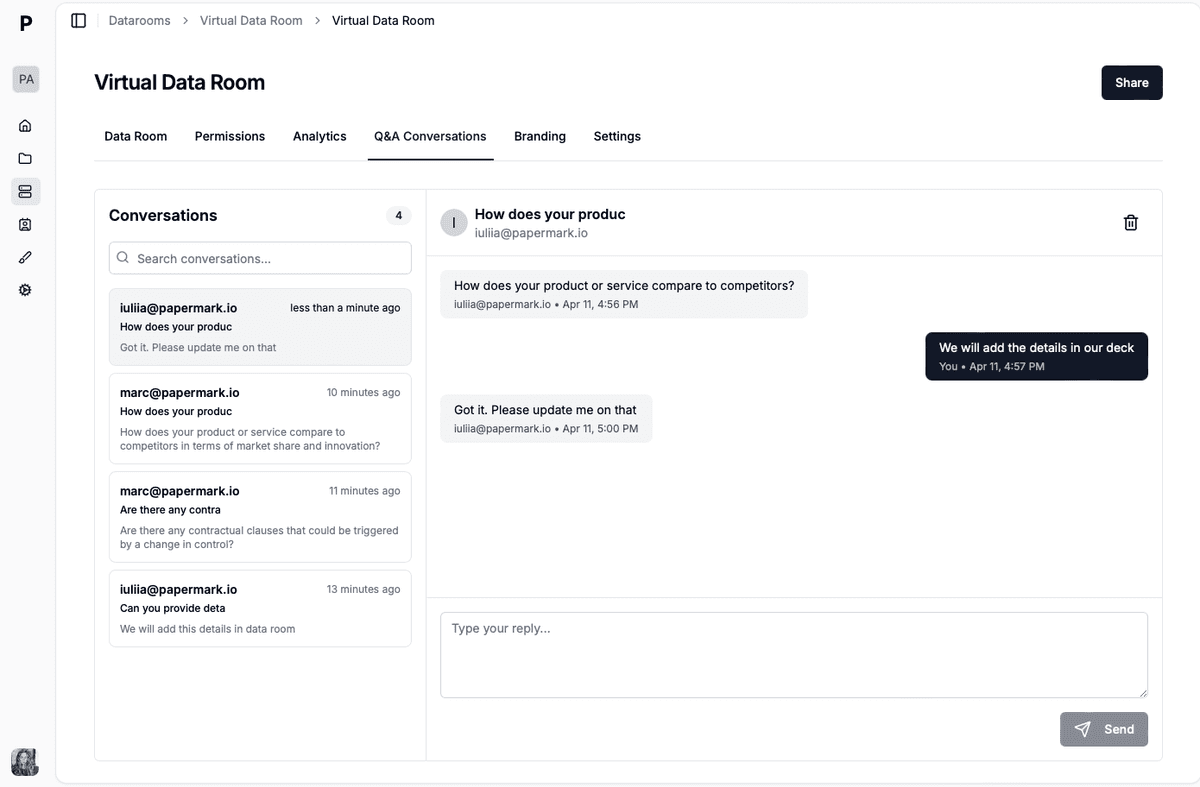
Use Papermark's Q&A Conversations feature to engage directly with interested investors without leaving the platform. Enable the feature in your dashboard, respond to questions quickly, and maintain all conversations organized in one place. Learn more about Q&A Conversations.
Use your analytics to identify which investors spent the most time on your deck and which slides captured their attention. Personalize your follow-up messages by referencing specific parts of your pitch that resonated with them. For highly engaged investors, propose meetings and use Papermark insights to steer conversations toward topics of proven interest.
Next step: Set up a data room
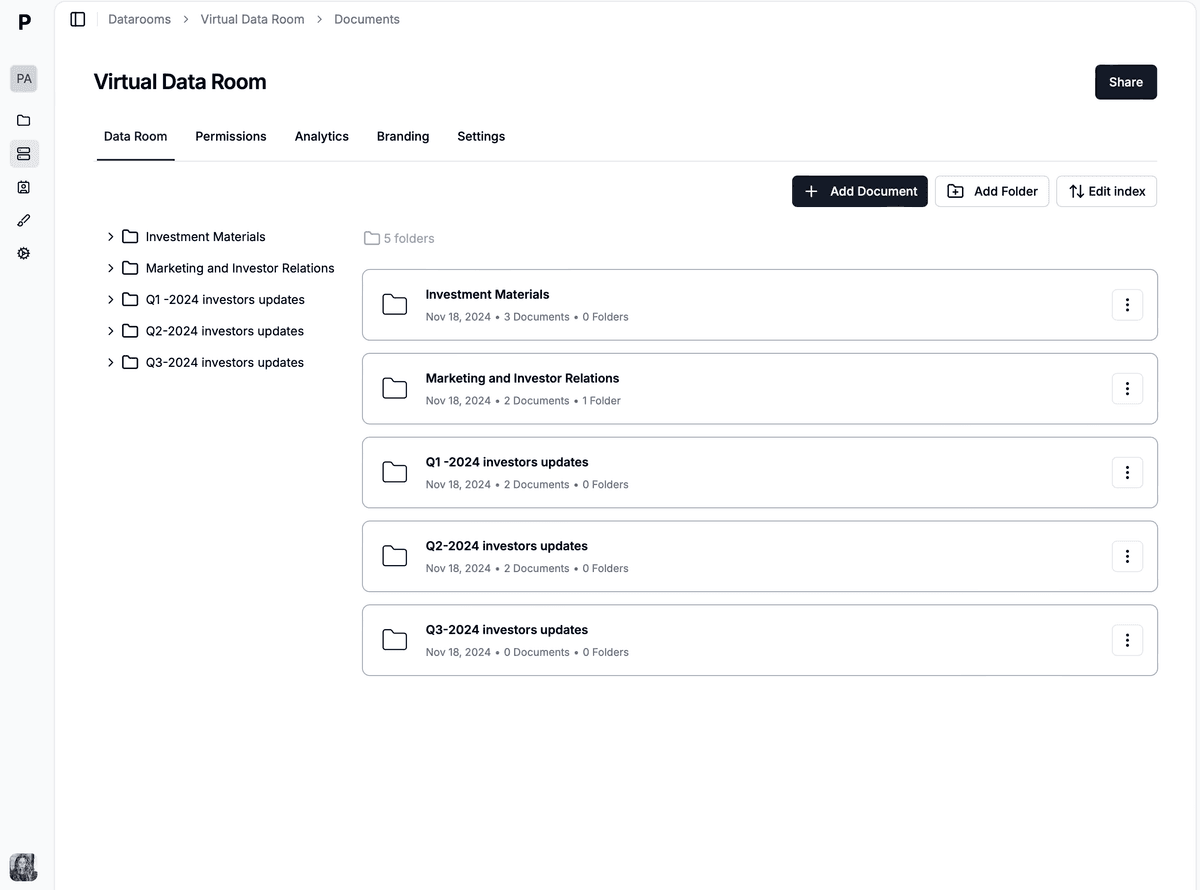
As your fundraising progresses, consider setting up a data room to share additional documents securely. Organize information into structured folders, categorize documents by importance, and use Papermark to maintain restricted access and confidentiality. A well-organized data room protects your business data, tracks investor interest, and makes a professional impression on potential investors.
No credit card required.
Conclusion
Sending your pitch deck to investors is about more than sharing information—it's about presenting your vision professionally and understanding how it's received. Using a tool like Papermark secures your intellectual property while providing deep insights into investor engagement. By preparing your deck carefully, sharing via secure links, and leveraging analytics strategically, you increase your chances of making meaningful connections with the right investors and turning those connections into successful investments.