



datarooms
Virtual Data Room Toronto: 7 Best Providers and Pricing for 2026
Compare the 7 best virtual data room providers in Toronto for 2026: pricing, PIPEDA compliance, Canadian data residency, and the right VDR for your M&A deal.
I'm Marc, co-founder of Papermark. I started building Papermark to bring a better solution for document sharing to a market where most data room providers have existed for at least 20 years.
I want to start by first reviewing the reasons why you might be looking for virtual data room alternatives and why we bring ours to market. Of all the founders and operators we've spoken to who are looking for better data room solutions, here are their top reasons:
So, if you're like me, here is my comparison of virtual data rooms, originally written in June 2025 and fully refreshed in September 2026 with current pricing, ratings, and product changes.
The shortlist for most teams in 2026: Papermark for a secure modern VDR with transparent flat-rate pricing (€99/month), page-level analytics, dynamic watermarking, and an optional self-hosted open-source deployment for full data sovereignty; Datasite or Intralinks for large-cap enterprise M&A; DealRoom for serial acquirers running a full M&A pipeline.
No credit card required.
The table below is the fastest way to compare virtual data rooms side by side. It ranks the 15 data room providers in this guide on the four things that actually separate them: what it costs to start, whether you can find that price without a sales call, what verified reviewers score it, and the deal shape it is built for. Pricing model matters more than most buyers expect. Of the 15 ranked providers, 8 publish a real starting price and 7 quote only, and the quote-only tier is where per-page billing and second-room surcharges live.
Review scores are shown only where a public G2 or Capterra rating exists with a review count. Several enterprise VDRs are sold entirely through sales teams and have thin or no public review base, which is itself a signal about how they are bought. Blank is reported as blank rather than filled with an estimate. Read the review count as carefully as the score: Drooms carries 4.7/5 on a G2 sample of only 3 reviews, which is directional at best, while Onehub's 4.2/5 across 45 reviews and ShareVault's 4.5/5 across 70 reviews are worth weighting.
| # | Provider | Starting price | Pricing model | Verified rating | Built for |
|---|---|---|---|---|---|
| 1 | Papermark | EUR 99/month | Published flat rate | 4.9/5 (171) | [Startups](/data-room-for-startups), scaleups, mid-market M&A, self-hosting |
| 2 | Datasite | Quote only | Per page, ~$0.40-$0.85 | 4.5/5 (260+) | Large-cap and cross-border M&A |
| 3 | Intralinks | Quote only | Custom, $10k-$200k+/yr | Not published | Enterprise M&A, regulated transactions |
| 4 | Ideals | Quote only | Three custom tiers | Not published | Mid-market deals needing 24/7 support |
| 5 | Firmex | ~$625+/month reported | Subscription, unlimited rooms | Not published | Advisory firms running concurrent deals |
| 6 | Ansarada | Quote only | Quote-based | Not published | Deal readiness and structured Q&A |
| 7 | DealRoom | $1,000/month | Published, billed annually | 4.3/5 (66) | Serial acquirers running an M&A pipeline |
| 8 | SecureDocs | From $450/month | Published subscription | Not published | Unlimited users on a predictable bill |
| 9 | Digify | From $480/month | Published, 3 users | 4.7/5 (65) | Document security across many small rooms |
| 10 | CapLinked | $399/month | Published, no per-viewer charge | 3.9/5 | Smaller diligence projects |
| 11 | ShareVault | Quote only | Storage and duration based | 4.5/5 (70) | Life sciences, biotech, licensing diligence |
| 12 | DFIN Venue | Quote only | Per transaction, $5k-$25k | 4.4/5 | IPOs and SEC-regulated capital markets deals |
| 13 | Drooms | EUR 17.90/user/month | Published per user, 300 MB each | 4.7/5 (3) | European M&A and real estate transactions |
| 14 | Onehub | $375/month | Published flat rate, 5 users | 4.2/5 (45) | Budget rooms for small diligence projects |
| 15 | ShareFile | $385/month | Published, 5-user minimum | Not published | Teams already inside the Citrix stack |
Read the pricing-model column before the price column. A published flat rate is a number you will still recognise on the invoice; a per-page quote is an opening position that moves with document count, user count, and how long the room stays open. The same mid-market diligence process can land anywhere between roughly $3,500 and $35,000 depending only on which billing structure you agreed to, which is why the providers in this guide that publish a price are grouped separately from the ones that will not.
The virtual data room market is growing fast because the cost of getting document security wrong keeps climbing. Fortune Business Insights valued the global VDR market at $3.4 billion in 2025 and projects it will grow from $4.11 billion in 2026 to $17.46 billion by 2034, a 19.8% CAGR. Estimates vary by firm (Grand View Research puts it at $2.42 billion in 2024 growing to $7.73 billion by 2030 at 22.2%), but every serious forecast agrees the category is expanding faster than most enterprise software as more M&A, fundraising, and due diligence moves into secure online data rooms.
The demand driver is risk. IBM's 2025 Cost of a Data Breach Report puts the global average breach at $4.44 million, with the U.S. average at a record $10.22 million, which is exactly the kind of exposure a VDR's watermarking, granular permissions, and audit logs are designed to prevent. At the same time, pricing across the 21 providers below (15 ranked data rooms plus 6 tools we ruled out) still spans a huge range, so knowing the numbers before you buy matters.
Pricing models vary far more than feature sets. Some VDRs publish flat monthly rates, others charge per page or by storage tier, and several refuse to publish any pricing at all. The donut below maps the 15 ranked providers to their primary pricing model, based on each vendor's official pricing page or industry-verified data points.
Source: vendor pricing pages and G2 / TrustRadius / VDR Compare data verified in September 2026. Each provider is assigned to its primary pricing model; some offer hybrid models in higher tiers.
Key takeaways:
Website: papermark.com
Pricing: From €99/month (Data Rooms plan, 7-day free trial). Free plan available.
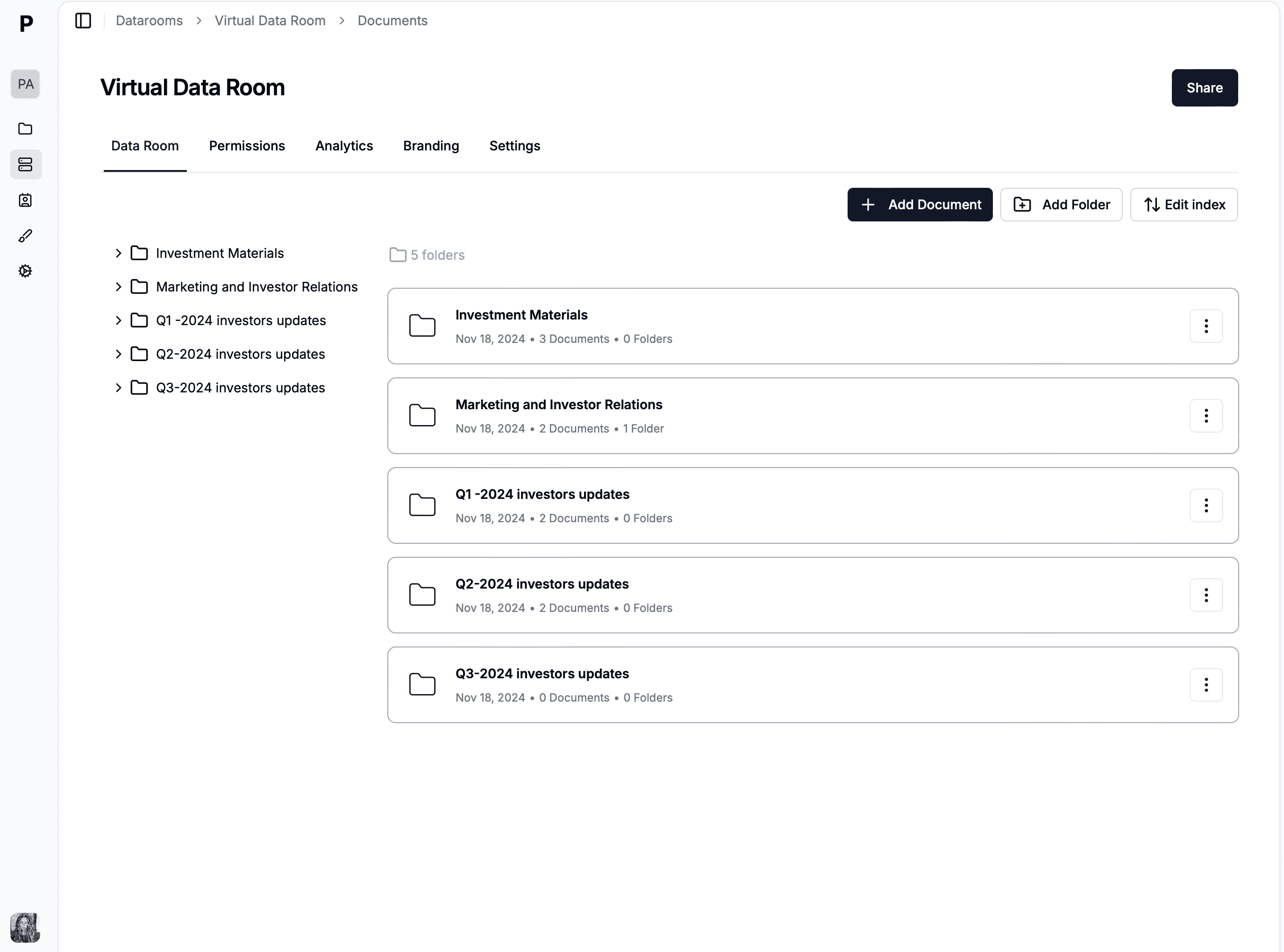
Papermark is a secure, fully customizable, and developer-friendly data room built for modern dealmakers, with page-by-page analytics, dynamic watermarking, and transparent pricing from €99/month. It replaces opaque per-page legacy VDRs with a flat plan and self-serve setup in minutes, adds a public API, CLI, and MCP server for programmatic data rooms, and is also open-source and self-hostable for teams that need full data sovereignty.
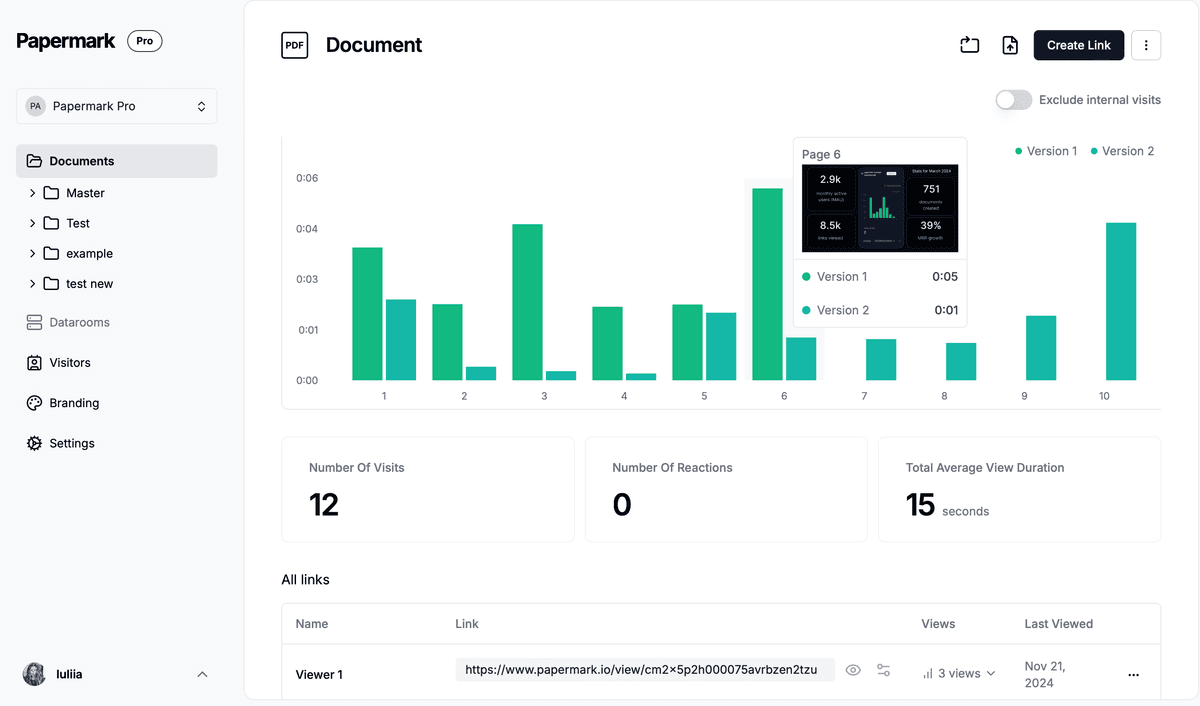
Page-by-page analytics is why most teams pick Papermark over cloud storage. You see which viewer opened the room, which document and page they spent time on, how long they lingered, and whether the link was forwarded. That turns a blind document handoff into a live signal on buyer or investor intent, and it is native to every plan rather than an enterprise add-on. See document analytics for the full breakdown.
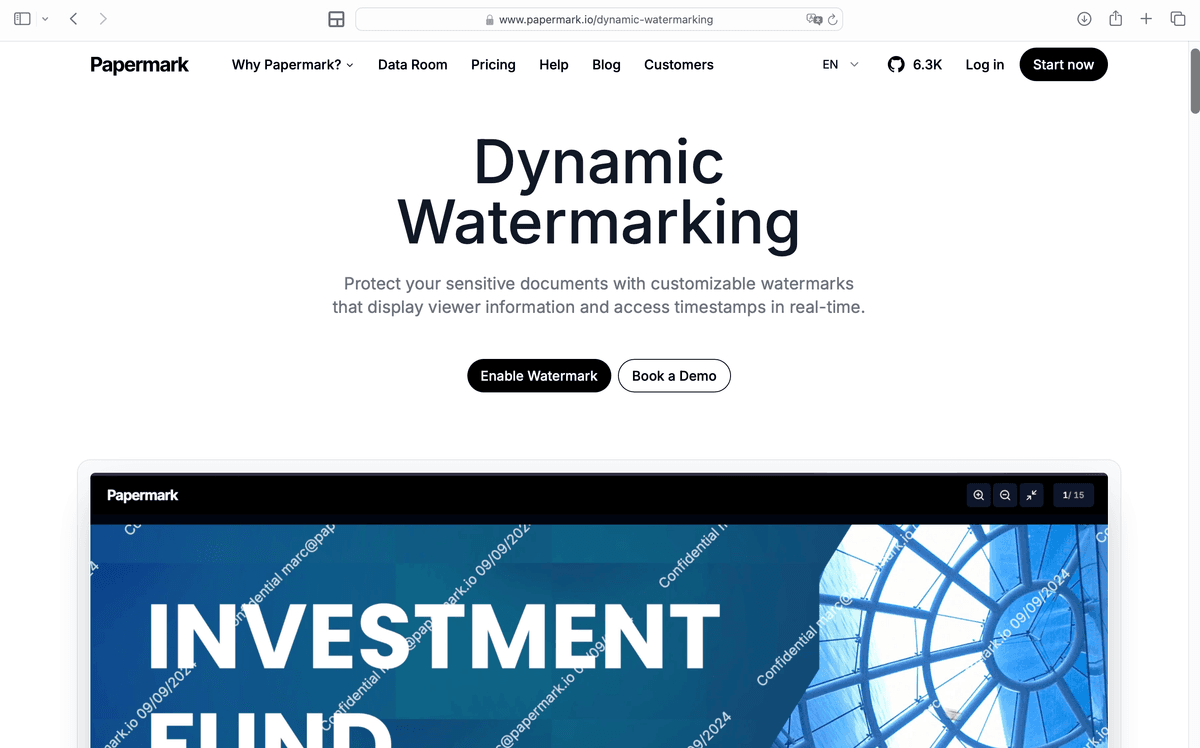
Papermark covers the security controls dealmakers ask for most: dynamic watermarking that stamps each viewer's email, IP, and timestamp on every page, view-only mode and screenshot protection, one-click NDA gating, and granular file-level permissions per viewer group. It is ISO 27001 certified and SOC 2 Type II audited (SOC 2 from Data Rooms Plus and above), plus GDPR, HIPAA, and CCPA compliant, with AES-256 encryption at rest, TLS in transit, and EU (Frankfurt) hosting available. That matters in this market because ISO 27001 and SOC 2 are the two certifications enterprise counsel asks for by name, and they are the baseline that legacy VDRs like Datasite, Intralinks, and DFIN Venue lead with in their own security pages. Every view, download, and NDA acceptance is captured in an exportable audit log. Read the security overview for the full certification list.
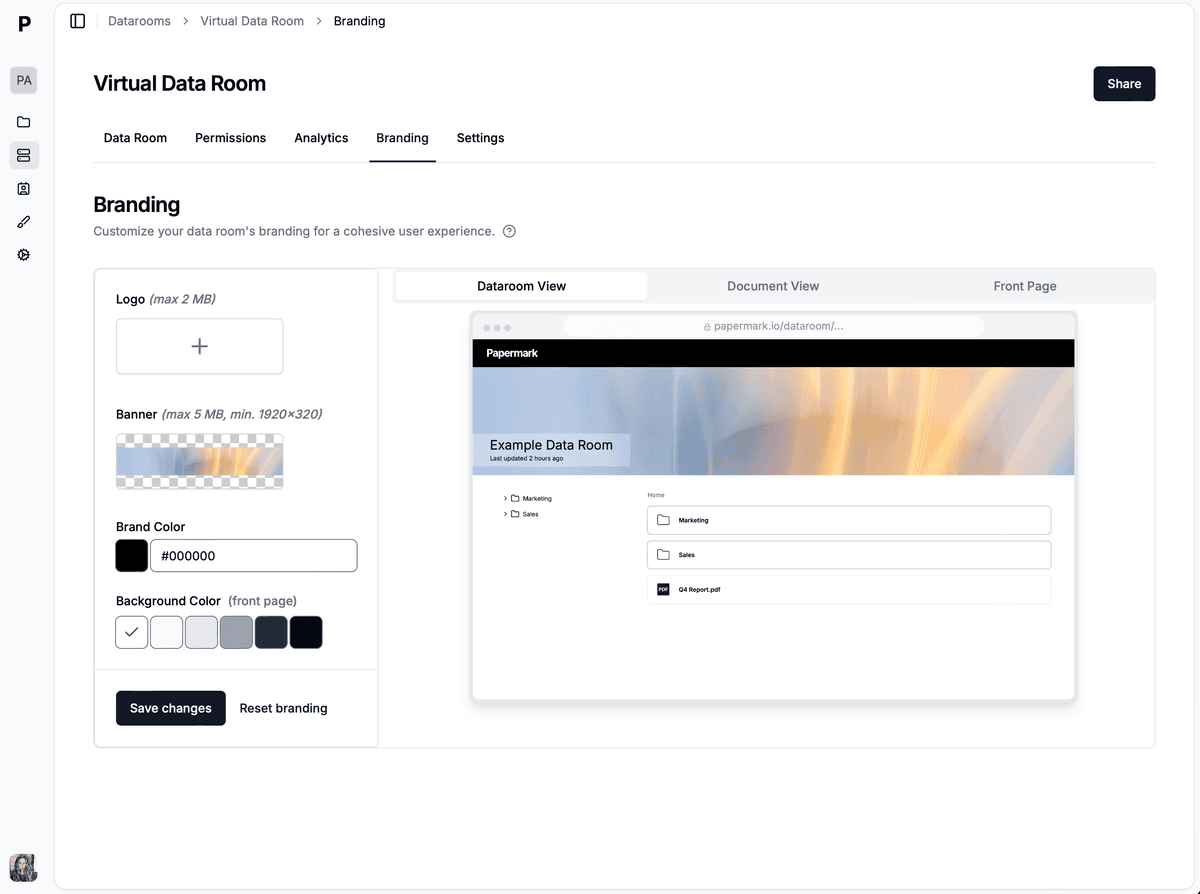
Papermark is fully customizable: run every data room on your own custom domain, add your logo, colors, and custom layouts, and remove all Papermark branding for a true white-label experience. Advisors and funds use this to give each client or LP a room that looks like their own brand, not a vendor's. Custom domains for data rooms are included from the €99/month Data Rooms plan.
Every link carries its own security settings, and the platform layers enterprise-grade controls underneath. The full list of controls Papermark ships with, from the Papermark security page:
See secure file sharing for link setup and the security overview for the full certification list.
On team seats, read the plan rather than the headline. Unlimited data room visitors are included everywhere, so inviting 200 LPs or five buy-side teams never changes the bill. Paid team members are what scale: 3 on the €99/month Data Rooms plan at €33/month for each extra, 5 on Plus, 10 on Premium, and genuinely unlimited team members only on Data Rooms Unlimited.
Papermark offers one of the most transparent and competitive pricing models on the market:
Document sharing plans:
Data Rooms plans (full virtual data room features):
One feature in that ladder is worth explaining rather than listing, because it changes how a deal actually runs.
AI redaction removes the manual pass that usually delays a room opening. Instead of exporting a contract, blacking out names and figures by hand, and re-uploading a flattened copy, you redact in place and the redaction holds across every viewer link. That matters most in diligence sets containing employee data, customer names, or pricing you are contractually barred from sharing, where the alternative is a paralegal and a week.
See the full Papermark Data Rooms pricing for plan comparison. The codebase is open-source under AGPL for self-hosted deployments.
Full white labelling and self hosting is available.
Trusted by 70,000+ companies for secure document sharing and data rooms
Work through five questions in this order. Each one removes providers rather than adding features, which is faster than comparing full feature matrices.
Anything that fails two of these is not worth a trial. Papermark answers all five on the Data Rooms plan at €99/month, with unlimited data room visitors, which is why first-time sellers and boutique advisors rarely need anything above it.
Work through five questions in this order. Each one removes providers rather than adding features, which is faster than comparing full feature matrices.
Anything that fails two of these is not worth a trial. Papermark answers all five on a free plan for the deck and €99/month for the room, which is why seed to Series B founders rarely need anything above it.
See how Two, a fintech startup, leveraged virtual data rooms to secure €13M in funding:
Website: datasite.com
Pricing: Custom quote only. Industry data points to roughly $0.40-$0.85 per page on the legacy per-page model; large enterprise M&A engagements can exceed $200,000 per year.
Datasite Diligence is a virtual data room used primarily by investment banks, private equity firms, and corporate law teams running M&A and due diligence. It is positioned for complex multi-stakeholder deals and is the #1-ranked VDR in G2's Spring 2025 Grid Report.
Website: intralinks.com
Pricing: Custom quote only. Industry estimates range from $10,000 to $200,000+ per year depending on deal size.
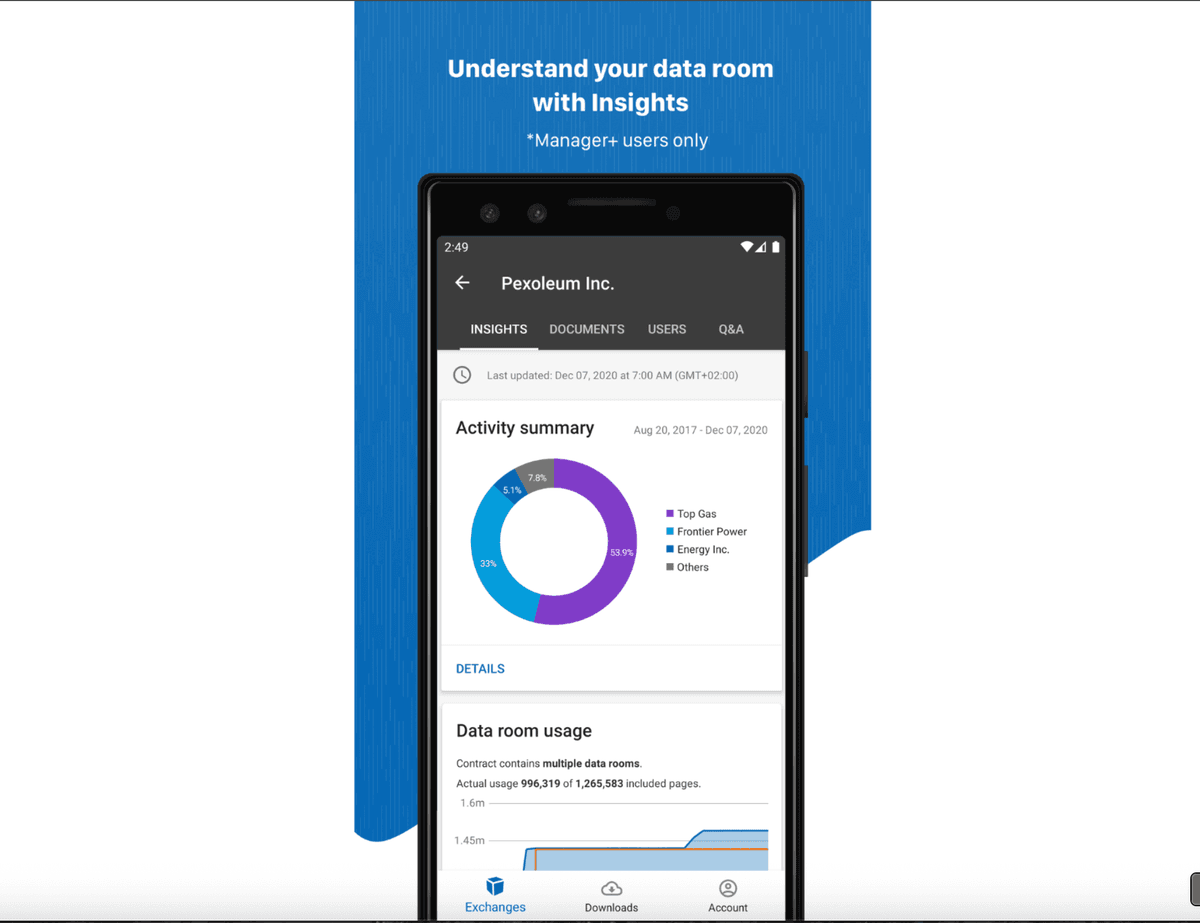
Intralinks is a legacy virtual data room platform used primarily for large M&A, IPOs, and other regulated deals. It offers secure document sharing, Q&A, and reporting, but often requires lengthy onboarding and premium pricing.
Intralinks does not publish transparent pricing and operates on a custom quote model. Based on industry analysis and user reports:
Additional fees are common for storage overages, extra users, duration extensions, and implementation services.
Website: idealsvdr.com
Pricing: Custom quote only. Three tiers (Core, Premier, Enterprise) with a 30-day free trial.
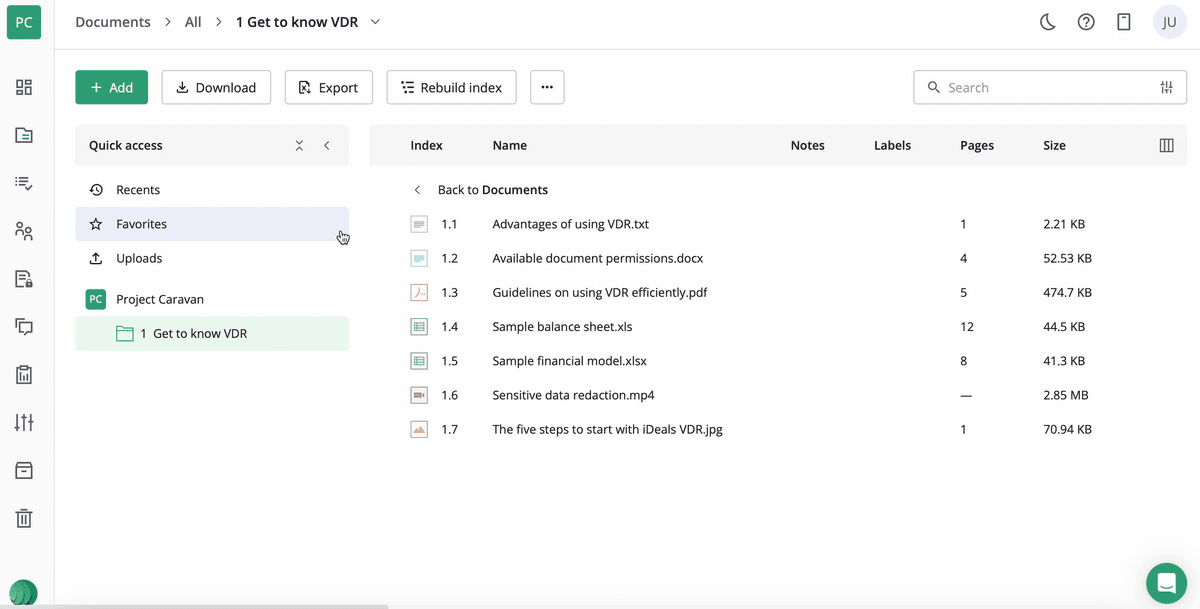
Ideals VDR is a secure online repository and collaboration platform used by businesses, M&A teams, legal advisors, and finance professionals for handling sensitive documents and streamlining due diligence, document sharing, and corporate transactions.
Pricing is custom-quote only across three tiers (Core, Premier, Enterprise), with a 30-day free trial. There are no public rates - you contact sales for a quote, which commonly starts around $500/month and scales into five-figure annual contracts on higher tiers.
For a detailed comparison and the best alternatives, see our Ideals VDR alternatives guide.
Website: firmex.com
Pricing: Custom quotes. Reported entry-tier subscriptions cluster around $625-$995/month; per-deal pricing available.
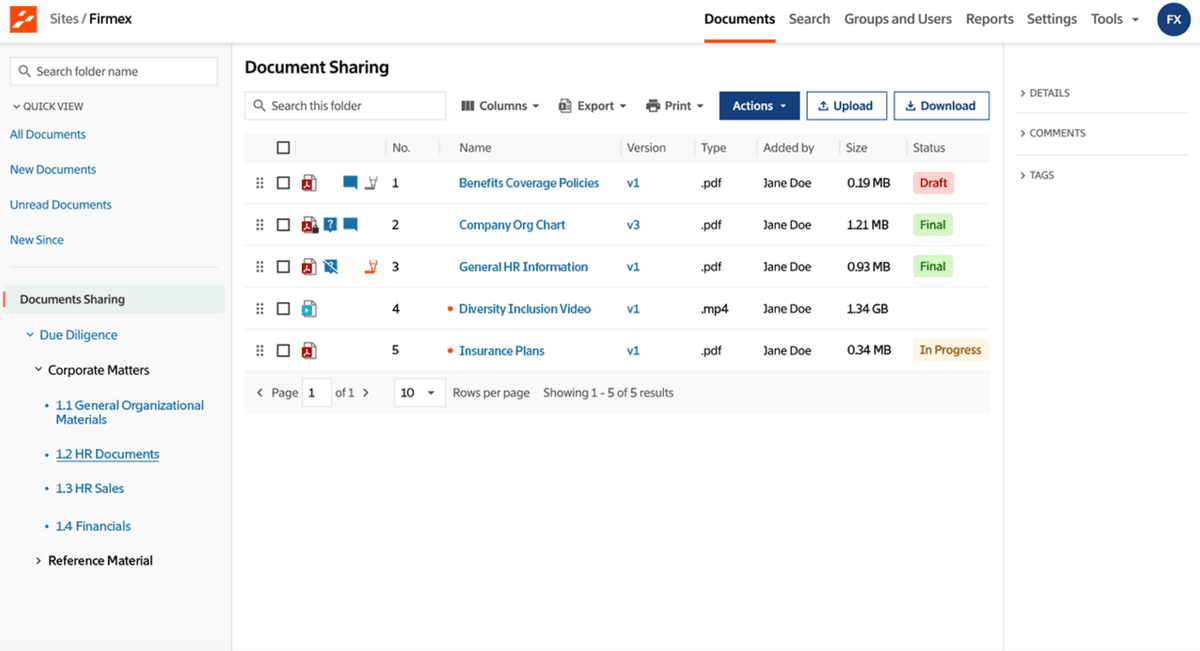
Firmex is a robust virtual data room provider known for its strong security features and user-friendly interface. It is widely used for complex processes such as M&A, litigation, and compliance, and is trusted by legal, financial, and corporate professionals for secure document sharing and deal management.
Firmex does not publish pricing on its website. Quotes start with a sales call and are scoped against deal duration, storage, user count, and feature set. Reported customer rates cluster around $625-$995/month for entry-tier subscriptions, with per-project quotes commonly $5,000-$10,000 per 3-month engagement. Enterprise and unlimited plans are custom-quoted.
Website: ansarada.com
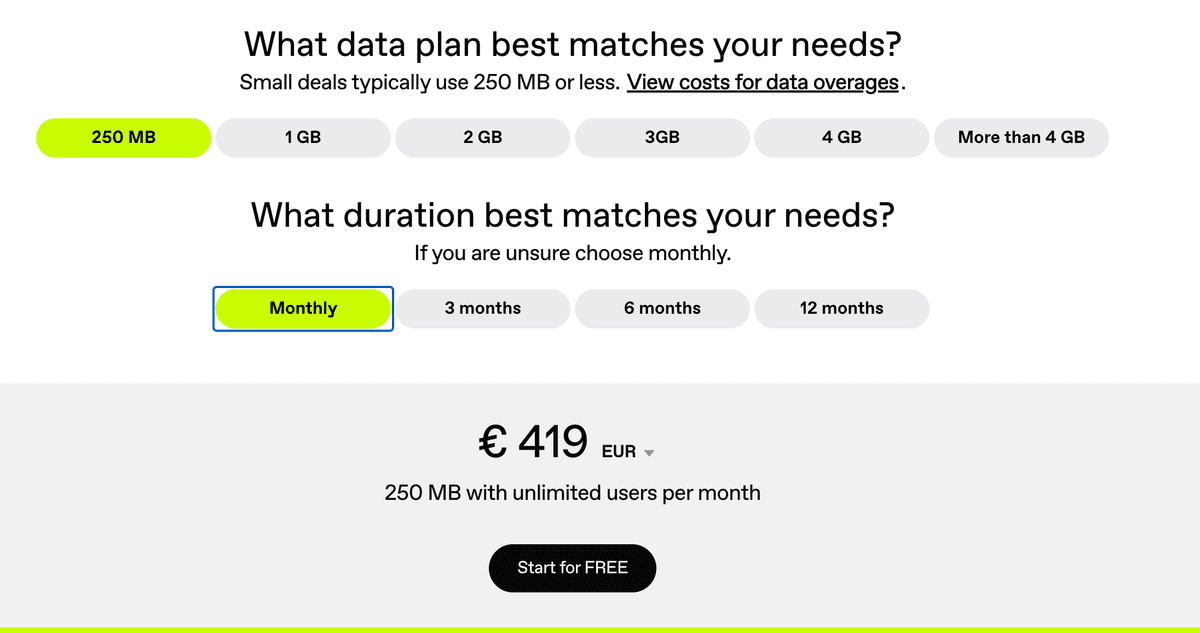
Pricing: Quote-based - Ansarada no longer publishes public pricing. Historical/indicative: from $479/month for the 250 MB plan; tiered storage up to 20 GB at $8,579/month, with annual commitments cutting costs by up to 53%.
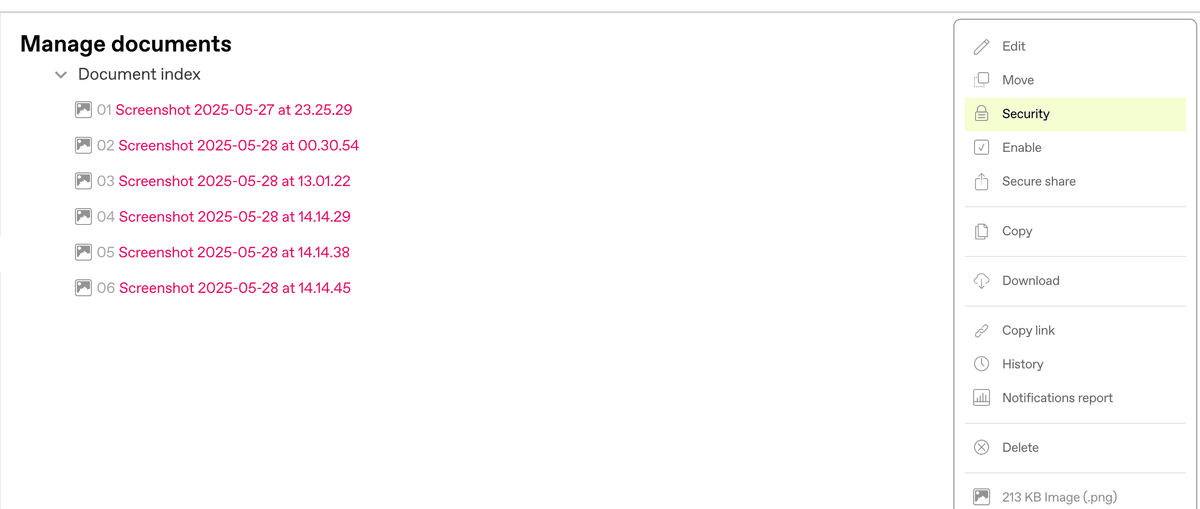
Ansarada is a leading virtual data room (VDR) provider that offers secure document storage and sharing solutions for M&A transactions, due diligence processes, and business information management. It provides enterprise-grade security with advanced AI-powered insights.
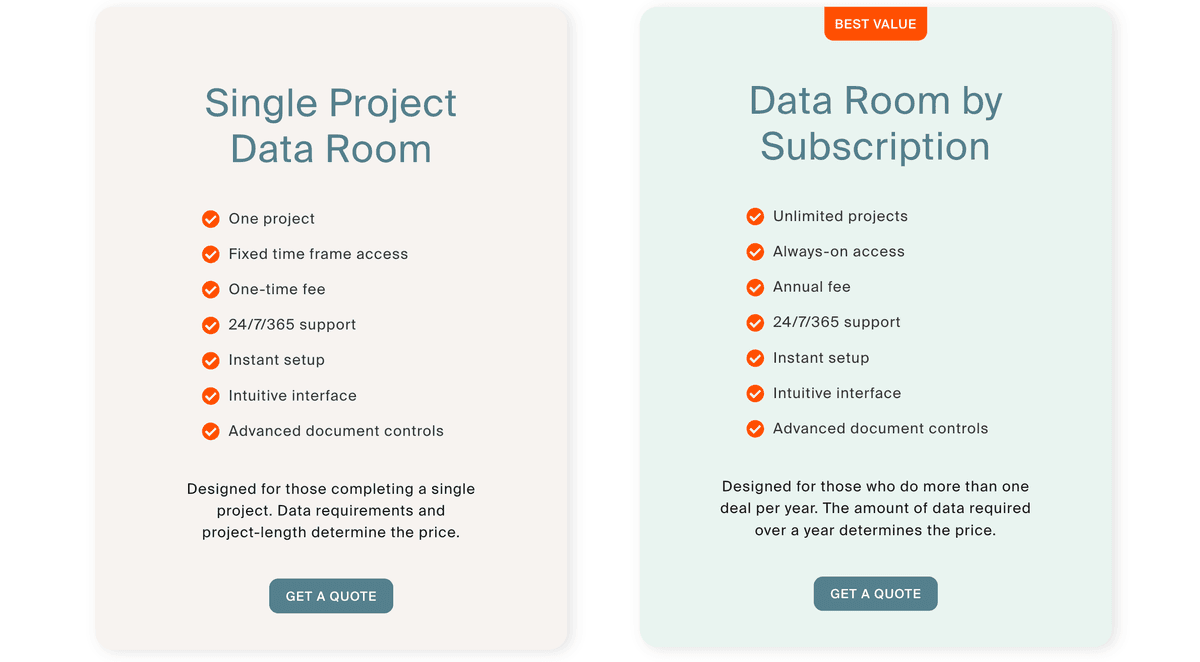
Ansarada offers flexible subscription-based pricing with different data storage plans. The platform uses a unique pricing model based on data storage requirements and subscription duration:
Ansarada no longer publishes public pricing and now quotes per deal; the tiers below are historical/indicative only.
Starting Plans:
Larger Plans:
Key pricing factors:
Website: dealroom.net
Pricing: From $1,000/month (Pipeline plan, billed annually at $12,000/year). Diligence plan from $1,250/month. Full M&A platform at $25,000/year. 14-day free trial.
DealRoom is a virtual data room and M&A workflow platform aimed at serial acquirers managing the full deal lifecycle - pipeline, diligence, and post-close integration. It uses fixed-cost annual subscriptions instead of per-page or per-deal pricing.
Website: securedocs.com
Pricing: From $450/month for unlimited users and storage. Free trial available.
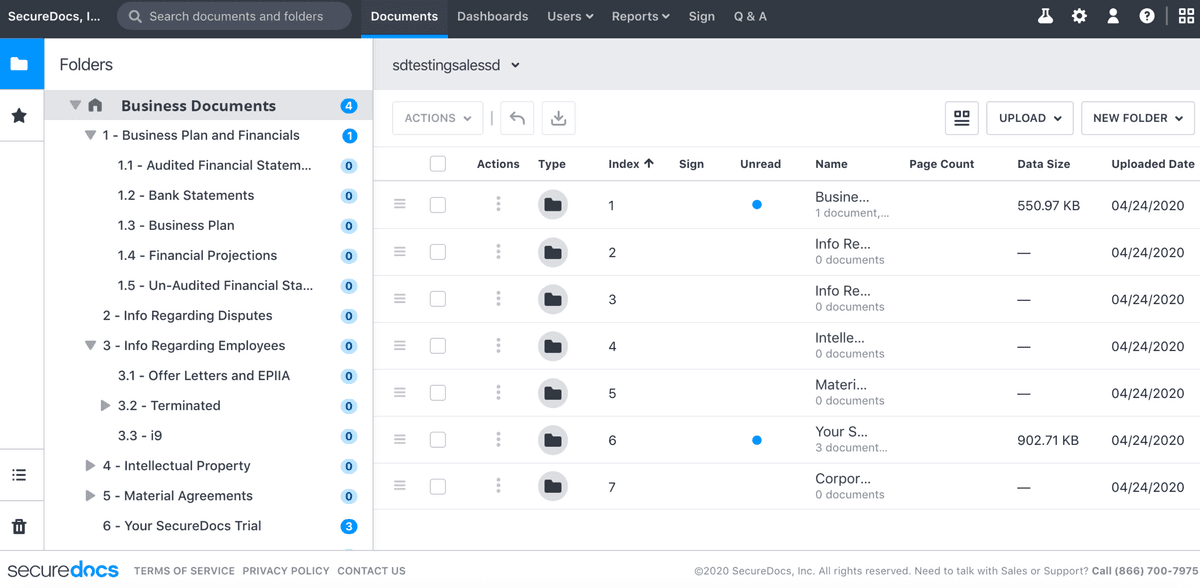
SecureDocs reimagines the virtual data room experience with an intuitive, quick-start interface, 24/7 dedicated support, sophisticated security features, and transparent subscription pricing. Rapid self-setup means you can have your data room up and running in 10 minutes or less-no need to speak with a salesperson or commit to technical training. The platform is designed for deal-readiness, making it easy for teams to securely share and manage critical documents with confidence.
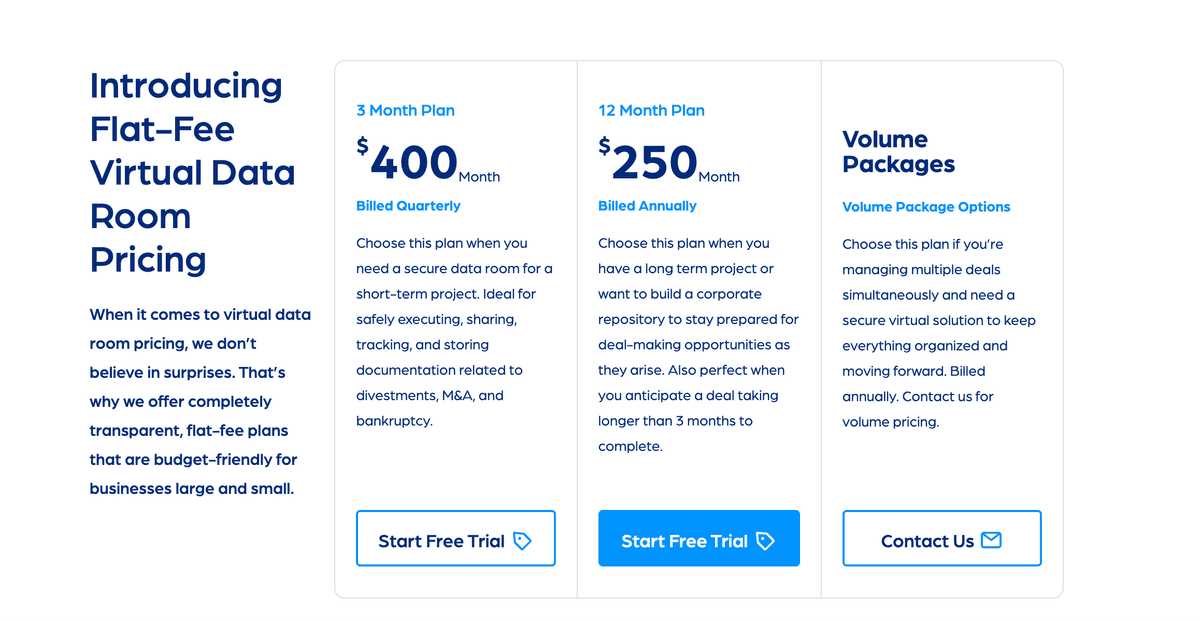
SecureDocs is ideal for companies seeking a secure, reliable, and easy-to-use virtual data room solution with predictable costs and rapid deployment.
Website: digify.com
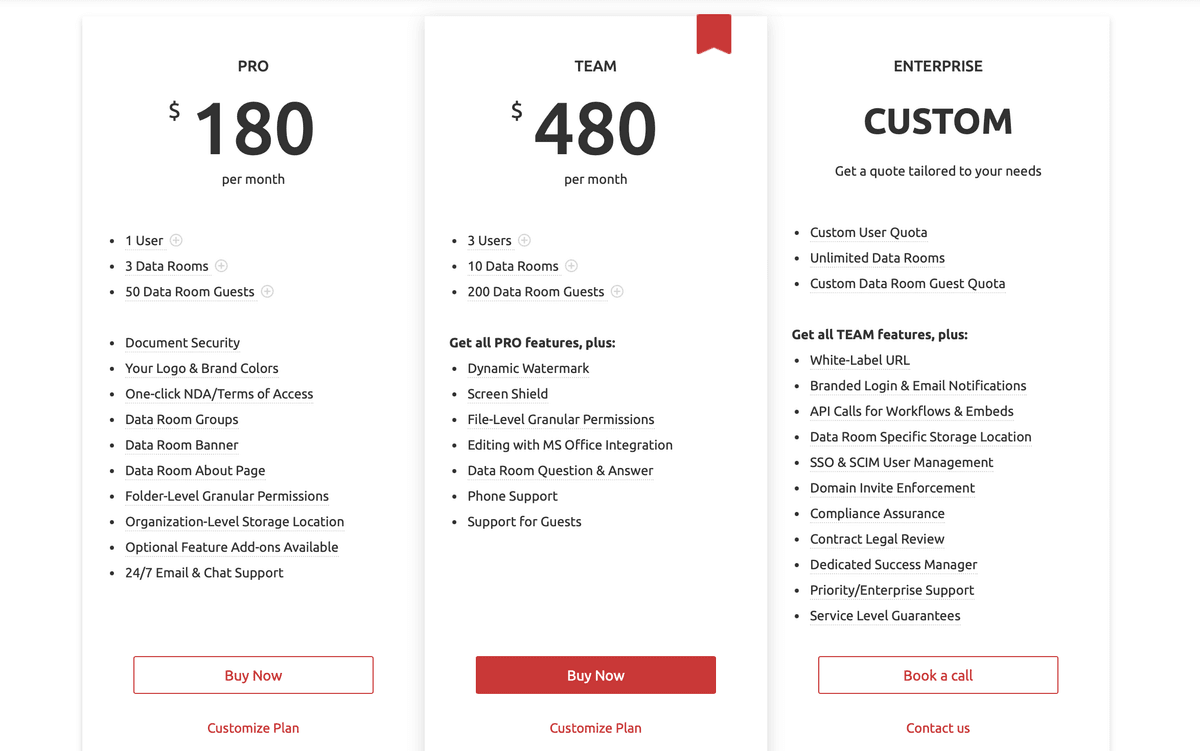
Pricing: From $480/month on the Team plan (3 users, 10 data rooms, 500 GB storage).
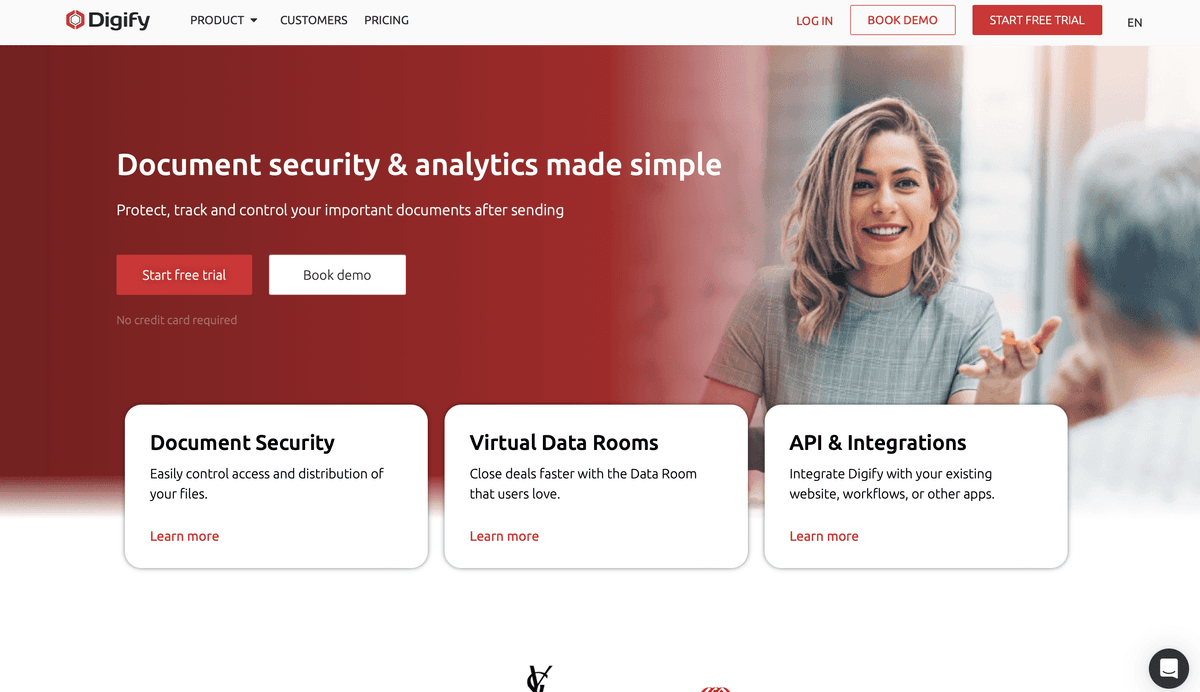
Digify offers a data room solution designed to help businesses securely share sensitive documents during due diligence, fundraising, and M&A processes. Starting at $480/month for the Team plan (3 users, 10 data rooms, 500GB storage), it provides comprehensive security features but at a higher price point.
Digify's pricing structure starts at $480/month:
Website: caplinked.com
Pricing: Team plan at $399/month with flexible storage and no per-viewer charge for external reviewers. Enterprise plan from $500/month or $5,000/year with custom quotes. 14-day free trial.
CapLinked positions itself as a transparent, flat-rate alternative to legacy VDRs. It is used for M&A, fundraising, and audits, and emphasizes pricing predictability over per-page or per-user metering.
Website: sharevault.com
Pricing: Custom quote only. Three tiers (Express, Pro, Enterprise) priced on storage volume and project duration. ShareVault's own pricing page advertises rates "as low as $160-$200/month" tied to minimum storage and a 12-month prepaid term; independent comparison data reports entry subscriptions from around $475/month. 14-day free trial.
ShareVault is a virtual data room used for life sciences, biotech, and pharma licensing diligence, alongside general M&A and legal document review. It is the VDR most often endorsed by industry trade associations in that sector, including BIO, which is the main reason it appears on biotech shortlists rather than general M&A ones.
Website: dfinsolutions.com
Pricing: Custom quote only. Project-based pricing typically runs $5,000 to $25,000 per transaction depending on data volume, user count, and duration. Ongoing subscriptions typically start around $15,000 to $40,000 per year with overage fees above the base storage and user allocation.
DFIN Venue is Donnelley Financial Solutions' virtual data room, built for capital markets work: IPOs, SEC-regulated transactions, M&A, and private equity fund processes. It sits at the enterprise end of the market alongside Datasite and Intralinks, and is bought the same way, through a sales-led process with a quote scoped to the deal.
Website: drooms.com
Pricing: Flex from €17.90 per user/month, billed monthly with no commitment, including 300 MB of storage per user license. A free 30-day trial covers up to 5 users and 1 GB. Enterprise is custom quoted with unlimited users and storage, and reviewers report a €700 installation fee on that tier.
Drooms is a Frankfurt-based virtual data room used mainly for European M&A and commercial real estate transactions. It is the most common European alternative to the US enterprise VDRs, and it is the one provider on this list whose published price is per user rather than per room, which changes how you should budget for it.
Website: onehub.com
Pricing: Data Room Edition at $375/month ($300/month billed annually), including 5 paid users at $25 per additional user. Standard is $15 per user/month with a 3-user minimum, Advanced is $25 per user/month with a 5-user minimum, and Enterprise is custom quoted. 14-day free trial.
Onehub is a cloud storage product with a dedicated Data Room Edition, and it is the cheapest published flat rate on this list after Papermark. SRS Acquiom acquired Onehub in January 2021, and it now sits inside that firm's M&A services suite rather than operating as a standalone software business.
Website: sharefile.com
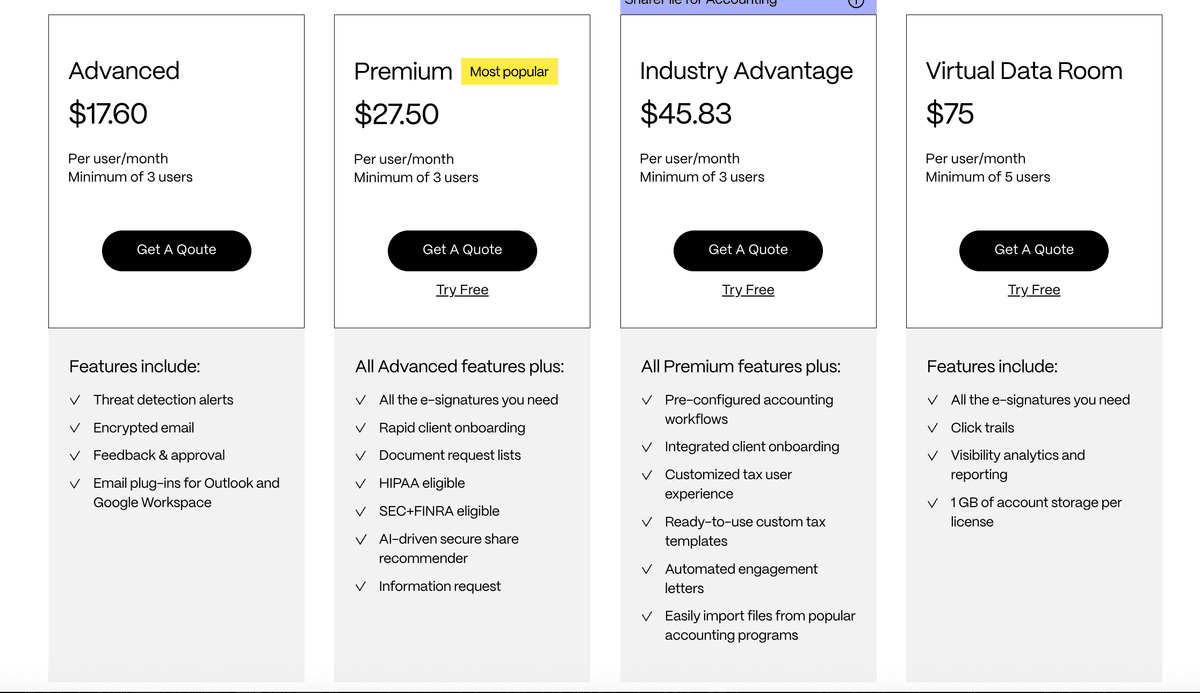
Pricing: VDR plan $385/mo, 5-user minimum. Free trial available.
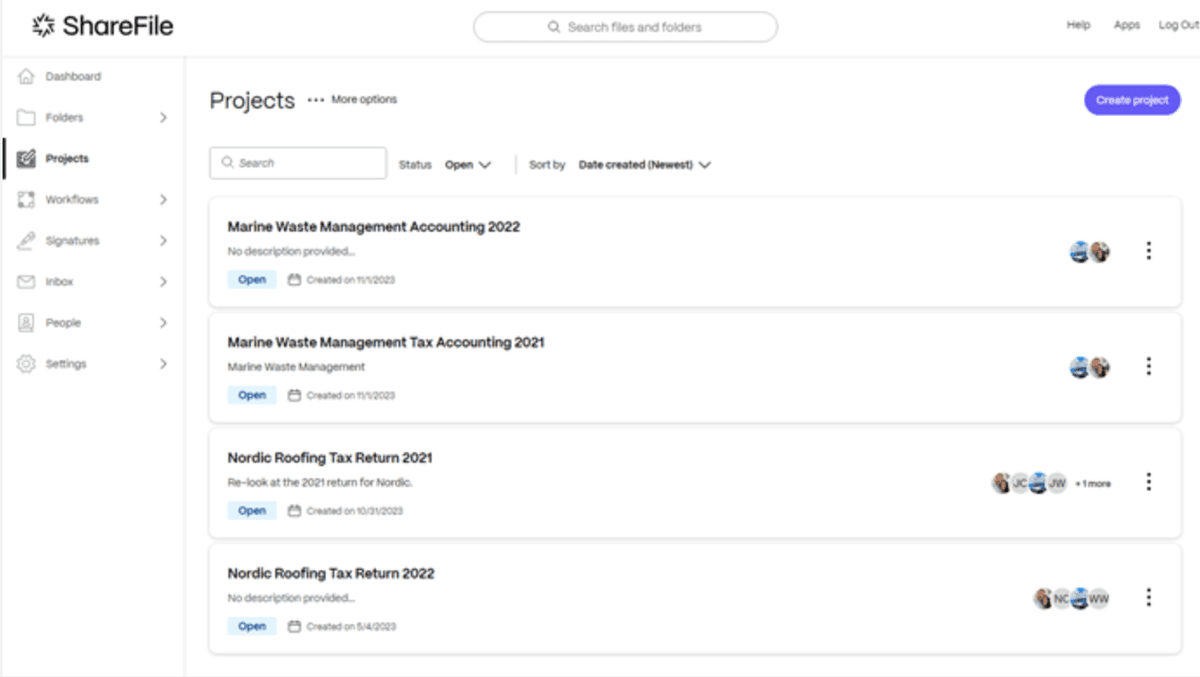
ShareFile by Citrix provides a secure virtual data room solution designed for streamlined document sharing and collaboration across various industries including finance, law, and healthcare.
Features include:
Six tools come up constantly in searches for data room software, and all six are general-purpose cloud storage rather than purpose-built virtual data rooms. They are excluded from the ranking above because they lack the controls a diligence process assumes: no dynamic per-viewer watermarking, no NDA gate before first access, no page-level engagement analytics, and no deal-scoped audit trail you can hand to counsel. They are listed here because they are legitimate options for low-stakes sharing, and because knowing why they fall short is part of choosing properly.
The practical dividing line is what happens after a document leaves your control. A data room assumes the reader may be a competitor, so it stamps every page with the viewer's identity, records which pages were read and for how long, and lets you revoke access after the fact. Cloud storage assumes the reader is a colleague. That difference is invisible until a deal goes wrong, which is why buyers' counsel routinely rejects a Drive folder as the system of record for a transaction.
| Tool | Starting price | Why it is not ranked as a VDR | Reasonable use |
|---|---|---|---|
| Dropbox | $18/user/month (Business) | Password links and expiry, but no dynamic watermarking, no NDA gate, and only basic activity tracking | Internal team file sync and low-sensitivity external sharing |
| Google Drive | Free (15 GB); paid from EUR 1.99/month | No watermarking, no document protection, no page-level analytics, no deal-scoped audit trail | Early-stage founders sharing non-confidential material |
| Box | EUR 18/user/month, 3-user minimum | Enterprise encryption and permissions, but limited VDR-specific controls and no per-viewer watermarking | Enterprise content management where a VDR already exists elsewhere |
| OneDrive | Free (5 GB); paid from $1.99/month | Expiry and access levels only; depends on the wider Microsoft stack for anything stronger | Microsoft 365 teams sharing internally |
| SharePoint | $5/user/month (Plan 1) | Granular permissions and versioning, but configuring it as a data room is a project, not a setting | Corporates with IT capacity to build and maintain the controls themselves |
| Nextcloud | Free self-hosted; paid enterprise support | Secure View and watermarking exist as add-ons, but it is not built for diligence or fundraising workflows | Teams that need a self-hosted Google Workspace replacement |
Nextcloud deserves one qualification. It is the only tool in this group that can be genuinely locked down, because you host it yourself and can bolt on File Access Control, Secure View, and on-screen watermarking. Teams that already run Nextcloud for internal collaboration sometimes layer those add-ons and call it a data room. It works, but it is configuration work you own forever, and it still gives you no page-level analytics on how an investor read your financial model. If self-hosting is the requirement rather than the preference, a purpose-built open-source data room gets you there without the assembly.
If one of these is what you were actually looking for, we cover them properly elsewhere rather than half-ranking them here. Box, Dropbox, Google Drive and Notion are compared side by side, with what each one can and cannot do as a deal room, in open-source and free data room software. That guide is also the right starting point if your constraint is budget or self-hosting rather than deal complexity, since it covers the free tiers and the AGPL-licensed options in detail.
Three more dedicated data room providers came up during research and deserve a mention, even though their review base or market footprint was too thin to rank them against the 15 above. All three are real VDRs rather than repurposed cloud storage, so if one matches your deal shape it is a legitimate option to shortlist.
DealVDR sells a fixed-fee data room priced on storage and duration rather than users or pages: reported packages start around $2,500 for 1 GB over 6 months and $4,000 for 1 GB over a year, with every feature included on every plan and no subscription tiers. That flat structure suits a single sell-side process with a known document volume, but per-GB pricing gets expensive fast on document-heavy deals, and the public review base is small compared to the ranked providers.
Imprima is a European virtual data room provider used mainly for M&A and real estate transactions in the UK and continental Europe. Its published introductory package starts at €250/month for a single data room with unlimited users and 500 MB of storage, with additional storage billed at €0.50 per MB, and an enterprise tier is custom quoted with a dedicated project manager. Like Drooms, it is a name you meet on European processes far more often than on US ones.
FirmRoom publishes a flat rate reported around $995/month for a 10 GB plan, with fast onboarding and integrations for Salesforce, Slack, and Office 365. It positions on the same transparent-pricing promise as the modern flat-rate group in the ranking, but with a smaller feature set and less brand recognition, which is why mid-market buyers usually end up comparing it against DealRoom or SecureDocs rather than the enterprise VDRs.
Many readers arrive at this comparison already using a data room and looking to replace it, usually over pricing, a dated interface, or analytics that stop at "document viewed". If that is you, the vendor-specific alternatives guides go deeper than this ranking can: each one compares the escape routes from a single provider on the exact features and contract terms that push teams to leave.
For mid-market M&A deals (transaction sizes between $10M and $500M), the best virtual data room is one that balances a transparent price, fast setup, and deal-grade security controls. Papermark, DealRoom, and Firmex all fit that profile. Papermark is the most common pick for first-time sellers and boutique advisors because the data room starts at €99/month flat, supports unlimited documents, and ships with dynamic watermarking, granular permissions, NDA gates, and page-by-page analytics out of the box. DealRoom suits serial acquirers that need a pipeline + diligence + integration workflow on a single flat-rate contract.
| # | Provider | Starting price | Best for M&A |
|---|---|---|---|
| 1 | Papermark | From €99/month | Mid-market M&A, first-time sellers, and boutique advisors wanting flat pricing and page-level analytics |
| 2 | Datasite | Custom quote | Large-cap M&A and investment banking where sell-side counsel mandates the vendor |
| 3 | Intralinks | Custom quote | Enterprise and regulated cross-border deals with 50+ reviewers |
| 4 | DealRoom | From $1,000/month (annual) | Serial acquirers running pipeline, diligence, and integration on one contract |
| 5 | Firmex | ~$625-$995/month | Mid-market legal, litigation, and advisory deals with per-project pricing |
For large-cap M&A and investment banking engagements, Datasite and Intralinks remain the default because buyer-side counsel and bulge-bracket advisors are already familiar with those platforms. Expect custom pricing in the $25,000 to $200,000+ per year range, legacy per-page billing on some packages, and a sales-led procurement cycle. The trade-off is opaque pricing: 8 of the 15 ranked providers in this list publish rates on their website, but Datasite, Intralinks, and Ideals do not.
It helps to see what the data room actually does at each stage of the due diligence process, because that is what the feature checklists are proxies for. In preparation, the seller assembles the diligence index (typically 400-500 documents on a mid-market deal) into a numbered folder structure and gates it behind an NDA before any buyer sees a file. During active diligence, each buy-side team works through its request list inside the room: scoped links keep the legal, tax, and commercial workstreams separated, the Q&A module replaces the email thread that otherwise becomes the unofficial record of the deal, and page-by-page analytics show the sell-side advisor which bidder is deep in the quality of earnings and which one has gone quiet, which is real negotiating information during exclusivity.
At close, the room becomes the legal record. The exportable audit log documents exactly which buyer saw which document and when, which matters in post-close disputes over disclosure, and the archived room is handed to counsel as a certified snapshot of the diligence record. This lifecycle is why buyers' counsel rejects a shared Drive folder as the system of record: cloud storage can hold the files, but it cannot produce the per-viewer, per-page evidence trail a disputed deal needs. The full phase-by-phase walkthrough is in the best data rooms for due diligence guide, and the process itself is covered in the M&A due diligence process guide.
If you are running a sell-side process under $100M and want predictable monthly cost, start with Papermark. If your advisor has mandated Datasite or Intralinks on a nine-figure deal, factor in two to four weeks of procurement plus per-page overage risk. For a deeper walk-through, see the data room for M&A guide.
The best virtual data room for startup fundraising is one with a free tier or flat pricing, page-level analytics on the pitch deck and data room, and dynamic watermarking. Seed and Series A founders rarely need the per-page billing or enterprise compliance add-ons that drive legacy VDR costs above $10,000 per year. They do need to see which investor opened the financial model, how long they spent on the cap table slide, and whether the deck was forwarded.
| # | Provider | Starting price | Best for fundraising |
|---|---|---|---|
| 1 | Papermark | Free / from €99/month | Seed to Series B raises needing page-level analytics on the deck and data room, plus dynamic watermarking |
| 2 | DealRoom | From $1,000/month (annual) | Later-stage rounds that want a structured pipeline and diligence workflow |
| 3 | SecureDocs | From $450/month | Flat-rate subscription rooms for later rounds with unlimited users |
| 4 | Digify | From $480/month | Founders who need device fingerprinting and document rights management |
| 5 | Google Drive | From €1.99/month | Earliest, budget-only internal sharing (not deal-grade security or analytics) |
Papermark is built for this profile: a free plan for document sharing and pitch decks, a data room tier at €99/month with unlimited documents and five team seats, and page-by-page analytics on every file. SecureDocs (from $450/month) and DealRoom (flat $1,000/month, annual) are also workable for later-stage rounds. Custom-quote tools (Datasite, Intralinks, Ideals) rarely make financial sense for a startup raise under Series B.
Real emerging managers and founders use Papermark for this exact workflow. Backtrace Capital raised €50M using Papermark and TBD VC raised $35M Fund II using Papermark as their investor data room. For a complete playbook, read the startup fundraising data room guide.
Private equity firms use virtual data rooms in three distinct workflows: fund-level LP reporting, portfolio company monitoring, and deal-specific due diligence. The requirements are different in each case. For LP reporting, you need a data room with granular per-investor permissions, custom branding, and audit logs that prove who saw which quarterly update. For portfolio monitoring, you need a persistent room per portco with ongoing document uploads and versioning. For deal diligence, the requirements match M&A: dynamic watermarks, NDA gates, Q&A, and buyer-specific access controls.
| # | Provider | Starting price | Best for private equity |
|---|---|---|---|
| 1 | Papermark | From €99/month | LP reporting, portfolio monitoring, and deal diligence on one flat plan with unlimited rooms and custom domains |
| 2 | Ideals | Custom quote | Large PE funds with enterprise procurement already in place |
| 3 | Intralinks | Custom quote | Cross-border buyouts and regulated deals with mandated vendors |
| 4 | Datasite | Custom quote | Buy-side diligence on large-cap deals with AI-assisted redaction |
| 5 | Firmex | ~$625-$995/month | Mid-market PE with project-based pricing per deal |
Papermark covers all three workflows on a single flat plan: unlimited data rooms, custom domains per room (so every portfolio company or LP can see a branded experience), granular permissions, and page-level analytics. Ideals, Intralinks, and Datasite are commonly used by larger PE funds that already have enterprise procurement in place, though pricing is quote-based and setup usually requires vendor onboarding. Firmex is a mid-market PE option with project-based pricing.
For PE-specific structure and document lists, see the private equity data room guide and the VC firms data room essentials checklist.
A secure virtual data room is defined by its certifications and its per-viewer controls, not by the word "secure" on the landing page. The certifications enterprise counsel asks for by name are SOC 2 Type II and ISO 27001, with GDPR as a legal requirement for any EU counterparty and HIPAA or 21 CFR Part 11 added on healthcare and life-sciences deals. The per-viewer controls are what make a leak traceable: dynamic watermarking that stamps each viewer's email, IP, and timestamp on every page, view-only mode, NDA gating before first access, and an append-only audit log you can hand to counsel.
Every ranked provider in this guide encrypts documents with AES-256 at rest and TLS in transit, so encryption is not what separates them. What separates the most secure data room providers is how far the certification stack goes and whether the controls apply per viewer or per room. The table below maps the certifications each provider publishes on its own security or compliance page.
| # | Provider | Certifications published | Standout security control |
|---|---|---|---|
| 1 | Papermark | ISO 27001, SOC 2 Type II (from Plus), GDPR, HIPAA, CCPA | Dynamic per-viewer watermarking, NDA gate, and screenshot protection on every plan |
| 2 | Datasite | ISO 27001, SOC 2, GDPR | AI-assisted redaction of PII across large diligence sets |
| 3 | Intralinks | ISO 27701, GDPR | Information rights management that restricts files after download |
| 4 | DFIN Venue | SOC 2 Type II, ISO 27001:2022, HITRUST, GDPR, HIPAA | Third-party penetration testing with 24/7 deal support |
| 5 | Ideals | SOC 2, GDPR | Fence view and seven permission levels |
| 6 | ShareVault | HIPAA | Remote document shredding after access ends |
Two practical notes on reading that table. First, a certification applies to the vendor's audited scope, not automatically to your plan: Papermark's SOC 2 Type II report covers Data Rooms Plus (€249/month) and above, and several enterprise VDRs scope certain certifications to specific hosting regions, so ask for the current report rather than accepting a badge. Second, the most secure VDR for your deal is the one whose controls match your threat model. If the risk is a forwarded PDF, per-viewer watermarking and view-only mode matter more than any certificate; if the risk is a regulator, the audit log and the certification stack do. Papermark documents its full stack, including EU (Frankfurt) data residency and the self-hosted deployment option for full data sovereignty, on the security page.
For European deals the security question turns into a data protection question quickly. Ask three things: where the data is physically hosted, whether the vendor signs a data processing agreement, and how transfers outside the EU are handled if the platform's infrastructure is not EU-based. Hosting in the EU removes the transfer question entirely; a US-hosted room needs standard contractual clauses and a transfer assessment for every deal.
Papermark hosts data in Frankfurt, signs a DPA, and can pin storage to a customer's own bucket or self-hosted deployment on Custom plans. Drooms hosts in Germany. Datasite, Intralinks and Ideals offer EU region options as part of an enterprise agreement.
Financial transactions raise the compliance bar above ordinary M&A diligence. An IPO or SEC-regulated process adds regulator-grade audit requirements, strict version control on every filing draft, and reviewer lists that run into the dozens across banks, counsel, and auditors. That is the segment DFIN Venue was built for: project-based quotes typically run $5,000 to $25,000 per transaction, and it pairs SOC 2 Type II, ISO 27001:2022, and HITRUST with 24/7 deal support staffed by capital-markets specialists. Datasite and Intralinks compete for the same engagements, and on nine-figure deals the sell-side bank often mandates one of the three.
Below that tier, most financial services deals do not need a capital-markets VDR, they need deal-grade controls at a predictable price. A reliable VDR for financial transactions covers dynamic watermarking, granular permissions per bidder group, NDA gating, and a defensible audit log. Papermark covers that baseline from €99/month, and Data Rooms Premium (€549/month) adds the enterprise requirements that come up in financial services procurement: SSO, full API access, SOC 2 Type II, unlimited encrypted storage, and whitelabeling, on a flat rate instead of a per-transaction quote. For the IPO-specific document set and workflow, see the data room for IPO guide and the investment banking data room guide. The finance-only shortlist, with Datasite, Intralinks, DFIN Venue, DealRoom, and the other deal rooms used on live transactions, is in best virtual data room for financial deal management.
The phrase "virtual data room services" usually means something different from data room software, and knowing which one you are buying explains most of the price gap in this guide. A full-service data room provider sells a managed engagement: a dedicated project manager sets up the room, uploads and indexes your documents, manages Q&A routing, and staffs support around the clock. Datasite, Intralinks, DFIN Venue, and the enterprise tiers of Firmex and Imprima work this way, and the service layer is a large part of what a $25,000-per-year engagement pays for.
Data room software, by contrast, is self-serve: you create the room, set the permissions, and share links yourself, the same way you would run any modern SaaS product. Papermark, SecureDocs, CapLinked, Onehub, and DealRoom all work this way, which is why their published rates sit one to two orders of magnitude below the managed engagements. The terms "online data room" and "electronic data room" describe the same self-serve category, and the electronic data room providers in that group compete on setup speed, analytics depth, and price rather than on service headcount.
The honest decision rule: if your team has nobody who can spend two hours organizing folders and setting permissions, or the counterparty's bank expects a managed process, pay for the service layer. Everyone else is better served by data room solutions they control directly, because self-serve setup takes under an hour, changes do not go through a vendor queue, and the money saved on service headcount funds the whole deal's tooling. Papermark's data room is built for that self-serve path, with the option of a dedicated account manager from the Data Rooms plan upward when you want help without enterprise pricing.
AI capability is now a real differentiator among data room vendors, but the depth varies enormously. Datasite and DFIN Venue apply AI to redaction across large diligence sets, Ansarada claims 97% accuracy predicting winning bidders by day 7, and Papermark ships AI redaction plus something no other provider on this list offers: a public API, CLI, and MCP server with 43 typed tools, so an AI agent can build, populate, and manage an ai-powered virtual data room programmatically.
We keep a dedicated, regularly updated comparison of AI data room capability across providers in the AI data rooms guide, including what AI due diligence actually automates today versus what remains marketing. Start there if AI capability is your primary selection criterion; the ranking on this page weighs it as one factor among several.
Two things narrow the field faster than any feature matrix: the shape of your deal, and the single capability you genuinely cannot compromise on.
Deal shape sets the floor. Sharing a pitch deck (under 50 documents, fewer than 10 viewers) needs analytics and basic security, not enterprise infrastructure. A single active deal of 50 to 5,000 pages with 3 to 20 external reviewers and a live Q&A thread needs granular permissions and engagement tracking. A fund or advisory firm running several rooms at once needs unlimited rooms and deal-level isolation more than it needs any individual feature. A cross-border transaction above $500M with 50+ reviewers usually has the vendor mandated by the sell-side bank, and there the deciding factor is compliance certification and a brand the counterparty already trusts.
The non-negotiable sets the answer. Most teams have exactly one, and naming it honestly resolves the choice. If it is page-level analytics or transparent pricing, Papermark. If it is post-download control on a nine-figure cross-border deal, Intralinks or Datasite still lead. If it is a specific certification like FedRAMP or ITAR, Box. If you believe you have four non-negotiables, at least three of them are preferences.
The grid below maps common situations to a recommended pick so you can translate a vague "we need a data room" into a concrete shortlist.
| Your situation | Best pick | Why |
|---|---|---|
| Mid-market M&A (deal under $500M) | Papermark or DealRoom | €99/month flat with watermarking, NDA gates, and Q&A; DealRoom ($1,000/month) if you need a pipeline-to-integration workflow |
| Large-cap M&A or IPO ($500M+) | Papermark (Premium / Custom) or Datasite / Intralinks | Papermark Premium (€549/month) covers the enterprise baseline (SSO, full API, whitelabeling, multi-team, unlimited encrypted storage, SOC 2 Type II) at flat pricing instead of per-page, which matters most on the document-heaviest deals. Datasite and Intralinks still win where buy-side counsel mandates a specific vendor or the brand itself is part of the process |
| PE fund running multiple concurrent rooms | Papermark or Firmex | Unlimited data rooms on one €99/month plan with per-LP permissions and custom domains per room |
| Boutique advisory, many clients | Papermark (white-label) | Full white-labeling on a custom subdomain, unlimited rooms, no forced account creation for clients |
| Startup raising seed or Series A | Papermark (Free or €99/month) | Free page-level analytics and a €99/month data room with unlimited documents; no per-page fees eating your runway |
| Simple, one-time data room | Papermark (Free) or SecureDocs | Papermark Free for a light room with analytics; SecureDocs (from $450/month) for unlimited subscription pricing |
| Need post-download file control | Intralinks or Digify | IRM / DRM that restricts files after download; note no VDR reliably claws back a downloaded copy |
| Regulated (FedRAMP / ITAR / HIPAA) | Box, ShareVault, or Papermark | Box/ShareVault for FedRAMP/BIO endorsements; Papermark is ISO 27001 certified and GDPR, HIPAA, and CCPA compliant, with SOC 2 Type II on Plus |
| Maximum data sovereignty | Papermark (self-hosted) | Open-source AGPL deployment on your own infrastructure, or BYO AWS bucket on the Custom plan |
| Traceable leaks / IP protection | Papermark | Dynamic watermarking with viewer email, IP, and timestamp on every page, plus view-only and screenshot protection |
| Tightest budget | Papermark (Free) or Google Drive | Papermark Free gives real VDR controls; Google Drive only for internal, non-deal collaboration |
The rankings above are sourced from pricing pages and verified ratings, but I also tested these data rooms directly. Where signup was open, I created an account, uploaded the same document set, and shared it the way you would share it with a real investor, timing how long it took to get from signup to a working link. Where it was not, which is most of the quote-only enterprise rooms, I sat through the demo and used the quote they sent. A few honest limits apply to any data room review, including this one: I did not run a full six-month M&A process through all 15, the demo-only reviews reflect a sales presentation rather than a live room I built, and as Papermark's co-founder I am not neutral.
Three findings from that testing changed how I read the market. First, signup friction predicts pricing model almost perfectly: every provider with instant self-serve signup publishes its price, and every demo-only provider quotes. Second, the analytics gap is wider in practice than any feature matrix shows. Most VDRs I tested report that a document was viewed and little else, which is close to useless on a 50-page CIM; page-by-page dwell time turned out to be rare outside the modern flat-rate group. Third, the second data room is where budgets break. Several tools price the first room reasonably and then charge per additional room, which is why funds and advisors running concurrent processes end up on unlimited-room plans.
In review terms, the market still splits into three tiers: enterprise rooms (Datasite, Intralinks, DFIN Venue) at roughly $3,000 to $30,000+ per month equivalent, sold through demos and built for regulated scale; mid-market rooms (Firmex, Ansarada, Ideals, FirmRoom) clustering between $500 and $1,500 per month with partial pricing transparency; and modern flat-rate rooms (Papermark, SecureDocs, CapLinked, Digify, Onehub) between €99 and $500 per month with self-serve setup. Verified review scores mostly track that split too, with the caveat from the comparison table that a 4.7/5 on 3 reviews is directional at best. The best reviewed VDR for your shortlist is the one with a high score on a review count you would accept as a sample size in any other purchase.
Pick by use case, not by brand recognition:
The biggest 2026 trend is the move away from opaque per-page billing toward transparent flat-rate subscriptions: 8 of the 15 ranked providers in this list now publish pricing on their website, up from a small handful five years ago.
The scenarios below come from real Papermark onboarding and sales conversations, anonymized to role and company type. If your situation sounds like one of these, the answer is written for you. Every recommendation keeps Papermark's pricing consistent with the plans above: the Data Rooms plan is €99/month with a 7-day free trial and unlimited data rooms.
Start with a single data room on the Data Rooms plan (€99/month, 7-day free trial), gate it with an NDA before investors see anything, and add your logo and a custom domain so it looks like your fund, not a generic tool. First-time managers we onboard usually go live the same day: upload your fund deck, LPA, track record, and team bios, turn on the NDA gate with acceptance notifications, then share one link. You get page-by-page analytics on every LP so you can see who actually read the track record versus who skimmed the summary. There is no per-page fee and no forced account creation for your investors.
This is one of the most common switches we see. One small VC running a roughly 18-month raise across about 150 investors was paying DocSend $1,800/year for basic file sharing with only open-level analytics and broken Excel rendering. On Papermark, the Data Rooms plan at €99/month (about €1,188/year) gives you page-level analytics, working spreadsheet previews, NDA gating, and dynamic watermarking, with email notifications when a document is opened. For a firm sharing roughly 25 documents with 150 investors, you get more visibility for less money, and no per-viewer charges as your investor list grows.
Yes, and this is exactly why placement agents and IR teams move to Papermark. Use separate data rooms for the fundraise and the ongoing LP reporting, each with per-LP permissions and dynamic watermarking that stamps each recipient's email on every page. Automated email invitations replace manual link-sharing to a big LP list, and every LP gets notified when a new quarterly update lands. Teams that need SOC 2 Type II, a full audit log, and the Q&A module move to Data Rooms Plus (€249/month, 5 team members). One IR team replacing Intralinks at roughly £20B AUM wanted exactly this: slide-level analytics across 500+ documents and 2,000+ investors, without the SMS-login friction that stopped LPs from ever opening the room.
Set up one data room for all the documents, then create a separate scoped link per buy-side team (legal, tax, commercial), each with its own file-level permissions, email allowlist, and NDA. That way the legal team can't see the tax team's activity, and you keep one source of truth instead of duplicating 500 files per group. A sell-side advisor we onboarded ran exactly this shape: 400-500 documents, a 4-6 month timeline, and buy-side teams of 3-5 people each. Papermark gives you a per-visitor, page-by-page audit log for legal protection post-close, a threaded Q&A module tied to specific documents, and a data room archive you can export as a certified zip when the deal closes.
Yes. The most common complaint we hear from funds leaving Intralinks is that the SMS verification step "disincentivizes anyone from ever looking at the data room." Papermark uses a simple link with optional 6-digit email verification, so LPs open the room in one step. On analytics, you see which documents each LP opened, which page they spent the most time on, and which sections they ignored, so your next meeting can focus on what they actually care about. Enterprise funds that need SSO use Data Rooms Premium (€549/month, 10 team members), and those that need unlimited team members with no per-seat charge move to Data Rooms Unlimited (€999/month), at a fraction of a typical $10,000-$200,000+/year Intralinks contract.
First-time GPs increasingly find Papermark by searching for a "user-friendly, cost-friendly VDR for private equity." The pattern that fits: start with tiered access (a limited teaser link first, a full NDA-gated room later), turn on notifications when someone views a document, and set granular permissions per investor group. At €99/month flat with unlimited data rooms and no per-page fees, you get modern branding, activity tracking, and no storage limits, without the multi-week procurement cycle a legacy VDR requires. You can always move up to Data Rooms Plus (€249/month) when you need SOC 2 Type II and the Q&A module for institutional LPs.
Papermark viewers open a data room straight from a link with optional email verification, so there is no forced signup. A boutique corporate finance advisor running $10-20M asset purchases, up to 10 signers per deal and 10-15 deals a year, switched off Box and SharePoint for exactly this reason. On Papermark you get pre-NDA and post-NDA tiered access (a teaser link plus a full-materials link), client-side file upload into a catch-all inbox, white-label branding on a custom domain, and full page-level audit logs, without making counterparties register. It is the frictionless experience clients expect, with the controls a deal requires.
Yes. Papermark supports full white-labeling with a custom subdomain (for example docs.yourfirm.com), so every client lands in a branded room with your logo, colors, and welcome message, and no Papermark branding. A middle-market advisory firm wanted email-based routing so each client automatically reaches their specific data room, plus per-link security controls and a Q&A module, all with no coding on their side. Unlimited data rooms are included on every paid plan starting at €99/month, so you can run one branded room per client or per counterparty without paying per room.
Yes. Papermark includes unlimited data rooms on every paid plan, so running 10-12 simultaneous deals with different teams and visitors doesn't multiply your cost. A finance manager at an EV manufacturer moved off Intralinks for this exact workflow and needed granular folder- and file-level permissions per visitor, SSO, and unlimited team members. One honest limitation to set expectations: no VDR (including Intralinks) can reliably claw back a file that has already been downloaded, which is why most teams keep sensitive folders view-only with dynamic watermarking and rely on the per-visitor audit log. SSO and full API access are available on Data Rooms Premium (€549/month, 10 team members), and unlimited team members with no per-seat charge on Data Rooms Unlimited (€999/month). Unlimited data room visitors are included on every plan, so the visitor count across those 10-12 deals never affects the price.
Yes. Granular file-level permissions let you restrict specific documents from individual team members inside the same data room, which is a frequent request from founders managing sensitive employee or cap-table information during a raise. An AgTech startup leaving DocSend needed hundreds of documents organized with tiered access (a teaser room versus the full diligence room) and the ability to pause a subscription between rounds without losing data. Papermark covers the tiered rooms and granular internal permissions on the €99/month Data Rooms plan, and your data is retained on the free plan if you pause between rounds. For the full playbook, see the startup fundraising data room guide.
Turn on dynamic watermarking so every page carries the viewer's email, IP, and timestamp, keep documents view-only by default, and use the downloadable audit log to see exactly who opened what. An IT manager at a government body distributing sensitive documents to roughly 18 cabinet members and 105 legislative members had two documents leak with no way to trace them. With per-recipient watermarking, a leaked page points straight back to the person who shared it. No watermark is 100% AI-proof, which is why we pair it with screenshot protection and domain-restricted access, but the combination turns an untraceable leak into a traceable one.
How we compared these providers: pricing is pulled from each vendor's official pricing page, or from industry-verified estimates where a provider is quote-only, and re-checked in September 2026. Ratings are taken from G2 and Capterra with review counts, verified in the same window, and left blank where no public rating exists. Best-fit recommendations are informed by real Papermark customer conversations (anonymized by role and segment in the scenarios later in this guide). Competitors are described neutrally and factually; we only make claims we can source.
If you want one answer without reading the 15 profiles below: Papermark for startups, funds, and mid-market M&A, Datasite or Intralinks when a nine-figure deal has the vendor mandated by the sell-side bank. That covers the large majority of real buying situations.
The reason the answer splits there is billing, not features. Below roughly $500M in deal size you are paying for security controls and analytics, and a published €99/month rate with unlimited documents and unlimited data room visitors beats a per-page quote that lands somewhere between $3,500 and $35,000 for the same process. Above it, the counterparty's familiarity with a specific brand is part of what you are buying, and that is worth the procurement cycle.
Compare the 7 best virtual data room providers in Toronto for 2026: pricing, PIPEDA compliance, Canadian data residency, and the right VDR for your M&A deal.
The best agentic AI virtual data rooms for M&A due diligence in 2026, compared on agent control, deal-level chat, and diligence automation. Covers Papermark, Datasite, Intralinks, Ansarada, DealRoom, and V7.
The 15 best virtual data rooms for due diligence in 2026, compared on security, pricing, features, and deal fit. Covers Papermark, Datasite, Intralinks, Ideals, DealRoom, Drooms, and more.