Microsoft Word documents often contain sensitive information—from legal contracts and business proposals to confidential reports and personal correspondence. Without encryption, anyone who gains access to your Word file can read, copy, or modify your content. Word encryption secures your documents by requiring a password to open them, ensuring that only authorized recipients can access your sensitive information.
When you encrypt a Word document, Microsoft Word uses AES-256 encryption to transform your file into unreadable code that can only be decrypted with the correct password. This protection applies to the entire document, including all text, formatting, images, and embedded content. Whether you're sharing legal agreements, financial reports, or confidential memos, encrypting Word files ensures your documents remain secure even if they're accidentally shared or intercepted. This guide covers multiple methods to encrypt Word documents, from Microsoft Word's built-in encryption features to secure cloud-based platforms with advanced access controls and tracking capabilities.
Quick recap of Word encryption methods
Microsoft Word built-in: Native password protection with encryption using Word's built-in security features
Archive encryption: Create password-protected ZIP files containing Word documents
Third-party encryption tools: Use specialized software like VeraCrypt or AxCrypt for advanced encryption
Secure sharing platforms: Use Papermark for encrypted Word sharing with analytics and access controls
Method 1: Encrypt Word using Microsoft Word built-in features
Microsoft Word provides built-in encryption options that offer strong security without requiring additional software.
Step-by-step guide for encrypting Word documents:
Open your Word document in Microsoft Word
Navigate to encryption options:
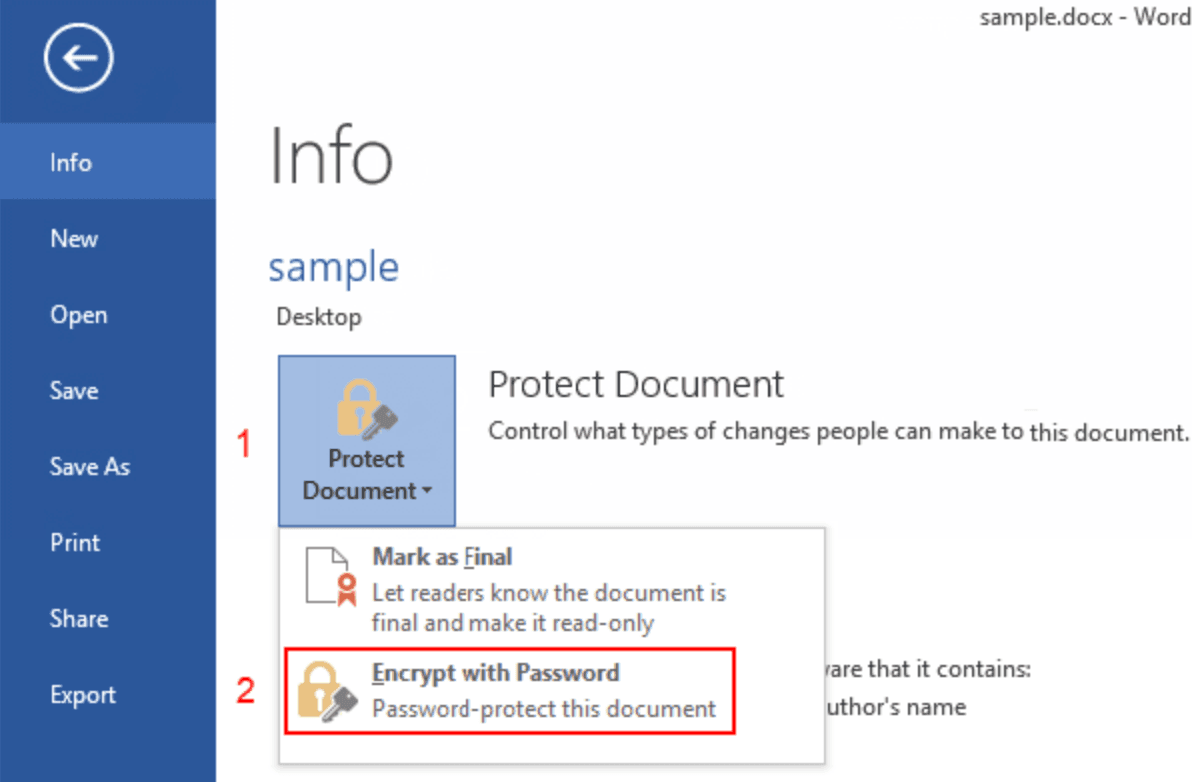
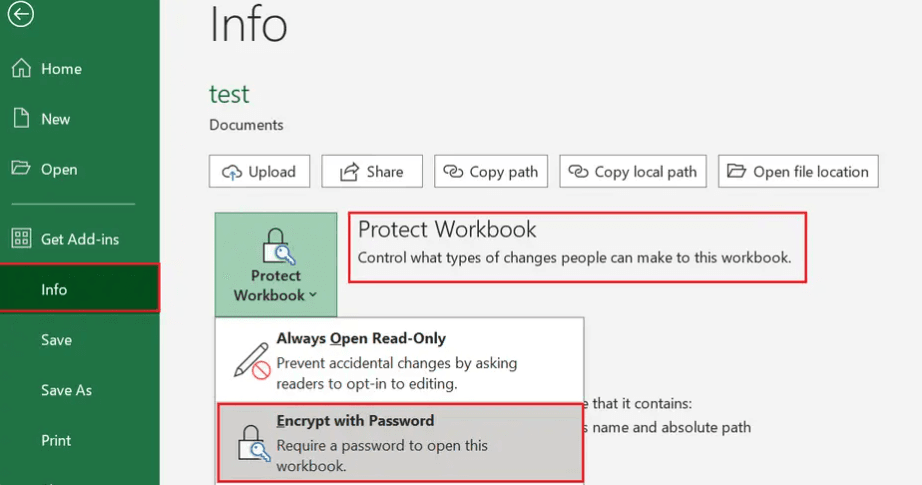
Click File > Info
Click Protect Document > Encrypt with Password
Alternatively, go to File > Save As > Tools > General Options
Set password protection:
Enter a strong password in the Password to open field (minimum 8 characters, mix of letters, numbers, and symbols)
Confirm the password
Click OK
Save the encrypted document:
Click Save or Save As
The file will now require the password to open
Microsoft Word uses AES-256 encryption for password-protected files, making it extremely difficult for unauthorized users to access your document without the password. This encryption applies to the entire document, protecting all content within the file.
Choose "Allow only this type of editing in the document"
Select restriction level (No changes, Comments only, or Filling in forms)
Optionally set exceptions for specific users
Start enforcement:
Click Yes, Start Enforcing Protection
Enter a password (optional but recommended)
Click OK
Mark as Final (read-only indicator):
Click File > Info > Protect Document
Select Mark as Final
Confirm when prompted
Note: Word's built-in encryption is strong, but it doesn't provide access tracking or the ability to revoke access after sharing. For business use cases, consider Method 4 for additional features.
Right-click your Word file (or folder containing Word files)
Select 7-Zip > Add to archive
Configure encryption:
Set archive format to "7z" or "zip"
Enter a strong password
Select "AES-256" encryption method
Check "Encrypt file names" for additional security
Click OK to create the encrypted archive
7-Zip uses AES-256 encryption, which is much stronger than Windows' default ZIP encryption. The encrypted archive will require the password to extract and view the Word document.
Mac: Create encrypted ZIP files
Select your Word file in Finder
Right-click and select Compress [filename]
Open Terminal (Applications > Utilities)
Navigate to the ZIP file location:
cd ~/Desktop
Encrypt the ZIP file:
zip -e encrypted_file.zip original_file.zip
Enter and verify a password when prompted
Archive encryption provides an additional layer of protection, but recipients must extract the archive before opening the Word document. This method is best for email transmission or basic file storage.
Method 3: Encrypt Word using third-party encryption software
For advanced encryption needs, specialized software provides additional features and flexibility beyond Word's built-in options.
VeraCrypt (Windows/Mac/Linux)
VeraCrypt is a free, open-source disk encryption software that can create encrypted containers for Word files.
Set volume size (large enough for your Word files)
Set a strong password (minimum 20 characters recommended)
Format the volume and mount it
Copy Word files into the mounted volume
Dismount when done to secure the files
VeraCrypt provides military-grade encryption and is ideal for highly sensitive Word documents that require maximum security.
AxCrypt (Windows/Mac)
AxCrypt provides simple file encryption with cloud storage integration.
Download and install AxCrypt
Right-click a Word file and select AxCrypt > Encrypt
Enter a password when prompted
The file is encrypted and can only be opened with AxCrypt and your password
AxCrypt is user-friendly and integrates well with cloud storage services, making it convenient for encrypting Word files stored in Dropbox, Google Drive, or OneDrive.
Method 4: Encrypt Word using Papermark
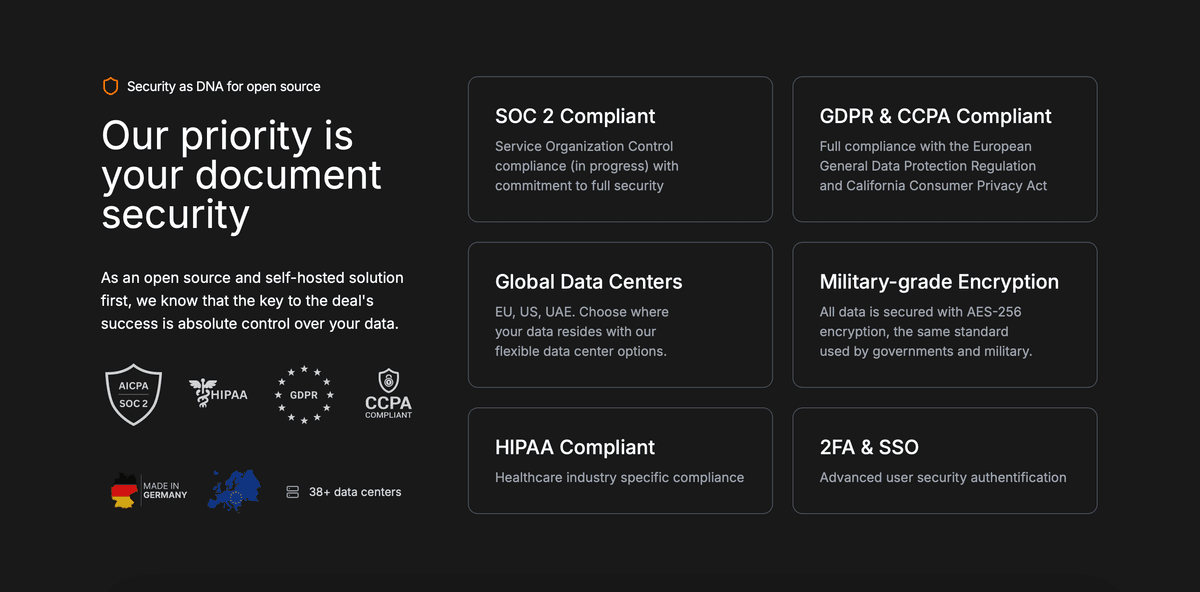
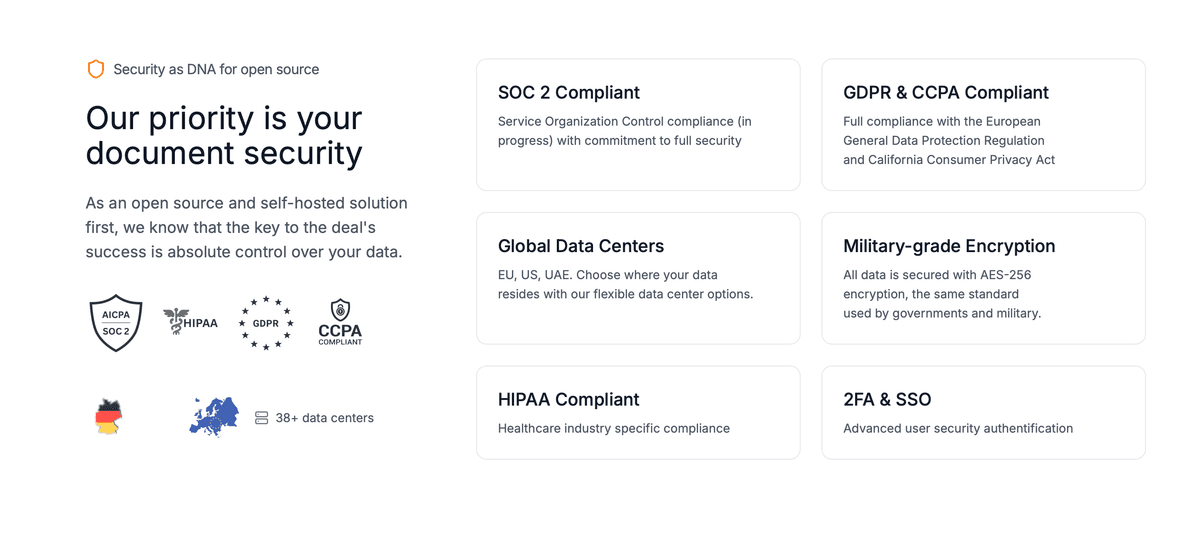
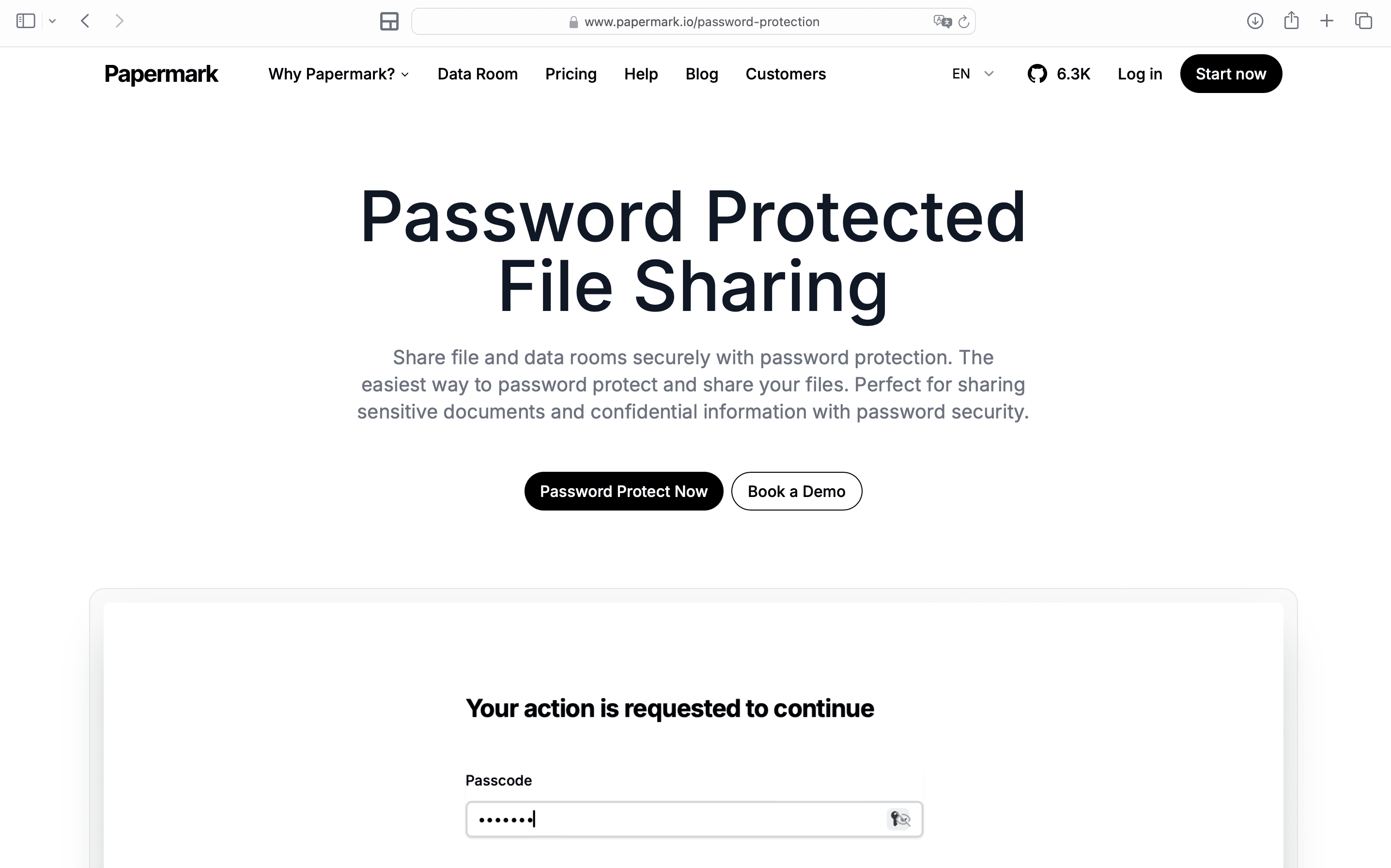
Papermark provides a secure way to encrypt and share Word documents with advanced security features beyond basic password protection, including analytics, access controls, and dynamic watermarking.
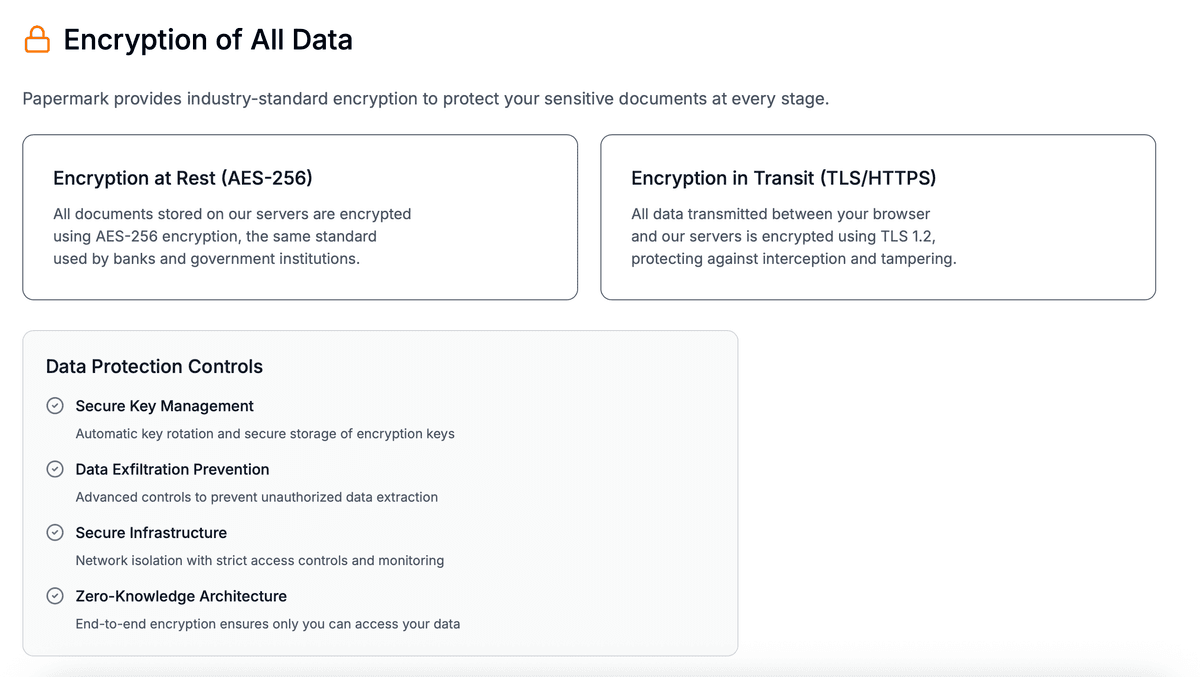
Papermark uses server-side AES-256 encryption combined with comprehensive access controls. While it doesn't use end-to-end encryption, it provides strong security with the added benefit of document analytics, engagement tracking, and access revocation—making it ideal for business use cases where you need to track who viewed your Word document and when.
Method 5: Encrypt Word using cloud storage encryption
Many cloud storage services offer encryption features that can protect Word documents stored in the cloud.
Microsoft OneDrive
Upload your Word document to OneDrive
Right-click the file and select Share
Set sharing permissions:
Choose who can access (specific people or anyone with link)
Set expiration date (if available)
Require password (if available in your plan)
Generate a secure link and share it
OneDrive uses encryption at rest and in transit, but the level of protection depends on your Microsoft 365 plan. Enterprise plans offer more advanced security features.
Google Drive
Upload your Word document to Google Drive
Right-click the file and select Share
Configure sharing settings:
Set access permissions (viewer, commenter, editor)
Restrict to specific people
Set expiration date (if available)
Copy the sharing link and distribute it
Google Drive encrypts files in transit and at rest, but doesn't offer password protection for individual files. For stronger security, combine Google Drive with archive encryption (Method 2) or use a secure sharing platform.
Security considerations: Cloud storage encryption protects files stored on servers, but doesn't provide the same level of access control and tracking as dedicated secure sharing platforms. For sensitive business Word documents, consider using Papermark's secure file sharing for enhanced protection.
Comparison: Word encryption methods
Method
Encryption strength
Ease of use
Cost
Best for
Microsoft Word built-in
AES-256
Easy
Included with Office
Personal use, local file protection
Archive encryption (7-Zip)
AES-256
Easy
Free
Email transmission, basic file storage
Third-party tools (VeraCrypt/AxCrypt)
AES-256
Moderate to advanced
Free to paid
Advanced users, maximum security
Papermark
AES-256 (server-side)
Very easy
Free plan available
Business Word sharing with analytics and access controls
Cloud storage encryption
Varies (AES-256 typical)
Easy
Free to paid plans
Team collaboration, cloud storage
Best practices for Word encryption
Follow these practices to maximize the security of your encrypted Word documents.
Use strong passwords: Create passwords with at least 16 characters, mixing uppercase, lowercase, numbers, and special characters. Avoid dictionary words, personal information, or common patterns. Consider using a password manager to generate and store strong passwords.
Backup passwords securely: Always store passwords in a secure location separate from your encrypted Word files. Use a password manager or encrypted note-taking app. Never share passwords in the same email or message as the file link.
Choose appropriate encryption strength: For highly sensitive data, use AES-256 encryption. Word's built-in encryption uses AES-256 by default, which is recommended for business contracts, legal documents, and personal information.
Use additional protection features: Combine file encryption with Word's editing restrictions to prevent unauthorized modifications. Use "Restrict Editing" to allow viewing while limiting changes, or mark documents as final to indicate they shouldn't be modified.
Verify encryption is working: Test that encrypted Word documents cannot be opened without the correct password before relying on encryption for sensitive data. Try opening the file without the password to confirm protection is active.
Combine encryption with other security measures: Encryption protects Word files at rest, but also use secure transmission methods (HTTPS, secure email), access controls, and consider dynamic watermarking for additional protection against unauthorized sharing when using secure sharing platforms.
Conclusion
Encrypting Word files protects your sensitive documents from unauthorized access, whether they're stored locally or shared online. Choose Microsoft Word's built-in encryption for local file protection, archive encryption for email transmission, or Papermark for encrypted Word sharing with analytics and advanced access controls. For business use cases where you need to track access and control sharing, Papermark's secure file sharing provides encryption plus comprehensive security features for your Word documents.