


fundraising
How to Create a Pitch Deck in Google Slides - Step-by-Step Guide
Learn how to create a professional pitch deck in Google Slides. Free templates, collaboration tips, and best practices for sharing with investors.
Making a pitch deck for your startup feels daunting. You've got one shot to capture investor attention, and you're not sure where to start.
Good news: creating a pitch deck follows a proven formula. This guide walks you through every step, from blank canvas to investor-ready deck.
Before opening any design tool, answer these questions:
Who is this deck for?
What's your specific goal?
Different audiences need different emphasis. Angels might care more about founder story. VCs want market size and scalability. Know your audience.
The biggest mistake founders make is jumping straight into slides. Don't.
Write your pitch as a story first:
Start with a one-page document covering:
Once your story flows on paper, converting to slides is easy.
Now map your narrative to slides. Here's the proven structure:
Your deck doesn't need to be beautiful. It needs to be clear.
Design principles:
One idea per slide - If a slide needs explanation, it's too complex.
Big fonts, minimal text - No one should squint. 30-point minimum.
Consistent styling - Same colors, fonts, and layouts throughout.
White space is your friend - Don't fill every inch of the slide.
Free options:
Paid options:
Pick what you're comfortable with. The tool matters less than the content.
Numbers and images make your deck convincing.
For data:
For visuals:
What to avoid:
Your first draft won't be your final deck. Plan for iteration.
Self-review checklist:
Get external feedback:
Common feedback you'll hear:
Fix these issues before sending to real investors.
How you share your deck matters as much as what's in it.
PDF - Best for email sharing. Preserves formatting.
Link to Google Slides - Easy to update, but less polished.
Pitch deck platform - Secure sharing with analytics.
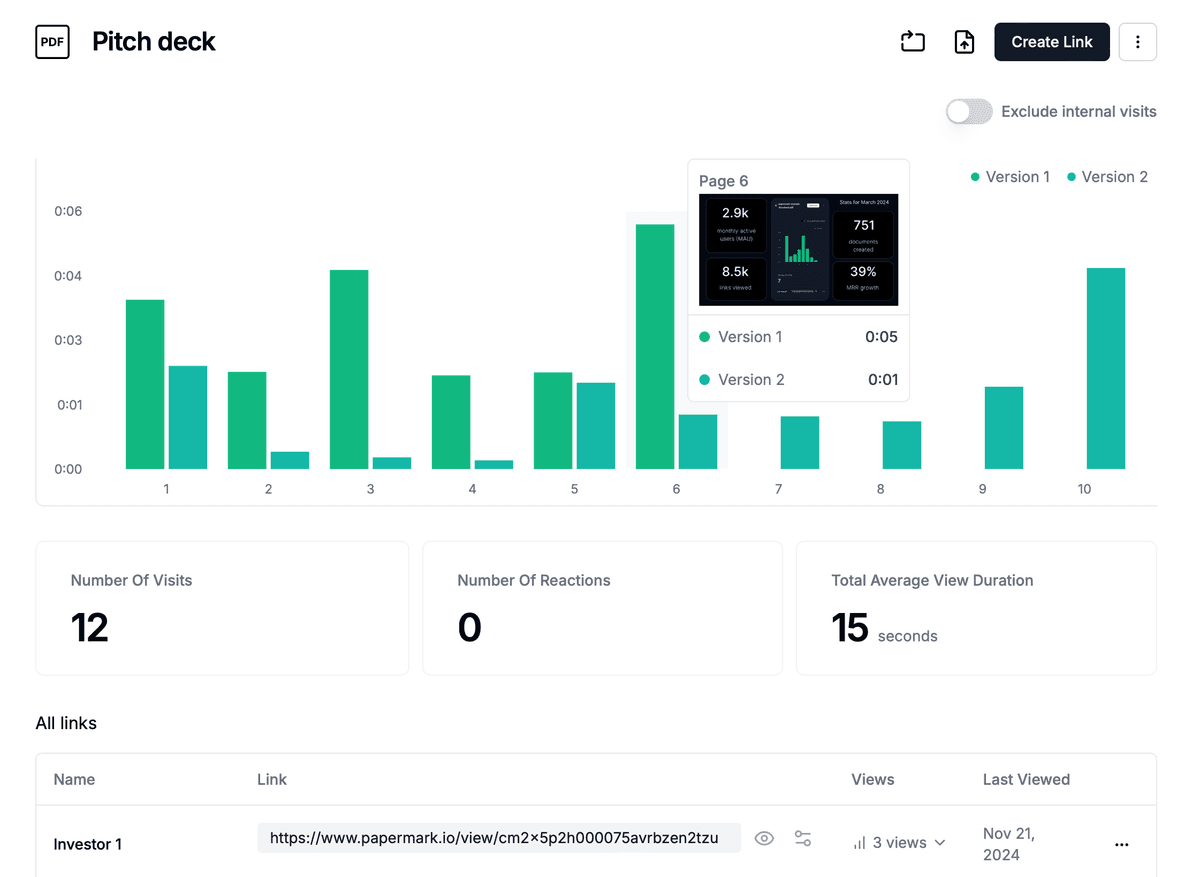
When you email a PDF, you have no idea:
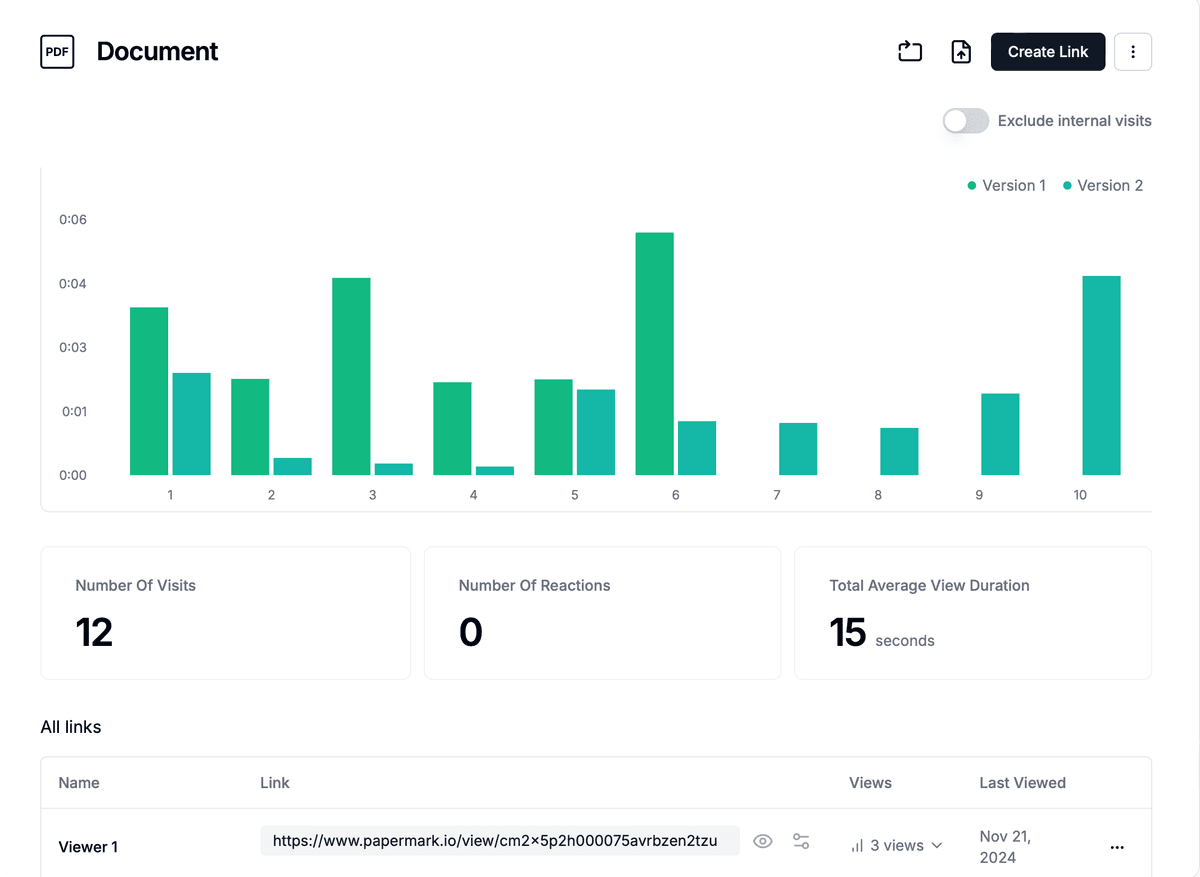
Use a tool like Papermark to track engagement:
Learn from others' errors:
Mistake 1: Too much jargon Investors see pitches across industries. Don't assume they know your space deeply.
Mistake 2: Burying the traction If you have impressive numbers, lead with them. Don't hide traction on slide 10.
Mistake 3: Unrealistic projections $100M revenue in year 3? Investors will roll their eyes. Be ambitious but credible.
Mistake 4: No clear ask Don't make investors guess. "We're raising $1.5M for 18 months of runway" is clear.
Mistake 5: Copying famous decks too closely Airbnb's deck worked for Airbnb. Your deck needs to work for you.
Your work doesn't end when you send the deck.
Track engagement - Tools like Papermark show when investors open your deck.
Follow up strategically - If someone spent 10 minutes on your deck, they're interested. Reach out.
Update and iterate - Each conversation teaches you something. Update your deck accordingly.
Making a pitch deck for your startup is a process: write your story, structure your slides, design for clarity, and prepare to share. Don't try to be perfect on the first try. Iterate based on feedback.
The best pitch decks aren't the most beautiful - they're the clearest. Tell your story simply, back it up with data, and make it easy for investors to say yes to a meeting.
Learn how to create a professional pitch deck in Google Slides. Free templates, collaboration tips, and best practices for sharing with investors.
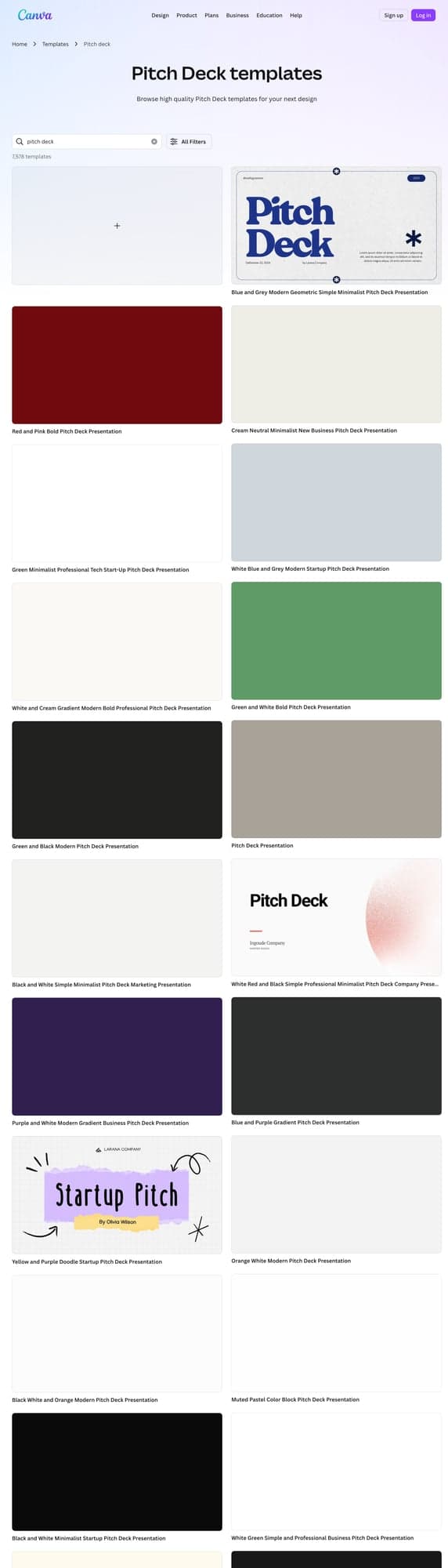
Learn how to create a professional pitch deck in Canva with our step-by-step guide. Free templates, design tips, and export options.
Learn what a pitch deck presentation is, why it matters for fundraising, and how to create one that wins investors over.