

datarooms
How to Structure a Family Office - Complete Guide for 2026
Learn how to structure a family office for maximum efficiency. Covers legal structures, governance models, staffing, and organizational best practices.
Starting a family office is a major undertaking. You're building an organization to manage your family's wealth for generations.
This guide walks you through the process step by step. From initial planning to day-one operations, here's everything you need to know.
Before launching a family office, answer these questions:
Do you have enough assets? Most single-family offices require $100 million+ to justify the cost. Below that, a multi-family office may make more sense.
What services do you need? List everything: investments, taxes, estates, philanthropy, concierge services. This defines your office's scope.
Who will be involved? Identify family members who will participate in governance and decision-making.
What's your timeline? Building a family office takes 6-18 months depending on complexity.
Start with clarity on what you want to achieve.
Gather key family members and discuss:
Document these goals formally. They become the foundation for everything else.
You have several structural options for your family office.
A dedicated entity serving only your family. Maximum control and privacy, but highest cost.
Best for families with $100M+ in assets who want fully customized services.
Join an existing MFO that serves multiple families. Lower cost, shared resources, less customization.
Best for families with $10-100M who want professional management without full overhead.
Start with outsourced services and bring functions in-house over time. Good for families testing the waters.
Use technology and specialist networks instead of full-time staff. Most cost-effective option.
Work with attorneys to create the proper legal framework.
Common structures include:
Each has different tax implications, liability protection, and regulatory requirements. Your choice depends on your family's specific situation.
Consider where to domicile your family office. Some states and countries offer advantages for privacy, taxes, or trust law.
Family governance prevents conflict and ensures smooth operations.
Key governance documents:
Establish a family council or board to oversee major decisions. Define voting rights, roles, and responsibilities clearly.
Good governance takes time to develop. Start simple and evolve as needed.
Staffing is crucial. You need the right people in the right roles.
Executive Director/CEO - Leads the office and coordinates all activities. The most critical hire.
Chief Investment Officer - Manages investment strategy and portfolio. Can be outsourced initially.
CFO/Controller - Handles accounting, reporting, and financial operations.
Executive Assistant - Supports leadership and manages office operations.
Salaries vary widely. Expect to pay $200K-500K+ for senior roles, depending on location and experience.
Modern family offices run on technology. Choose systems for:
Investment management:
Document management:
Accounting and reporting:
Communication:
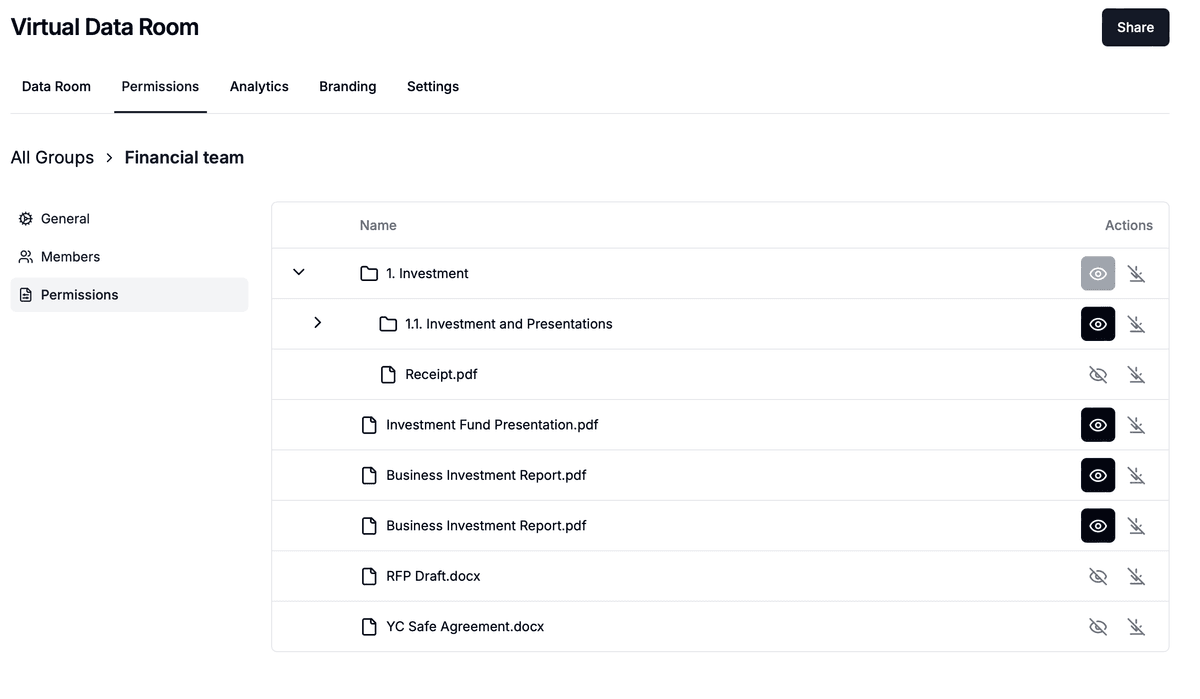
A secure data room is essential for storing and sharing sensitive family documents. Look for features like granular permissions, activity tracking, and audit trails.
No family office does everything alone. Build a network of trusted advisors.
Essential providers:
Vet providers carefully. Check references, review conflicts of interest, and negotiate fee arrangements.
Document how your family office operates.
Key policies:
Written policies create consistency and reduce risk. They also help with staff transitions.
With structure, team, and systems in place, launch operations.
First 90 days focus:
Start with core functions and add complexity over time. Don't try to do everything at once.
A family office should outlast any individual. Build for longevity.
Long-term planning includes:
Review and update your family office strategy annually.
Underestimating costs. Budget realistically. Hidden costs add up quickly.
Rushing the process. Take time to plan properly. Mistakes are expensive to fix.
Neglecting governance. Family dynamics cause most family office failures. Invest in governance early.
Over-hiring initially. Start lean. It's easier to add staff than to let people go.
Ignoring technology. Manual processes don't scale. Invest in proper systems from day one.
Skipping due diligence. Vet all service providers thoroughly. One bad actor can cause major damage.
Months 1-2: Planning and goal-setting Months 3-4: Legal structure and governance framework Months 5-6: Hiring and technology selection Months 7-9: System implementation and provider setup Months 10-12: Soft launch and refinement Year 2+: Full operations and ongoing optimization
Most family offices take 12-18 months from concept to full operation.
Here's a rough budget for launching a single-family office:
One-time setup costs:
Annual operating costs:
Costs vary significantly based on scope, location, and complexity.
Starting a family office is a significant investment of time and money. Done well, it creates a powerful platform for managing wealth across generations.
Take the process step by step. Define your goals, build the right structure, hire carefully, and invest in proper systems. Most importantly, get governance right from the start.
The families that succeed treat their family office as a long-term institution—not just a service provider.
Learn how to structure a family office for maximum efficiency. Covers legal structures, governance models, staffing, and organizational best practices.
Learn what a family office is, how it works, and why wealthy families use them to manage investments, estates, and multi-generational wealth.
Not sure if you need a family office? Learn the key indicators that suggest it's time to consider establishing one for your family's wealth management.