BlogData RoomsHow to Protect Your Documents from AI Bots in 2026
How to Protect Your Documents from AI Bots in 2026
·3 min read
Marc Seitz
"AI controlled bot farms are now a reality. They can browse the web, fill out forms, and access your documents—all without human intervention."
The age of AI agents is here. And they're coming for your data rooms.
Tools like OpenClaw's ClawdBot, Anthropic's computer use agents, and dozens of other autonomous AI systems can now browse the web just like humans. They click links. They fill out forms. They read documents.
If your confidential pitch deck or M&A data room is only protected by a simple link, an AI agent might already be reading it.
The Rise of AI Agents
AI agents aren't just chatbots anymore. They're autonomous systems that can:
Navigate websites and web applications
Click buttons and fill out forms
Read and analyze documents
Take screenshots and extract data
Follow multi-step workflows without human input
Tools like OpenClaw give AI agents the ability to control browsers, access files, and perform complex tasks. While these capabilities are powerful for productivity, they also create new security risks.
Why Your Documents Are at Risk
Traditional document security assumes a human is on the other end of the link. But AI agents challenge this assumption:
Link sharing is vulnerable. If someone shares your document link in a chat, email, or forum, an AI agent can follow it just like a human would.
Email gates aren't enough. AI agents can generate disposable emails or use their operator's credentials to bypass email requirements.
Passwords can be shared. If a password is stored in a system an AI agent can access, the protection is meaningless.
No human verification. Most document platforms don't distinguish between human visitors and AI agents.
How to Detect and Block AI Bots
The key to protecting your documents from AI agents is detection. You need to identify when an AI bot is accessing your content—and decide whether to allow it.
Detection Methods
Browser fingerprinting. AI agents often run in headless browsers or automated environments that have distinct fingerprints.
Behavioral analysis. Bots interact with pages differently than humans—faster clicks, predictable patterns, no mouse movements.
Request headers. Many AI agents identify themselves in their user agent strings (though sophisticated ones may not).
Challenge-response. CAPTCHAs and other challenges can distinguish humans from bots, though this adds friction.
Papermark's AI Bot Protection
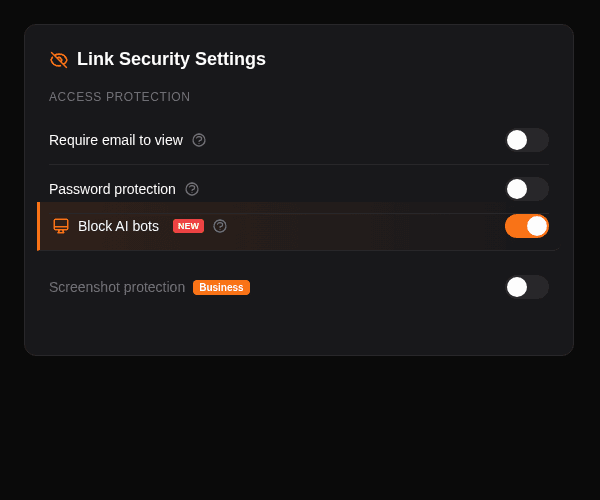
Papermark now includes built-in AI bot detection and blocking. When you create a document link, you can enable "Block AI bots" with a simple toggle:
When enabled, Papermark will:
Detect AI agent access - Identify when a visitor is likely an AI bot
Block or flag the access - Prevent bots from viewing your document
Log the attempt - Record bot access attempts in your analytics
Alert you - Get notified when bots try to access sensitive documents
Best Practices for AI-Age Document Security
Layer Your Protections
Don't rely on a single security measure. Combine multiple protections:
AI bot blocking
Email verification
Password protection
Link expiration
View limits
Use Data Rooms for Sensitive Content
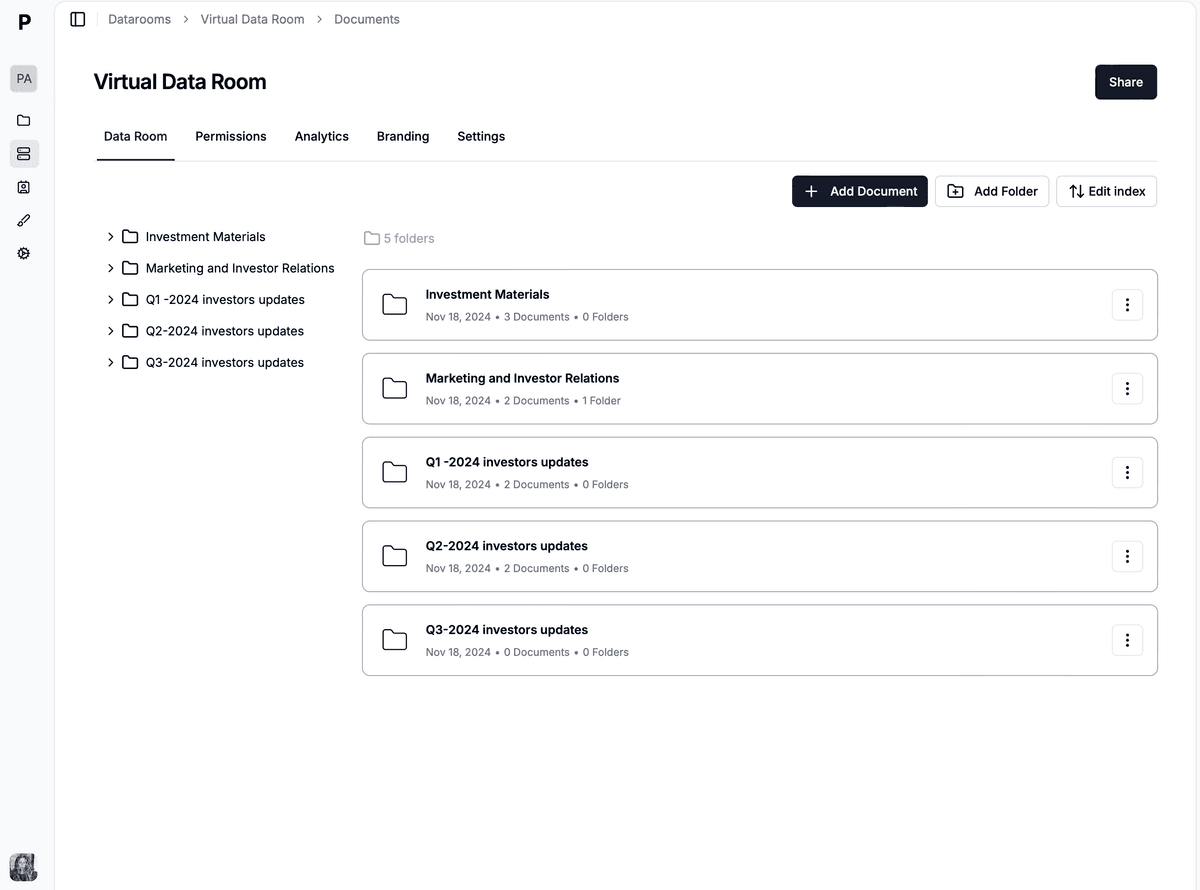
For highly confidential documents like M&A materials, investor updates, or board decks, use a proper data room with:
Granular access controls
NDA requirements
Watermarking
Activity audit trails
Monitor Access Patterns
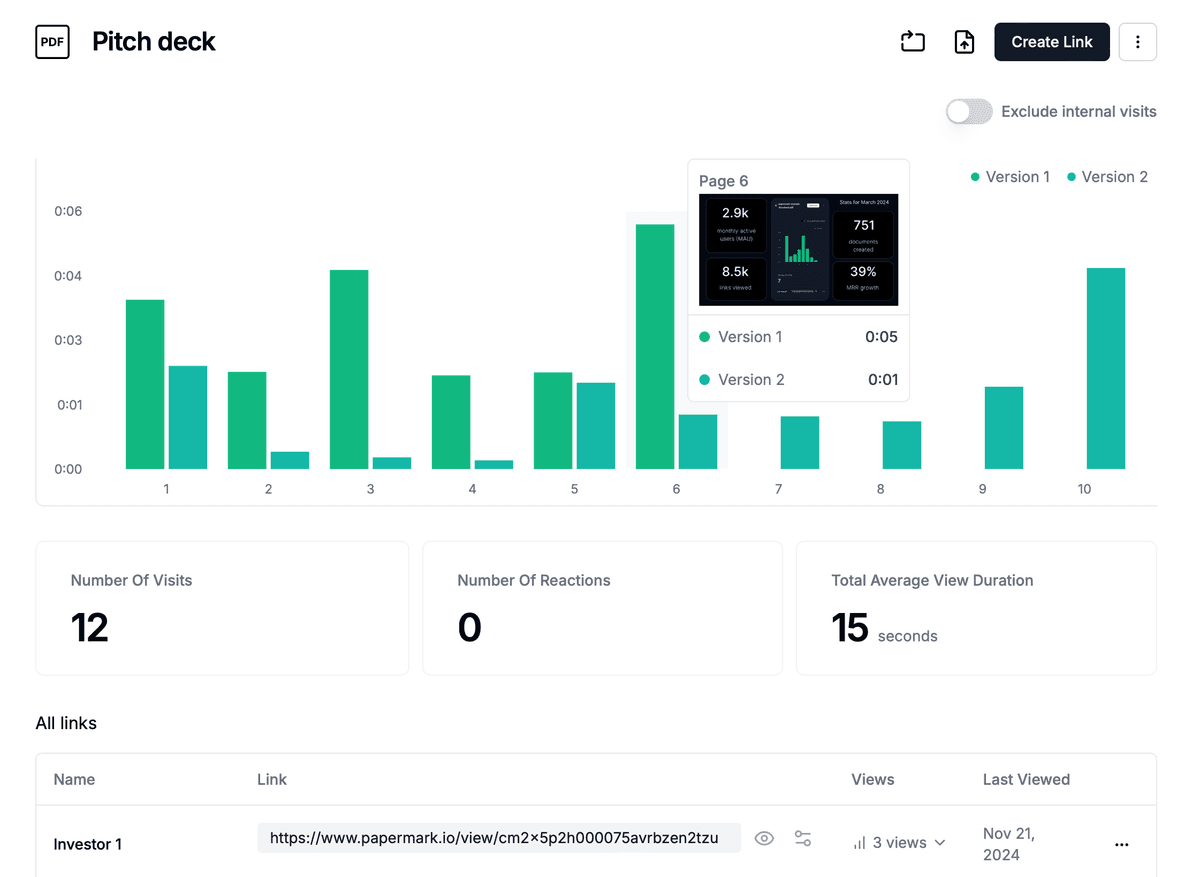
Watch your document analytics for unusual patterns:
Rapid page viewing (faster than human reading speed)
Access from unusual locations or at unusual times
Multiple accesses from similar fingerprints
Missing mouse movement or scroll data
Educate Your Team
Make sure everyone who shares documents understands:
Don't share links in public channels
Use expiring links for time-sensitive content
Enable maximum security for confidential materials
Review access logs regularly
The Future of Document Security
AI agents are only going to become more sophisticated. The line between human and bot access will continue to blur.
Forward-thinking companies need to:
Assume AI agents exist - Design security with AI access in mind
Implement detection - Use tools that can identify AI visitors
Create policies - Decide when AI access is acceptable and when it isn't
Stay updated - Security is an ongoing process, not a one-time setup
Conclusion
The rise of AI agents like ClawdBot represents a fundamental shift in document security. Traditional protections that assumed human visitors are no longer sufficient.
By enabling AI bot detection and combining it with other security measures, you can protect your confidential documents from unauthorized AI access.
Don't wait until an AI agent has already read your pitch deck. Enable bot protection today.