

datarooms
How to Structure a Family Office - Complete Guide for 2026
Learn how to structure a family office for maximum efficiency. Covers legal structures, governance models, staffing, and organizational best practices.
A family office is a private wealth management firm that serves ultra-high-net-worth families. Think of it as a dedicated team that handles everything from investments to tax planning to estate management.
Unlike traditional wealth advisors who juggle hundreds of clients, a family office focuses exclusively on one family's financial needs. This personalized approach helps preserve and grow wealth across generations.
Family offices wear many hats. They manage investments, handle tax strategies, coordinate estate planning, and often oversee day-to-day financial operations.
Core services include:
Some family offices go further. They might manage household staff, coordinate travel, handle art collections, or even run family businesses.
There are two main types: single-family offices (SFOs) and multi-family offices (MFOs).
An SFO serves one family exclusively. It's the most personalized option but also the most expensive.
You'll typically need $100 million or more in assets to justify the cost. Running an SFO can cost $1-3 million annually for staff, technology, and operations.
The upside? Complete control, total privacy, and services tailored exactly to your family's needs. For how that compares with a fund investing outside capital, see family office vs private equity.
An MFO serves multiple families, sharing costs and resources. It's more affordable while still providing sophisticated services.
MFOs work well for families with $10-100 million in assets. You get access to institutional-quality services without the full overhead of a dedicated office.
The tradeoff is less customization and shared attention from advisors.
Wealthy families create family offices for several reasons.
Complexity management. When you have diverse investments, multiple properties, business interests, and philanthropic goals, coordinating everything becomes a full-time job.
Privacy and control. Family offices keep financial matters confidential. There's no public reporting, and families maintain complete control over their affairs.
Generational wealth transfer. A family office creates structure for passing wealth to the next generation. It can educate heirs, establish governance, and ensure continuity.
Cost efficiency at scale. While expensive, a family office can be more cost-effective than paying fees to multiple outside advisors once assets reach a certain level.
Document management is critical for family offices. They handle sensitive financial records, legal agreements, investment documents, and family governance materials.
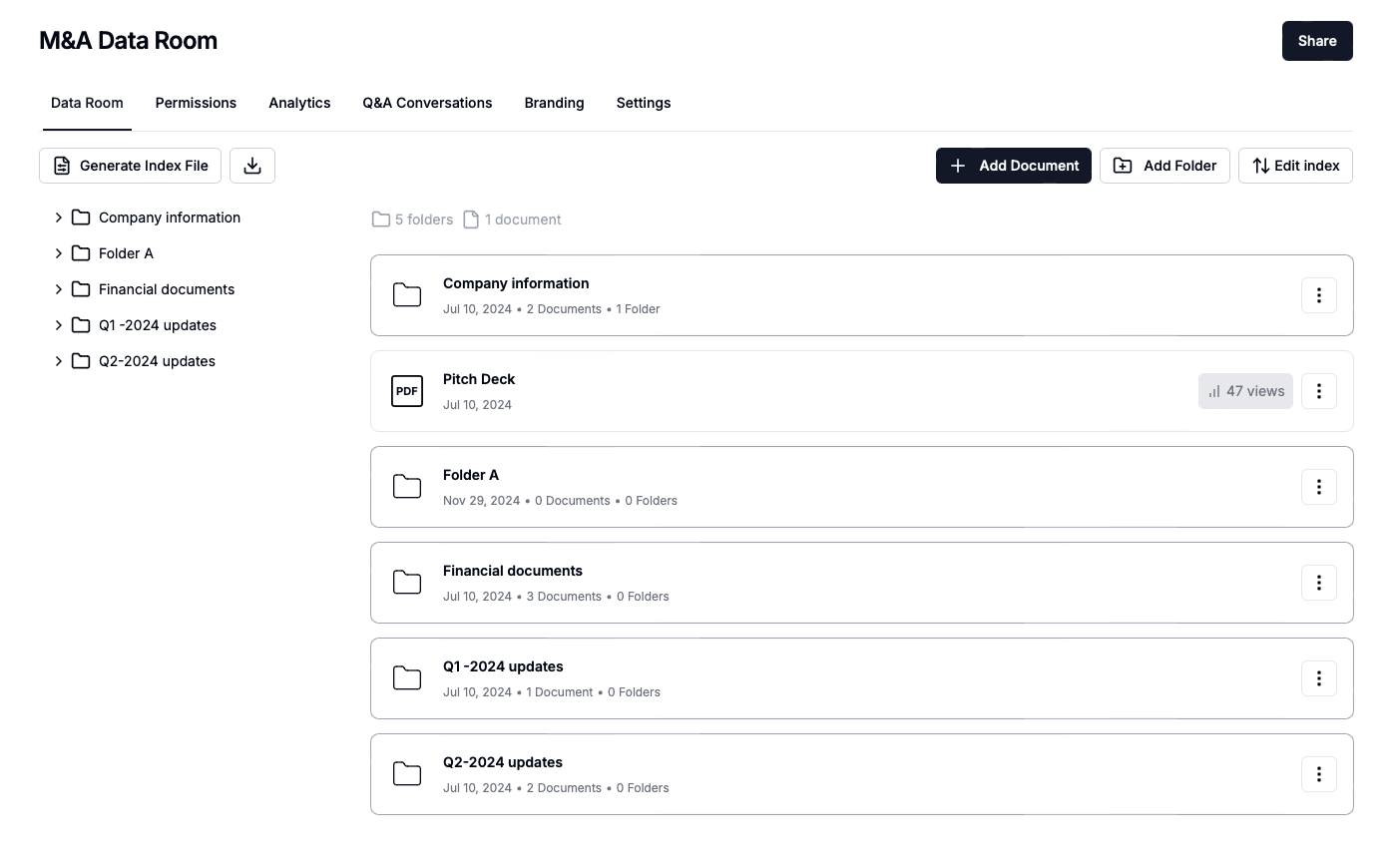
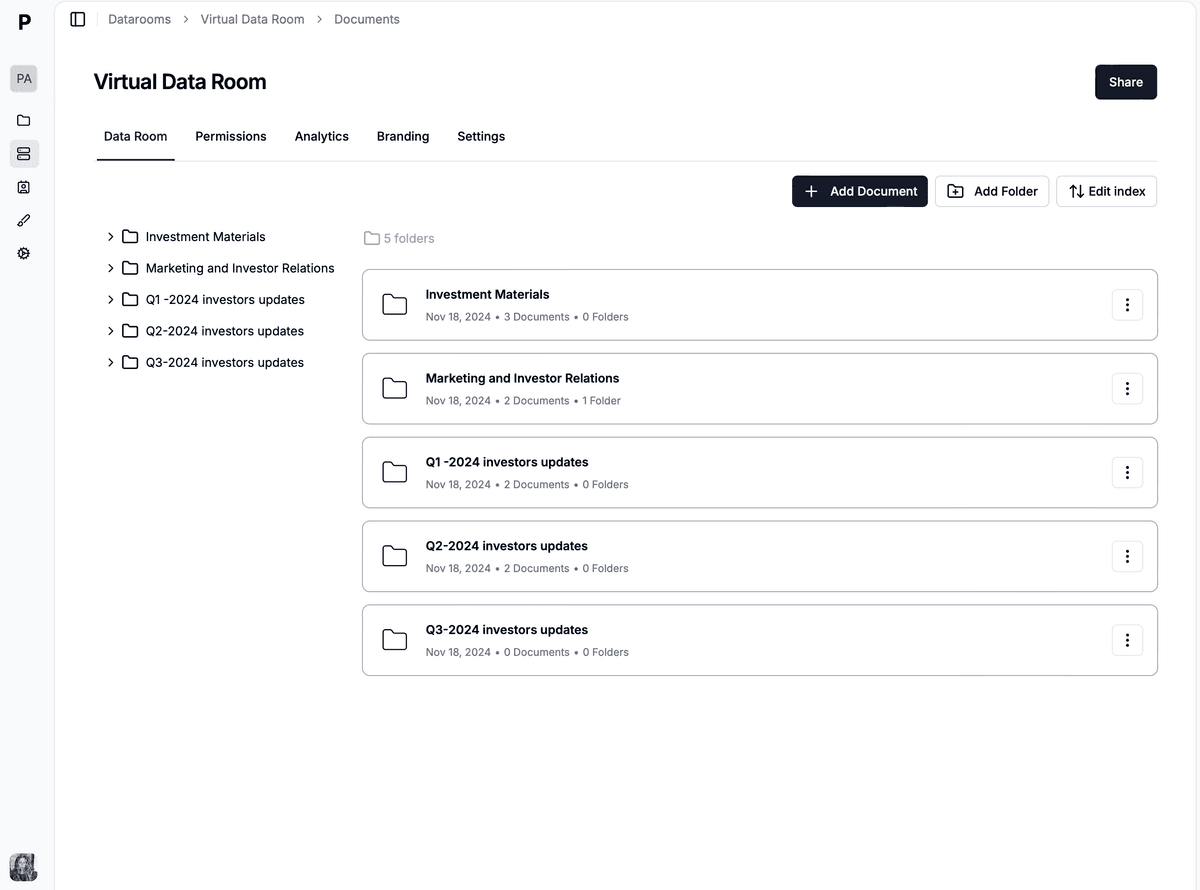
Many family offices use secure data rooms to organize and share confidential documents. A data room provides:
What's the difference between a family office and a traditional wealth manager?
Scope. Wealth managers focus primarily on investments. Family offices handle the full spectrum of financial life—investments, taxes, estates, philanthropy, and more.
Dedication. Wealth managers serve many clients. A single-family office serves one family exclusively.
Integration. Family offices coordinate across all advisors and service providers. They act as a central hub for the family's entire financial ecosystem.
Customization. Everything in a family office is built around the specific family's needs, values, and goals.
The threshold varies by type.
For a single-family office, most experts suggest a minimum of $100-250 million in investable assets. Below that, the costs often don't make sense.
For a multi-family office, you can typically join with $10-25 million in assets. Some MFOs accept families with as little as $5 million.
These aren't hard rules. Some families with lower assets create family offices for non-financial reasons—like coordinating a family business or managing complex governance needs.
A typical family office includes several key positions:
Chief Investment Officer (CIO) - Oversees investment strategy and portfolio management.
Chief Financial Officer (CFO) - Manages accounting, reporting, and financial operations.
General Counsel - Handles legal matters, contracts, and compliance.
Tax Director - Manages tax planning and ensures compliance across jurisdictions.
Estate Planning Specialist - Coordinates wealth transfer and succession planning.
Smaller family offices might combine roles. Larger ones may have teams under each function.

Running a family office isn't cheap. Here's what to expect:
Single-family office costs:
Multi-family office costs:
The cost-benefit analysis changes as assets grow. At $500 million, a $2 million family office represents just 0.4% of assets.
Holistic approach. All financial decisions are coordinated, not siloed.
Privacy. No public disclosures or regulatory filings.
Continuity. The office persists across generations, preserving institutional knowledge.
Customization. Every service is tailored to your family's unique situation.
Alignment. Staff work exclusively for your family's interests.
Cost. The overhead is significant, especially for smaller families.
Talent. Finding and retaining qualified staff can be difficult.
Governance. Family dynamics can complicate decision-making.
Succession. Planning for leadership transitions requires careful thought.
Oversight. Without external accountability, mistakes can go unnoticed.
Consider a family office if:
If you're not ready for a full family office, consider starting with a virtual family office. This model uses technology and outsourced services to provide family office capabilities at lower cost.
A family office is a powerful tool for managing complex wealth. It brings together investments, taxes, estates, and family governance under one coordinated structure.
Whether you choose a single-family or multi-family office depends on your assets, needs, and preferences. Either way, the goal is the same: preserving and growing wealth for generations to come.
Learn how to structure a family office for maximum efficiency. Covers legal structures, governance models, staffing, and organizational best practices.

Learn how to start a family office from scratch. This guide covers planning, structure, staffing, technology, and everything you need to launch your family office.
A comprehensive legal due diligence checklist covering contracts, compliance, intellectual property, and litigation documentation. Learn how to organize and manage legal due diligence with a virtual data room.