

fundraising
How to Create a Pitch Deck in Canva - Complete Guide 2026
Learn how to create a professional pitch deck in Canva with our step-by-step guide. Free templates, design tips, and export options.
A pitch deck presentation is a brief visual slideshow that entrepreneurs use to give investors a quick overview of their business. Think of it as your startup's story told in 10-15 slides.
Whether you're raising seed funding or Series A, a pitch deck is usually the first thing investors see. It's your chance to make a strong first impression and get that crucial follow-up meeting.
A pitch deck isn't your typical business presentation. It's specifically designed to:
Unlike a business plan (which can run 30+ pages), a pitch deck is visual, concise, and designed to spark conversation.
Most successful pitch decks follow a similar structure. Here's what investors expect to see:
What pain point are you solving? Make it real and relatable. The best problem slides make investors nod their heads because they've seen this issue themselves.
How does your product fix the problem? Keep it simple. If you can't explain your solution in one sentence, it's too complicated.
How big is the market? Investors want to know there's room for massive growth. Use TAM, SAM, and SOM to show your market size.
How do you make money? Be specific. Subscription? Transaction fees? Advertising? Show that you've thought this through.
What progress have you made? Revenue, users, partnerships — anything that proves people want what you're building.
Why are you the right people to solve this? Highlight relevant experience and past wins.
What are your projections? Include revenue forecasts, key metrics, and your path to profitability.
How much are you raising and what will you do with it? Be specific about milestones you'll hit with the funding.
Investors receive hundreds of pitch decks every month. A strong deck helps you:
Even great startups stumble with their pitch decks. Here's what to avoid:
Too much text — If investors are reading paragraphs, you've lost them. Use visuals and keep text minimal.
No clear ask — Don't make investors guess what you want. State your funding goal clearly.
Unrealistic projections — Hockey stick charts with no foundation hurt your credibility.
Ignoring competition — Saying "we have no competitors" is a red flag. Every business has competition.
Poor design — You don't need to hire a designer, but your deck should look clean and consistent.
How you share your deck matters almost as much as what's in it. Here are your options:
Email attachment — Simple, but you lose all visibility into who views it and for how long.
Google Drive/Dropbox link — Better, but still limited tracking.
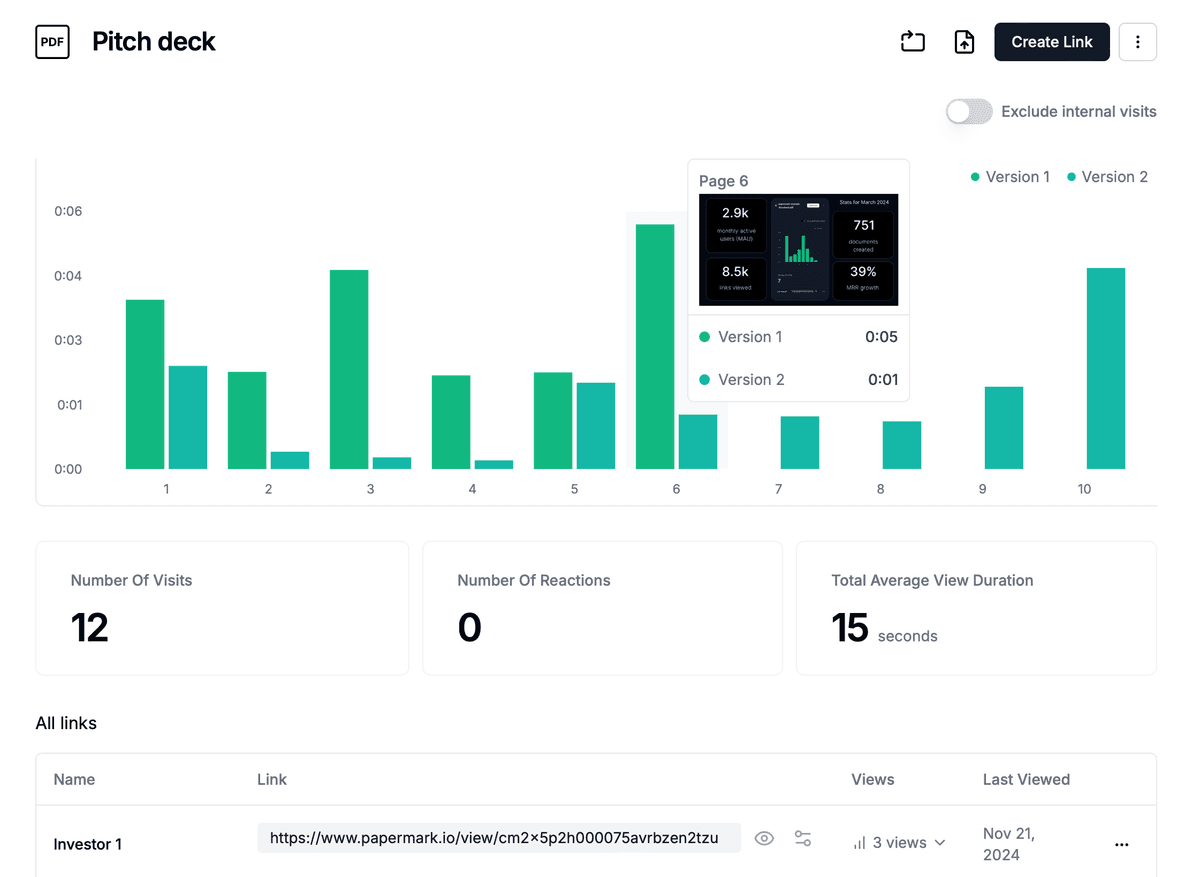
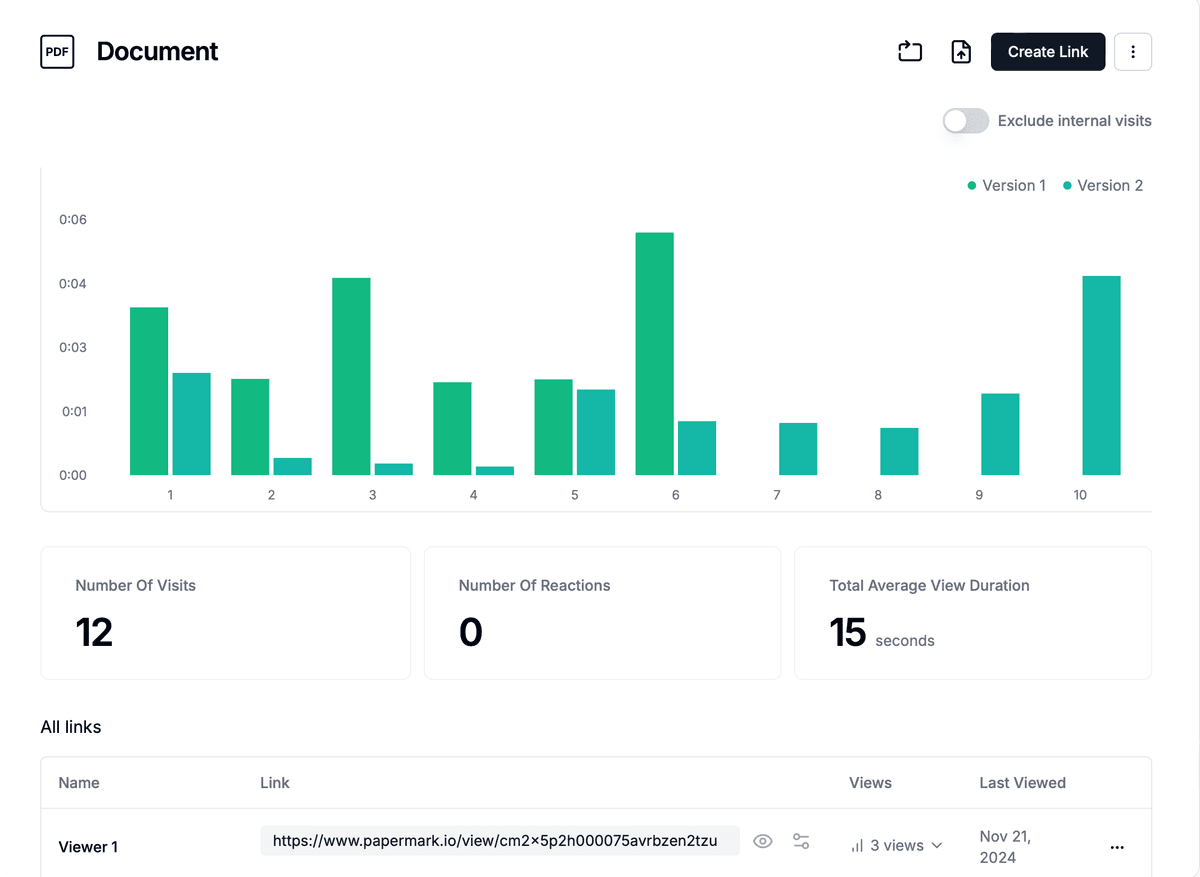
Dedicated pitch deck software — Tools like Papermark let you share securely, track views page-by-page, and see exactly which investors are engaged.
People often confuse pitch decks with business plans. Here's the difference:
| Aspect | Pitch Deck | Business Plan |
|---|---|---|
| Length | 10-15 slides | 20-50 pages |
| Format | Visual presentation | Written document |
| Purpose | Get a meeting | Due diligence |
| Audience | Investors, initial screen | Deep-dive stakeholders |
| Time to consume | 3-5 minutes | 1-2 hours |
You need both, but the pitch deck comes first. It opens the door. The business plan follows when investors want details.
Some pitch decks have become legendary in the startup world:
Study these decks not to copy them, but to understand the principles that made them work.
Ready to build your deck? Here's a quick roadmap:
When you send your deck to investors, you want to know:
This intelligence helps you prioritize follow-ups and improve your deck over time.
A pitch deck presentation is your startup's calling card. It's the bridge between your vision and investor interest. Done well, it opens doors. Done poorly, it closes them before you even get a chance to speak.
Focus on telling a clear, compelling story. Keep it visual and concise. And use tools that give you visibility into how investors engage with your deck.
Learn how to create a professional pitch deck in Canva with our step-by-step guide. Free templates, design tips, and export options.

Learn how to create a professional pitch deck in Google Slides. Free templates, collaboration tips, and best practices for sharing with investors.
Learn how to create a compelling pitch deck for your startup with our step-by-step guide. From first slide to investor send-off.