


fundraising
How to Create a Pitch Deck in Google Slides - Step-by-Step Guide
Learn how to create a professional pitch deck in Google Slides. Free templates, collaboration tips, and best practices for sharing with investors.
Building a pitch deck and not sure what to include? You're not alone. Most founders struggle with this question because they want to tell investors everything about their business.
Here's the truth: less is more. A great pitch deck includes only what's necessary to get a meeting. Let's break down exactly what that means.
Now let's dig into each one.
Your title slide sets the tone. Keep it clean and simple.
Include:
Don't include:
This is where you hook investors. Make them feel the pain your customers experience.
What makes a strong problem slide:
Example: "Sales teams spend 4 hours per day on manual data entry instead of selling."
Now show how you fix the problem. Keep it simple enough that a 10-year-old could understand.
What to include:
What to avoid:
Show, don't tell. This slide should include screenshots, mockups, or a product demo.
Options:
Investors want to see what you've actually built, not just concepts.
How big is the opportunity? Investors need to see potential for significant returns.
Use the TAM, SAM, SOM framework:
Tips:
How do you make money? Be specific and clear.
Include:
Example: "SaaS subscription: $49/month per seat. Average customer has 5 seats. LTV: $2,940. CAC: $300."
This is often the most important slide. Show proof that your business is working.
What counts as traction:
Show growth over time. A chart showing month-over-month improvement is powerful.
Every business has competition. Showing you understand the landscape builds credibility.
How to present competition:
What not to do:
How will you acquire customers? Show you've thought about distribution.
Include:
Investors bet on people as much as ideas. Show why your team can execute.
Include for each key team member:
Keep it focused. Highlight 2-4 key people, not your entire org chart.
Show you understand your numbers and have a realistic plan.
Include:
Be realistic. Investors have seen thousands of hockey stick charts. Grounded projections build trust.
Be clear about what you want.
Include:
Example: "Raising $2M seed round to reach $1M ARR in 18 months. Funds will go toward: 50% product development, 30% sales, 20% operations."
Keep these slides in your appendix for follow-up questions:
Your pitch deck should be focused. Leave out:
Once your deck is ready, how you share it matters.
The problem with email attachments:
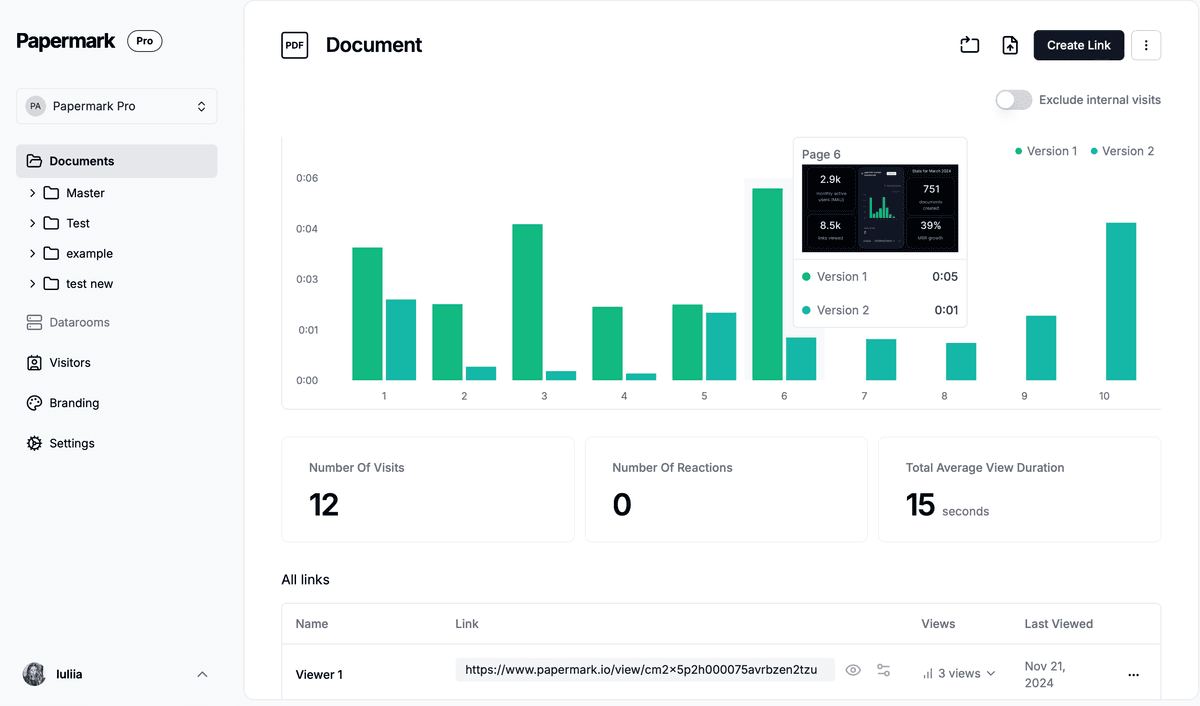
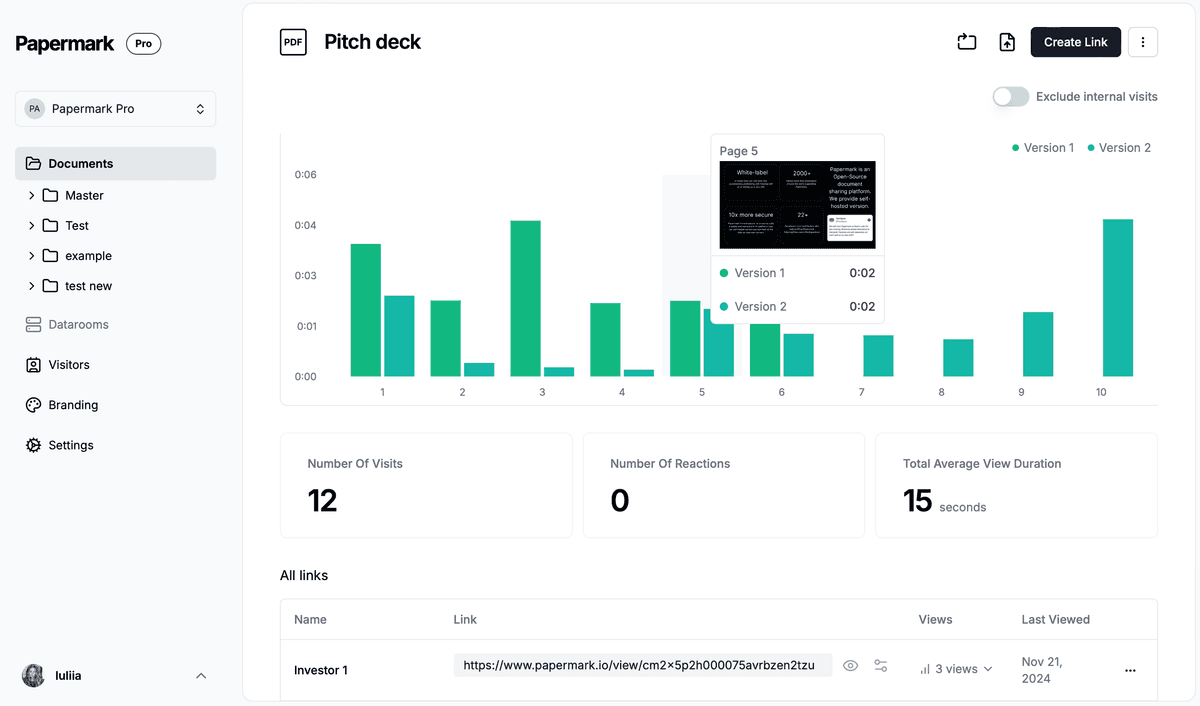
Better approach: Use a pitch deck sharing tool like Papermark that gives you:
A strong pitch deck includes exactly what investors need to decide if they want a meeting — nothing more, nothing less. Focus on the 12 essential slides, keep each one clear and visual, and tell a compelling story about your business.
Remember: your pitch deck opens doors. What you say in the meeting closes them.
Learn how to create a professional pitch deck in Google Slides. Free templates, collaboration tips, and best practices for sharing with investors.
Learn how to create a compelling pitch deck for your startup with our step-by-step guide. From first slide to investor send-off.
Learn how to create a compelling competitor analysis slide for your pitch deck. Frameworks, examples, and common mistakes to avoid.