In this article, we will explore 9 of the best data rooms designed specifically for startups, highlighting their features and benefits to help entrepreneurs make an informed decision for their growing business.
Quick recap of best data rooms for startups
Papermark: Modern, secure virtual data room with advanced analytics and professional branding
Notion: An integrated workspace tool for note-taking, databases, and project management that can be used for simplified data rooms
Visible VC: A fundraising platform with data room capabilities for startups managing investor relations
Google Drive: Cloud storage and file sharing service that can be used for basic data room needs
DocSend: A document sharing platform with tracking and analytics capabilities
Digify: A secure document sharing service with DRM and tracking features
Box: A cloud content management and file sharing service for businesses, focusing on collaboration and security
FirmRoom: A virtual data room service for document sharing in financial transactions
SecureDocs: A virtual data room for secure document storage and sharing during financial transactions
What to consider when selecting a data room for your startup
Choosing the right data room is crucial for startups that need to manage sensitive information and facilitate investor interactions during fundraising rounds or other financial activities. Here are key factors to consider when selecting a data room:
Factor
Description
Security
Ensure the data room offers top-notch security features, such as encryption, secure data transfer, and multi-factor authentication. These measures protect sensitive data from unauthorized access and cyber threats.
Ease of use
Select a data room with an intuitive interface that is easy for all team members to use, regardless of their tech proficiency. This reduces the learning curve and enhances productivity.
Cost-effectiveness
As a startup, budget constraints are often a reality. Look for a data room provider that offers transparent pricing without compromising on essential features. Avoid long-term commitments if possible to maintain flexibility as your needs change.
Scalability
The data room should be able to grow with your startup. It should support an increasing amount of data and users as your company expands.
Collaboration tools
Choose a data room that facilitates collaboration through features like document commenting, question and answer modules, and real-time updates. This enhances communication among team members and with potential investors.
Customer support
Good customer support is essential, especially for startups that may require guidance on how to maximize the use of their data room. Ensure the provider offers reliable, accessible support.
Compliance
The data room should adhere to relevant legal and regulatory requirements, particularly those related to data protection. This compliance is crucial to avoid legal issues and build trust with investors.
By considering these factors, startups can select a data room that not only protects their sensitive information but also supports their growth and facilitates effective communication with stakeholders.
Watch how to create a startup data room
Once you've picked a provider, here's a quick walkthrough showing how to set up a secure data room from scratch.
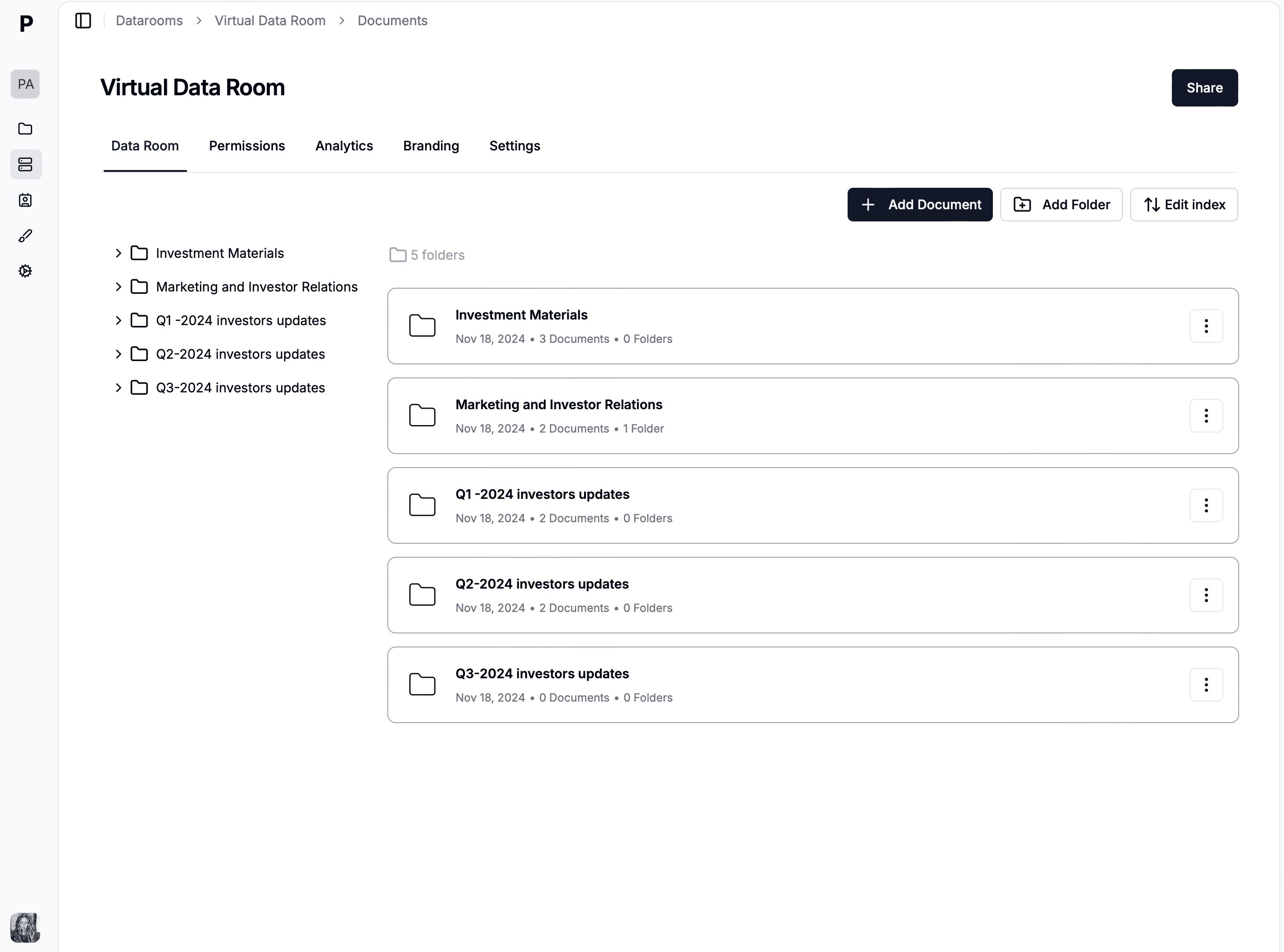
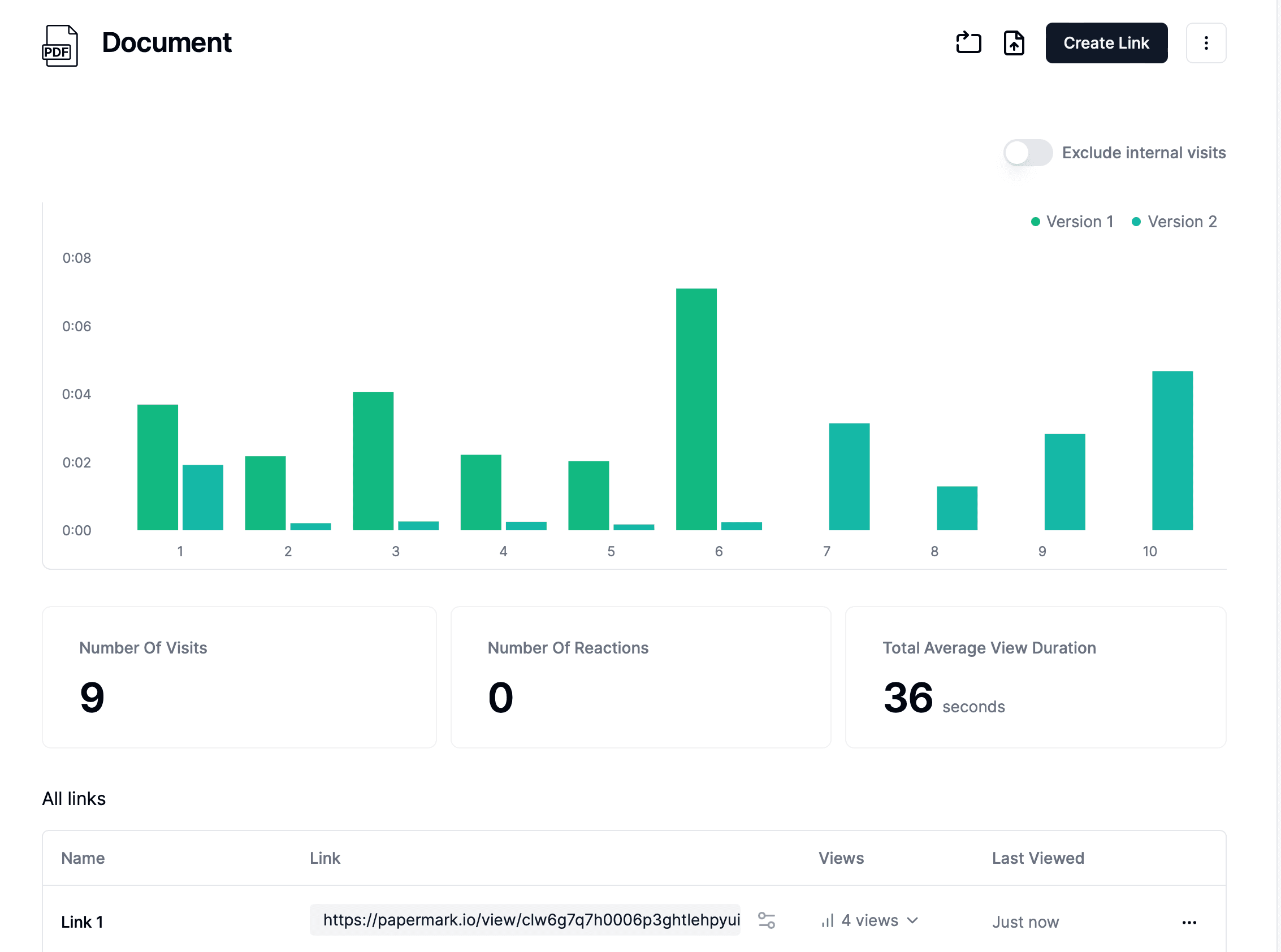
Papermark is a modern and secure virtual data room platform designed for startups and teams looking to streamline their fundraising, due diligence, and document sharing processes. With its intuitive interface and comprehensive feature set, Papermark helps startups manage sensitive documents while providing detailed analytics and professional branding options.
Papermark features
Papermark offers advanced branding and custom domain capabilities that let you maintain your professional image throughout the fundraising process. With custom domains, you can share your data room using your own domain name (e.g., dataroom.yourcompany.com), creating a seamless brand experience for investors. Complete white-labeling options allow you to customize logos, colors, and branding elements to match your company's visual identity.
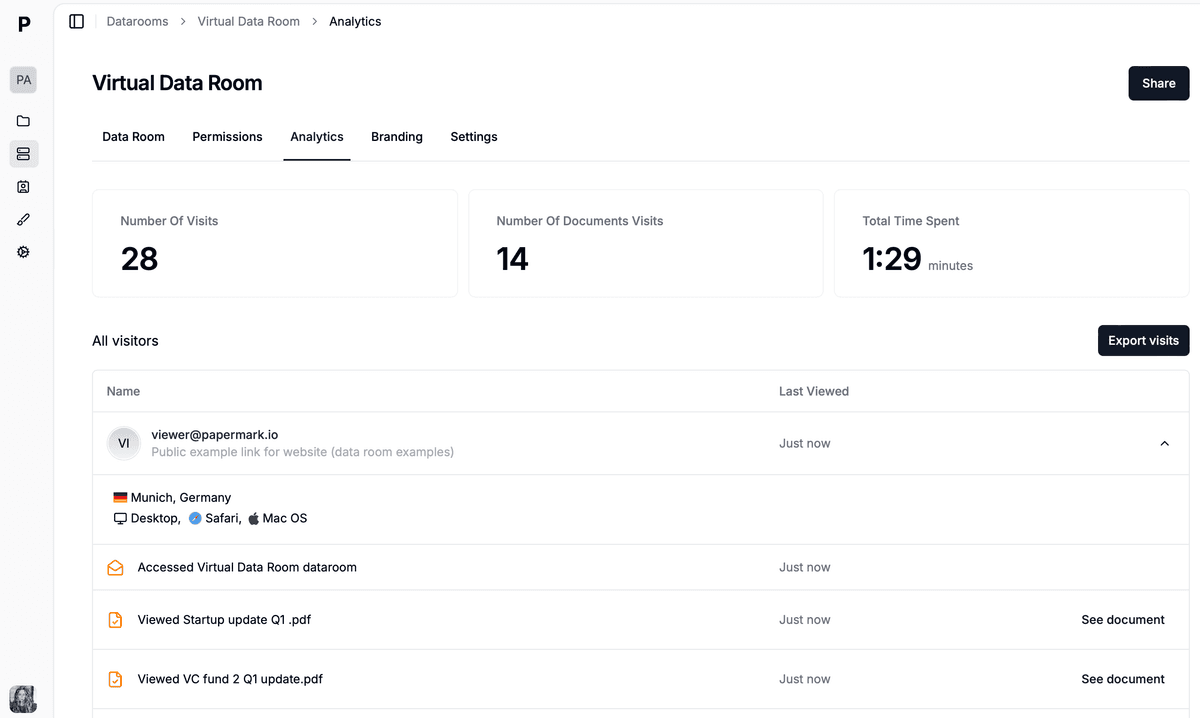
Advanced analytics: Page-by-page engagement tracking and real-time visitor insights
Enterprise-grade security: Granular access controls, dynamic watermarking, and secure document sharing. Learn more about Papermark's security features.
Professional branding: Custom domains and complete white-labeling options
Intuitive interface: Easy-to-use document management and organization tools
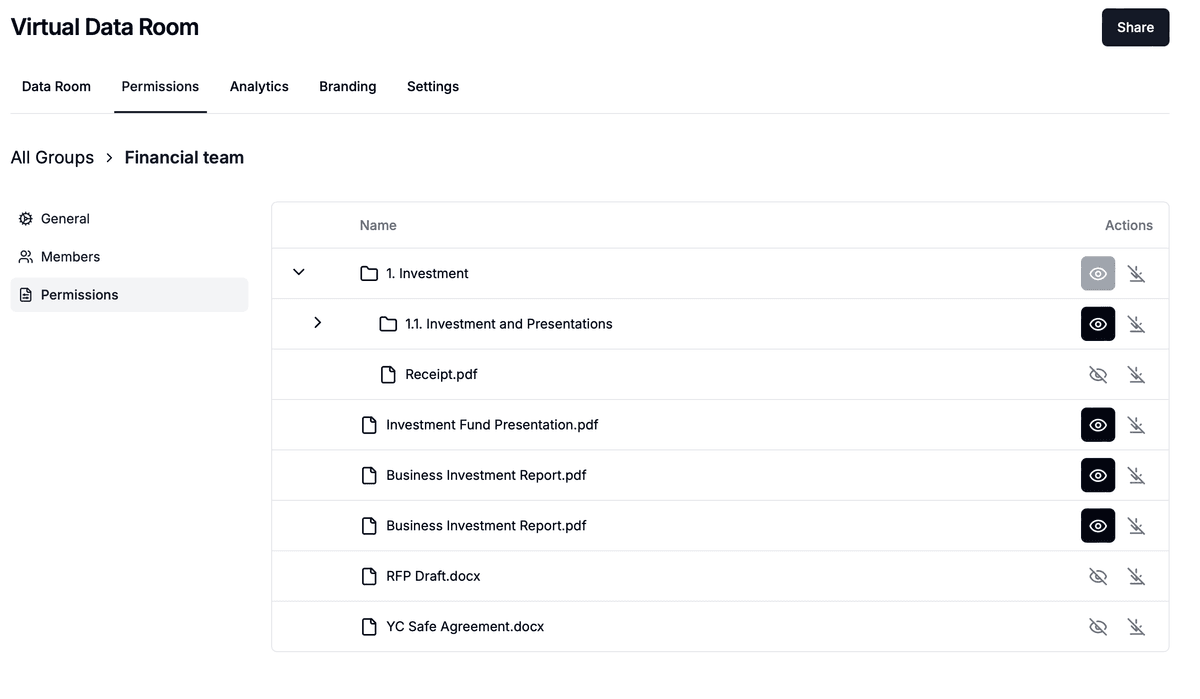
Flexible permissions: Control access at the document, room, and user level
Collaboration tools: Built-in Q&A modules and document versioning
Modern design: Clean, professional interface that impresses investors
Comprehensive tracking: Monitor all document interactions and user engagement
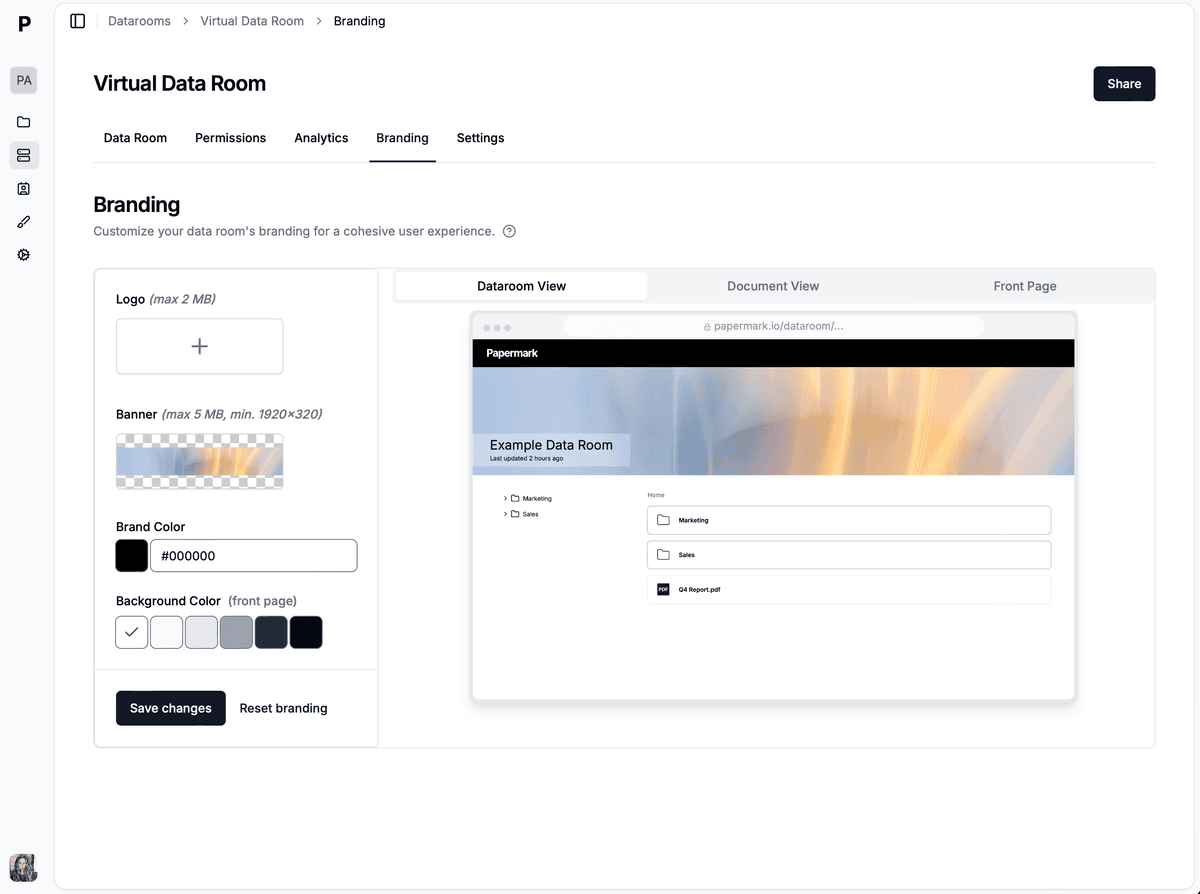
Papermark branding and custom domains
Papermark offers advanced branding capabilities that let you maintain your professional image throughout the fundraising process. With custom domains, you can share your data room using your own domain name (e.g., dataroom.yourcompany.com), creating a seamless brand experience for investors. Complete white-labeling options allow you to customize logos, colors, and branding elements to match your company's visual identity. This professional presentation builds investor confidence and reinforces your brand throughout every interaction.
Papermark's custom branding interface allows you to configure your logo, color scheme, and domain settings to create a fully branded data room experience that matches your company's identity.
The branded data room interface showcases your company's professional image with custom domains and white-labeling, creating a cohesive experience that impresses investors and maintains brand consistency throughout the fundraising process.
Papermark is loved and used by over 15000 founders for creating data room and sharing pitch deck decurely.
It is highly rated by startup founders and investors.
Startups sharing there Pitch Deck and documents with top investors out there.
We saved 70% by transitioning to Papermark. And managed to scale our sales. Our team loves this modern data rooms.
Alonso Benavides Panizo
SVP of Finance at Yuno | Founding team
Startup data room example
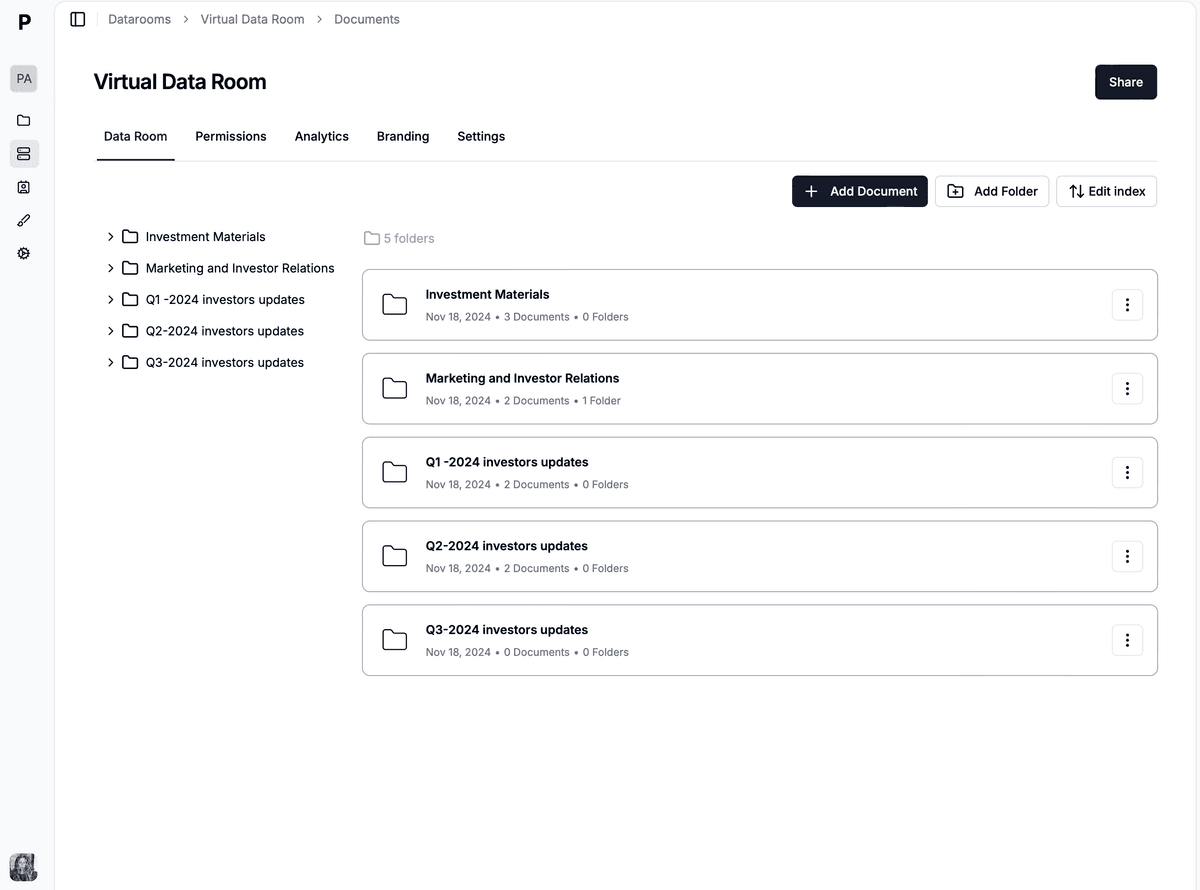
Real startups use data rooms to streamline their fundraising process and securely share documents with investors. Explore how Orbotix structured their data room to raise €6.5M pre-seed for AI-driven autonomous defense systems. Navigate through the complete data room structure and organization:
Notion is a flexible workspace platform that many startups adapt into a data room for investor communications and document organization. While not purpose-built for due diligence, its collaborative features and familiar interface make it a popular choice for early-stage companies with limited budgets.
With Notion, users can centralize their knowledge, manage complex projects, and organize their time effectively. Startups can create structured data rooms by organizing documents into pages, databases, and folders, making it easy to share information with investors during fundraising rounds.
Enhancing Notion with Papermark: Many teams connect their Notion data rooms to Papermark to add security features and analytics tracking that Notion lacks natively. This integration allows you to maintain Notion's flexibility while gaining visitor tracking, page-by-page analytics, password protection, and custom domains. Learn more about how to create a Notion data room and share it with custom domain.
Notion vs Papermark: Notion data room is perfect if you are looking for a flexible workspace tool that can be adapted for basic document organization. Alternatively, for more secure advanced features like granular permissions, dynamic watermarking, page-by-page analytics, and custom domains, Papermark can be used as a dedicated data room solution designed specifically for fundraising and due diligence.
Notion features
Next-gen notes & docs
Centralized knowledge management
Manage complex projects
Collaboration for all teams
Notion limitations
Limited security for shared documents
Limited Data Room features.
Limited language support: English, Korean, Japanese, French, German, Spanish, Portuguese
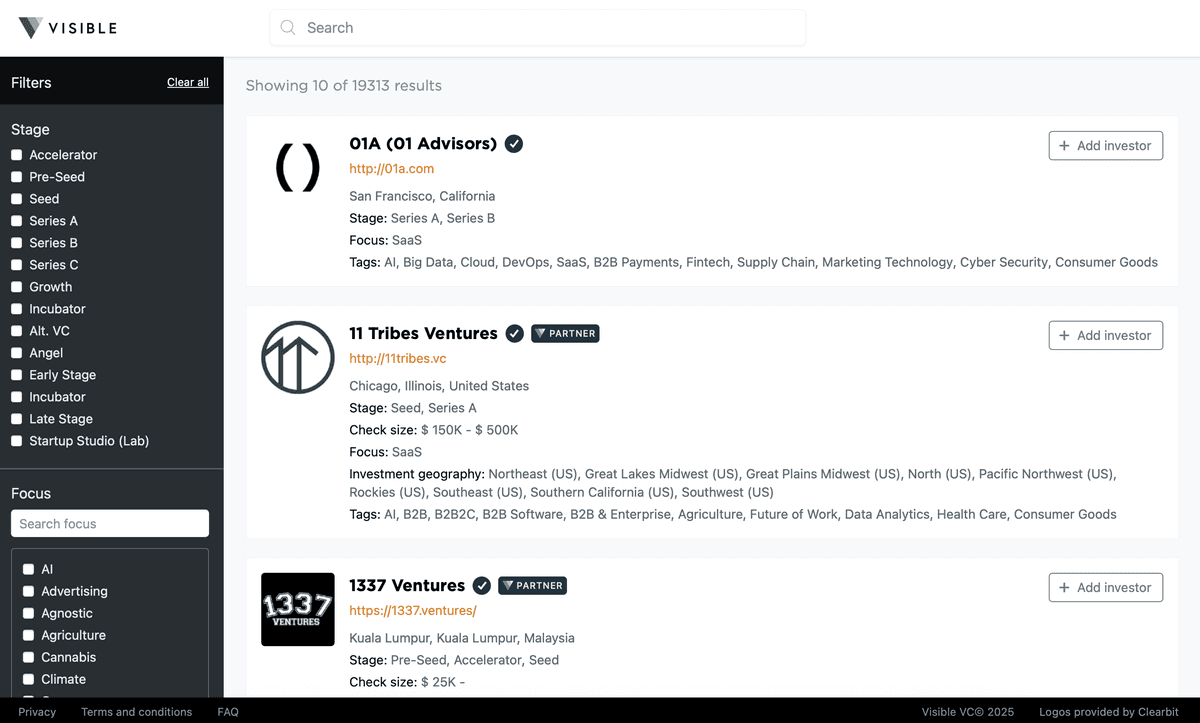
Visible VC is a fundraising platform designed specifically for startups to manage investor relations, track metrics, and share updates. The platform includes data room capabilities that help startups organize and share documents with investors during fundraising rounds.
Founded to help founders streamline their fundraising process, Visible VC combines investor update tools, metric tracking, and data room functionality in one platform. It began as an investor update platform and now offers investor databases, portfolio KPI dashboards, and data rooms.
Visible VC's data room feature allows startups to securely share fundraising documents, pitch decks, financial statements, and other sensitive materials with potential investors. The platform integrates data rooms with investor pipeline management, making it easy to track which investors have accessed specific documents and when.
Visible VC vs Papermark: Visible VC data room is perfect if you are looking for an all-in-one fundraising platform with investor CRM and update tools. Alternatively, for more secure advanced features like granular folder permissions, dynamic watermarking, custom domains, and unlimited data rooms, Papermark can be used as a dedicated data room solution with superior security and analytics.
Visible VC features
Monthly and quarterly investor update templates
Data rooms for document sharing
Metric tracking and KPI dashboards
Pitch deck sharing
Investor database with 15k+ VC and angel contacts
Portfolio monitoring tools
Visible VC limitations
Primarily focused on investor relations rather than comprehensive data room features
May lack advanced security features compared to dedicated data room providers
Smaller investor list compared to larger databases
Some analytics features behind higher pricing tiers
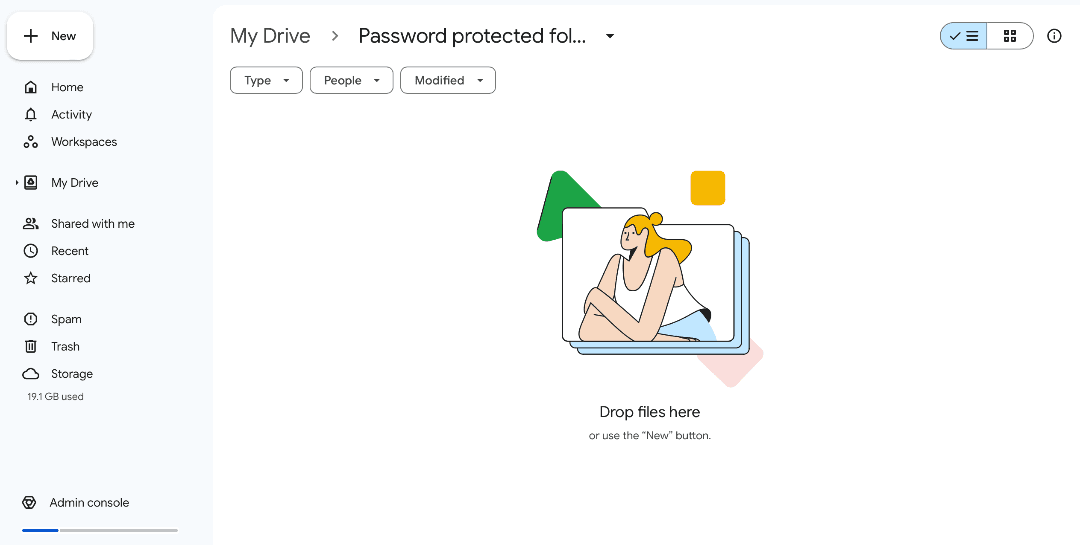
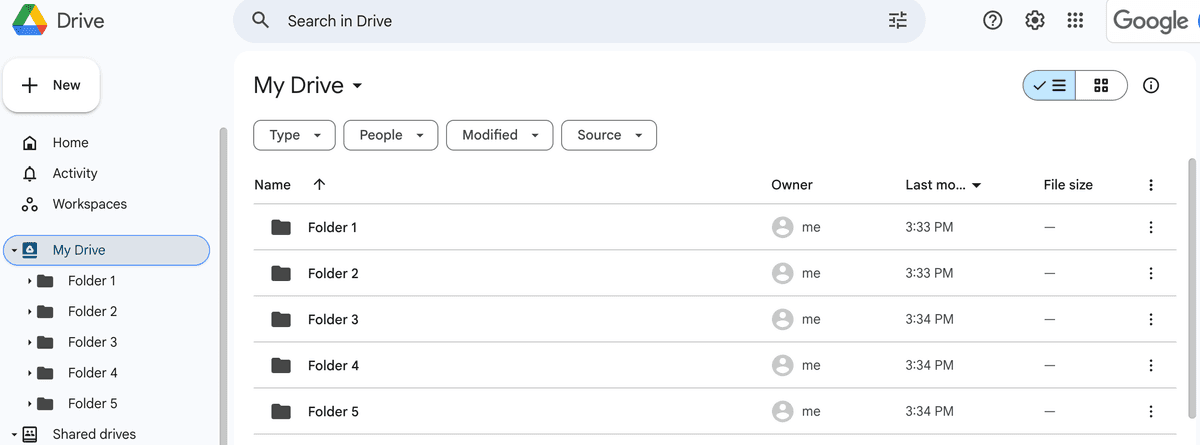
Google Drive is a cloud storage and file sharing service that can be used for basic data room needs. While not a dedicated data room solution, many startups use Google Drive to organize and share documents with investors due to its familiarity and ease of use.
Google Drive offers file storage, sharing capabilities, and collaboration features that can serve as a simple data room alternative for early-stage startups with basic document sharing needs. Startups can create organized folder structures to share financial documents, legal agreements, pitch decks, and other fundraising materials with investors. The platform allows for granular sharing permissions, enabling startups to control who can view, comment, or edit specific documents.
Startups can organize their data room documents into folders by category (financial, legal, product, etc.) and share access with investors through email invitations or shareable links with specific permission levels.
Google Drive vs Papermark: Google Drive data room is perfect if you are looking for a free or low-cost basic file sharing solution with familiar collaboration tools. Alternatively, for more secure advanced features like page-by-page analytics, dynamic watermarking, password protection, and professional branding, Papermark can be used as a dedicated data room solution designed specifically for fundraising.
Google Drive features
Cloud file storage and organization
File sharing with access controls
Real-time collaboration on documents
Integration with Google Workspace
Mobile apps for iOS and Android
Version history and file recovery
Google Drive limitations
Limited security features compared to dedicated data room providers
No advanced analytics or engagement tracking
No watermarking or screenshot protection
Limited audit trails and access controls
Not designed specifically for fundraising or due diligence
Google Drive pricing
Free: 15GB storage
Google Workspace Individual: $9.99/month (1TB storage)
Google Workspace Business Starter: $6/user/month (30GB storage)
Google Workspace Business Standard: $12/user/month (2TB storage)
Google Workspace Business Plus: $18/user/month (5TB storage)
DocSend is a tool that provides real-time document and video analytics to help businesses understand customer behavior and improve their pitches. The platform offers virtual data room capabilities designed for startups managing fundraising and investor relations.
DocSend allows users to track engagement with shared documents and videos, gaining actionable insights and create data rooms fitting growing startups. The data room feature enables startups to organize multiple documents in a secure, trackable environment where they can monitor investor engagement, see which pages investors spend the most time on, and receive notifications when documents are accessed.
DocSend vs Papermark: DocSend data room is perfect if you are looking for document analytics and video tracking capabilities. Alternatively, for more secure advanced features like unlimited data rooms, granular folder permissions, custom domains, and open-source self-hosting options, Papermark can be used as a more cost-effective and feature-rich alternative.
DocSend features
Real-time document and video analytics
Trackable links
Instant, actionable insights
Proactive follow-up
Advanced security
Control over shared documents
Virtual data rooms
DocSend limitations
Potential privacy and security concerns with sharing sensitive documents and videos externally
Need for training and familiarization with advanced features like virtual data rooms and watermarking
Requires active monitoring and follow-up to make the most of the insights and analytics gathered from shared documents and videos
Box is a collaboration tool that ensures sensitive files are protected with advanced security controls and intelligent threat detection. While not a dedicated data room solution, Box can be configured as a data room for startups needing enterprise-grade security and collaboration features.
Box is cloud-based content management, collaboration, and file sharing tools for businesses which can be used for data room creation. Startups can organize fundraising documents into secure folders with granular access controls, allowing them to share sensitive information with investors while maintaining security and compliance standards. The platform offers features like watermarking, access expiration, and detailed audit trails that are essential for data room operations.
However, it is not its main feature, and startups may find it more complex than dedicated data room solutions.
Box vs Papermark: Box data room is perfect if you are looking for enterprise-grade collaboration tools with extensive integrations. Alternatively, for more startup-friendly pricing, dedicated data room features like page-by-page analytics, custom domains, and simpler setup, Papermark can be used as a purpose-built data room solution.
Box features
Collaboration with anyone, anywhere
E-signatures
Simplified workflow
1,500+ app integrations
Content migration
Admin controls
Box limitations
Dependence on internet connectivity for collaboration
Learning curve for users to adapt to new platform
Limited customization options for specific business needs
Digify is a document security service providing protection and tracking capabilities for important documents. The platform offers virtual data rooms specifically designed for secure management of sensitive company information, ideal for fundraising and investor updates, which can fit startups.
Digify's data room solution allows startups to create secure, organized spaces for sharing fundraising documents with investors. The platform provides document tracking, access controls, and automated watermarks to protect sensitive information. Startups can monitor who has accessed which documents, track viewing times, and set expiration dates for document access, making it suitable for managing investor due diligence processes.
Digify vs Papermark: Digify data room is perfect if you are looking for document security with watermarking features. Alternatively, for more cost-effective pricing, unlimited data rooms, custom domains, and open-source self-hosting options, Papermark can be used as a more affordable and flexible alternative.
Digify features
Document Security
Control access and distribution
Virtual Data Rooms
Automated watermarks
Digify limitations
Risk of confidential documents being spread online
May not be suitable for those who prefer physical document security
Dependence on internet connectivity for cloud-based service
FirmRoom is virtual data room solutions for startups that offer efficient management of sensitive documents for dealmakers in various industries. The platform is designed specifically for financial transactions, M&A deals, and fundraising activities.
Users of FirmRoom can control access to company data, manage document disclosure, and gain valuable insights into data room activity. The platform provides startups with tools to organize fundraising documents, track investor engagement, and manage the due diligence process. FirmRoom's data room features include document indexing, Q&A modules, and activity tracking to help startups manage investor communications effectively during fundraising rounds.
FirmRoom vs Papermark: FirmRoom data room is perfect if you are looking for enterprise-focused M&A data room solutions. Alternatively, for more startup-friendly pricing starting at $59/month, unlimited data rooms, custom domains, and modern analytics, Papermark can be used as a more affordable and flexible alternative.
SecureDocs Data Room is a user-friendly platform designed for secure document management during business transactions, including fundraising and M&A activities. The platform offers startups a straightforward way to organize and share sensitive documents with investors.
SecureDocs Data Room is a reliable tool for securely managing information, processes, and supporting business transactions. Startups can use SecureDocs to create organized data rooms for fundraising, sharing financial documents, legal agreements, and other sensitive materials with potential investors. The platform provides features like drag-and-drop uploads, due diligence checklists, and audit trail reporting to help startups manage the investor due diligence process efficiently.
SecureDocs vs Papermark: SecureDocs data room is perfect if you are looking for a straightforward data room with due diligence checklists. Alternatively, for more advanced features like page-by-page analytics, custom domains, unlimited data rooms, and open-source self-hosting, Papermark can be used as a more feature-rich and cost-effective alternative.
SecureDocs features
Instant account setup
Audit trail reporting
Security features
Drag-and-drop uploads
Due Diligence Checklist
SecureDocs limitations
Lack of mention of customization options
Limited information on specific security measures
Lack of integration capabilities with other software or systems
High Pricing
SecureDocs pricing
$250/month
$450/month
SecureDocs ratings and reviews
G2: 4.8/5 (38+ reviews)
Capterra: 4.9/5 (151+ reviews)
Trustpilot: 4.7/5 (2244+ reviews)
Conclusion
Start from secure data room for startups in 2026, by selecting one of the most fitting options for you.




 It is highly rated by startup founders and investors.