
How to enable index generation for your data room viewers?
Want to help your viewers better navigate your data room content? Papermark can automatically generate an index file that provides a clear overview of your data room's structure and contents.
The index file helps viewers understand your document organization and quickly find what they need.
You can enable index generation when creating a new link or editing an existing one in your data room's Advanced Controls section.
Step-by-step setup
-
Navigate to your data room – From your dashboard:
- Click on "Datarooms" in the sidebar
- Select the data room you want to configure
-
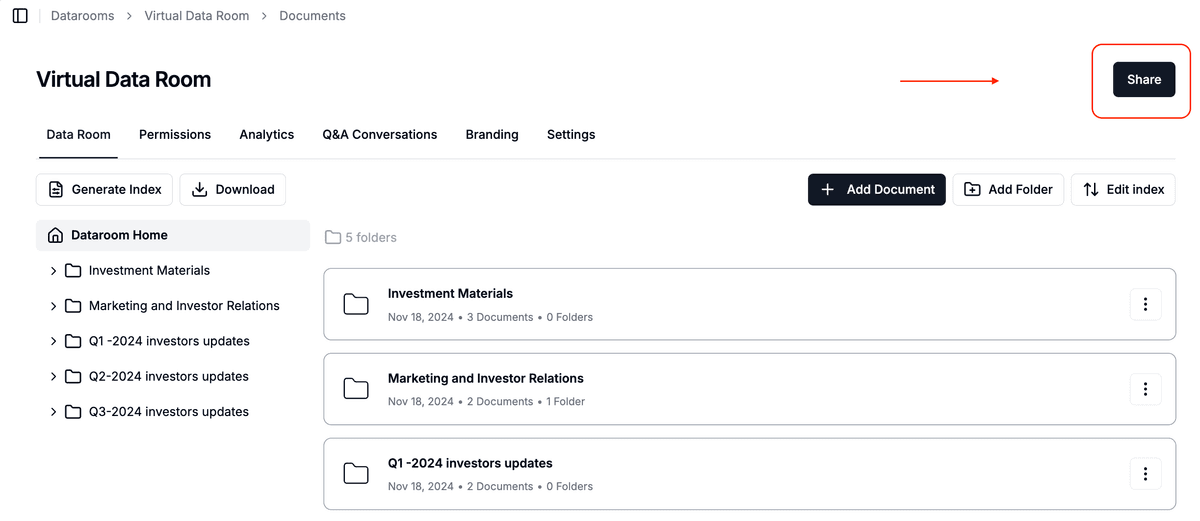
Access sharing settings – In your data room:
- Click the "Share" button
- This will open the link creation panel
-
Find index generation settings – In the link settings:
- Scroll down to find "Advanced Controls"
- Click to expand the section
-
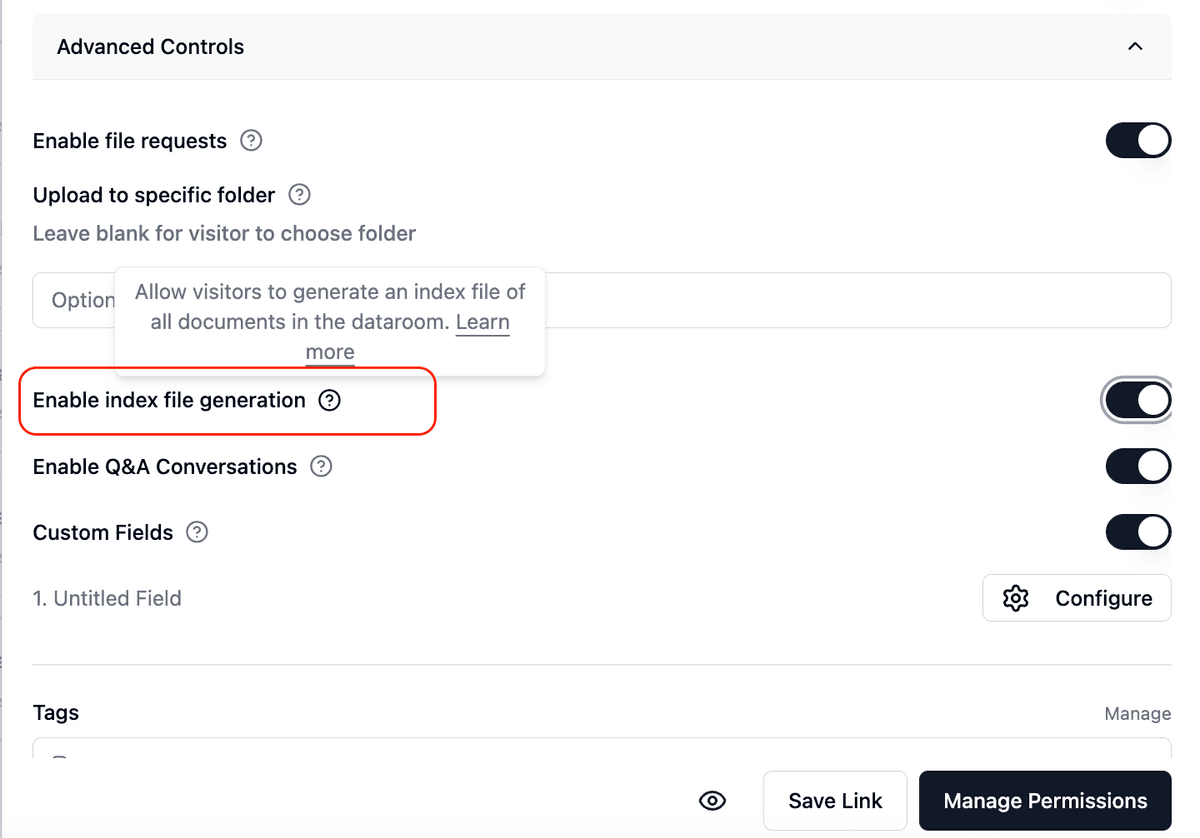
Enable index generation – In Advanced Controls:
- Find "Enable index file generation"
- Toggle the switch to enable
- The index will be automatically generated for viewers
-
Configure index settings (Optional):
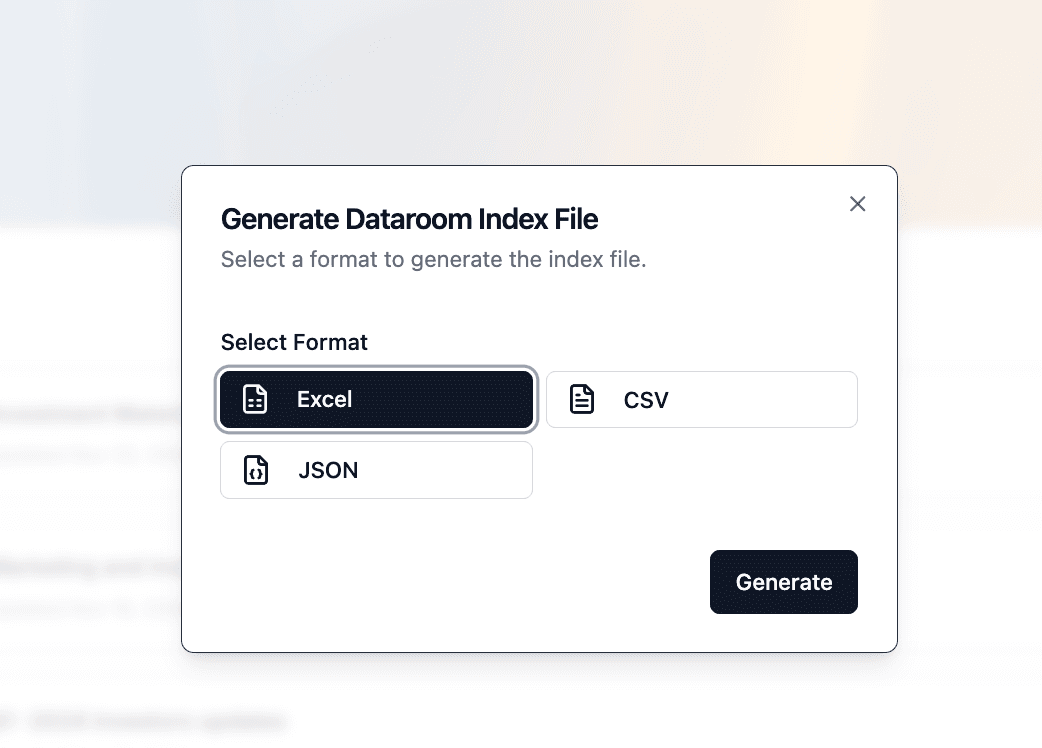
- Choose index file format (PDF/Excel)
- Select what information to include:
- File names
- Folder structure
- Last modified dates
- File sizes
- Document descriptions
-
Share the data room – After configuration:
- Save your settings
- Copy and share your data room link
- Recipients will see the index option when they access the room
Automatic hierarchical index numbering
In addition to the downloadable index file, every document and folder in your data room is automatically assigned a hierarchical index number based on its position. This matches the conventions used in traditional virtual data rooms and makes it easy to reference specific items.
How the numbering works:
- Top-level folders are numbered
1,2,3, and so on - Documents inside a folder use the folder number plus an item number:
1.1,1.2,1.3 - Nested subfolders go deeper:
1.1.1,1.1.2 - Numbers update automatically when you reorder items in the data room
- The index numbers appear in the viewer sidebar, the file list, and the downloadable index file
This makes it easy to say "open 3.2.1" in an email or on a call, and your visitor knows exactly which document you mean. It's the same naming convention auditors, lawyers, and bankers use in physical data rooms.
For more on ordering and organization, see how to organise documents into folders.
Benefits of index generation
- Better Navigation: Viewers can quickly find specific documents
- Clear Structure: Shows the complete folder hierarchy
- Time Saving: No need to manually create document lists
- Professional Presentation: Organized view of your content
- Easy Updates: Index automatically updates when you add or remove files
- Industry-standard numbering: Hierarchical numbers (1.1, 1.2, 2.1) match traditional VDR conventions
Tips for success
- Use clear folder names for better index organization
- Add document descriptions for more context
- Regularly review the generated index
- Consider your viewers' needs when choosing what information to include
- Use consistent file naming conventions
Common questions
Related guides
Need help? Contact support@papermark.com or use the in-app chat.