
Your Salesforce opportunities have no visibility into whether the buyer actually reviewed your proposal. Activity logs show emails sent but not documents read.
With Papermark you can webhooks and visitor identification to solve this end-to-end with real-time analytics.
How it works
Step by step
Step 1. Upload your sales decks
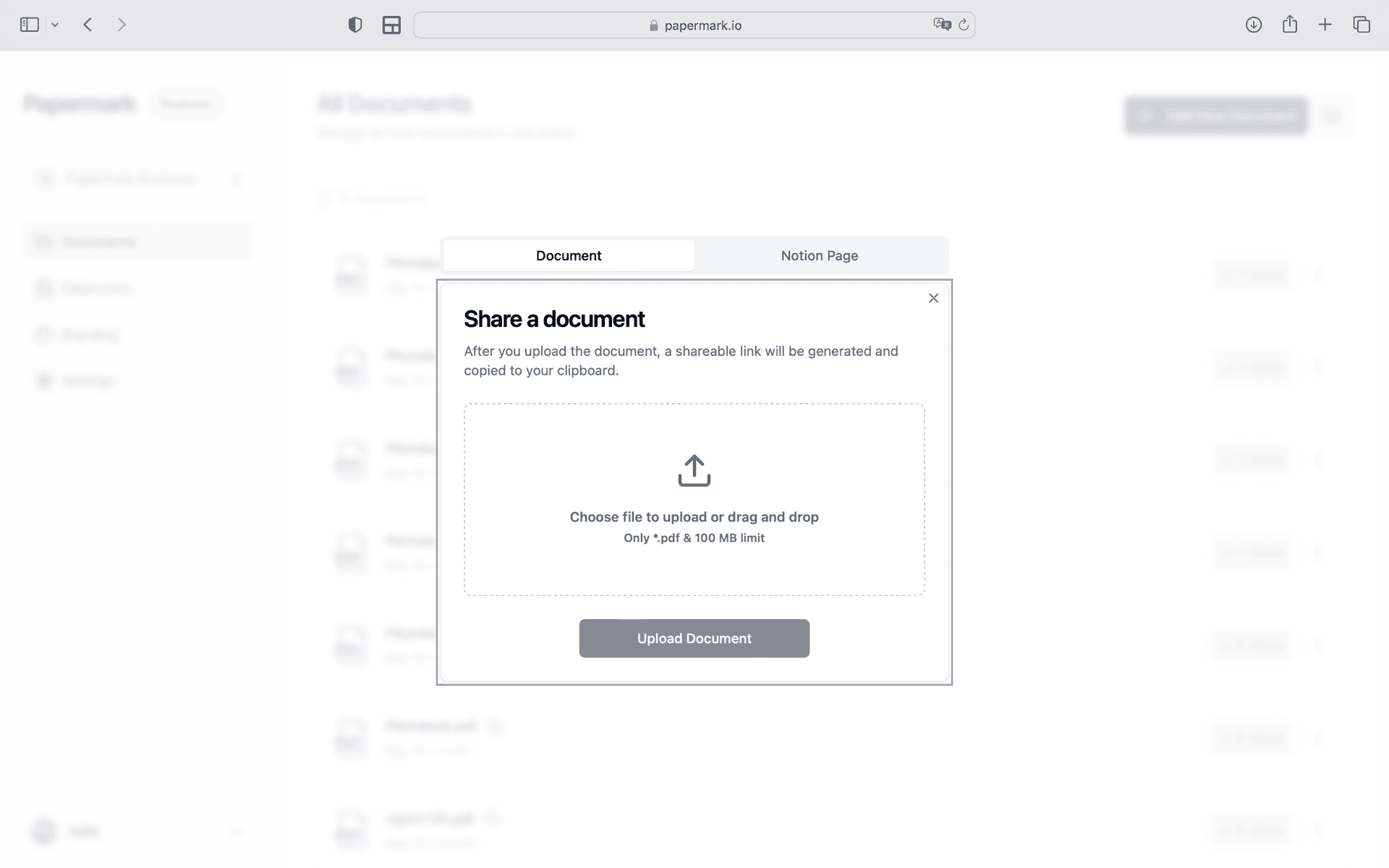
Open Papermark and create a new data room. Upload your sales deck or proposal. Use drag-and-drop to add files, then organize them into folders. Papermark automatically indexes everything and supports bulk upload of entire folder structures.
Step 2. Set up access controls for prospects and buying committee members
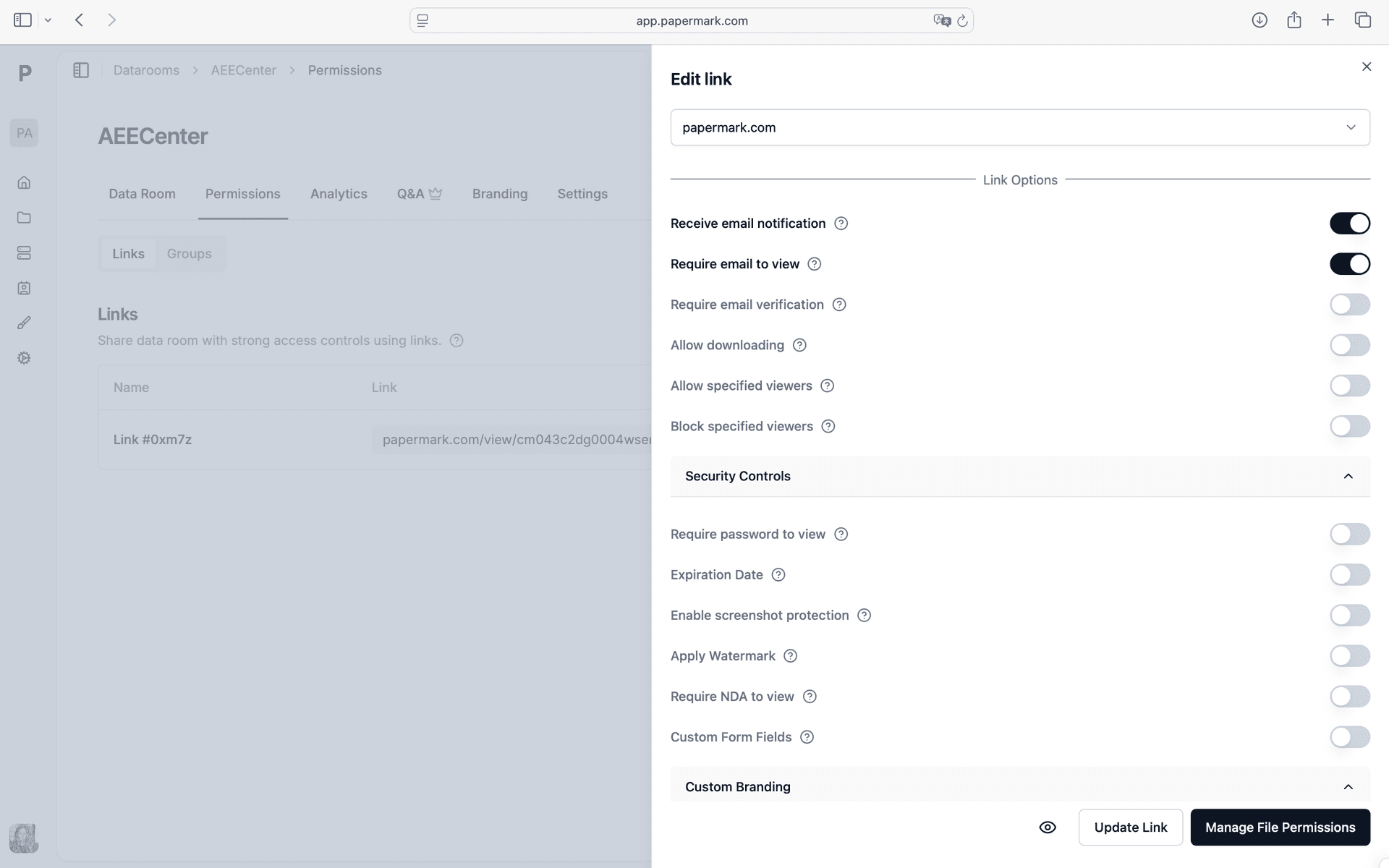
Configure your security settings. In Papermark link settings, enable Visitor identification. Every viewer is verified before they can access a single page. You control exactly who among your prospects and buying committee members sees which documents.
Step 3. Share a tracked link with your prospect and track engagement
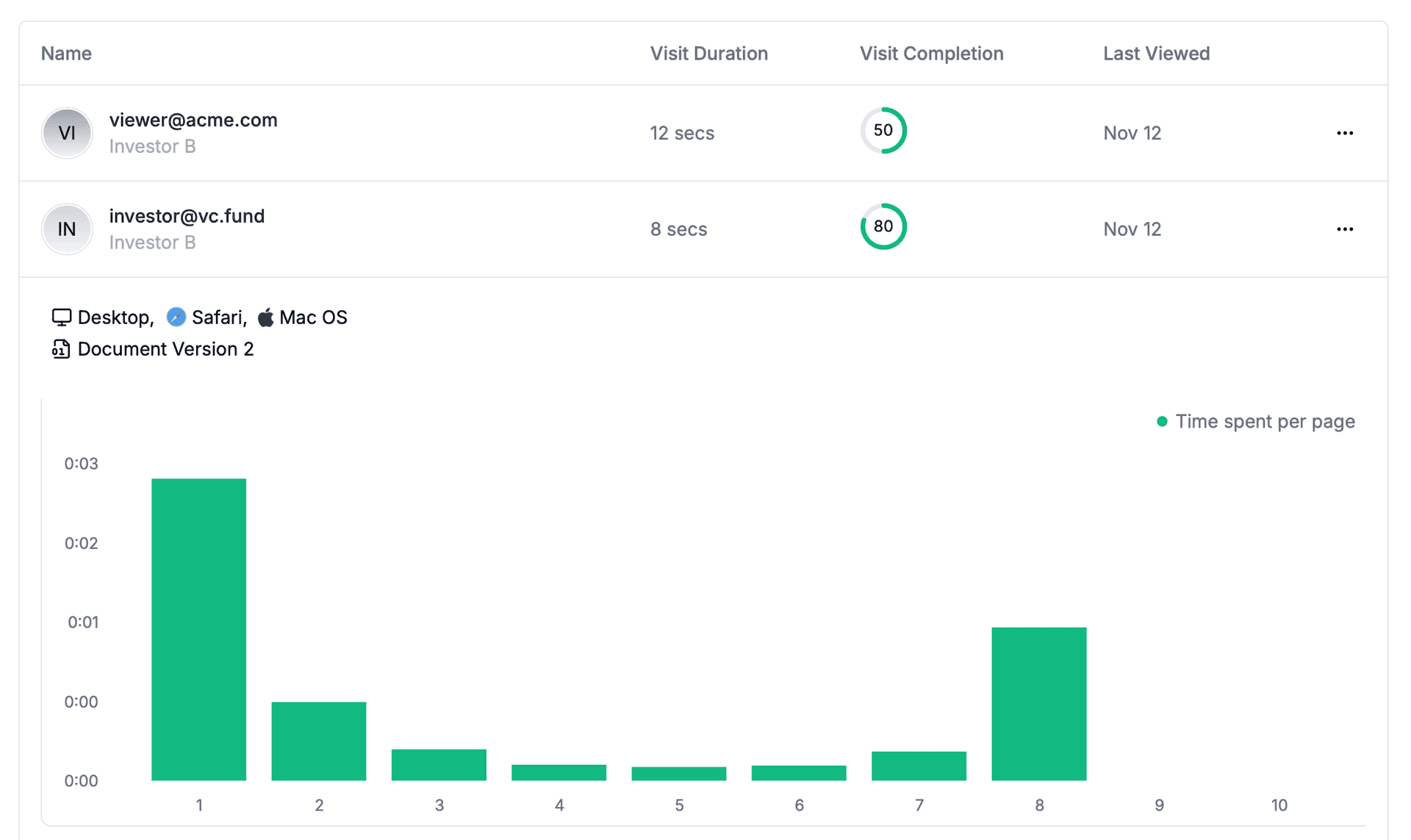
Generate a secure link and share a tracked link with your prospect. Papermark tracks every interaction in real-time. See which slides the prospect viewed, time spent, and completion rate. Open the analytics dashboard to see all engagement data as it happens.
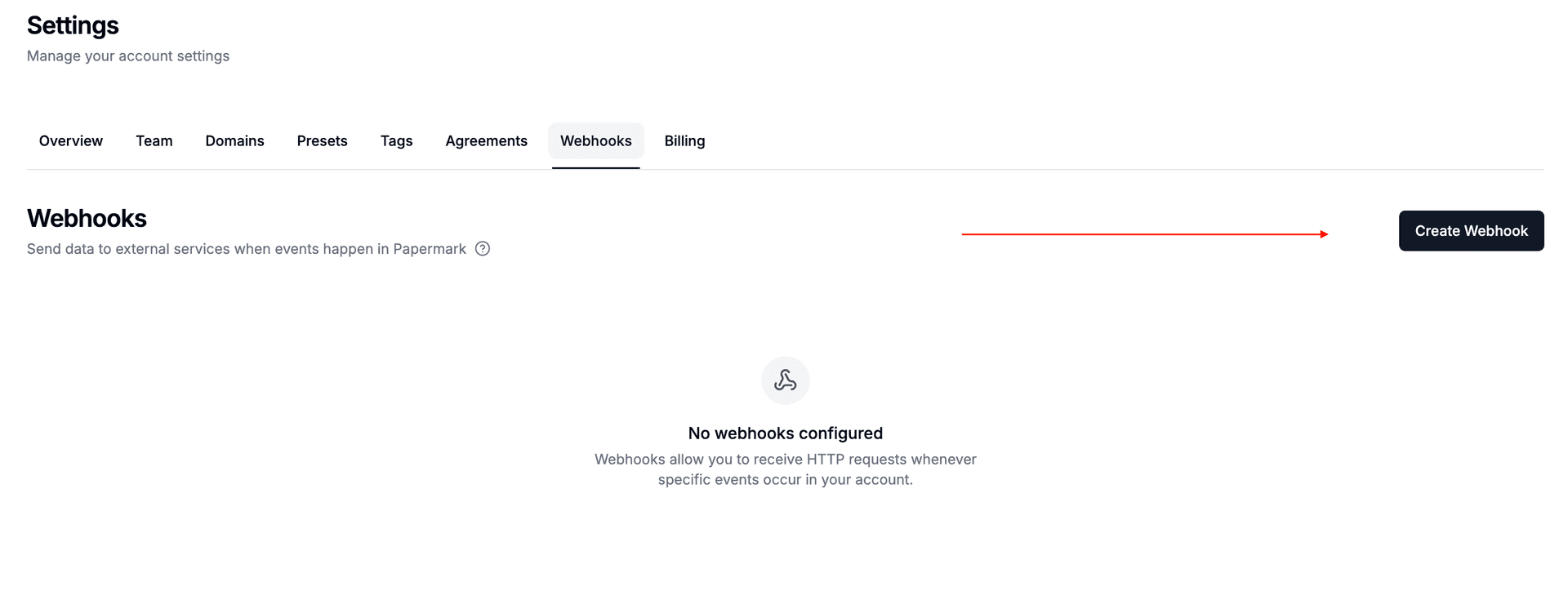
Step 4. Create a webhook to connect external tools
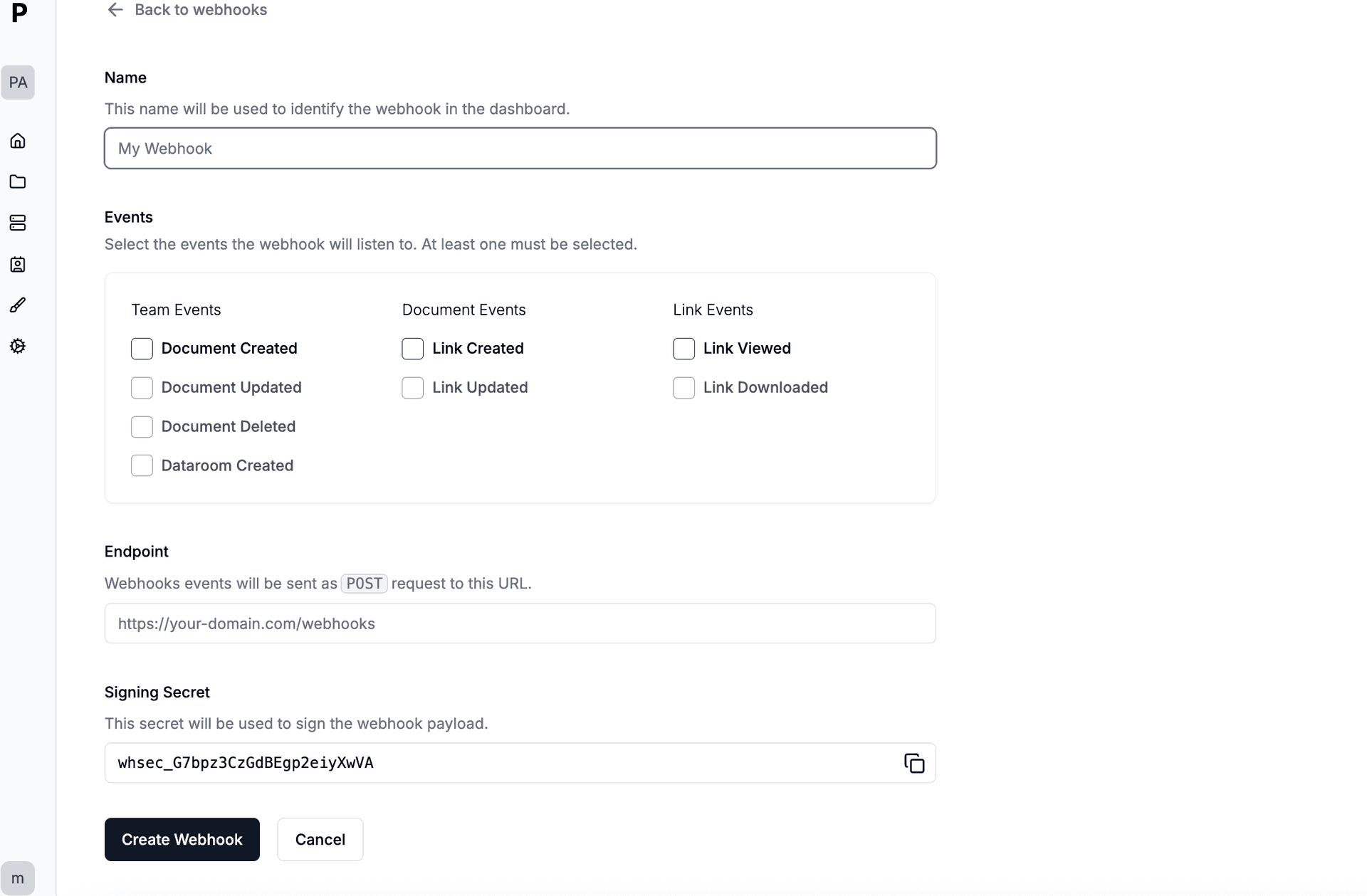
Go to Settings > Webhooks in Papermark. Create a new webhook endpoint pointing to your automation tool (Zapier, Make, or n8n). Select which events should trigger: "Link Viewed" fires when prospects and buying committee members open your documents, "Document Downloaded" when they download. Papermark sends a signed payload with viewer email, document name, pages viewed, and time spent.
Step 5. Choose which events trigger your automation
Pick the events relevant to your workflow. For tracking prospects and buying committee members engagement, select "Link Viewed". For monitoring downloads of sensitive sales decks, add "Document Downloaded". Each payload is signed with HMAC-SHA256 for security. You can create multiple webhooks for different tools.
Step 6. Log document view events to opportunity activity timeline and contact records
Log document view events to opportunity activity timeline and contact records. Connect Salesforce through Zapier, Make, or n8n as middleware. When prospects and buying committee members view your documents, the webhook payload delivers their email, document name, pages viewed, time spent, and completion percentage to Salesforce automatically.
Step 7. Connect Papermark webhook to Salesforce activity creation
In Zapier, create a new Zap with "Webhooks by Zapier" as the trigger (Catch Hook). Copy the webhook URL and paste it in Papermark's webhook settings. Add your action: Connect Papermark webhook to Salesforce activity creation. Now every time prospects and buying committee members view your sales decks, Zapier runs your automation.
Tools and integrations
Papermark connects to external tools via outgoing webhooks (HMAC-SHA256 signed). Slack has a native integration with OAuth. For all other tools, connect Papermark webhooks through Zapier, Make, or n8n.
Salesforce via webhook
Log document view events to opportunity activity timeline and contact records
Connect through Papermark webhooks via Zapier, Make, or n8n
Zapier Webhook middleware
Connect Papermark webhook to Salesforce activity creation