

datarooms
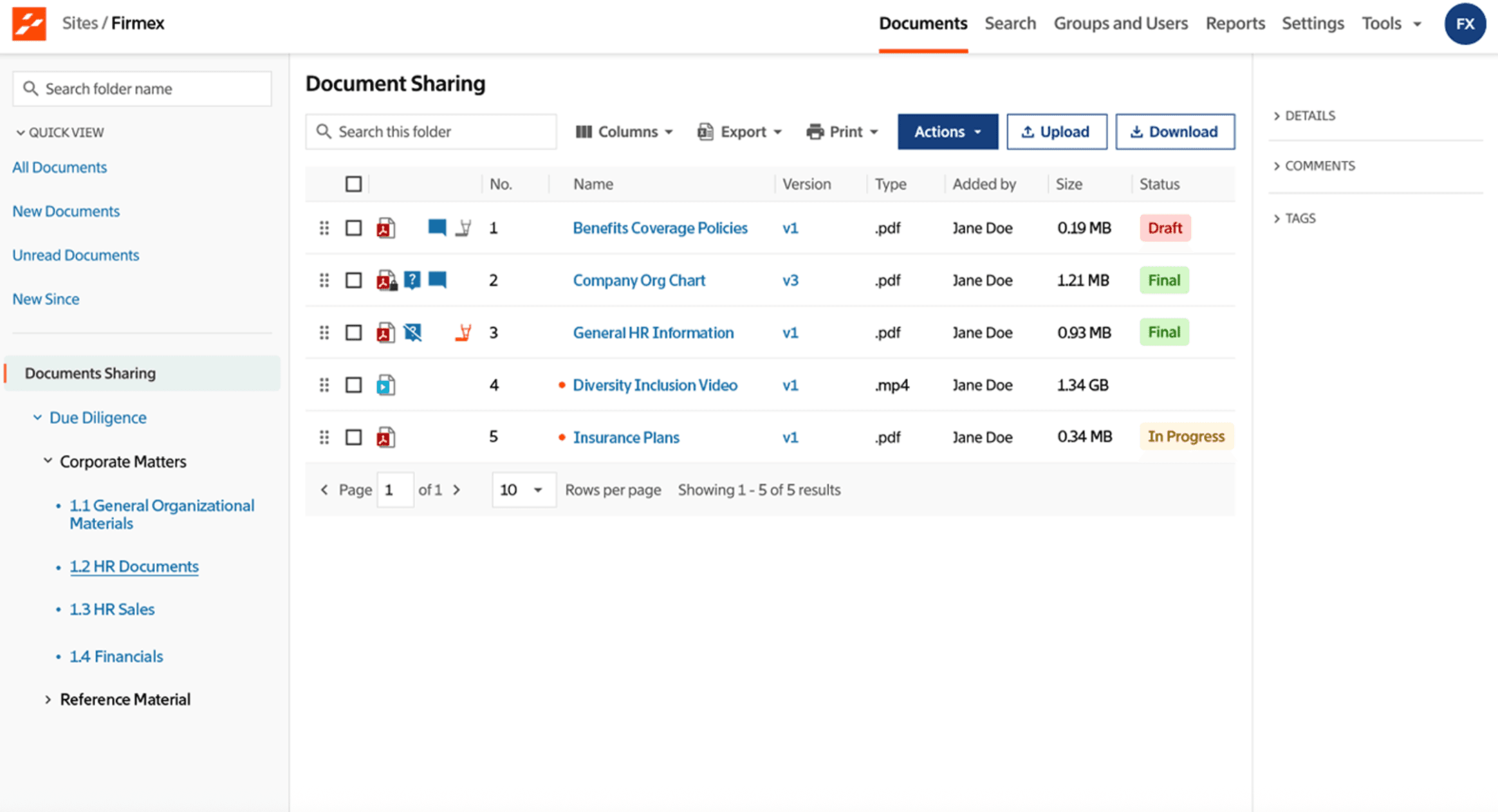
Firmex Review 2026: Features, Pricing, Pros, Cons, and Alternatives
Honest Firmex review for 2026 - virtual data room features, pricing, screenshots, pros and cons, and how it compares to Papermark, iDeals, and Datasite.
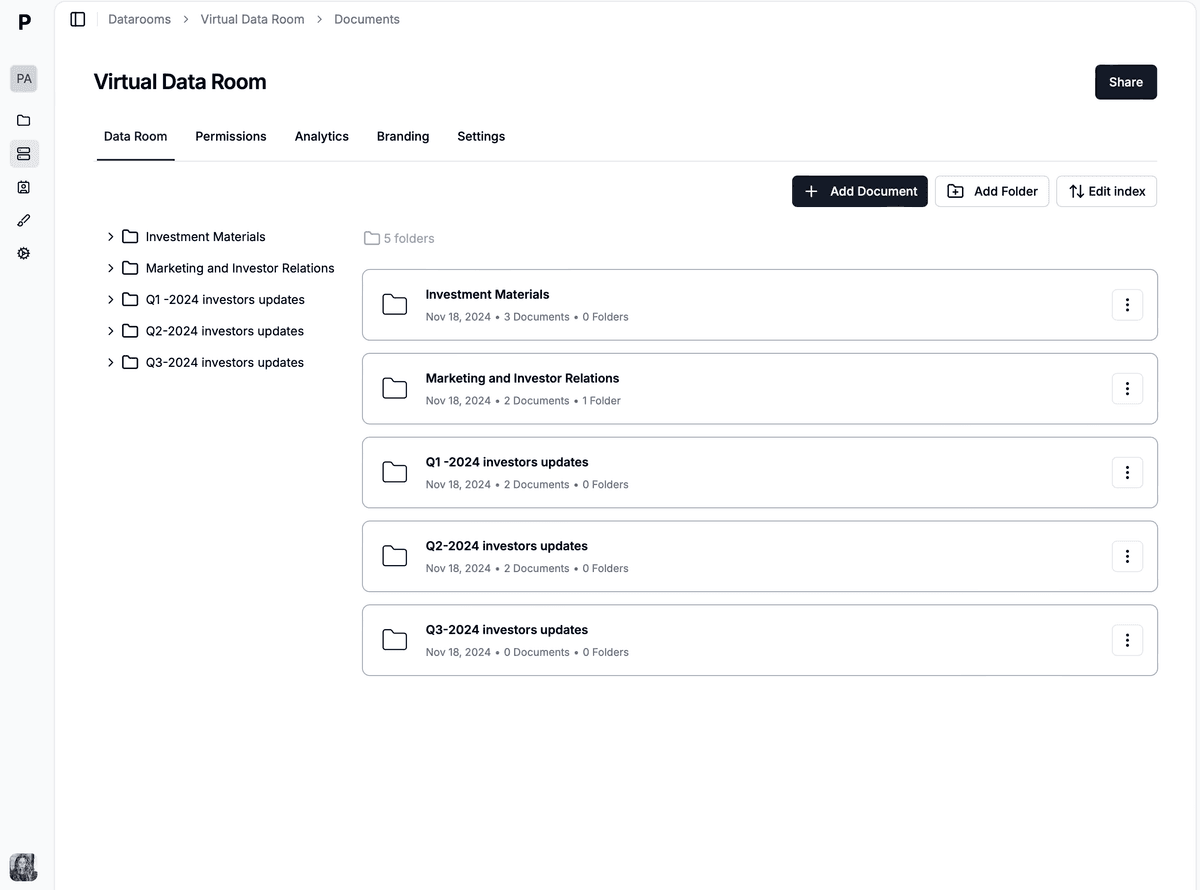
HighQ Dataroom, now part of Thomson Reuters, is an enterprise legal collaboration platform with virtual data room functionality, built primarily for law firms and corporate legal departments running M&A, litigation, and complex matters. This review covers what HighQ actually does, what it costs, where it falls short, and five alternatives worth comparing in 2026.
HighQ began life as an independent British legal collaboration company before Thomson Reuters acquired it in 2018 and integrated it into its wider legal technology portfolio. What most people call "HighQ Dataroom" is really the data room module inside a much larger platform. That distinction matters, because it explains both the product's strengths and the reasons many buyers eventually look elsewhere. HighQ is not a lightweight tool you spin up for a single deal; it is a system a firm commits to.
At its core, HighQ bundles several capabilities that a law firm would otherwise buy separately. It provides a virtual data room for secure document sharing, collaboration workspaces for internal legal teams, matter management for organizing deals and client work, branded client portals for external collaboration, and knowledge management for reusable legal content. Each of those modules is aimed squarely at how a law firm runs its practice, from intake through to closing.
Unlike a pure-play VDR such as Firmex or Intralinks, HighQ is a broad collaboration suite that happens to include data room functionality. For a large firm juggling dozens of concurrent matters, that breadth is the selling point. For a startup that simply needs to share a due diligence folder with three investors, it is the reason HighQ feels like the wrong tool. Understanding which of those two buyers you are is the fastest way to decide whether HighQ belongs on your shortlist.
HighQ's feature set reflects its origins as a legal platform rather than a document-sharing tool. The data room is designed around matters and clients, not just files and links, and the surrounding modules assume you are managing ongoing legal relationships rather than a one-off transaction. The result is a product that is genuinely powerful for legal teams and genuinely overbuilt for almost everyone else.
The table below summarizes the modules most buyers evaluate. Each of these is a distinct area of the platform, and most implementations turn on only a subset depending on the firm's needs and budget.
| Feature | Description |
|---|---|
| Virtual data room | Secure document repository with granular folder and file permissions |
| Collaboration workspace | Team collaboration with discussions, tasks, and calendars |
| Matter management | Organize matters, deals, and client work in one place |
| Client portals | Secure, branded external collaboration with clients |
| Document automation | Template-based document generation for legal work |
| Mobile access | iOS and Android apps for on-the-go review |
| Analytics | User activity tracking and reporting |
| Integrations | Connections to iManage, NetDocuments, and Office 365 |
The data room itself is the module most relevant to M&A and diligence. It is built for legal workflows, which means matter-based organization, granular folder and document permissions, detailed audit trails for compliance, watermarking and DRM protection, and redaction tools for sensitive material. These are the controls a firm needs when a document set is subject to privilege or regulatory scrutiny, and HighQ handles them competently.
Beyond storage, HighQ leans heavily into collaboration and client-facing work. Internally, teams get shared workspaces, discussion boards, task management with deadlines, and calendars for scheduling. Externally, the client portals allow a firm to bring counterparties and clients into a branded environment, run structured Q&A, and handle document requests and submissions without buying additional licenses for every external user. Rounding out the picture, HighQ connects to the wider legal stack through integrations with iManage and NetDocuments for document management, Microsoft Office 365, and common practice management systems, which is a real advantage for firms already standardized on those tools.
HighQ uses custom enterprise pricing as part of the Thomson Reuters legal technology suite, and there is no public price list. Every quote is assembled by a sales team after a discovery process, which makes it hard to budget in advance and impossible to compare on a website. This is normal for enterprise legal software, but it is a meaningful friction point for buyers who are used to self-service tools.
In practice, a HighQ contract is built from several components. There are per-user licenses for internal team members, platform fees for hosting and infrastructure, professional services for setup, training, and support, and optional module fees for capabilities beyond the core data room. Because the pricing is stacked this way, the headline number can climb quickly once you account for everyone who needs access and every module you switch on.
Based on the way the product is sold and positioned, most mid-sized law firm implementations start in the range of $20,000 to $50,000+ per year, and large firms can spend anywhere from $100,000 to $500,000+ annually depending on user count and modules. Treat these as informed estimates rather than quoted rates, since HighQ does not publish figures and actual contracts vary widely. Still, the order of magnitude is the point: this is enterprise pricing, not a monthly subscription.
Several structural issues follow from that model. Pricing is opaque, so you cannot evaluate cost without engaging sales. Minimums are high, which rules out solo practitioners and small firms. Per-user licensing means costs scale with headcount rather than usage. Contracts are typically annual or multi-year, which reduces flexibility. And the buying motion itself is a full enterprise procurement cycle involving demos, proposals, and negotiation, which can take weeks or months before you can even use the product.
No platform is all upside, and HighQ is a clear case of a tool that is excellent for its intended buyer and poorly matched to everyone else. Read the lists below in that light: the strengths are real for large legal teams, and the weaknesses are equally real for smaller or non-legal organizations. The question is never whether HighQ is "good," but whether it fits how you actually work.
On the positive side, HighQ earns its place in large firms through legal-specific depth and platform breadth:
The drawbacks cluster around cost, complexity, and fit for anyone outside a large legal team:
HighQ makes the most sense when its breadth is a feature rather than a burden. If you run a large legal operation with many concurrent matters, the fact that the data room sits inside a full collaboration and matter-management suite is exactly why you would choose it. The platform is designed to be the system of record for how the firm works, not a point solution for one deal.
The clearest fit is large law firms with roughly 100 or more lawyers, corporate legal departments, firms doing frequent M&A or complex litigation, and organizations already standardized on Thomson Reuters tools. For these buyers, the annual cost is defensible because the platform replaces several tools at once and supports a high volume of matters.
HighQ is a poor fit almost everywhere else. Startups and small businesses do not need matter management or client portals and cannot justify the price. Solo practitioners and small firms hit the high minimums immediately. Non-legal businesses that simply need a secure VDR find the legal-specific design gets in the way. And any organization doing a one-off transaction is far better served by a tool it can set up in an afternoon and cancel when the deal closes.
Calderwood Partners, a hypothetical eight-person boutique M&A advisory in Toronto, ran three to four sell-side mandates at a time and needed a data room its bankers could stand up quickly for each mandate. When a larger law firm on a shared deal recommended HighQ, the team booked a demo. The platform was impressive, but the fit was wrong. HighQ assumed Calderwood wanted matter management, internal workspaces, and client portals it would never touch, and the indicative quote landed near $30,000 per year on an annual contract.
The deciding factor was tempo. Calderwood opened and closed data rooms constantly, sometimes standing one up the same day a mandate signed, and a multi-week procurement cycle before the first upload was a non-starter. The firm also wanted to see, page by page, which buyers were actually reading the confidential information memorandum so its bankers knew who to chase.
After a short trial, Calderwood moved to Papermark on the €99/month Data Rooms plan. A junior banker built the first room in under an hour, applied granular permissions per buyer, turned on dynamic watermarking and NDA gating, and used page-by-page analytics to prioritize follow-ups. The firm kept HighQ off the shortlist not because it was weak, but because it was built for a different kind of buyer. The lesson generalizes: match the tool to the deal cadence, not to the biggest brand in the room.
If HighQ's cost, complexity, or legal focus do not match how you work, several alternatives cover the same core need with different trade-offs. The right choice depends on whether you want a lean modern VDR, a mid-market legal room, an enterprise deal room, or a document-management system that includes a data room. The five options below span that range, from startup-friendly to full enterprise.
Before the individual write-ups, it is worth noting the two axes that separate these tools: how much collaboration and matter tooling they bundle around the data room, and how they price. Papermark sits at the lean, transparent end; iManage and NetDocuments sit at the heavy, legal-DMS end; Firmex and Intralinks sit in between as focused VDRs. For a broader field, our guides to the best data rooms for legal teams and Firmex alternatives go deeper on adjacent options.
Papermark is an open-source virtual data room built for startups, scale-ups, and modern businesses that need secure document sharing without legal-enterprise overhead. Where HighQ assumes you want a full legal platform, Papermark assumes you want a fast, transparent data room and gets out of the way. You can see live pricing, start on a free plan, and have a room live in minutes rather than weeks. Learn more on the Papermark data room page.
Its standout features are granular permissions, dynamic watermarking, page-by-page analytics that show exactly which pages an investor or buyer read, custom domains for white-labeling, an AI-assisted Q&A workflow, real-time view notifications, and NDA gating before access. Pricing is public: a free plan, Pro from EUR 24/month, Business from EUR 59/month, and the Data Rooms plan at €99/month. It is best suited to Series A to B fundraising, startup M&A, investor due diligence, and non-legal businesses that were quoted enterprise VDR pricing they could not justify.
Firmex is a focused, user-friendly virtual data room that many legal and corporate teams choose precisely because it does not bundle collaboration and matter management. It is faster to set up than HighQ and priced as a predictable monthly subscription rather than a stacked enterprise contract, which makes it a common step down from HighQ for firms that only need the data room itself. Read our full Firmex review for detail.
Its strengths are a clean VDR without collaboration bloat, fixed monthly pricing, solid support for legal matters, and quicker onboarding than an enterprise platform. Pricing typically runs from $500 to $1,500/month depending on data rooms and users. It fits mid-sized law firms, mid-market M&A, and legal due diligence where a purpose-built room beats a full platform.
Intralinks is one of the longest-established names in enterprise data rooms and is a natural comparison for large legal and banking deals. Like HighQ it is enterprise-grade, but unlike HighQ it is a pure-play VDR without the surrounding legal collaboration suite. That focus makes it a strong choice when the priority is a battle-tested room for a single high-stakes transaction. Our Intralinks alternatives guide compares it further.
It offers a proven track record in legal and M&A, enterprise security, and global infrastructure, without the collaboration extras HighQ layers on. Pricing is custom and typically starts around $10,000+ per deal. It suits large M&A, investment banking, and enterprise legal transactions where deal size justifies enterprise VDR cost.
NetDocuments is a cloud document management system for law firms that includes data room functionality. For firms whose core need is a modern DMS rather than a standalone VDR, it can cover both jobs in one platform. It is a sensible alternative when HighQ is being evaluated mainly as a document repository.
Its strengths are cloud-native document management, built-in VDR capabilities, strong security and compliance, and a natural fit for firms already using NetDocuments. Pricing is custom and per-user. It is best for law firms that want document management and a data room in a single system.
iManage is the other dominant legal document management system, widely deployed in large firms, and it offers deal room functionality alongside its DMS. Firms already committed to iManage often prefer to extend it rather than add a separate platform such as HighQ. Deep Office integration and flexible deployment are the main draws.
It provides document management purpose-built for law firms, deal room functionality, deep Microsoft Office integration, and on-premise or cloud deployment. Pricing is custom and enterprise. It fits large law firms with complex document management needs that want their deal rooms in the same system.
The table below puts HighQ next to the three alternatives buyers most often compare it with. It is a starting point rather than a verdict; the right choice depends on deal size, legal versus non-legal use, and how much you value transparent pricing and fast setup over a full collaboration suite.
| Feature | HighQ | Papermark | Firmex | Intralinks |
|---|---|---|---|---|
| Starting price | $20,000+/year (est.) | EUR 24/month | from $500/month | $10,000+/deal |
| Platform type | Collaboration + VDR | Pure VDR | Pure VDR | Pure VDR |
| Free trial | No | Yes | Yes | No |
| Setup time | Weeks | Minutes | Days | 1 to 2 weeks |
| Learning curve | Steep | Easy | Moderate | Steep |
| Best for | Large law firms | Startups | Mid-market | Enterprise |
| AI features | Limited | Yes | No | No |
| Mobile access | Apps | Web-based | Apps | Apps |
When buyers leave HighQ off the shortlist, the reasons are consistent, and they cluster around four themes: cost, simplicity, transparency, and fit. None of these are knocks on HighQ's quality for large legal teams. They are mismatches between a heavyweight legal platform and buyers who need something lighter. Understanding the pattern helps you predict whether you will hit the same friction.
Cost is the most common driver. For a small business or startup, HighQ's enterprise pricing can be an order of magnitude higher than a modern VDR. A team that would pay tens of thousands of dollars a year for HighQ can often meet the same document-sharing need on a plan that costs a small fraction of that, which is a difficult gap to justify when the extra modules go unused. As one sell-side advisor comparing quotes put it, the enterprise number only makes sense if you are actually using the enterprise platform.
Simplicity is the second driver. HighQ's collaboration workspaces, matter management, and client portals are valuable to a firm that needs them and pure overhead to a team that does not. Buyers who only need to share a diligence folder securely repeatedly describe the platform as overkill, and they are right to, because the parts that make HighQ powerful for a law firm are exactly the parts they will never open.
Transparency and fit round out the list. Modern buyers expect to see pricing, start a trial, and evaluate a product before talking to sales, and HighQ's enterprise motion runs counter to that expectation. Fit is the subtler issue: HighQ is engineered around legal workflows, so a tech startup raising venture capital or a company running a single acquisition finds the tool constantly nudging it toward a way of working that does not apply. For those buyers, a general-purpose VDR is not a compromise, it is the correct tool.
The clearest way to decide between HighQ and a modern VDR such as Papermark is to match the tool to the situation rather than the brand. HighQ wins when you are a large legal operation that needs a platform; Papermark wins when you need a fast, transparent data room for a specific deal or fundraise. The table maps common scenarios to the stronger choice.
| Scenario | Best choice |
|---|---|
| Large law firm with 100+ lawyers | HighQ |
| Startup raising Series A | Papermark |
| Law firm managing 20+ M&A deals per year | HighQ |
| Small business acquisition | Papermark |
| Corporate legal department | HighQ |
| Venture due diligence | Papermark |
| Complex litigation with client portals | HighQ |
| Investor document sharing | Papermark |
For buyers who conclude HighQ is more platform than they need, Papermark is the closest modern alternative built specifically for secure document sharing rather than legal practice management. It delivers the parts of HighQ that matter for a deal, a genuine virtual data room with real security controls, without the matter management, client portals, and enterprise procurement that push HighQ's cost and complexity up. The result is a data room a founder or banker can run without training, on pricing they can see before they commit.
The security model is where Papermark earns its place against an enterprise incumbent. You get granular permissions at the folder and file level so each investor or counterparty sees only what they should, dynamic watermarking that stamps viewer identity across every page to deter leaks, and NDA gating that requires acceptance before anyone reaches a single document. A complete audit trail records who opened what and when, which is the evidence you need if a diligence process is ever questioned. Papermark is SOC 2 Type II compliant, so the underlying controls stand up to the scrutiny a serious M&A or fundraising process demands.
Where Papermark pulls ahead of a traditional VDR is visibility and speed. Page-by-page analytics show exactly which pages a buyer or investor actually read, so a sell-side team knows who is engaged and who to chase, the same insight that made the difference in the Calderwood scenario above. A built-in Q&A module keeps diligence questions organized instead of scattered across email, full-text search makes large document sets navigable, and custom domains let you present a white-labeled data room on your own URL. Because there is no procurement cycle, you can open a room the same day a mandate signs and close it when the deal completes.
Pricing is the final contrast. Papermark's Data Rooms plan is €99/month, published and self-service, against HighQ's five-figure annual estimates and mandatory sales process. For a startup, a boutique advisory, or any non-legal team, that combination of transparent pricing, modern analytics, and same-day setup is why Papermark is the default HighQ alternative in 2026. You can compare plans and start on the Papermark data room page, and see the broader landscape in our guide to the best data rooms for legal teams.
Papermark gives you a virtual data room with granular permissions, dynamic watermarking, and page-by-page analytics at €99/month, without HighQ's enterprise procurement.
If you are a large law firm or corporate legal department managing many matters and you need comprehensive collaboration tools alongside a data room, HighQ is worth serious consideration. Its legal-specific workflows, deep integrations, and Thomson Reuters backing make it a credible system of record for enterprise legal work, and the annual cost is defensible when the platform replaces several tools at once.
If you are a startup, small business, boutique advisory, or any non-legal organization, HighQ is almost certainly the wrong tool. The five-figure annual cost, steep learning curve, and legal-first design make it impractical for teams that simply need a secure, fast, transparent data room. For those buyers, Papermark delivers the VDR functionality that matters at a fraction of the cost, with modern analytics and setup in minutes.
No credit card required.
Honest Firmex review for 2026 - virtual data room features, pricing, screenshots, pros and cons, and how it compares to Papermark, iDeals, and Datasite.
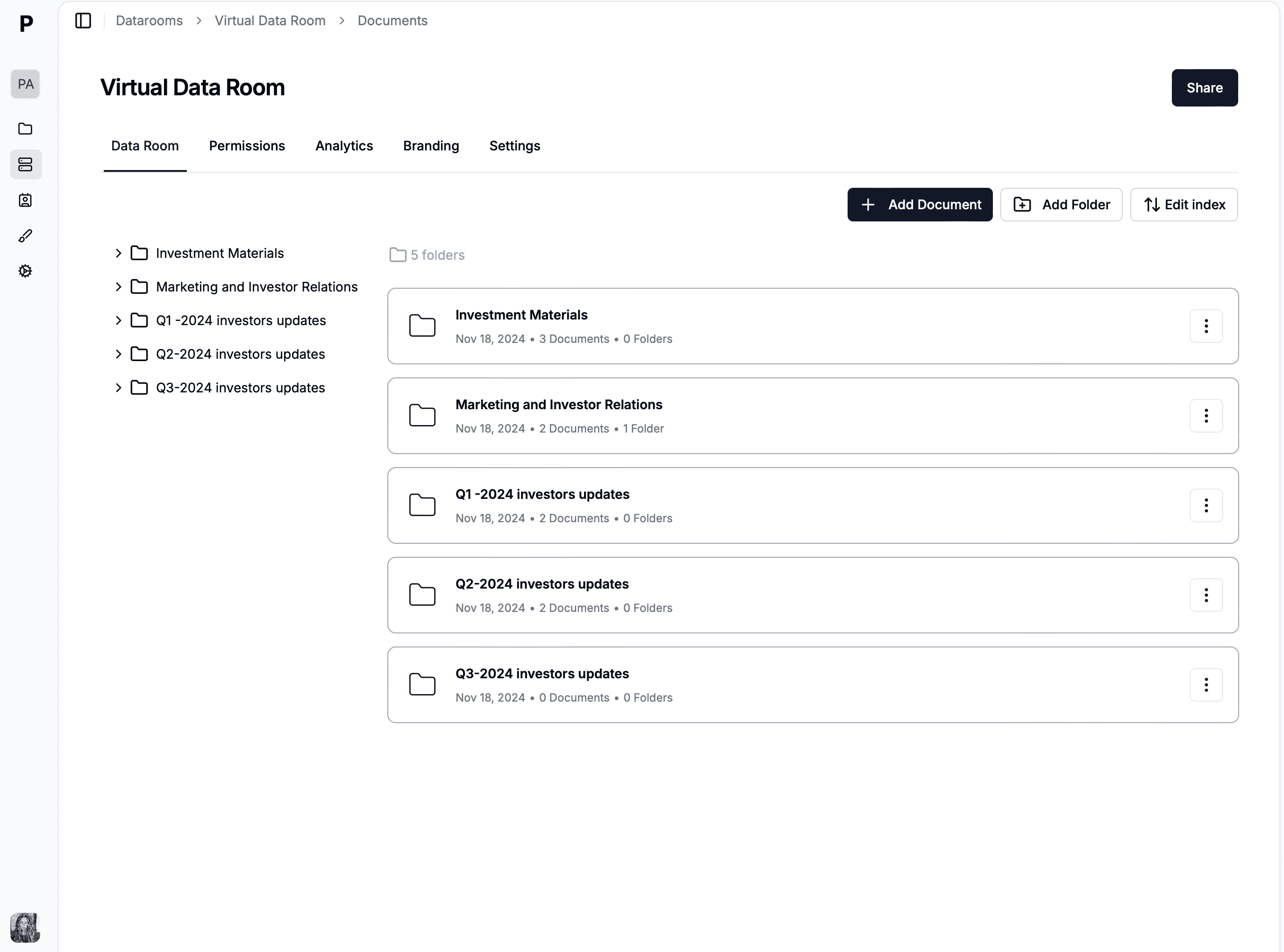
RR Donnelley Venue review for 2026: real pricing from $15,000, features, pros and cons, and 5 virtual data room alternatives including Papermark at €99/month.
DealRoom VDR review for 2026: $25,000/year start, AI diligence, FirmRoom ownership, and 4 alternatives. Papermark from €99/month with AI redaction.