BlogData RoomsThe Ultimate Startup Data Room Checklist: What to Include in 2026
The Ultimate Startup Data Room Checklist: What to Include in 2026
·2 min read
Marc Seitz
Preparing for investor due diligence can be overwhelming. Many founders struggle with what documents to include, how to organize them, and how to share them securely. In fact, a poorly organized data room can delay fundraising or even kill a deal entirely.
This comprehensive checklist will help you build a professional-grade data room that impresses investors and streamlines your fundraising process.
Complete Startup Data Room Checklist
Here's a comprehensive checklist of documents to include in your startup data room:
The foundation of your data room should be a clear and compelling company overview that helps investors quickly understand your business:
2. Financial Documents
Investors need a comprehensive view of your financial health and future projections to evaluate the investment opportunity:
3. Legal Documents
Demonstrate your company's legal compliance and corporate governance with these essential documents:
4. Team Information
Showcase the strength and experience of your team, as investors often say they invest in people first:
5. Intellectual Property
Protect and highlight your company's competitive advantages and proprietary technology:
Example Startup Data Room Checklist
Here's a practical example of what a seed-stage SaaS startup might include in their data room:
Priority Level
Document Type
Status
Priority 1 (Must-Have)
Latest pitch deck
✅
Priority 1 (Must-Have)
Cap table
✅
Priority 1 (Must-Have)
Financial model with 3-year projections
✅
Priority 1 (Must-Have)
Last 12 months of financial statements
✅
Priority 1 (Must-Have)
Certificate of incorporation
✅
Priority 1 (Must-Have)
Team overview with key hires timeline
✅
Priority 1 (Must-Have)
Product roadmap
✅
Priority 1 (Must-Have)
Customer metrics dashboard
✅
Priority 2 (Important)
Customer contracts (top 3-5)
✅
Priority 2 (Important)
Employment agreements for key team members
✅
Priority 2 (Important)
Technical architecture overview
✅
Priority 2 (Important)
Market size analysis
✅
Priority 2 (Important)
Competitor analysis
✅
Priority 2 (Important)
Customer testimonials/case studies
✅
Priority 3 (Nice-to-Have)
Board meeting minutes
✅
Priority 3 (Nice-to-Have)
Marketing strategy
✅
Priority 3 (Nice-to-Have)
Sales pipeline
✅
Priority 3 (Nice-to-Have)
Product demo videos
✅
Priority 3 (Nice-to-Have)
Press mentions
✅
Priority 3 (Nice-to-Have)
Previous investor updates
✅
Papermark customization and domain is what stood out for me. Really helped us during raising our $35M Fund.
David Citron
Partner at TBD VC
💡 Pro Tip: Start with Priority 1 documents and work your way down. Most investors will initially focus on these core documents anyway.
How to Organize and Secure Your Data Room
A well-organized and secure data room is crucial for successful fundraising. Here's how to structure and protect your documents effectively:
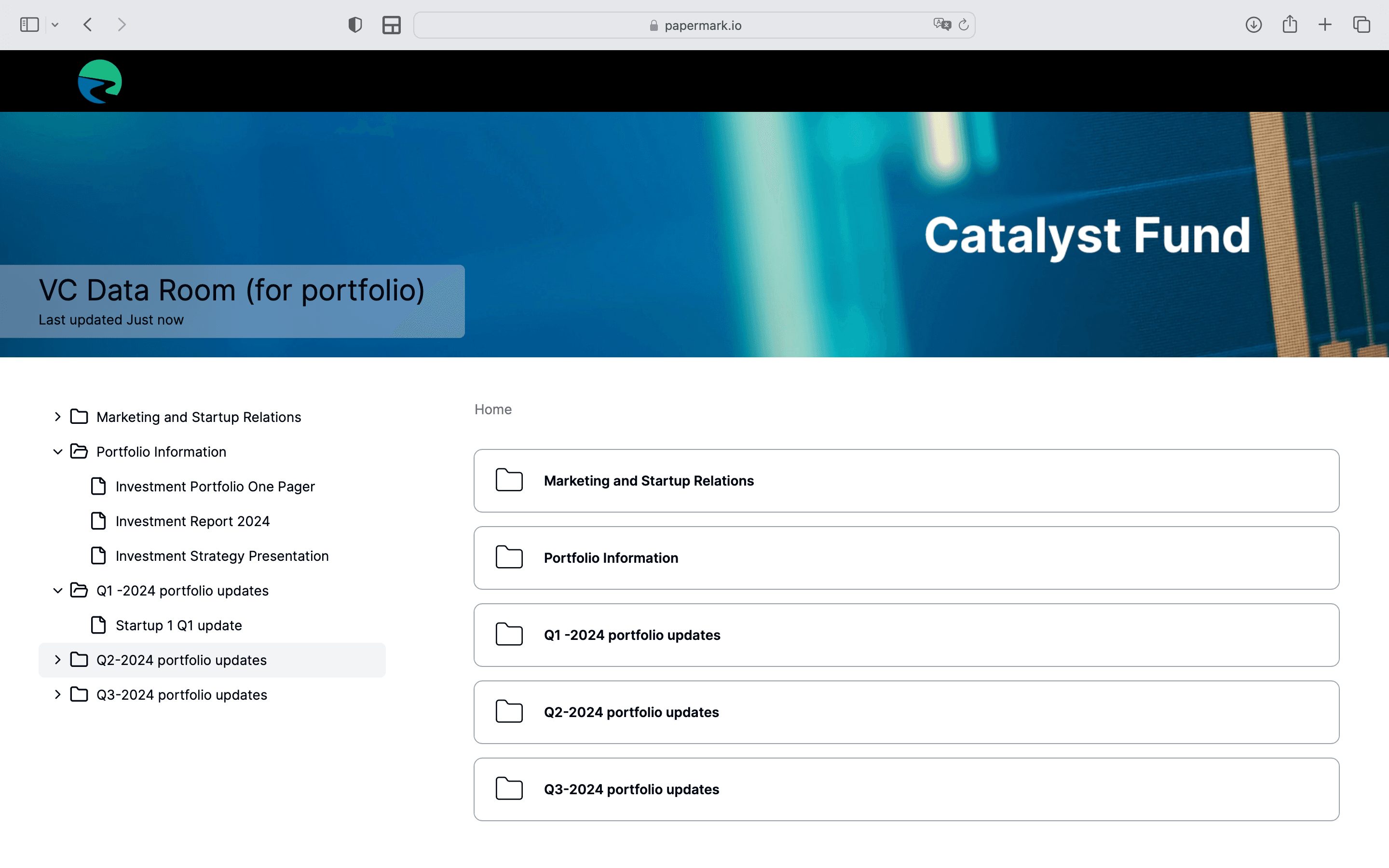
1. Document Organization
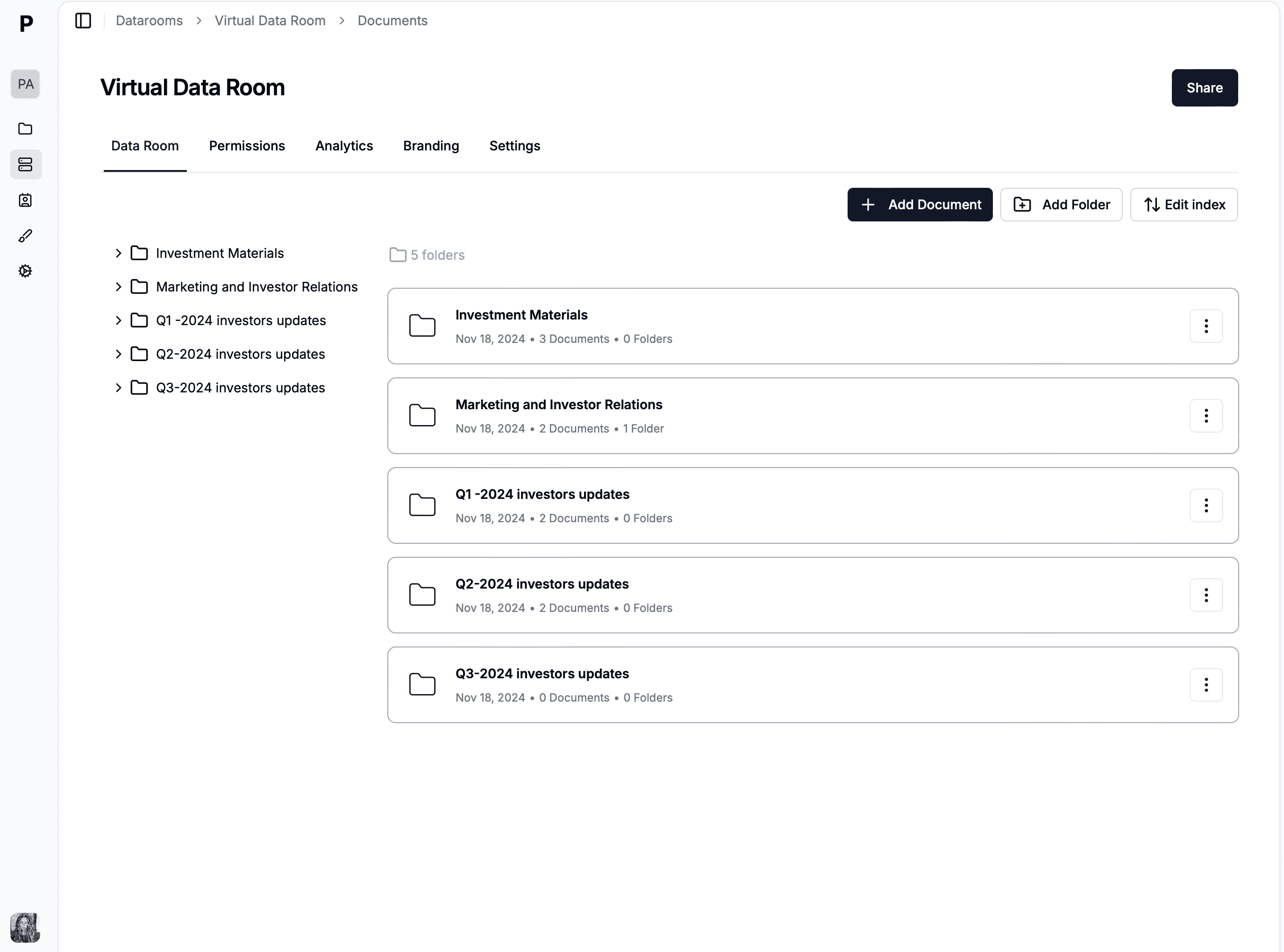
Create Clear Categories: Use the categories from the checklist above
Consistent Naming: Use clear, descriptive file names (e.g., "2024_Q1_Financial_Statements.pdf")
Version Control: Include dates in file names for updated documents
Index Document: Create a master document explaining the structure
Progressive Disclosure: Organize documents in layers of sensitivity
2. Security and Access Control
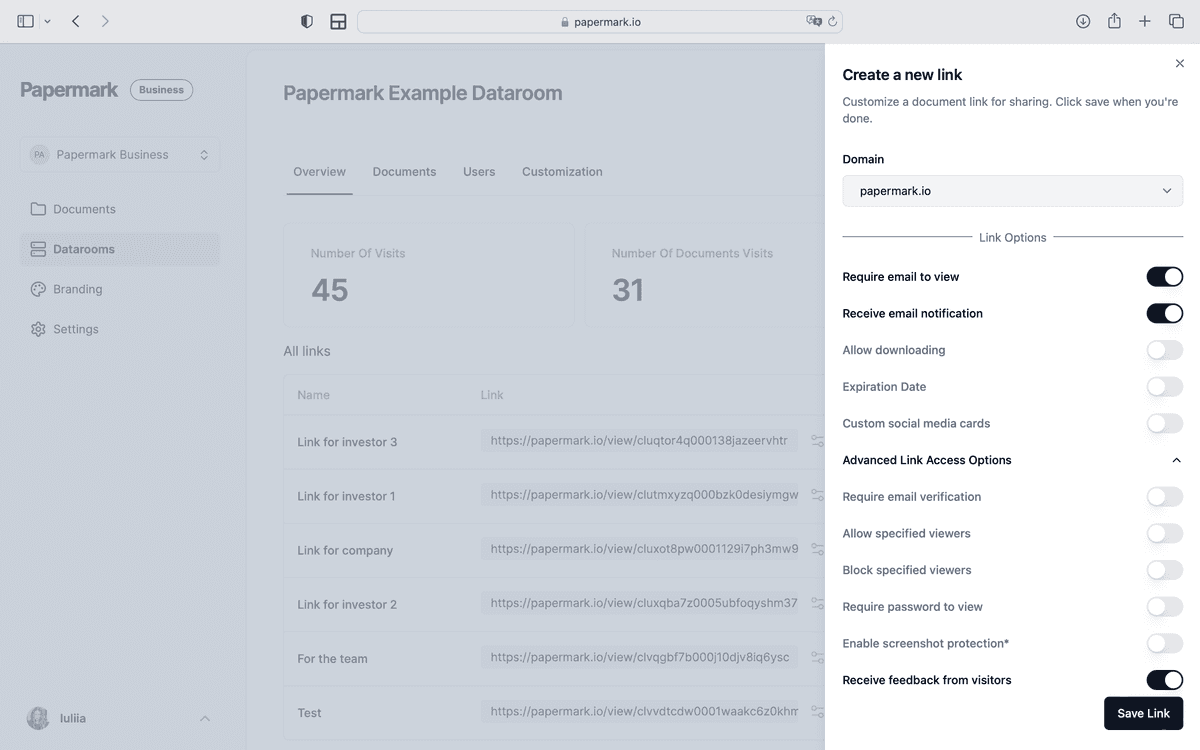
Email Verification: Require viewers to verify their email before access
Access Levels: Structure folders based on document sensitivity:
Level 1: Public information (pitch deck, company overview)
Level 2: Basic confidential info (financial highlights, team bios)
Level 3: Sensitive data (detailed financials, contracts)
Viewer Permissions: Set different access levels for different stakeholders
Time-Limited Access: Set expiration dates for document access
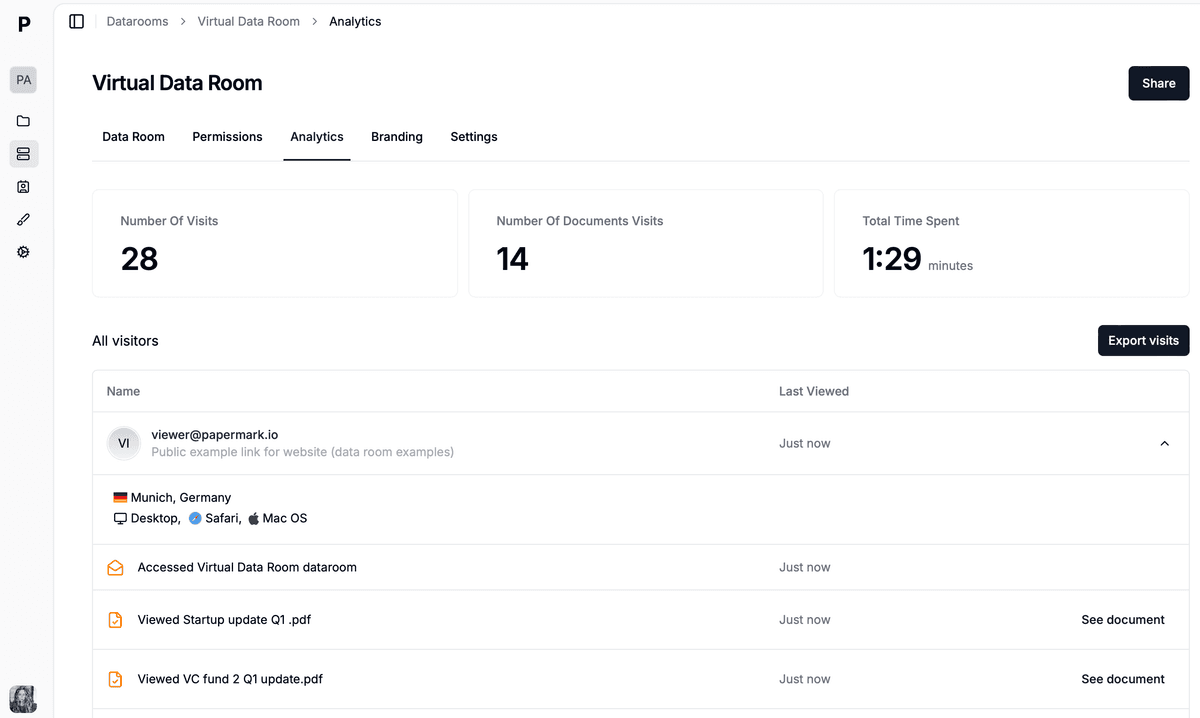
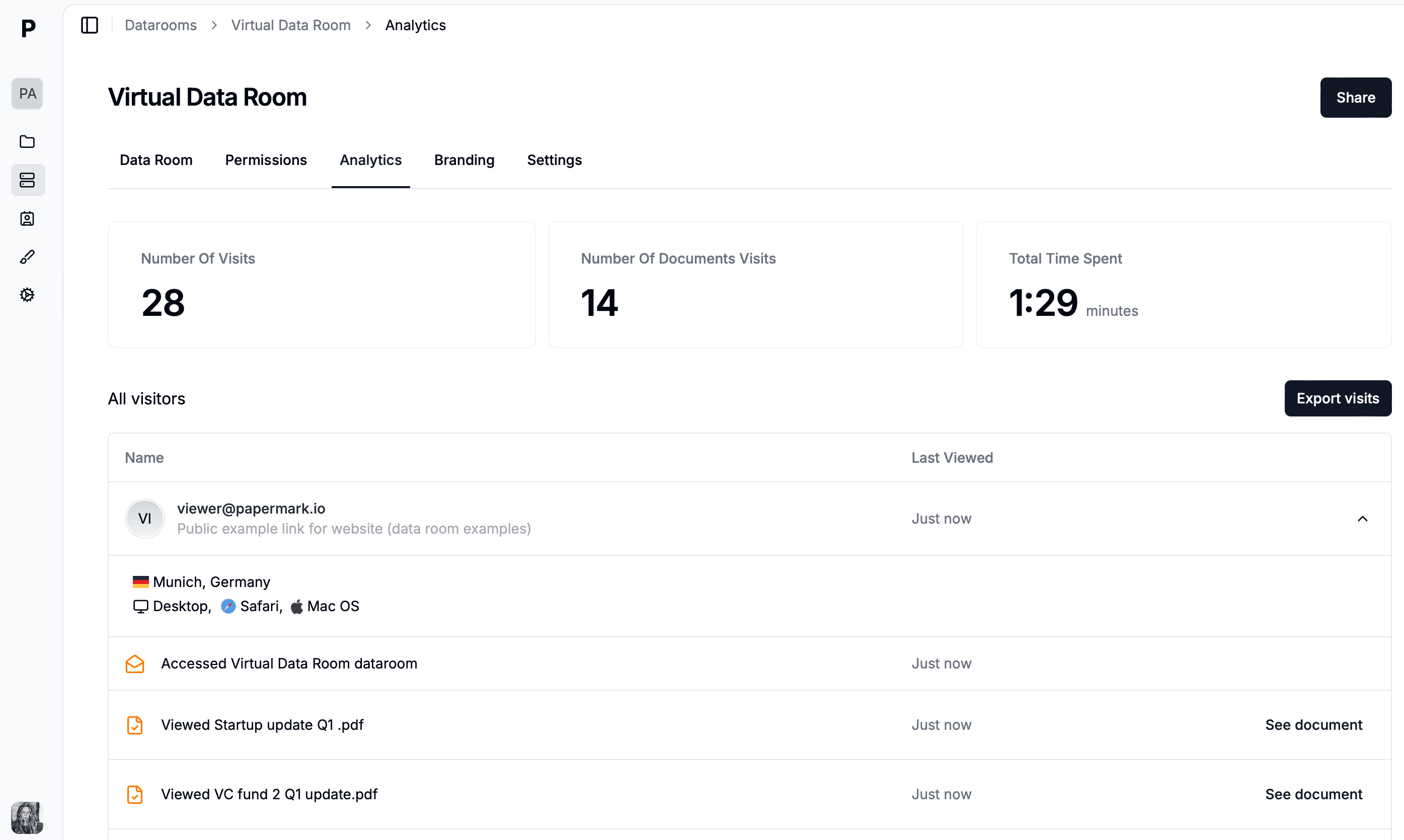
Activity Tracking: Monitor who views what and when
3. Document Protection
Watermarking: Add dynamic watermarks with viewer information
Download Controls: Disable downloads for sensitive documents
NDA Integration: Require NDA acceptance before accessing sensitive materials
Password Protection: Add an extra layer of security for critical documents
Cost Considerations
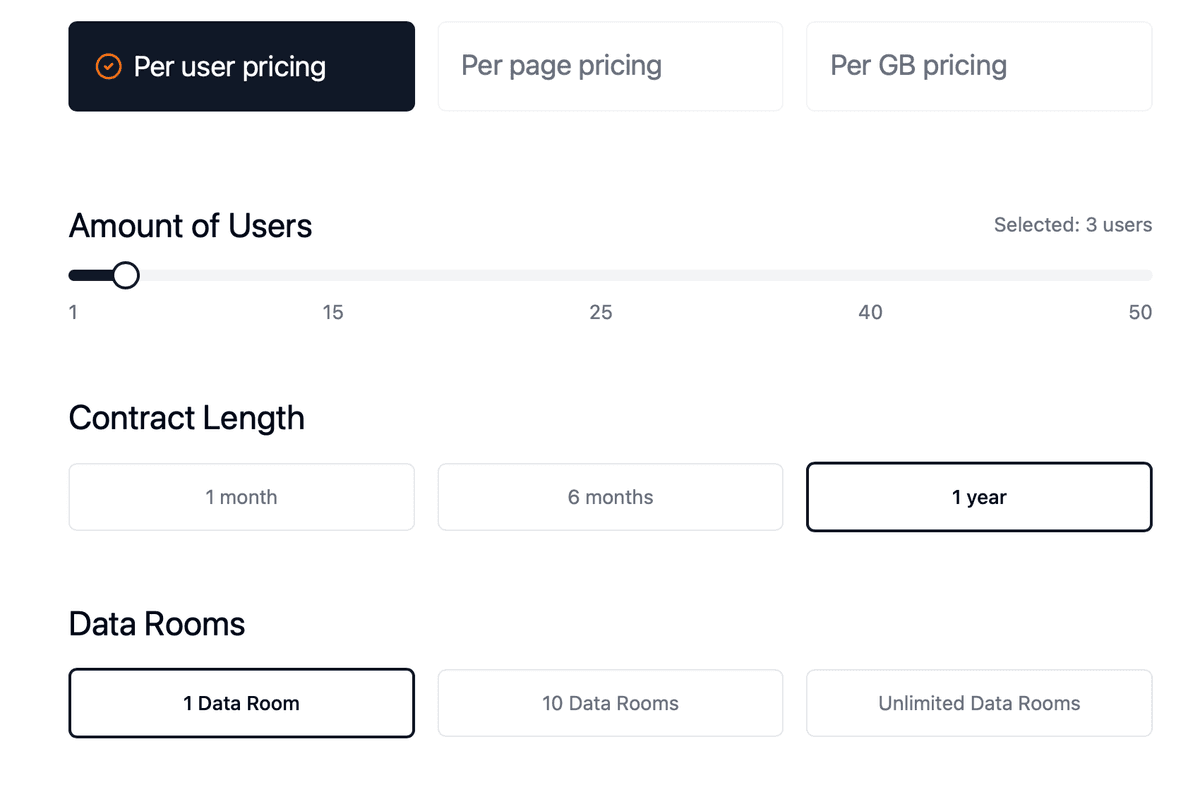
Traditional virtual data rooms can be expensive, often charging:
Per user
Per document
Per storage amount
Per room
Papermark offers a more startup-friendly approach with:
Flat pricing at €59/month (billed yearly)
Unlimited data rooms
Unlimited users
Unlimited storage
All security features included
Tips for Success
Start Early: Begin organizing your data room before you need it
Keep it Updated: Regularly review and update documents
Quality Over Quantity: Focus on essential documents first
Progressive Disclosure: Consider staging document access based on investor interest
Track Engagement: Use analytics to understand investor interest
Conclusion
A well-organized data room is essential for startups seeking investment. It demonstrates professionalism, streamlines due diligence, and helps build investor confidence. With Papermark's secure and affordable solution, you can create a professional data room that impresses investors while protecting your sensitive information.