Corporate Acquisition Strategy in 2026: A 10-Step Framework
·12 min read
Marc Seitz
Most acquisitions fail. McKinsey found that 70% of M&A deals don't create the expected value. The reason? Poor strategy.
Companies buy for the wrong reasons, overpay, or struggle with integration. But the ones that get it right grow faster, enter new markets, and build competitive moats that organic growth alone can't match.
This guide covers how to build an acquisition strategy that actually works - from identifying the right targets to closing deals that create lasting value.
Quick Recap: Building Your Acquisition Strategy
Here's the corporate acquisition process in numbered steps:
Define your strategic goals - know exactly why you're acquiring
Build a target pipeline - 20-50 potential companies that fit your criteria
Prioritize targets - rank by strategic fit and feasibility
Initial outreach - approach targets through bankers or direct contact
Preliminary due diligence - financial, operational, and cultural assessment
Valuation and offer - determine fair value and submit LOI
Deep due diligence - comprehensive review in a data room
Negotiate definitive agreement - finalize terms and structure
Close and integrate - execute the deal and realize synergies
The alternative for document version control
No credit card required
Page by page analytics
Require email verification
Require password to view
Allow/Block specified viewers
Apply Watermark
Require NDA to view
Custom Welcome Message
Why Companies Acquire
Every acquisition should serve a clear strategic purpose. The best acquirers know exactly what they're buying and why.
Strategic Rationales That Work
Market expansion - Enter new geographies or customer segments faster than building from scratch. A European software company buying a US competitor to access the American market.
Technology acquisition - Get capabilities your team can't build in time. Google buying Android, Facebook buying Instagram - acquiring technology and teams that would take years to develop internally.
Talent acquisition - Sometimes called "acqui-hires." You're buying the team more than the product. Common in tech for specialized engineering talent.
Vertical integration - Control more of your supply chain. A manufacturer buying its key supplier to secure pricing and availability.
Horizontal integration - Consolidate a fragmented market. Roll up smaller competitors to gain economies of scale.
Product expansion - Add complementary products to cross-sell to your customer base. Adobe buying Magento to sell e-commerce tools to creative professionals.
Bad Reasons to Acquire
We have cash to deploy - Having capital isn't a strategy. You'll overpay.
Our competitors are acquiring - Following the herd leads to bad deals.
To boost short-term revenue - If you can't grow organically, buying growth rarely works.
CEO wants to build an empire - Acquisitions driven by ego destroy value.
The best acquisitions solve specific business problems or accelerate strategic goals you've already identified.
Building Your Acquisition Criteria
Before you look at any targets, define your criteria. What kind of companies make sense for your strategy?
Key Criteria to Define
Revenue size - Are you looking for €5M companies or €50M companies? Smaller acquisitions are easier to integrate but create less impact. Larger ones move the needle but carry more risk.
Profitability - Will you only consider profitable companies, or are you willing to buy growth companies burning cash? Profitable companies cost more but are less risky.
Geography - Same country, same region, or global? Cross-border deals add complexity (different regulations, currencies, cultures) but open bigger markets.
Industry and vertical - Exactly which market segments fit your strategy? Be specific. "SaaS companies" is too broad. "SaaS companies selling marketing automation to mid-market B2B companies in Europe" is a real criteria.
Technology stack - Does their technology integrate with yours? If you're a cloud-native company, buying a company running on-premise legacy software creates integration headaches.
Customer base - Do they serve the same customers? Overlapping customers means easier cross-selling. Different customers means market expansion.
Culture and values - Acquisitions fail when cultures clash. Define the cultural attributes that matter to you.
Create a Scoring System
Build a simple scoring framework to evaluate potential targets:
Strategic fit (40%):
Addresses our key strategic priorities
Complements our existing products/services
Expands our market position
Financial performance (30%):
Revenue growth rate
Profitability or path to profitability
Customer retention
Integration feasibility (20%):
Technology compatibility
Cultural alignment
Geographic proximity
Risk factors (10%):
Customer concentration
Key person dependencies
Legal or regulatory issues
Score each target on each dimension, weight the scores, and you'll have an objective way to prioritize your pipeline.
Finding Acquisition Targets
Now you need to identify companies that fit your criteria. This is where most corporate development teams spend their time.
Build Your Target List
Start with a broad list of 50-100 companies, then narrow it down.
Industry databases - Use Crunchbase, PitchBook, or CB Insights to search for companies by industry, size, and funding stage.
Competitor research - Who are your competitors acquiring? Who's in their ecosystem?
Customer and partner networks - Your customers and partners often know other companies in your space.
LinkedIn and AngelList - Search by industry, company size, and location.
Trade publications and conferences - Industry publications often profile interesting companies. Conference exhibitors and speakers are often acquisition targets.
Investment bankers - M&A advisors maintain databases of companies that might be open to acquisition.
Narrow to Your Top 20-30
From your initial list, narrow down to 20-30 targets you'll actively pursue. Prioritize based on:
Strategic fit score (using your framework)
Likely acquisition price vs. your budget
Openness to acquisition (are they actively shopping or would this be an unsolicited approach?)
Competitive dynamics (are others also pursuing them?)
For each target, create a one-page profile:
Company overview and history
Key products and customers
Financial performance (if available)
Competitive positioning
Why they fit your strategy
Estimated valuation range
Potential deal risks
Approaching Targets
You've identified your top targets. How do you start a conversation without scaring them off or tipping off competitors?
Direct Outreach vs. Banker Introduction
Direct outreach works well when:
You have an existing relationship (customer, partner, investor)
The company is known to be exploring options
You're significantly larger and they'd view an offer positively
Banker introduction works better when:
You have no existing relationship
The approach might be viewed as hostile
You want to maintain confidentiality
Multiple potential buyers are in play
The First Conversation
Your initial outreach should be short and intriguing, not detailed:
"Hi [Founder/CEO], I'm [Name] from [Company]. We've been impressed by what you've built at [Target Company], especially [specific achievement]. We're exploring strategic partnerships and potentially closer collaboration. Would you be open to a conversation?"
Don't lead with "we want to buy you." Start with partnership or collaboration. Many acquisition conversations begin as partnership discussions.
Confidentiality and NDAs
Before sharing sensitive information, both sides sign an NDA (non-disclosure agreement). This protects:
Financial information
Customer lists
Technology and trade secrets
The fact that acquisition discussions are happening
Make sure your NDA includes:
Non-solicitation clause (you won't hire their employees during negotiations)
Standstill provision (you won't make hostile offers or buy shares for a certain period)
Return or destruction of confidential information if the deal doesn't happen
Use Papermark to share your NDA securely. You can see when they open it, how long they review it, and get signatures electronically.
Valuation: What's It Worth?
Valuation is part art, part science. You need a number that makes strategic sense for you while being attractive enough for the seller.
Common Valuation Methods
Revenue multiple - Most common for high-growth companies. SaaS companies often trade at 5-15x annual recurring revenue depending on growth rate and profitability.
EBITDA multiple - Common for profitable companies. Industry multiples range from 4-10x EBITDA for mid-market companies.
Discounted cash flow (DCF) - Project future cash flows and discount to present value. More theoretical but useful for scenario modeling.
Comparable transactions - Look at recent acquisitions of similar companies in your industry. What did they sell for relative to revenue, users, or EBITDA?
Strategic Premium
You'll often pay more than financial buyers (private equity) because you can realize synergies they can't:
Revenue synergies (cross-selling, bundling)
Cost synergies (eliminate duplicate functions)
Technology synergies (integrate products)
If you can generate €5M in annual synergies, paying an extra €20M makes sense (4x multiple on synergies).
Letter of Intent (LOI)
Once you agree on a ballpark valuation, you submit a letter of intent outlining:
Proposed purchase price and structure (cash, stock, earnout)
Key terms and conditions
Exclusivity period (typically 60-90 days)
Timeline for due diligence and closing
LOIs are usually non-binding except for exclusivity and confidentiality. This gives both sides a framework to proceed while allowing you to adjust based on due diligence findings.
Due Diligence Process
This is where you validate everything the seller told you and uncover risks.
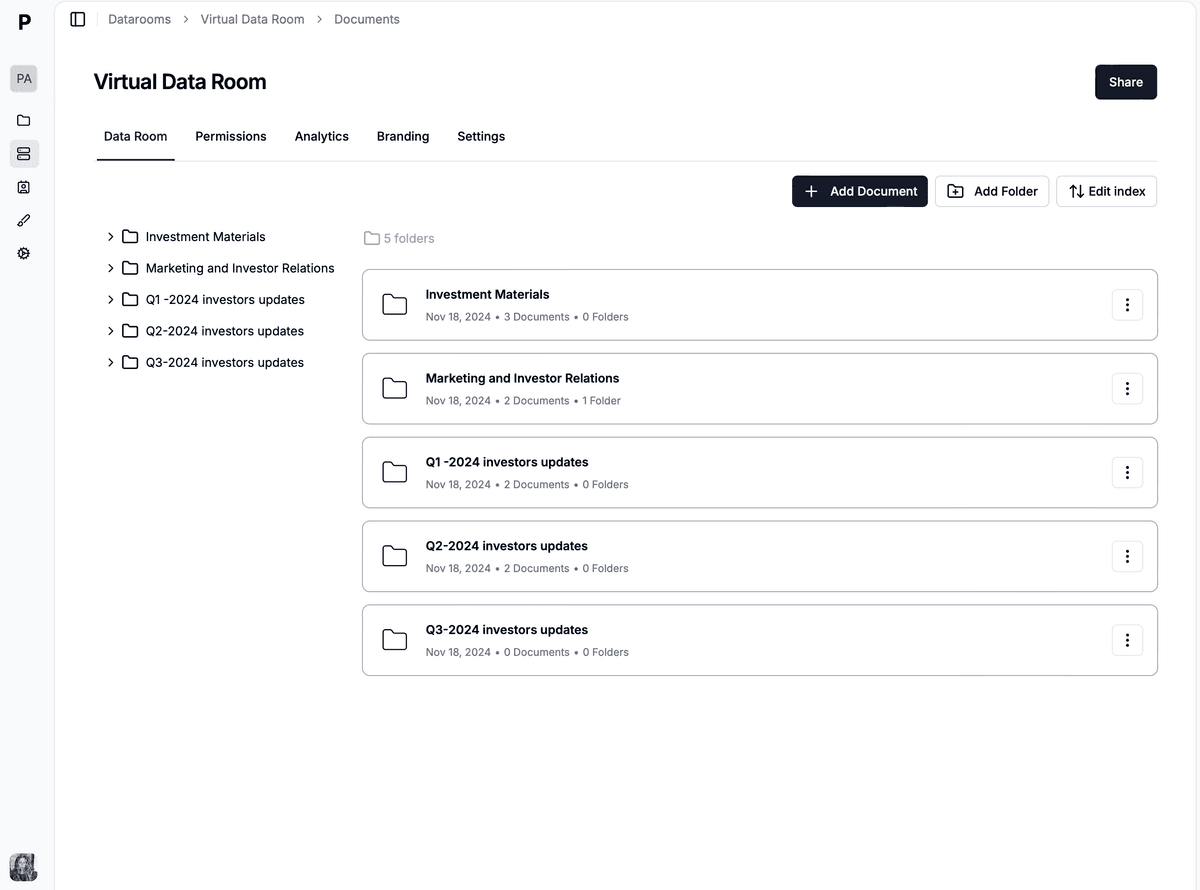
Set Up a Data Room
The seller provides a virtual data room with all key documents. You'll review:
Financial due diligence:
3-5 years of audited financials
Monthly management accounts
Customer contracts and revenue recognition policies
Accounts receivable aging
Debt schedules and obligations
Legal due diligence:
Corporate structure and ownership
Material contracts (customers, suppliers, partners)
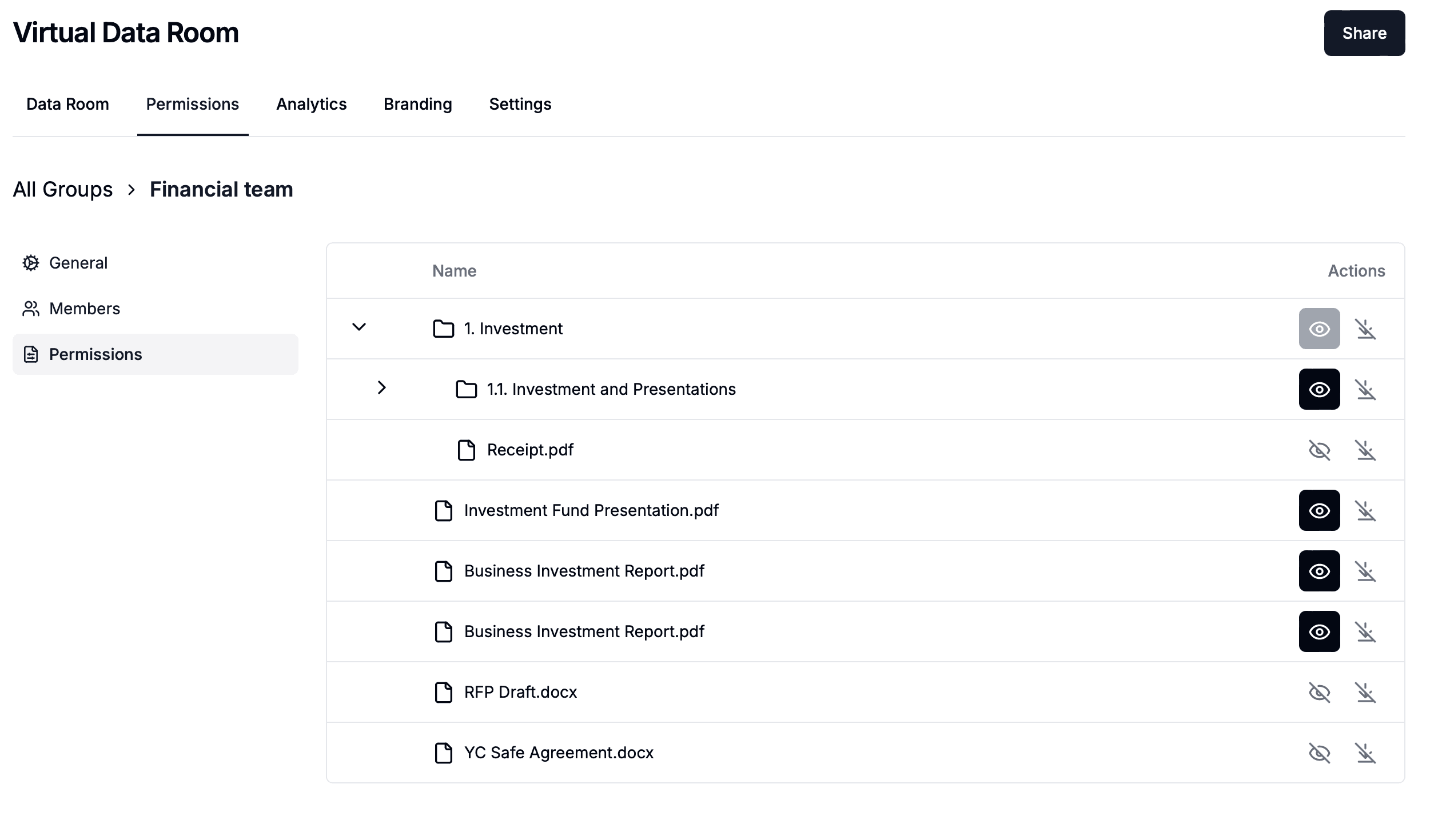
Sellers use Papermark to create secure, professional data rooms for buyers to review.
Why it works for M&A:
Granular permissions - control which buyers see which documents
Activity tracking - see which documents each buyer reviews and for how long
Q&A workflow - buyers can ask questions directly on documents
Audit trail - complete record of who accessed what and when
Custom branding - white-label the data room with your company domain
For buyers, Papermark data rooms make due diligence more efficient. You can see what other work streams are reviewing, track outstanding items, and organize findings.
Negotiating the Deal
Due diligence uncovered some issues (it always does). Now you need to adjust terms or decide if the deal still makes sense.
Common Negotiation Points
Price adjustment - If revenue is lower than claimed or customer churn is higher, you'll want to reduce the price or add an earnout.
Earnouts - Pay part of the purchase price based on future performance. Useful when there's uncertainty about growth. Typical earnout periods are 1-3 years.
Indemnification - Protections if the seller misrepresented something material. Usually capped at 10-20% of purchase price and limited to 12-24 months post-close.
Key person retention - If the founder or key employees are critical, you'll want retention bonuses or employment agreements ensuring they stay for 1-2 years.
Working capital adjustment - Ensure the company has enough cash and working capital at closing to operate normally.
Red Flags to Walk Away
Sometimes the right move is to walk away. Red flags that should end negotiations:
Material misrepresentation - they lied about revenue, customers, or legal issues
Customer concentration - 50%+ of revenue from one customer who's about to leave
Undisclosed liabilities - major lawsuits, regulatory issues, or debt
Cultural misalignment - after meeting the team, it's clear they won't integrate with your company
Key person dependency - the entire business depends on the founder who won't stay
Walking away from a bad deal is better than closing and regretting it. The best acquirers have strong deal discipline.
Integration Planning
The deal closes. Now comes the hardest part: making the acquisition work.
Start Planning Early
Integration planning should begin during due diligence, not after closing. By the time you close, you should have:
Day 1 plan - What happens on the first day:
Employee communication (what's changing, what's staying the same)
Customer communication (reassure them about continuity)
System access and IT integration
Leadership structure and reporting lines
First 100 days plan - Key milestones:
Week 1-4: Stabilize operations, communicate with all stakeholders
Week 5-8: Identify quick wins and begin integration work streams
Week 9-12: Execute quick wins, show early success
Week 13+: Tackle larger integration projects
Integration team - Assign an integration lead and work stream owners:
Product and technology integration
Sales and go-to-market
Operations and back-office systems
Culture and people
Realize Synergies
You paid a premium based on synergies. Now you need to deliver them.
Revenue synergies typically take longer (6-18 months):
Cross-sell products to each other's customers
Bundle products for higher prices
Expand into new markets using combined capabilities
Cost synergies can happen faster (3-6 months):
Eliminate duplicate roles (HR, finance, IT)
Consolidate vendors and negotiate better pricing
Reduce facility costs
Track synergy realization monthly. CFOs and boards will hold you accountable to the business case you presented.
Common Acquisition Mistakes
After watching hundreds of M&A deals, here are the most common mistakes:
Paying too much - Getting emotionally attached to a target and overpaying. Remember: every deal has a price where it doesn't make sense.
Skipping cultural assessment - Assuming two companies will work together because they're in the same industry. Culture clash kills deals.
Weak integration planning - Figuring out integration after closing instead of before.
Over-optimistic synergies - Assuming 100% of synergies will materialize in 12 months. Reality: 60-70% over 18-24 months is good.
Ignoring key employees - Not retaining the critical people who made the company valuable in the first place.
Announcing too early - Leaking the deal before it's signed creates problems with employees, customers, and competitors.
Analysis paralysis - Spending so long on due diligence that the seller gets frustrated or a competitor swoops in.
Key Takeaways
Corporate acquisition strategy is about disciplined execution, not deal volume. Here's what matters:
Start with strategy - know exactly why you're acquiring before you look at targets
Build clear criteria - define what makes a good target for your specific goals
Do thorough due diligence - use a virtual data room to organize and track document review
Value conservatively - pay for proven value, not speculative synergies
Plan integration early - start during due diligence, not after closing
Communicate constantly - employees, customers, and investors need clarity and reassurance
Walk away from bad deals - discipline beats desperation
The best acquirers buy fewer companies, pay fair prices, and execute integration ruthlessly.