

mergers-and-acquisitions
Entrepreneurship Through Acquisition 2026: 8 Steps and the Owner Trap
Entrepreneurship through acquisition in 2026: four search models, SBA financing up to $5M, an 8-step process, and the data room for an ETA acquisition.
Acquiring a company means buying an existing business along with its customers, contracts, and staff instead of building those from scratch. For a first-time buyer the process runs eleven stages, takes four to seven months, and costs 1% to 3% of deal value in advisory fees before a single dollar of purchase price changes hands.
This guide gives the sequence, the numbers, and the decision gate at each stage.
For a $20M acquisition of a profitable mid-market business, a realistic plan looks like this.
| # | Stage | Duration | Runs in parallel? | Typical cost |
|---|---|---|---|---|
| 1 | Define criteria | 1-2 weeks | No | Internal time only |
| 2 | Source targets | 4-12 weeks | Yes | $0 direct, or 1-2% success fee via broker |
| 3 | Contact and NDA | 1-2 weeks | Yes | $1,500-$3,000 legal |
| 4 | Preliminary diligence | 2-3 weeks | No | $5,000-$15,000 |
| 5 | Valuation and LOI | 2-3 weeks | No | $10,000-$25,000 |
| 6 | Full due diligence | 6-12 weeks | Yes | $80,000-$250,000 |
| 7 | Financing | 4-10 weeks | Yes | 1-2% arrangement fee on debt |
| 8 | Purchase agreement | 2-4 weeks | Yes | $40,000-$120,000 legal |
| 9 | Regulatory approvals | 4-24 weeks | Yes | $30,000+ if HSR applies |
| 10 | Closing | 1 week | No | Included above |
| 11 | Integration | 100 days+ | After close | 1-3% of deal value |
Total elapsed time: four to seven months for an unregulated deal, seven to twelve months if HSR or a foreign-investment review applies.
Total transaction cost before purchase price: roughly $170,000 to $450,000 on a $20M deal, or 0.9% to 2.3% of deal value. Smaller deals cost proportionally more, because legal and accounting work has a floor that does not scale down.
Name your rationale before you approach a target. It determines the price you can justify, the diligence you emphasize, and the way you integrate.
| Rationale | What you are actually buying | Where the value leaks |
|---|---|---|
| Growth acceleration | Revenue and customers, immediately | Overpaying for growth that was already decelerating |
| Geographic expansion | Local presence, licences, relationships | Underestimating regulatory and hiring differences |
| Technology and talent | An intact engineering team | Attrition once earn-outs vest |
| Product expansion | A feature your customers already ask for | Integration debt between two codebases |
| Vertical integration | Margin currently paid to a supplier | Losing the supplier's other customers post-deal |
| Market consolidation | Pricing power, one fewer competitor | Antitrust review, and customer churn to a third player |
The consistent finding across decades of M&A research is that a majority of acquisitions fail to create value for the buyer. The three causes that recur are overpayment, thin diligence, and integration treated as an afterthought. Each of the eleven steps below exists to attack one of those three.
| Strategic | Financial (PE) | Acqui-hire | |
|---|---|---|---|
| Buyer | Operating company in a related market | Private equity or investment firm | Larger company, usually tech |
| Buying for | Synergy and market position | Return on invested capital | The team |
| Typical premium | Highest, synergies justify it | Disciplined, returns-driven | Priced per engineer |
| Hold period | Permanent | 3-7 years, then exit | Permanent, product often wound down |
| Leverage used | Low to moderate | High | None |
| Main risk | Integration complexity | Debt service if cash flow dips | Retention after earn-out vests |
This choice determines which liabilities travel with the deal, and it is one of the most negotiated points in any transaction.
| Asset purchase | Stock purchase | |
|---|---|---|
| What transfers | Named assets and assumed contracts | The legal entity, entirely |
| Unknown liabilities | Stay with the seller | Transfer to you |
| Contract consents | Usually required, one by one | Usually not, absent change-of-control clauses |
| Tax position | Buyer gets a stepped-up basis | No step-up; seller usually pays less tax |
| Preferred by | Buyer | Seller |
| Typical use | Distressed targets, carve-outs, divisions | Healthy going concerns |
Because each side prefers the opposite structure, the gap is normally closed with price. A seller pushed into an asset sale will ask for more to offset the higher tax bill.
Treat each step as a gate with an explicit decision. Walking away at step 4 costs $15,000. Walking away at step 8 costs $200,000.
Duration: 1-2 weeks. Output: a one-page screen. Gate: can you reject a target in under ten minutes?
| Dimension | Specify | Worked example |
|---|---|---|
| Strategic | Industry, geography, business model, tech stack | B2B SaaS, US or EU, subscription revenue |
| Financial | Revenue band, margin floor, multiple ceiling, max price | $3M-$8M revenue, positive EBITDA, max 5x revenue |
| Risk | Customer concentration cap, key-person dependence | Top 10 customers under 40% of revenue |
| Cultural | Management style, retention expectations | Founders stay 24 months minimum |
Vague criteria are the root cause of overpayment. If your screen cannot produce a fast no, it will not protect you from a target you have grown attached to.
Duration: 4-12 weeks. Output: 10-20 screened targets, 3-5 prioritized. Gate: do you have a credible alternative to your favourite?
| Channel | Typical deal size | Cost to you | Price effect | Speed |
|---|---|---|---|---|
| Investment bank / M&A advisor | $20M+ | 1-2% success fee | Higher, competitive process | Fast, structured |
| Business broker | $1M-$50M | 5-10% seller-paid | Moderate | Moderate |
| Direct outreach | Any | Your time | Lowest | Slow, 6-18 months |
| Industry network | Any | Free | Low | Unpredictable |
| Distressed / insolvency | Any | Legal fees | Deep discount | Very fast, high risk |
Negotiating leverage comes from alternatives. A buyer with one target has no ability to walk, and sellers price that in.
Duration: 1-2 weeks. Output: signed mutual NDA. Gate: is the owner actually a seller?
Qualify for motivation and timeline before anything else. An owner who is "open to the right offer" is not the same as an owner who has decided to sell, and the difference is six months of your time.
The NDA should be mutual, run 2-3 years, define confidential information broadly, and include a non-solicit covering the target's employees. Have a clean template ready so momentum is not lost to a two-week legal round trip.
Duration: 2-3 weeks. Cost: $5,000-$15,000. Output: a go/no-go and a price range. Gate: any deal-breaker?
You are not auditing the business. You are looking for the five to ten facts that would change your mind entirely.
| Area | Request | Deal-breaker signal |
|---|---|---|
| Financial | 3-5 years of P&L, balance sheet, revenue by customer | Restated financials, or revenue concentrated above 30% in one account |
| Legal | Cap table, litigation summary, IP ownership | Unresolved IP ownership, or founder equity disputes |
| Operational | Org chart, top 10 customer and supplier contracts | A single key person holding all customer relationships |
| Commercial | Churn, pipeline, competitive position | Churn rising for four consecutive quarters |
Duration: 2-3 weeks. Output: a signed Letter of Intent. Gate: does the price survive your own downside case?
Triangulate across four methods rather than trusting one.
| Method | How it works | Best for | Typical range |
|---|---|---|---|
| Revenue multiple | Multiple applied to ARR or annual revenue | High-growth, low-profit SaaS | 3x-10x revenue |
| EBITDA multiple | Multiple applied to normalized EBITDA | Profitable, stable businesses | 5x-12x EBITDA |
| Discounted cash flow | Project cash flows, discount to present value | Predictable cash generators | Sensitive to assumptions |
| Comparable transactions | What similar companies actually sold for | Every deal, as a sanity check | Grounds the other three |
Smaller businesses trade lower. Owner-operated companies under $5M of revenue commonly change hands at 3x-6x EBITDA, because the buyer is also replacing the owner's labour.
Then choose the structure, which is often as negotiable as the price itself.
| Structure | Seller preference | Buyer benefit | Watch for |
|---|---|---|---|
| All cash | Highest | Clean, fastest close | Requires financing certainty |
| Stock | Low, unless liquid | Preserves cash | Dilution, and valuation of your own shares |
| Earn-out | Low | Bridges a valuation gap | Disputes over how the target is measured post-close |
| Seller note | Moderate | Reduces cash needed, keeps seller invested | Subordination to bank debt |
The LOI captures price, structure, exclusivity (typically 60-90 days), and closing conditions. It is largely non-binding except for exclusivity and confidentiality, but it sets the anchor for everything that follows.
Duration: 6-12 weeks. Cost: $80,000-$250,000 on a $20M deal. Output: a findings report that feeds price and indemnity. Gate: does anything found here change the number in the LOI?
Four workstreams run in parallel, each with its own advisor.
| Workstream | Who runs it | Core question | Typical cost | Classic red flag |
|---|---|---|---|---|
| Financial (quality of earnings) | Accounting firm | Are the earnings real and repeatable? | $40,000-$145,000 | Add-backs that normalize away recurring costs |
| Legal | Law firm | What do we inherit? | $30,000-$120,000 | Change-of-control clauses in top contracts |
| Operational | Internal or consultant | Does it run without the owner? | $15,000-$60,000 | Undocumented processes, single points of failure |
| Commercial | Consultant | Will customers stay? | $20,000-$85,000 | Churn masked by a few large expansions |
Quality of earnings is the single highest-return line item. It exists to find the difference between reported EBITDA and the EBITDA you will actually receive, and on a 6x multiple every $100,000 of overstated EBITDA is $600,000 of overpayment.
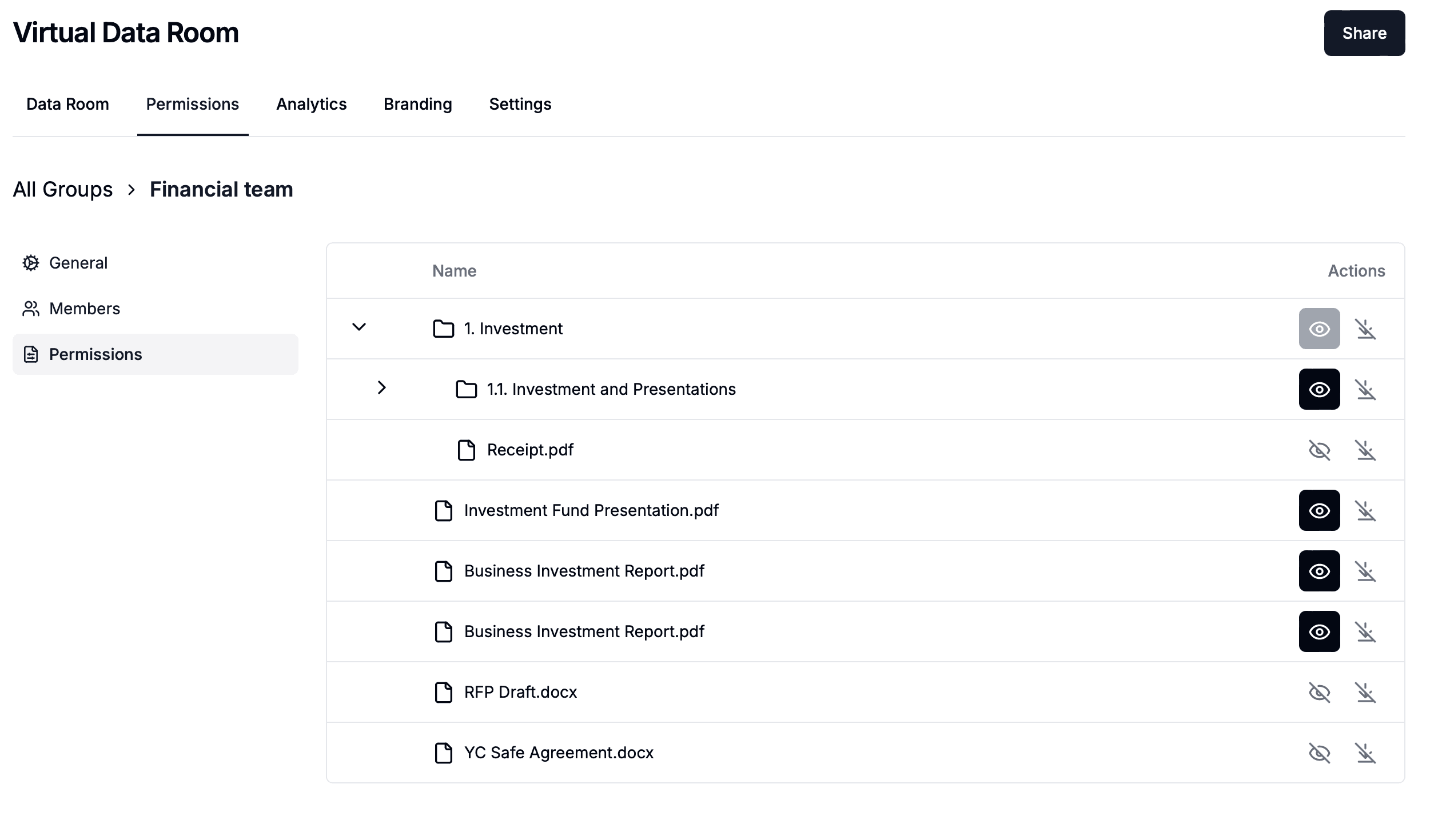
Because four advisory teams review hundreds of confidential files at once, run diligence through a virtual data room with folder-level permissions rather than shared drives or email.
Duration: 4-10 weeks, run in parallel with diligence. Gate: does the target service its own debt in a downside case?
| Source | Typical share | Cost | Term | Notes |
|---|---|---|---|---|
| Cash reserves | 10-40% | Opportunity cost | - | Cleanest, but do not drain working capital |
| Bank term loan | 30-50% | SOFR + 2-4% | 5-7 years | Secured on target assets, covenanted |
| SBA 7(a) (US) | Up to $5M | Prime + spread | Up to 10 years | Business acquisition eligible, personal guarantee required |
| Seller note | 10-25% | 5-8% | 3-5 years | Subordinated; keeps the seller invested |
| Earn-out | 10-30% | Contingent | 1-3 years | Not financing, but reduces cash at close |
| PE co-investment | Varies | Equity dilution | 3-7 years | For larger deals |
The discipline that separates surviving deals from failed ones: model debt service against the target's cash flow in a downside case, not the base case. A deal that only works if next year goes to plan is not financed, it is gambled.
Duration: 2-4 weeks. Cost: $40,000-$120,000. Gate: is your downside capped at a number you can absorb?
| Term | Market standard | Why it matters |
|---|---|---|
| Purchase price basis | Cash-free, debt-free, with a working-capital peg | Prevents the seller stripping cash or leaving you short of working capital |
| Representations and warranties | Seller warrants financials, IP, contracts, compliance | The factual foundation you can claim against |
| Indemnity cap | 10-20% of purchase price | Your maximum recovery |
| Survival period | 12-24 months general; longer for tax, title, IP | The window in which you can claim |
| Escrow / holdback | 10-20% of price | Money actually available to claim against |
| Basket / deductible | 0.5-1% of price | Small claims do not trigger indemnity |
| Non-compete | 2-5 years, defined territory | Stops the seller rebuilding the business next door |
| R&W insurance | Common above $20M | Shifts indemnity risk to an insurer, shrinks escrow |
Representations, indemnity cap, and escrow are one connected system. A generous cap is worthless if there is no escrow behind it and the seller has already distributed the proceeds.
Duration: 4-24 weeks, entirely outside your control. Gate: built into the timeline from day one?
US antitrust thresholds were revised effective 17 February 2026:
| Test | 2026 threshold |
|---|---|
| Size of transaction, below which no filing | $133.9M |
| Size-of-person test applies | $133.9M - $535.5M |
| Size of person, larger party | $267.8M in sales or assets |
| Size of person, smaller party | $26.8M in sales or assets |
| Reportable regardless of size of person | Above $535.5M |
| Maximum filing fee | $2.46M |
The initial HSR waiting period is 30 days. A second request extends that by months and costs six figures in document production. Beyond antitrust, regulated sectors such as banking, insurance, defence, and telecom carry their own approvals, and cross-border deals may trigger a foreign-investment review such as CFIUS in the US.
Duration: one week of coordination, one day of execution.
The closing checklist is mechanical by this point:
Nothing should be negotiated on closing day. If it is, something failed at step 8.
Duration: first 100 days set the pattern; full integration 12-24 months. Gate: was the plan written before closing?
| Window | Priority | Concrete action |
|---|---|---|
| Day 0-1 | Communication | Announce to staff, customers, suppliers on the same day, in that order |
| Week 1-2 | Retention | Retention agreements signed with named key people |
| Week 2-6 | Quick wins | Ship two or three visible improvements |
| Month 2-3 | Systems | Integrate finance and payroll first; leave product last |
| Month 3-12 | Synergies | Track each modeled synergy as a line item with an owner |
Integration budget runs 1-3% of deal value, and it is the line most often left out of the model entirely. Buyers reliably overestimate synergies and underestimate how long integration takes; the standard correction is to halve the synergy estimate and double the timeline before you use them to justify a price.
Maya Okafor, founder of a mid-sized B2B analytics company, made her first acquisition in 2026. Her criteria: B2B SaaS, $3M-$8M revenue, positive EBITDA, top-ten customer concentration under 40%. Working a broker and her network, she screened fourteen targets and prioritized four.
Her top choice was a bootstrapped visualization tool at $5.2M revenue. After a warm introduction and mutual NDA, preliminary diligence confirmed steady growth but flagged one customer at 28% of revenue. She valued the business at roughly 4x revenue on comparable transactions with an EBITDA cross-check, and submitted an LOI at $21M: $18M cash and a $3M earn-out tied to Year-1 retention.
Full diligence ran through a virtual data room split into financial, legal, operational, and commercial folders. It surfaced an unassigned software licence, resolved through a specific indemnity plus a 15% escrow. She financed the cash portion with a bank term loan serviced by the target's own cash flow, plus reserves.
The deal closed in just under six months. In the first 100 days she signed both founders to earn-out-linked retention, kept the product roadmap intact, and integrated billing first while leaving engineering alone. Eighteen months on, the acquired product had lifted her platform's average contract value by 22%.
An acquisition generates hundreds of confidential documents, and each advisory team should see only its own workstream. That is what a purpose-built virtual data room does.
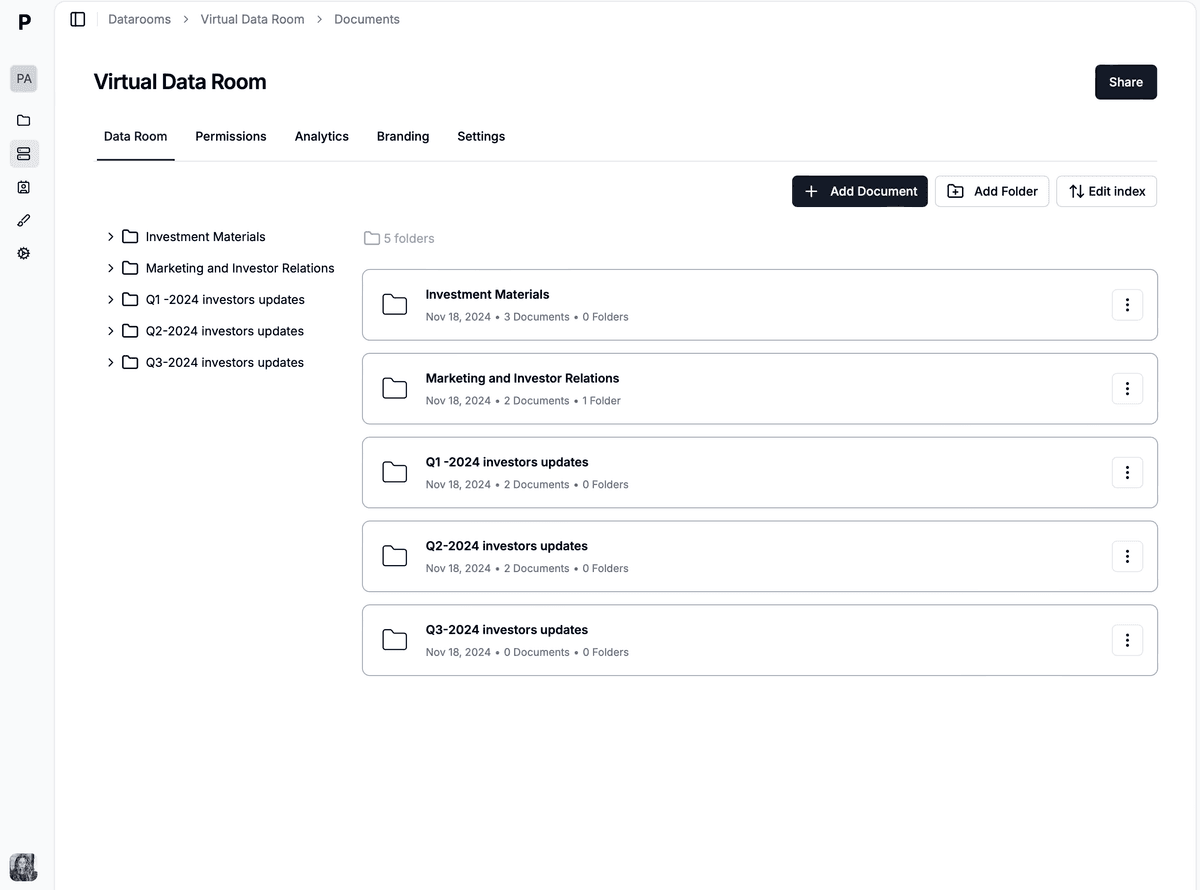
Papermark's virtual data room organizes acquisition due diligence with granular permissions, dynamic watermarking, and a full audit trail.
| Mistake | Warning sign during the deal | Prevention |
|---|---|---|
| Overpaying | Your model needs the base case to work | Price the downside case; keep the walk-away number written down |
| Thin due diligence | Timeline compressed to "close by quarter end" | Never shorten quality of earnings |
| Ignoring culture | Nobody has met the target's middle managers | Interview beyond the founders before signing |
| Overestimating synergies | Synergies justify more than 20% of the price | Halve the estimate, double the timeline |
| Late integration planning | No integration owner named at signing | Name the owner before the LOI |
| Losing key people | No retention agreements at closing | Sign retention before, not after, announcement |
| Over-leverage | Debt service works only at plan | Model a 20% revenue decline |
| No Plan B | Single target, no alternatives | Keep two live options until exclusivity |
Entrepreneurship through acquisition in 2026: four search models, SBA financing up to $5M, an 8-step process, and the data room for an ETA acquisition.
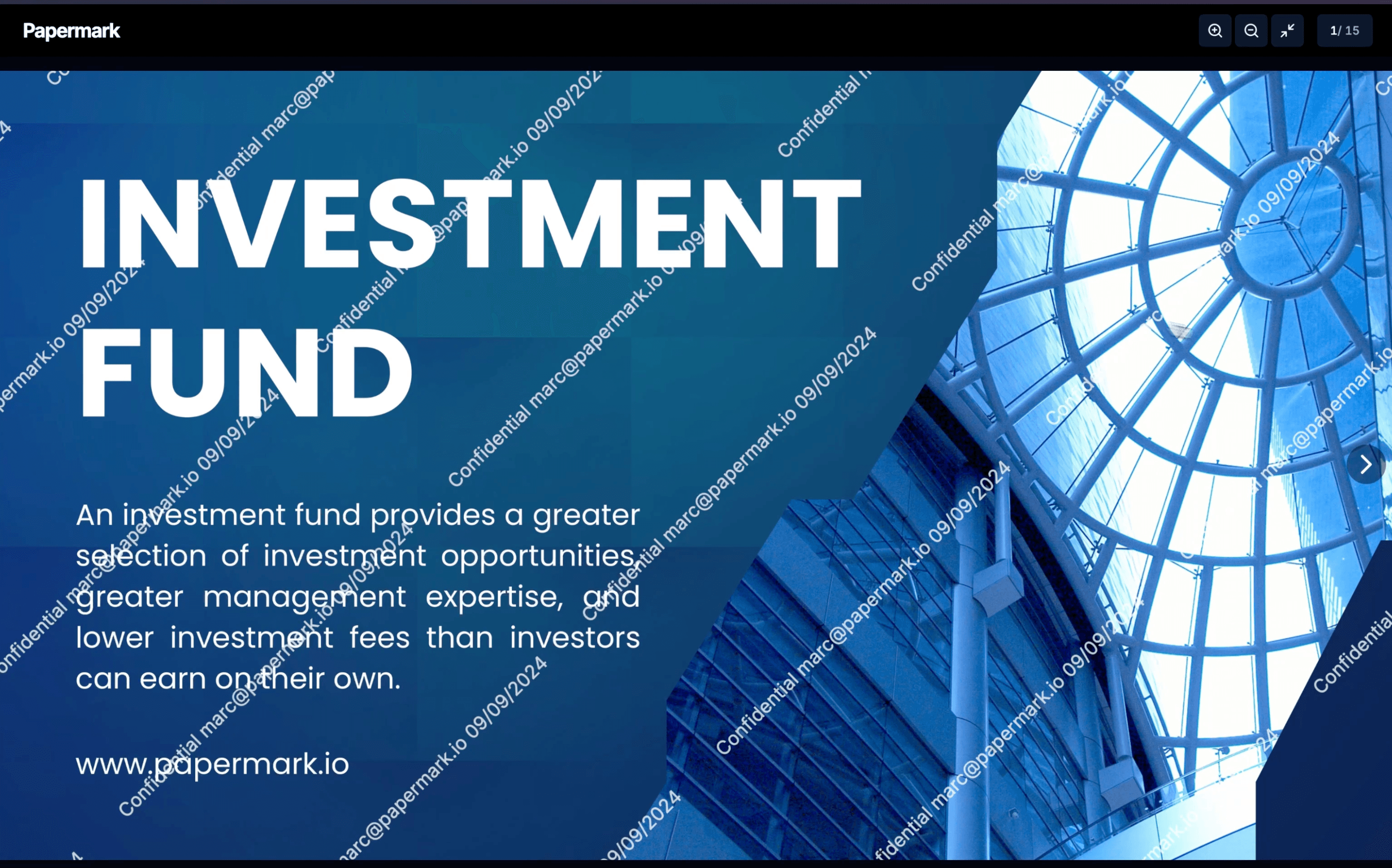
Sell-side due diligence in 2026: the 6-step process, what a sell-side QoE costs, the retrade it prevents, and the data room for sell-side due diligence.
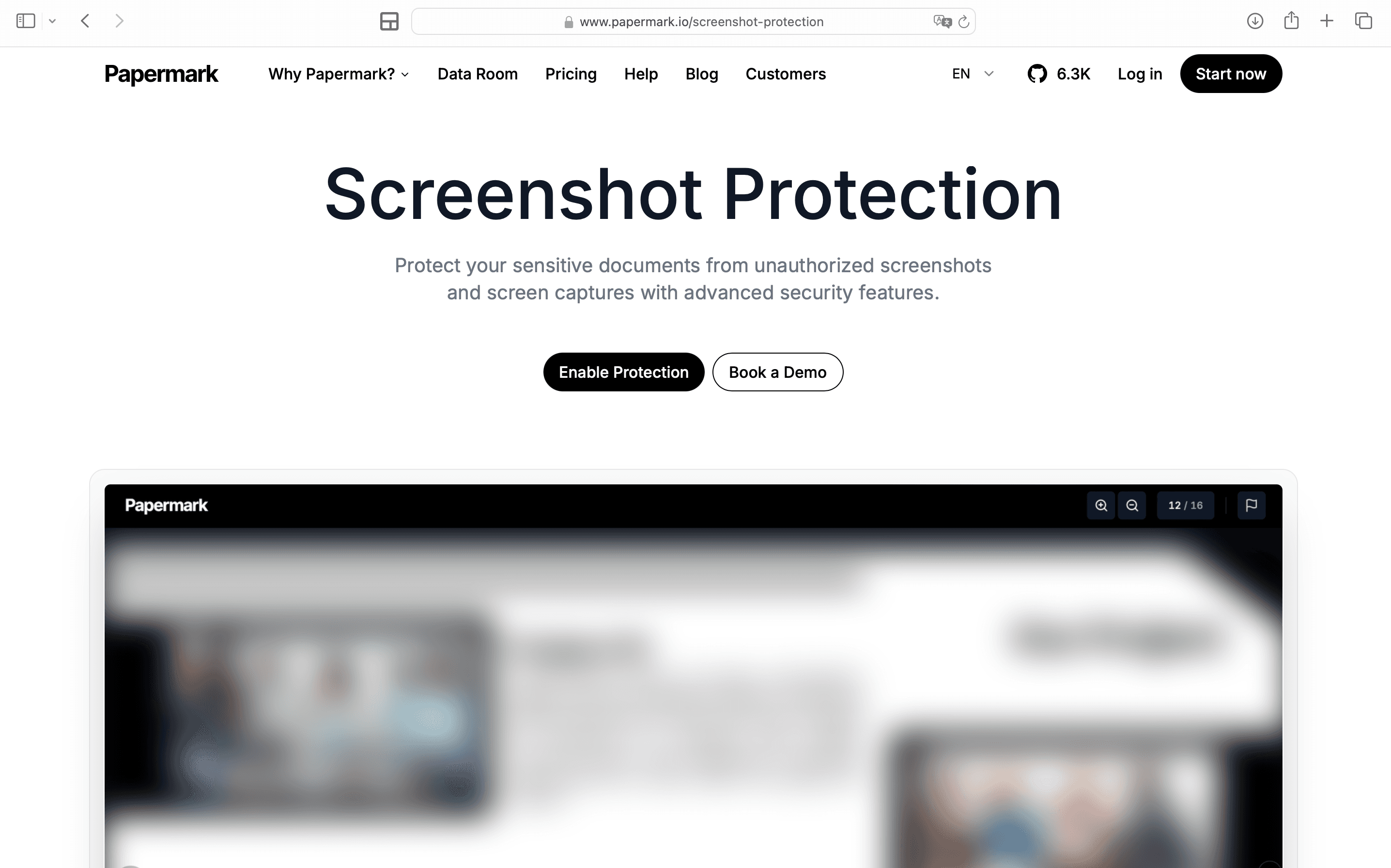
HSR filing in 2026: the $133.9M threshold, fees from $35,000 to $2.46M, the 30-day wait, the Item 4(c) trap, and the data room for an HSR filing you run it from.