

mergers-and-acquisitions
7 Types of Mergers and Acquisitions in 2026 and the Tax Trap
The types of mergers and acquisitions in 2026: 5 economic types, 5 legal structures, the asset vs stock tax trap, and how to run the data room for M&A deals.
Cross-border M&A is the process of acquiring or merging with a company headquartered in a different country. It opens new markets, diversifies risk, and unlocks growth that domestic deals cannot match, but it forces buyers to navigate multiple legal systems, tax regimes, currencies, and cultures at once. This guide covers the full workflow, from strategic planning to post-merger integration.
Cross-border M&A involves acquiring or merging with a company in a different country. Unlike a domestic transaction, you are not working inside a single legal and tax system. You are reconciling two of everything: two sets of company law, two tax authorities, two competition regulators, and often two languages of contract. That multiplicity is the defining feature of an international deal, and it shapes every downstream decision about structure, timeline, and advisory team.
The structure you choose depends on the target market, the regulatory environment, and your strategic goals. A software buyer entering a new region for talent will approach the deal differently from a manufacturer consolidating supply chains, and a heavily regulated sector such as defense or telecoms may force a minority position where a full buyout would be simpler. Getting the structure right early avoids expensive restructuring once regulators and tax advisors weigh in.
Most cross-border transactions fall into one of a handful of structures. The right one balances control, regulatory tolerance for foreign ownership, and how much local partnership the market requires:
Companies rarely cross a border for a single reason. The strongest international deals stack several strategic benefits at once, which is what justifies the added regulatory and integration risk. Market expansion is the most common driver: buying an established local player lets you enter a new geography with existing customers, distribution, and brand recognition, instead of spending years building presence from scratch. That head start is often worth a premium, especially in markets where local relationships are hard for outsiders to replicate.
Beyond geography, acquirers pursue foreign targets for talent, technology, and cost. An acquisition can bring in engineering teams with specialized skills or deep local market knowledge that would take years to hire directly. It can also secure proprietary technology, patents, and intellectual property that reshape a buyer's competitive position. Cost and diversification motives round out the picture: lower production costs, favorable tax treatment, and supply-chain advantages improve unit economics, while spreading revenue across multiple economies reduces dependence on any single market. Competitive positioning matters too, since acquiring abroad can block a rival or consolidate global market share.
The best deals combine several of these at once. Acquiring a European competitor, for example, can deliver market share, a local engineering team, and a hedge against a slowdown in your home market in a single transaction. When only one benefit is present, the strategic case is usually too thin to carry the risk of an international deal.
International deals fail for reasons that domestic deals rarely encounter. The five challenges below are where most cross-border transactions get delayed, repriced, or abandoned, and each one requires local expertise that a home-country advisory team cannot supply on its own. Understanding them before you approach a target is what separates a disciplined process from an expensive learning experience.
Every country sets its own rules on foreign ownership, and those rules tighten sharply in sensitive sectors such as defense, energy, telecommunications, and critical infrastructure. In the US, the Committee on Foreign Investment (CFIUS) screens deals for national security risk; Australia routes foreign acquisitions through the Foreign Investment Review Board (FIRB); the EU and its member states run their own screening regimes. These reviews are not formalities. Some take 6 to 12 months, and a rejection can end a deal outright, so the smart move is to engage local legal counsel early and map the approval path before you commit.
Regulatory clearance rarely comes from a single body. A typical cross-border deal must clear several gates in parallel, and any one of them can become the critical path:
Cross-border tax is notoriously complex, and poor structuring can quietly destroy the economics of an otherwise sound deal. You are dealing with two corporate tax systems that interact through treaties, withholding rules, and anti-avoidance provisions. The headline corporate rate in each country is only the starting point. Withholding taxes on dividends and interest, transfer pricing rules that govern how value moves between group entities, and permanent establishment risk that can create unexpected tax presence all shift the after-tax return. Tax treaty benefits can reduce or eliminate some of these costs, but only if the structure is designed to qualify for them.
Because the interactions are hard to model and expensive to unwind, international tax advisors should be engaged before you make an offer, not after. The key variables to work through together are the corporate tax rates in both countries, withholding taxes on cross-border payments, transfer pricing exposure, available treaty benefits, and permanent establishment risk. Structuring around these early is far cheaper than repairing a bad structure once the deal has closed.
Currency movement between signing and closing can change what you actually pay and what the target is actually worth. On a $100M deal, a 10% swing in the exchange rate moves value by $10M, which is enough to turn an attractive multiple into a poor one. Because closing can sit months after signing while regulators work through approvals, this exposure is not hypothetical. Buyers manage it deliberately rather than hoping the rate holds.
Several hedging tools are standard in cross-border deals, and most acquirers use a combination rather than relying on one:
Cultural differences reach far beyond language. Management style, decision-making norms, attitudes toward risk, and everyday work expectations vary dramatically between countries, and they are largely invisible in a financial model. A hierarchical organization acquired by a flat one, or a consensus-driven culture folded into a fast-moving one, can lose exactly the people and momentum the buyer paid for. Many cross-border deals fail not because the strategy was wrong but because integration ignored these differences until it was too late to fix them.
Treating culture as a diligence workstream rather than an afterthought is what protects deal value. The areas most worth assessing before close are management style, from hierarchical to flat; communication preferences, from direct to indirect; attitudes toward risk and change; and local labor law and employee expectations, which often constrain how much you can standardize even when you want to.
Cross-border due diligence takes more time, more specialists, and more coordination than a domestic review. Financial statements may be prepared under IFRS or a local GAAP rather than US GAAP, so numbers that look comparable are not. Employment law, environmental liability, and intellectual property protection all operate under local rules that a home-country team cannot reliably interpret. Layered on top are political and economic stability risks that can change the value of the business between signing and close. The practical consequence is that you need local advisors embedded in the process, and you need a way to share sensitive documents with them securely across time zones.
The workstreams that expand most in a cross-border review are local accounting standards (IFRS versus GAAP versus local GAAP), foreign employment law and labor agreements, environmental liability under local regulation, political and economic stability, and IP protection in the target jurisdiction. Each typically needs a local specialist rather than a generalist.
A cross-border acquisition runs through the same broad arc as a domestic deal, but each stage carries extra weight because of the international dimension. The eight stages below move from strategy through diligence and approvals to closing and integration. Treat them as a sequence where regulatory timelines and local expertise are planned in from the start, not bolted on when a problem appears.
Before you approach any target, clarify why you are expanding internationally at all. The discipline here is to answer hard questions honestly: why this specific market, whether you genuinely understand local customer behavior, whether you can compete with entrenched local players, and whether your management team has the bandwidth to run international operations. Expanding abroad simply because competitors are doing so is how buyers end up owning assets they cannot integrate. A clear strategic rationale, tested against these questions, is the foundation everything else rests on.
Finding the right target in a foreign market depends on local knowledge you probably do not have in-house. The best opportunities tend to surface through relationships rather than auction processes, which means the sourcing effort is really a relationship-building effort. In practice buyers combine several channels: investment banks with a genuine local presence, local advisors and consultants who know the private companies, industry conferences in the target market, and relationships with local private equity firms who see deal flow first. Proprietary, relationship-sourced deals usually offer better terms and cleaner diligence than a competitive process.
Before making any offer, run a preliminary pass to confirm the deal is even feasible. This early research covers market dynamics and the competitive landscape, the regulatory approval requirements and their likely timelines, the available tax structuring options, and the integration challenges you can foresee. The goal is not depth but realism. A short feasibility review tells you whether an offer would be credible and whether the approval path is survivable, which keeps you from spending months on a deal that regulators or tax economics would have killed anyway.
With feasibility confirmed, work with advisors to structure the transaction so it is defensible on tax, legal, and operational grounds. The core choices interact, so they are best decided together rather than in isolation:
Every one of these decisions carries tax, legal, and operational implications, which is why the structuring stage is where experienced advisors earn their fee.
Full diligence is comprehensive review across every functional area, run in parallel workstreams so the deal does not stall waiting on any single one. Each stream needs local specialists who understand how the target's numbers, contracts, and obligations actually work under local rules:
A secure virtual data room is the standard tool for managing this phase, because it lets you share documents with local advisors and stakeholders while keeping tight control over who sees what.
Once diligence is under way, submit the required filings and work them through in parallel, because approvals frequently become the critical path that dictates when you can close. Depending on the countries and the sector involved, the deal may need foreign investment clearance, antitrust or competition review, industry-specific licensing, and exchange control approvals for moving capital across borders. Each of these runs on its own clock, and several run for months. Building realistic approval timelines into the deal calendar from the outset, rather than treating them as a formality at the end, is what keeps a transaction from drifting past its economic window.
Arrange financing that optimizes tax treatment and limits currency exposure, then coordinate a closing that spans multiple time zones and legal systems. The mechanics are more involved than a domestic close: you are converting currency, satisfying regulatory conditions, and reconciling signing and closing across jurisdictions where business days do not always overlap. Post-closing adjustments for working capital and escrows add another layer. Having local counsel present at closing to handle last-minute issues is not a luxury; it is how you avoid a failed close over a document that no one in your home office was positioned to fix.
Integration is where most cross-border deals struggle, and it deserves as much planning as the transaction itself. The tension is always the same: you need to capture synergies without destroying the local capability you paid for. That means establishing clear governance and reporting lines quickly, aligning compensation and benefits where local law allows, harmonizing systems and processes at a sustainable pace, and communicating frequently and transparently so uncertainty does not drive people out. Retaining key local talent is the single most important outcome, which is why many acquirers keep local management in place initially, especially in a market they do not yet understand well.
Meridian Robotics, a US industrial automation firm, wanted a foothold in the European market and a specialized engineering team it could not hire fast enough at home. Its target was Nordklinge GmbH, a family-owned German maker of precision actuators with strong regional customers and a 40-person R&D group. The strategic rationale stacked cleanly: market entry, talent, and proprietary technology in one deal.
Meridian began with preliminary diligence and a feasibility review with German counsel, which flagged that the acquisition would need clearance under Germany's foreign investment screening rules plus EU competition notification. The team built a 9-month approval window into the deal calendar from day one. Because signing and closing would sit months apart, the CFO hedged the euro-dollar exposure on the roughly $85M purchase price with a forward contract, protecting against a swing that could have moved value by several million dollars.
Full diligence ran in parallel workstreams. Nordklinge's accounts were prepared under German GAAP, so Meridian's advisors normalized them to compare against internal models, and a local tax specialist mapped withholding and transfer-pricing exposure before the offer was finalized. All diligence documents, from the quality-of-earnings report to labor agreements, were shared through a virtual data room with granular permissions, so German counsel, tax advisors, and the deal team each saw only their relevant folders.
After clearance came through on schedule, Meridian closed with local counsel present and retained Nordklinge's managing director for a two-year transition. Eighteen months on, the R&D team was intact and Meridian had won its first pan-European contract.
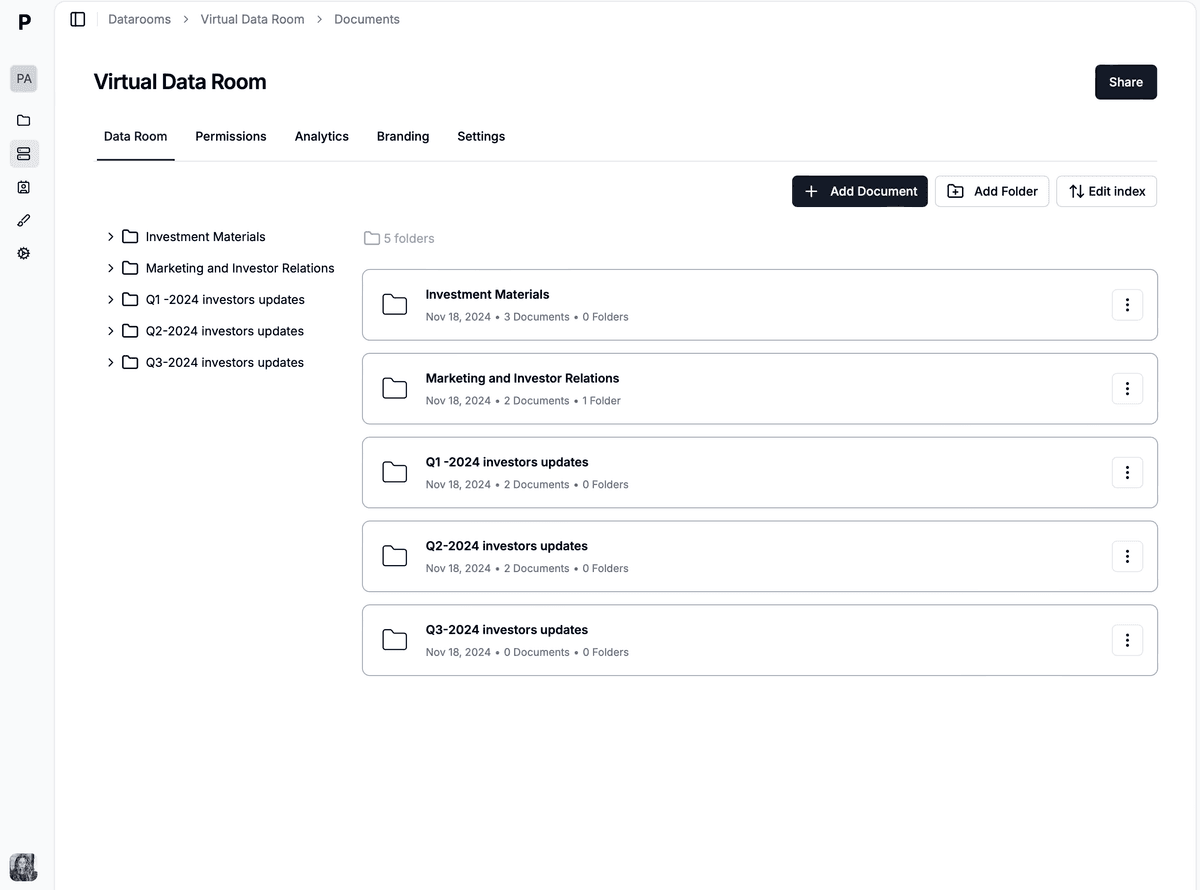
Running a cross-border deal means coordinating advisors on several continents, sharing highly sensitive documents securely, and staying compliant with more than one regulatory regime at once. A purpose-built virtual data room is what makes that manageable, and it is exactly the problem Papermark's data room is designed to solve. Instead of emailing confidential files to local counsel or wrestling with a legacy VDR priced per page, you run the entire diligence process in one secure workspace with full control over access.
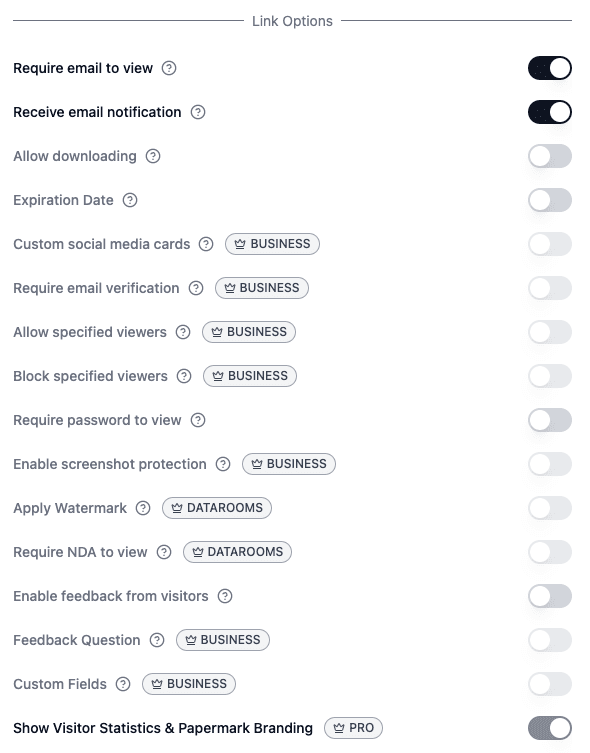
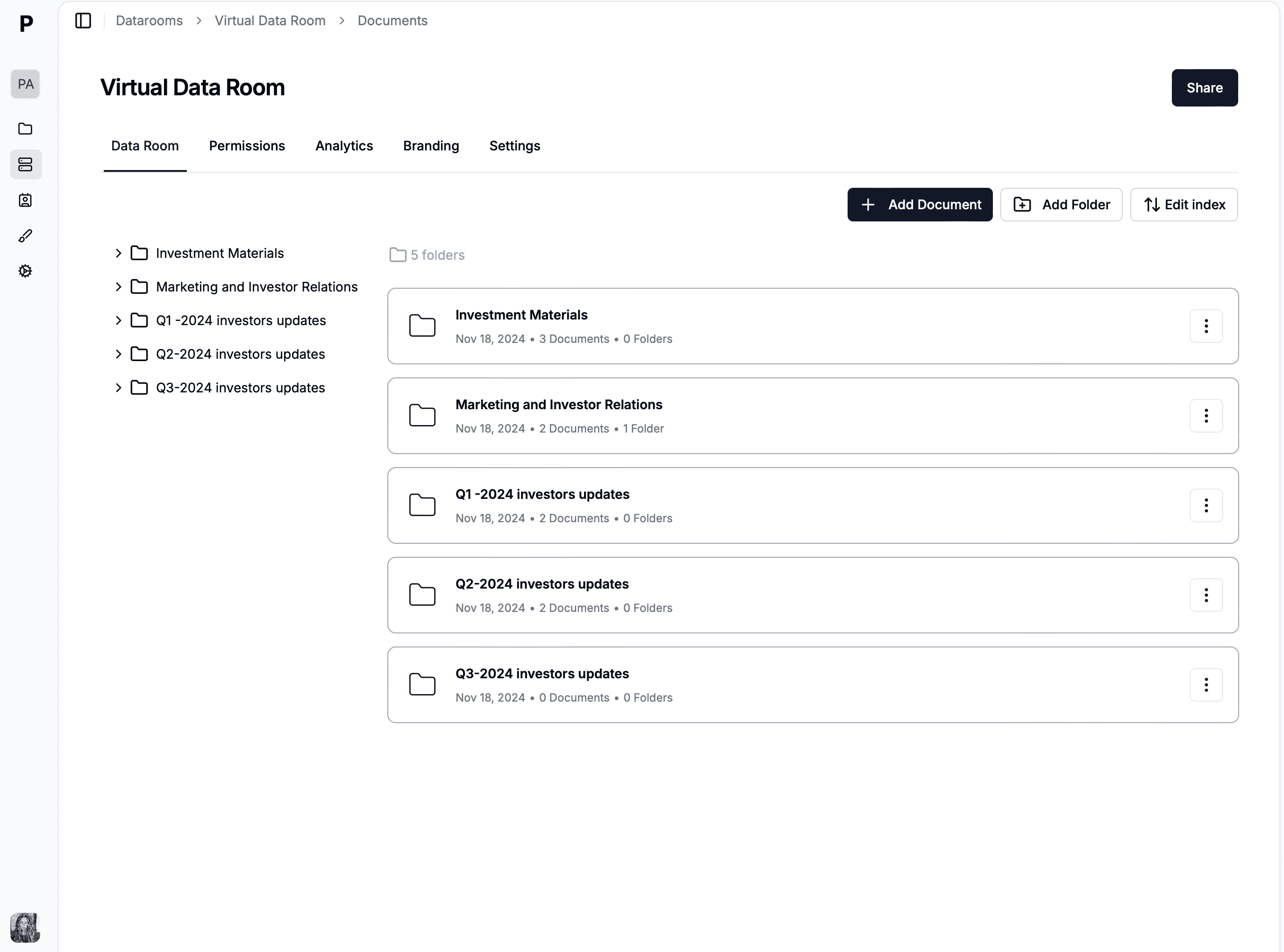
Granular permissions are the feature that matters most in an international deal, because your advisory team is fragmented by geography and role. You can restrict documents folder by folder and file by file, so German tax counsel sees the tax workstream while local employment lawyers see only labor agreements, and temporary advisors lose access automatically when their engagement ends. Every view is captured in a complete audit trail, giving you a page-by-page record of who opened which document, when, and from where. That same activity data doubles as a live read on buyer engagement during a competitive process. Dynamic watermarking stamps each page with the viewer's email and a timestamp, which deters leaks of sensitive material as it moves between jurisdictions.
For the international dimension specifically, Papermark supports multi-language sharing and custom domains so the data room presents professionally to stakeholders in any market, and a built-in Q&A module keeps diligence questions and answers organized in one place instead of scattered across email threads and time zones. On compliance, the platform runs on GDPR-compliant infrastructure with EU data residency and is SOC 2 Type II certified, which matters when a European target's data cannot lawfully leave the region. Unlike legacy VDRs with per-page pricing that punishes large document sets, Papermark offers transparent plans, with the Data Rooms plan at €99/month, so you can manage everything from preliminary diligence to final closing documents without a surprise invoice.
Papermark's secure data room lets international deal teams share diligence documents with granular permissions, dynamic watermarking, and a full audit trail.
Manage your entire cross-border M&A process, from preliminary due diligence to final closing documents, in one secure platform.
The checklist below tracks the deal from strategy to post-close. Each item maps to a stage covered above, so use it as a running control list rather than a substitute for the detail in each section.
Pre-deal:
Deal structuring:
Due diligence:
Regulatory approvals:
Closing:
Post-closing:
Most cross-border failures trace back to a short list of avoidable errors, and they cluster at the two ends of the deal: the planning that sets expectations and the integration that has to deliver on them. The most damaging one is underestimating regulatory timelines. Foreign investment approvals can take 12 months or more, and a deal calendar built on optimistic assumptions will slip past its economic window. Closely related is ignoring tax structuring until after an offer is on the table, when poor planning has already locked in value leakage that is expensive or impossible to reverse.
The rest tend to appear once the deal is done. Buyers skip cultural due diligence and then watch integration fail over misaligned management styles rather than any financial problem. They overestimate synergies, which are consistently harder to realize across borders than at home, and then miss the numbers the deal was priced on. They fail to retain local talent through heavy-handed integration, driving away the very expertise they paid for. And they neglect currency hedging, letting a 10% to 15% swing erode projected returns. Rushing integration before understanding local practice compounds all of these, which is why disciplined acquirers slow down precisely where the pressure to move fast is greatest.
Cross-border M&A creates growth opportunities that domestic deals cannot match, but it rewards planning and discipline far more than speed. The through-line across every stage is the same: bring local expertise in early, respect the regulatory clock, and treat integration as the part of the deal where value is actually won or lost. Buyers who internalize that mindset, rather than treating an international deal as a domestic one with extra paperwork, are the ones who capture the upside.
Seven principles hold across nearly every successful cross-border transaction:
With proper planning, local expertise, and disciplined execution, cross-border M&A can transform a business and create lasting competitive advantages.
The types of mergers and acquisitions in 2026: 5 economic types, 5 legal structures, the asset vs stock tax trap, and how to run the data room for M&A deals.
Learn how to identify, execute, and integrate strategic acquisitions that drive growth, expand capabilities, and create lasting competitive advantages.

The independent sponsor model in 2026: three fee layers, promote tiers, capital partners, and running the deal in a data room for independent sponsors.