

mergers-and-acquisitions
Cross-Border M&A in 2026: A Guide to International Acquisitions
Learn how to navigate cross-border mergers and acquisitions with expert guidance on regulatory compliance, due diligence, and deal execution.
Most acquisitions fail. Study after study shows that 70-90% of acquisitions destroy shareholder value, yet the right strategic acquisitions transform businesses and build durable competitive advantage. The difference between the deals that create value and the ones that erode it is rarely luck. It comes down to strategy, discipline, and integration.
A strategic acquisition is one that advances your business strategy in ways organic growth simply cannot deliver on the same timeline. Where a financial buyer asks what return a target will generate, a strategic buyer asks what the combined business becomes. The acquisition is a means to a competitive end: a new market, a missing capability, a consolidated position, or a defensive block that keeps a critical asset away from a rival. Because the value is measured against long-term competitive position rather than a standalone return, strategic buyers are often willing to pay a premium that a financial buyer would never justify.
That willingness to pay for synergy is exactly why strategic deals demand more discipline, not less. The strategic rationale has to be specific and testable before you approach a target, and it has to survive due diligence intact. Vague ambitions to "grow faster" or "get bigger" are how acquirers talk themselves into overpaying. A genuine strategic acquisition names the problem it solves and the mechanism by which the combination solves it.
In practice, strategic acquisitions tend to deliver one or more of the following advantages:
Understanding where you sit on the strategic-versus-financial spectrum shapes every subsequent decision, from valuation to integration. A strategic buyer operates in the same or an adjacent industry and acquires for synergies, market position, or capabilities. Because the deal changes what the acquirer can do, the strategic buyer can rationally pay more than the target is worth on a standalone basis, and integration is usually easier thanks to shared customers, processes, and industry context. The trade-off is real risk: emotional attachment to a strategy can push a buyer into overpaying, and combining two live operations introduces integration complexity and cultural friction that pure financials never reveal.
A financial buyer, most often a private equity firm, is buying for return. The plan is to improve operations, cut cost, and exit in roughly three to seven years at a profit. That orientation makes financial buyers disciplined valuers who will walk away when the numbers stop working, and relentless operators focused on margin. Their limitations are the mirror image of the strategic buyer's strengths: without operating synergies they cannot pay strategic premiums, their exit horizon can discourage long-term investment, and the leverage that magnifies their upside also magnifies the downside.
Most middle-market M&A is a contest between the two. When a strategic buyer and a PE firm chase the same target, the strategic buyer usually wins the auction because synergies let it pay more, though that same advantage is what makes overpaying the strategic buyer's characteristic mistake.
| Dimension | Strategic buyer | Financial buyer (PE) |
|---|---|---|
| Motive | Synergies, market position, capabilities | Financial return on exit |
| Price ceiling | Higher (synergies justify premiums) | Lower (disciplined multiples) |
| Integration | Combines operations directly | Often standalone or bolt-on |
| Time horizon | Long-term competitive position | 3-7 year hold and exit |
| Signature risk | Overpaying, cultural clash | Under-investment, leverage |
Salesforce acquiring Slack to embed communication inside its CRM is a textbook strategic deal, while a PE firm buying a logistics company, consolidating warehouses, and reselling to a strategic acquirer five years later shows the financial model at work.
Strategic acquisitions are not a single move but a family of them, and naming the type you are pursuing sharpens both diligence and integration planning. The type determines where the value comes from, which risks matter most, and which regulators may take an interest. Horizontal deals live and die on antitrust and customer overlap; capability deals live and die on talent retention. Getting specific about which of the five you are running prevents you from importing the wrong playbook.
Across every type, the recurring tension is the same: the more obvious the strategic logic, the more competitors see the same opportunity, and the higher the price gets bid. That is why the sections below pair each type's benefits with its characteristic risk, so you can price the risk rather than ignore it.
The five most common types are horizontal, vertical, market extension, product extension, and technology or capability acquisitions.
Buying a direct competitor increases market share and pricing power immediately, and it is often the fastest route to cost synergy because so many functions are duplicated across the two businesses. The benefits are tangible: instant revenue growth, elimination of redundant finance, HR, and IT functions, stronger pricing power, and faster consolidation of a fragmented market. The risks are equally concentrated. Antitrust scrutiny rises sharply in already-concentrated markets, overlapping customers may leave rather than consolidate their spend, and merging two organizations that recently competed can produce real cultural friction. Two regional banks merging to compete against national players is a common example.
Vertical acquisitions move you up or down your own value chain by buying a supplier upstream or a distributor or customer downstream. Done well, they secure supply or distribution, capture the margin that used to leave your business, and shorten the feedback loop between you and the end market. The risks come from unfamiliar economics and channel conflict: acquiring a distributor can alienate the other distributors you still rely on, and running a business model you have never operated adds complexity and capital intensity. Netflix producing original content rather than licensing it from studios is a well-known vertical move.
Market extension acquisitions buy your way into a new geography by acquiring a local player that already has the customers, brand, and regulatory fluency you would otherwise spend years building. The upside is instant presence, local expertise, an established customer base, and an easier path through local regulation. The downside is that geography multiplies every integration challenge: work practices and customer expectations differ, currency movements introduce financial risk, and foreign-investment rules add regulatory complexity. A European retailer acquiring US chains to enter North America is a representative case.
Product extension acquisitions add complementary products or services aimed at the customers you already serve, deepening the relationship rather than widening the market. The payoff is cross-selling, higher customer lifetime value, a more complete solution that reduces churn, and clearer competitive differentiation. The risks live in the seams between the products: different development cycles complicate integration, overlapping positioning can confuse customers, and combined roadmaps compete for the same engineering resources. Adobe acquiring Figma to add collaborative design to its creative suite is a prominent example.
Technology or capability acquisitions, sometimes called acqui-hires, buy a company mainly for its intellectual property or its people. When building would take two to five years, acquiring proven technology and scarce talent can be faster and less risky than internal R&D, and it doubles as a defensive move that keeps the capability away from competitors. The dominant risk is human: the value walks out the door if key people leave, architectural mismatches can make the technology hard to absorb, and emotional attachment to a "must-have" asset drives overpayment. Google acquiring DeepMind for AI talent and research is the archetype.
A strategic acquisition succeeds or fails less in the boardroom announcement than in the discipline of the process that precedes and follows it. The acquirers who consistently create value treat acquisition as a repeatable capability rather than an opportunistic event: they start from a written thesis, screen against explicit criteria, validate the thesis in diligence, and begin integration planning long before they sign. The steps below describe that end-to-end workflow, and the through-line is intellectual honesty. At every stage the discipline is the same: define what you believe, then look hard for the evidence that would prove you wrong.
The other constant is documentation. Every stage produces confidential material that has to be organized, shared selectively, and tracked, which is why a purpose-built virtual data room sits underneath the entire process rather than appearing only at the diligence stage.
Before you look at a single target, define the strategic problem you are solving and why acquisition beats the alternatives. Organic growth and partnerships are cheaper and lower risk, so the burden is on the acquisition to prove it is the better route. Write a one-page acquisition thesis that states the problem, the reason a deal is the right instrument, your non-negotiables on culture and business model, how much strategic value you will pay for, and the specific synergies you expect and how you will realize them. Revisit that page at every stage. When a live deal starts drifting from the thesis, the page is what pulls you back.
A thesis becomes actionable only when you translate it into concrete screening criteria across three dimensions. Clear criteria let you evaluate targets quickly and, more importantly, stay disciplined when an attractive but off-thesis company appears.
With criteria in hand, assemble a list of ten to twenty companies that fit, then prioritize by strategic fit, cultural compatibility, and the realistic likelihood that the owners would consider selling. A long list built from a single source is a weak list; the strongest pipelines combine several sourcing methods so that off-market opportunities surface alongside the obvious names. Map every player in the target segment, ask your customers who else they evaluate and what tools they use, watch who your competitors are acquiring or partnering with, track emerging startups and technologies, and engage M&A advisors to surface deals that never reach the open market.
Before you approach anyone, do the background work that lets you walk in with a specific, credible story rather than a generic overture. Preliminary assessment is where you pressure-test strategic fit by articulating exactly how the target advances your strategy, what concrete revenue, cost, or capability synergies exist, and what integration challenges you already foresee. It is also where you run a light financial screen on revenue trajectory, margins, customer concentration, and competitive position, and where you form an early read on culture from the management team, public employer reviews, and customer reputation. The output is a shortlist you can approach with confidence and a tailored pitch for each.
The best acquisitions feel like partnerships, not takeovers, and the first conversation sets that tone. Reach out through a mutual connection whenever you can, because a warm introduction changes how the message is received. Your pitch should make the strategic rationale specific rather than generic, explain clearly how the deal benefits the seller through resource access, market reach, or a larger customer base, reference your acquisition track record if you have one, and propose concrete next steps such as an NDA and an initial information exchange. The goal is to make the seller genuinely excited about the combined entity, not merely willing to entertain an offer.
Due diligence exists to confirm or reject your thesis, and the discipline is treating rejection as a legitimate, even valuable, outcome. On the strategic side you are testing whether the synergies are real and achievable, whether key customers and talent will stay, whether the technologies and products integrate as expected, whether hidden risks lurk in customer concentration or key-person dependence, and whether the two cultures can actually work together. On the financial side you are examining quality of earnings and normalized EBITDA, working capital needs, revenue and customer-retention trends, and the cost structure and margin opportunity. If diligence shows the thesis is wrong, walk away. Rationalizing a bad deal after months of work is how disciplined acquirers become the statistic.
Strategic buyers can justify higher prices than financial buyers, but the discipline is refusing to bid against yourself. Anchor the negotiation on two numbers: the stand-alone value, which is what a financial buyer would pay using EBITDA multiples or a DCF, and the strategic value, which is what the synergies are worth specifically to you. A defensible maximum price is the stand-alone value plus 50-70% of expected synergies, so that you share the value you create with the seller and keep a margin of safety if the synergies fall short. Never pay for 100% of projected synergies, because you will have handed the seller all the upside and kept all the risk.
Structure matters as much as headline price, and the right instruments align incentives while protecting you against the unknown:
Integration planning should begin during due diligence, not after the announcement, because the first 100 days are decisive and you cannot design them in a week. By the time you close, you should already have a detailed plan across four workstreams so that day one is execution rather than improvisation.
Most strategic acquisitions fail during integration, not during negotiation, which means the deal you close is only the beginning of the work. Disciplined integrators communicate relentlessly, repeating the key messages about what is changing and, just as importantly, what is not, until employees, customers, and partners have genuinely heard them. They identify critical talent early and lock it in with retention bonuses, clear career paths, and meaningful roles. They deliver two or three visible wins inside the first 90 days to build momentum, and they protect the culture, processes, and customer relationships that made the target worth buying in the first place. They track synergy realization monthly and adjust when they drift off target, they empower local teams with clear goals rather than micromanaging them, and they stay patient, because full integration takes 12 to 24 months and forced decisions destroy value.
Meridian Software, a mid-market SaaS company selling workflow tools to logistics firms, decided its customers increasingly wanted embedded analytics it could not build fast enough in-house. Rather than spend three years developing the capability, Meridian wrote a one-page thesis: acquire a proven analytics team to add a high-value module, defend against a competitor rumored to be shopping for the same asset, and cross-sell to its existing 400 logistics accounts. This was a technology and capability acquisition with a product-extension payoff.
Screening against explicit criteria, Meridian built a list of twelve targets and prioritized Northwind Analytics, a 30-person team with strong technology, modest revenue, and a founder open to a conversation. A warm introduction led to an NDA, and Meridian opened a virtual data room organized into financial, legal, technical, and integration folders, granting its advisors access only to the workstreams they needed. Diligence confirmed the technology integrated cleanly but flagged heavy dependence on two lead engineers.
Meridian anchored its offer on Northwind's stand-alone value plus 60% of projected synergies, and structured the deal with an earnout tied to shipping the combined product and two-year retention bonuses for the key engineers. Integration planning started during diligence, so day one had a 30/60/90-day plan ready. Nine months later the analytics module was live across a quarter of Meridian's base, both lead engineers had stayed, and the acquisition had already paid back a third of its premium.
Knowing the failure patterns is a form of insurance, because most destroyed deals repeat a small set of avoidable errors. The mistakes below cluster around two themes: paying too much for value you have not verified, and mishandling the human side of integration. Reviewing them against a live deal is a cheap way to catch a problem while it is still correctable.
Every strategic acquisition generates a dense, confidential paper trail long before closing: NDAs, financial models, quality-of-earnings reports, customer lists, technology documentation, and, once the deal is live, the integration plans that carry it through the first 100 days. Managing that flow in email threads and shared drives is where control quietly slips away, which is why serious acquirers run the entire process through a purpose-built virtual data room. Papermark gives you one secure workspace for the whole deal, from preliminary diligence through post-closing integration, rather than a tool that only appears for the diligence phase and disappears afterward.
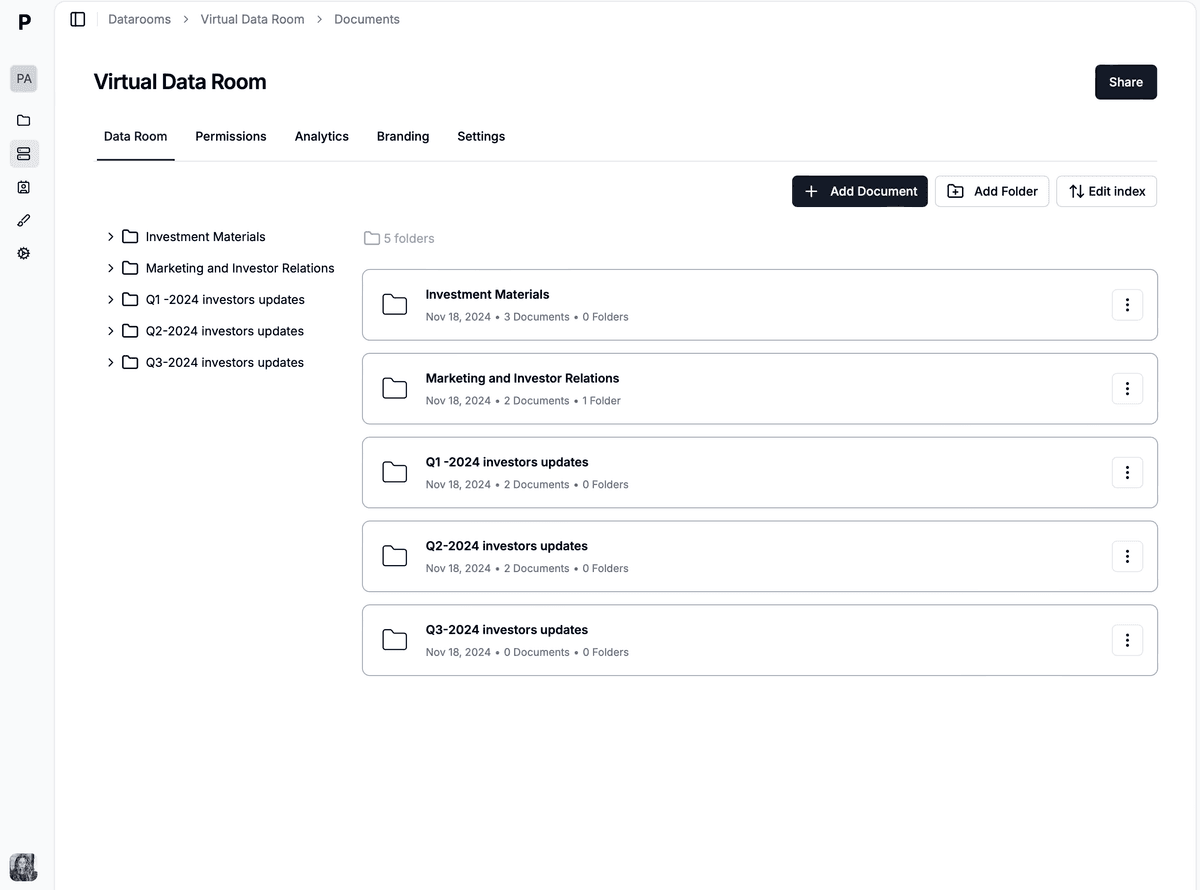
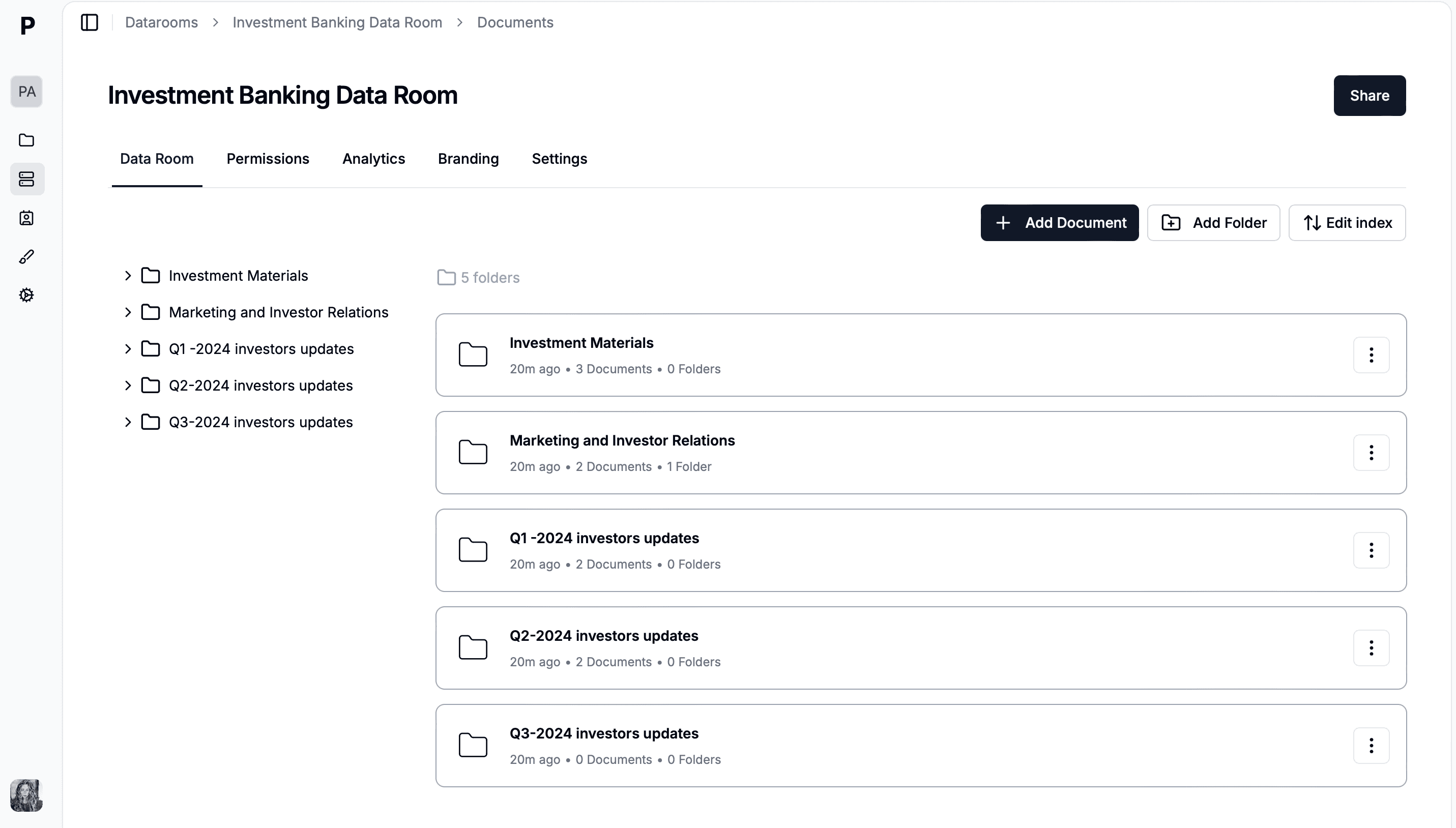
The features that matter for a strategic acquisition map directly onto the workflow above. Granular permissions let you organize the data room into financial, legal, operational, commercial, and integration folders and grant each advisor, executive, or integration lead access only to the workstreams they need, so a banker never sees the integration plan and an integration manager never sees privileged legal correspondence. Dynamic watermarking stamps each viewer's email, IP, and timestamp across sensitive files, discouraging leaks of customer lists and financial models during a competitive process. The audit trail and page-by-page analytics show exactly which documents each party opened and how long they spent, which is genuine signal during negotiation, and the built-in Q&A module keeps buyer and seller questions structured and logged instead of scattered across inboxes. Because Papermark is SOC 2 Type II compliant, the security posture holds up to the scrutiny of institutional counterparties and their counsel. Each of these settings is walked through in how to secure a data room for a corporate development transaction.
Pricing is deliberately transparent. Where legacy VDRs still charge per page or per gigabyte and turn a long diligence process into an unpredictable bill, Papermark's Data Rooms plan is €99/month with unlimited documents and viewers, so the cost of running a thorough process does not rise with the size of the data set.
Papermark data rooms organize strategic acquisition documents with granular permissions, dynamic watermarking, and a full audit trail.
Strategic acquisitions can transform a business, but only when clear strategy meets disciplined execution. Start from a specific strategic rationale rather than a general urge to grow, define your acquisition criteria before you look at targets, and use due diligence to genuinely test the thesis, walking away when it does not hold. Pay a fair price anchored on stand-alone value plus a portion of synergies, never the full amount, and begin integration planning before closing rather than after. In the first 100 days, focus relentlessly on retaining key talent and customers, communicate obsessively with every stakeholder, and measure synergy realization so you can correct course early. The best strategic acquisitions feel inevitable in hindsight because they fit the acquirer's strategy, culture, and capabilities, and disciplined execution is what turns that fit into lasting competitive advantage.
Learn how to navigate cross-border mergers and acquisitions with expert guidance on regulatory compliance, due diligence, and deal execution.
The types of mergers and acquisitions in 2026: 5 economic types, 5 legal structures, the asset vs stock tax trap, and how to run the data room for M&A deals.
Buy-side due diligence in 2026: the 7 workstreams, the LOI to signing timeline, real fee ranges, and how to run a data room for buy-side due diligence.