BlogData RoomsLegal Due Diligence Checklist: The Complete Guide for 2026
Legal Due Diligence Checklist: The Complete Guide for 2026
·7 min read
Marc Seitz
Legal due diligence is one of the most critical workstreams in any M&A transaction, investment, or corporate restructuring. A thorough legal review protects buyers from hidden liabilities, ensures regulatory compliance, and validates the enforceability of key contracts. This guide provides a complete legal due diligence checklist, organized by category, along with best practices for managing the process using a virtual data room.
Whether you are an acquirer evaluating a target company, a law firm advising on a transaction, or a startup preparing for investor scrutiny, this checklist will help you systematically identify and assess legal risks before closing a deal.
What Is Legal Due Diligence?
Legal due diligence is the process of reviewing and analyzing a company's legal standing, obligations, and potential liabilities before a transaction. It typically covers corporate governance, contracts, intellectual property, employment matters, regulatory compliance, litigation history, and real property interests.
The goal is to identify legal risks that could affect the valuation, structure, or viability of a deal. Legal due diligence is usually conducted by external counsel or an in-house legal team working alongside financial and operational due diligence teams.
Why Legal Due Diligence Matters
Legal issues discovered after closing can result in significant financial losses, regulatory penalties, or even unwinding of the transaction. According to the American Bar Association, contract and compliance issues are among the top three reasons post-closing disputes arise in M&A transactions.
A structured checklist ensures that no critical area is overlooked and that findings are documented in a way that supports informed decision-making.
Legal Due Diligence Checklist by Category
The following table provides a high-level overview of the key document categories and their priority level in a typical legal due diligence review.
Category
Key Documents
Priority
Corporate Governance
Articles of incorporation, bylaws, board minutes, shareholder agreements
High
Contracts & Agreements
Material contracts, customer agreements, vendor contracts, joint ventures
Tax returns, audit correspondence, transfer pricing documentation
High
Corporate Governance Documents
Corporate governance documents establish the legal foundation of the entity. Reviewing these documents confirms that the company is properly organized, that ownership interests are clear, and that corporate formalities have been maintained.
Articles of incorporation or certificate of formation
Bylaws or operating agreements (and all amendments)
Shareholder or membership agreements
Board of directors and committee meeting minutes (last 3 years)
Written consents in lieu of meetings
Stock ledger and capitalization table
Organizational chart showing all subsidiaries and affiliates
Good standing certificates for each jurisdiction of qualification
Powers of attorney granted by the company
What to Look For
Pay attention to any restrictions on transfer of ownership, anti-dilution provisions, drag-along or tag-along rights, and preemptive rights. Gaps in corporate minutes or missing board approvals for significant transactions can signal governance weaknesses.
Contracts and Commercial Agreements
Material contracts define the company's commercial relationships and revenue streams. A thorough review identifies change-of-control provisions, termination rights, and unfavorable terms that could affect the transaction.
All contracts with annual value exceeding a defined materiality threshold
Customer contracts and master service agreements
Supplier and vendor agreements
Distribution and reseller agreements
Joint venture and partnership agreements
Franchise agreements
Government contracts
Non-disclosure and confidentiality agreements
Non-compete and non-solicitation agreements
Loan agreements, credit facilities, and guarantees
Letters of intent and memoranda of understanding
Key Risk Areas
Identify contracts with change-of-control clauses that could trigger termination upon closing. Review exclusivity provisions, most-favored-nation clauses, and assignment restrictions. Contracts nearing expiration without renewal options also warrant attention.
Intellectual Property Review
Intellectual property is often one of the most valuable assets in a transaction, particularly for technology, pharmaceutical, and consumer brand companies. A complete IP review validates ownership, identifies potential infringement risks, and confirms the scope of protection.
Patent registrations and pending applications (domestic and international)
Trademark registrations and pending applications
Copyright registrations
Trade secret policies and documentation
Domain name registrations
Software licenses (inbound and outbound)
IP assignment agreements from founders and employees
IP licensing agreements
Open source software usage and compliance records
Correspondence regarding IP disputes or infringement claims
Common IP Issues
Failure to obtain proper IP assignments from founders or contractors is a frequent issue, particularly in startups. Open source license compliance is another area where companies often have gaps. Any third-party IP claims or cease-and-desist letters should be flagged immediately.
Litigation and Dispute History
A comprehensive litigation review identifies existing and potential legal exposure. This includes not only pending lawsuits but also threatened claims, regulatory investigations, and arbitration proceedings.
Schedule of all pending litigation (plaintiff and defendant)
Schedule of threatened claims or demand letters received
Settled litigation with ongoing obligations (indemnities, injunctions)
Arbitration and mediation proceedings
Regulatory enforcement actions or investigations
Product liability claims
Insurance coverage for litigation matters
Legal opinions on material disputes
Consent decrees and settlement agreements
Assessment Approach
For each matter, document the nature of the claim, the parties involved, the estimated financial exposure, and the likelihood of an adverse outcome. Cross-reference litigation matters with the company's insurance policies to determine the extent of coverage.
Regulatory and Compliance Review
Regulatory compliance varies significantly by industry. Companies in financial services, healthcare, energy, and food and beverage face particularly complex regulatory frameworks. Non-compliance can result in fines, license revocations, or criminal liability.
All material permits, licenses, and registrations
Regulatory filings and correspondence with regulatory bodies
Compliance audit reports (internal and external)
Anti-bribery and anti-corruption policies (FCPA, UK Bribery Act)
Data privacy compliance documentation (GDPR, CCPA, HIPAA)
Environmental compliance reports and permits
Industry-specific regulatory requirements
Sanctions and export control compliance records
Whistleblower complaints and investigation reports
Employment and Labor Matters
Employment-related liabilities can be substantial, particularly in companies with large workforces or operations in multiple jurisdictions.
Executive employment agreements
Standard employment agreement templates
Employee handbook and policies
Benefit plan documents (health, retirement, equity)
Stock option and equity incentive plans
Union and collective bargaining agreements
OSHA violation history and workplace safety records
Pending or threatened employment-related claims
Worker classification analysis (employee vs. contractor)
Immigration and work authorization records
Using a Virtual Data Room for Legal Due Diligence
Managing legal due diligence across multiple workstreams requires a centralized, secure document repository. A virtual data room (VDR) provides the infrastructure to organize thousands of documents, control access by reviewer groups, and track engagement across the entire review process.
Papermark offers several features that are particularly valuable for legal due diligence:
Granular permissions: Assign different access levels to outside counsel, in-house legal teams, and financial advisors
Document analytics: Track which documents have been viewed and by whom, providing visibility into review progress
Watermarking: Apply dynamic watermarks to sensitive legal documents to deter unauthorized distribution
NDA enforcement: Require reviewers to accept a non-disclosure agreement before accessing the data room
Q&A workflow: Manage questions from the buyer's legal team in an organized, auditable format
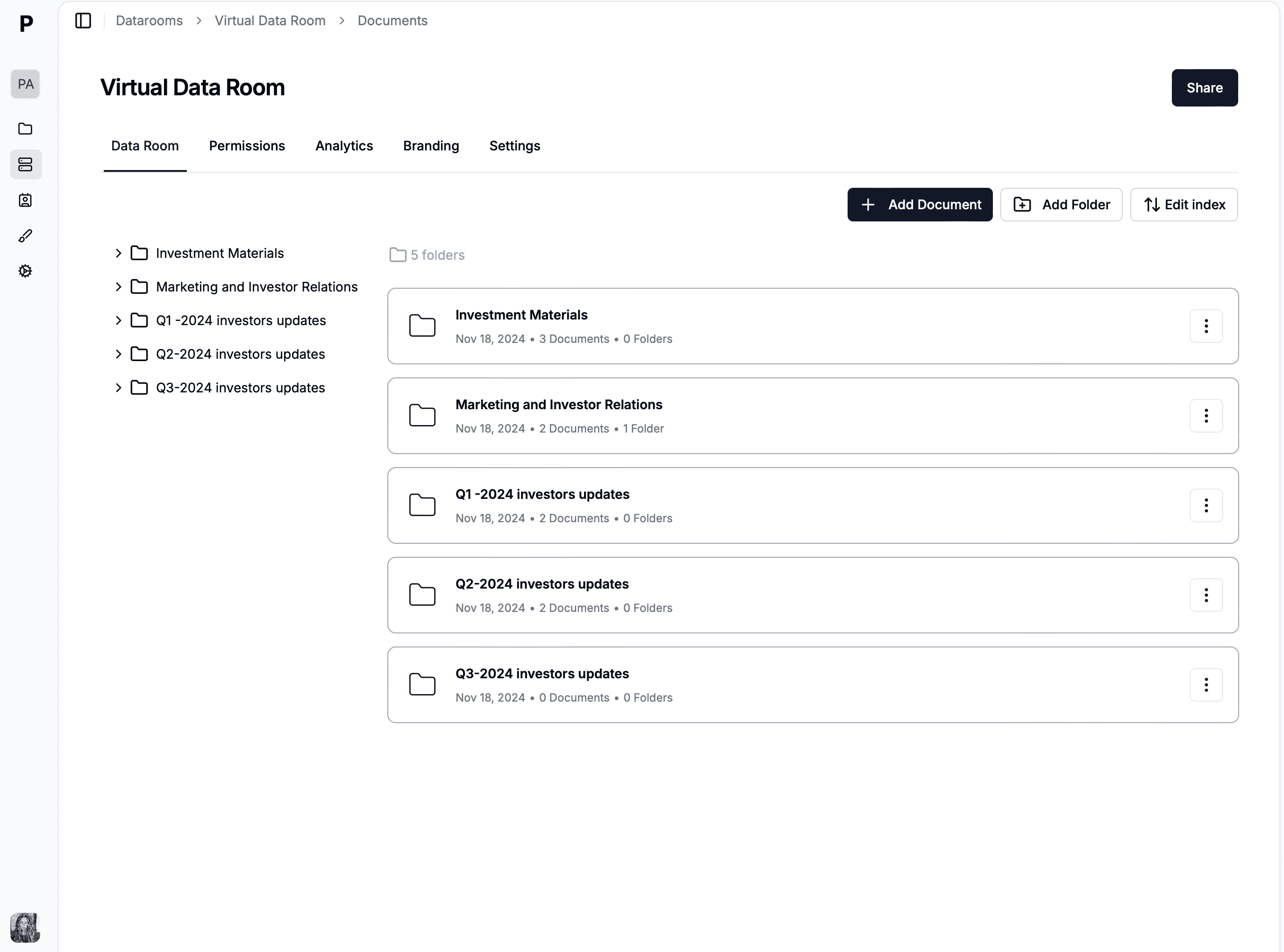
Folder-level organization: Structure documents by category to mirror the checklist outlined above
Using a purpose-built data room eliminates the risks associated with email-based document sharing and generic cloud storage, where access controls and audit trails are limited.
Best Practices for Legal Due Diligence
Following established best practices ensures a thorough and efficient legal review:
Start early: Begin document collection as soon as a transaction is contemplated. Sellers should prepare a data room proactively rather than reactively.
Use a standardized checklist: A consistent framework ensures completeness and allows comparison across transactions.
Prioritize material items: Focus first on high-priority categories that are most likely to affect deal terms or valuation.
Coordinate with other workstreams: Legal findings often have financial or operational implications. Maintain open communication with financial and operational due diligence teams.
Document findings systematically: Use a structured report format that maps findings to specific checklist items.
Flag deal-breakers early: Issues such as undisclosed litigation, IP ownership disputes, or regulatory violations should be escalated immediately.
Legal Due Diligence Timeline
A typical legal due diligence process follows this timeline:
Phase
Duration
Activities
Preparation
1-2 weeks
Document request list, data room setup, team assignment
Due diligence report, risk matrix, recommendations
Manage due diligence with a virtual data room
No credit card required
Page by page analytics
Unlimited documents & folders
Permission management
Dynamic watermarks
NDA collection
Real-time alerts
Custom branding
Audit trail
Conclusion
Legal due diligence is a foundational component of any transaction. A structured checklist, organized by category and priority, ensures that legal risks are identified early and addressed before closing. Combining a comprehensive checklist with a secure virtual data room like Papermark streamlines the process, improves collaboration between legal teams, and creates a defensible record of the review.