

mergers-and-acquisitions
Business Brokers San Diego: 13 Top Firms to Sell a Business 2026
Compare 13 business brokers and M&A advisors in San Diego for 2026, with deal sizes, sectors, fee ranges, and how to pick the right firm to sell your business.
The Twin Cities support roughly 15 to 25 active business brokers and M&A advisory firms handling private company sales, from $500K main street deals to $500M+ divestitures. This list covers the thirteen firms that close transactions in Minneapolis and St. Paul, what size deals each takes, and what they charge in 2026.
Deal flow reflects what Minnesota makes. Medical device suppliers and contract manufacturers orbit the Medtronic and Boston Scientific ecosystem, food and agriculture businesses feed General Mills, Cargill, Hormel, and Land O'Lakes, and industrial manufacturers sit in the shadow of 3M, Graco, Donaldson, and Toro. Underneath all of it is a deep base of family-owned businesses, many now in their second or third generation and facing a succession decision.
If you would rather scan the field before reading the profiles, the M&A advisors database lists all 13 Minneapolis firms below alongside every other adviser we have researched, filterable by city, industry and deal size.
| # | Firm | Typical deal size | Sector focus |
|---|---|---|---|
| 1 | Hennepin Partners | $25M to $500M+ | Industrials, healthcare, food, ag, software |
| 2 | Cherry Tree & Associates | $10M to $150M | Education, technology, industrial, consumer, agtech |
| 3 | Chartwell Financial Advisory | $15M to $250M | Manufacturing, construction, healthcare, ESOP |
| 4 | Quazar | $5M to $75M | Lower middle market generalist |
| 5 | Aethlon Capital | $10M to $100M | Manufacturing, food and consumer, fintech |
| 6 | SealedBid Marketing | $2M to $50M+ | Closely held businesses, consumer products |
| 7 | True North Mergers & Acquisitions | $2M to $50M | Services, manufacturing, distribution |
| 8 | Sunbelt Business Advisors | $500K to $30M | Main street, trades, HVAC, IT, restaurants |
| 9 | Lingate Financial Group | $5M to $50M | Privately held generalist |
| 10 | Faelon Partners | $3M to $50M | Generalist, family owned businesses |
| 11 | Kroll Capital | $10M to $150M | Industrials, aerospace, medtech, logistics |
| 12 | Corporate Finance Associates | $5M to $100M | Industrials, food, distribution, technology |
| 13 | Revenue Rocket | $5M to $100M | IT services, MSP, cybersecurity |
Sellers assume the broker is the one being chosen, but in the lower middle market it runs both ways. A Minneapolis advisor taking a $10M engagement invests six to nine months of senior time before seeing a success fee, so they screen hard for deals that can close.
The fastest way to get a yes is to arrive with three years of reconciled financials, a normalized EBITDA schedule with defensible add-backs, and a customer concentration table. Advisors shelve most inbound sellers because the numbers cannot be tied out, not because the business is weak. That is doubly true in the Twin Cities, where so many targets are contract manufacturers leaning on two or three OEM programs. If one program is 45% of sales, say so in the first meeting.
The second signal is readiness for the diligence load. A Minneapolis sell-side process generates 300 to 600 documents across financial, legal, HR, IP, and customer categories, and owners who already have those in a secure data room get taken seriously faster.
No credit card required.
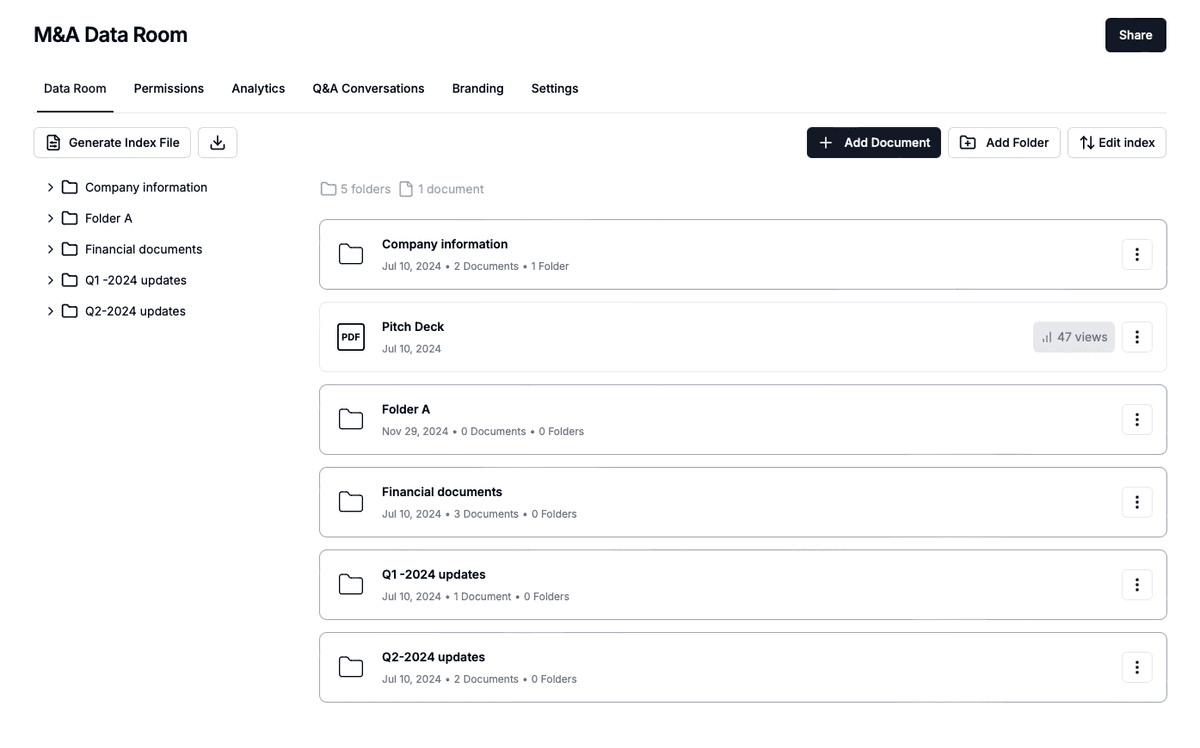
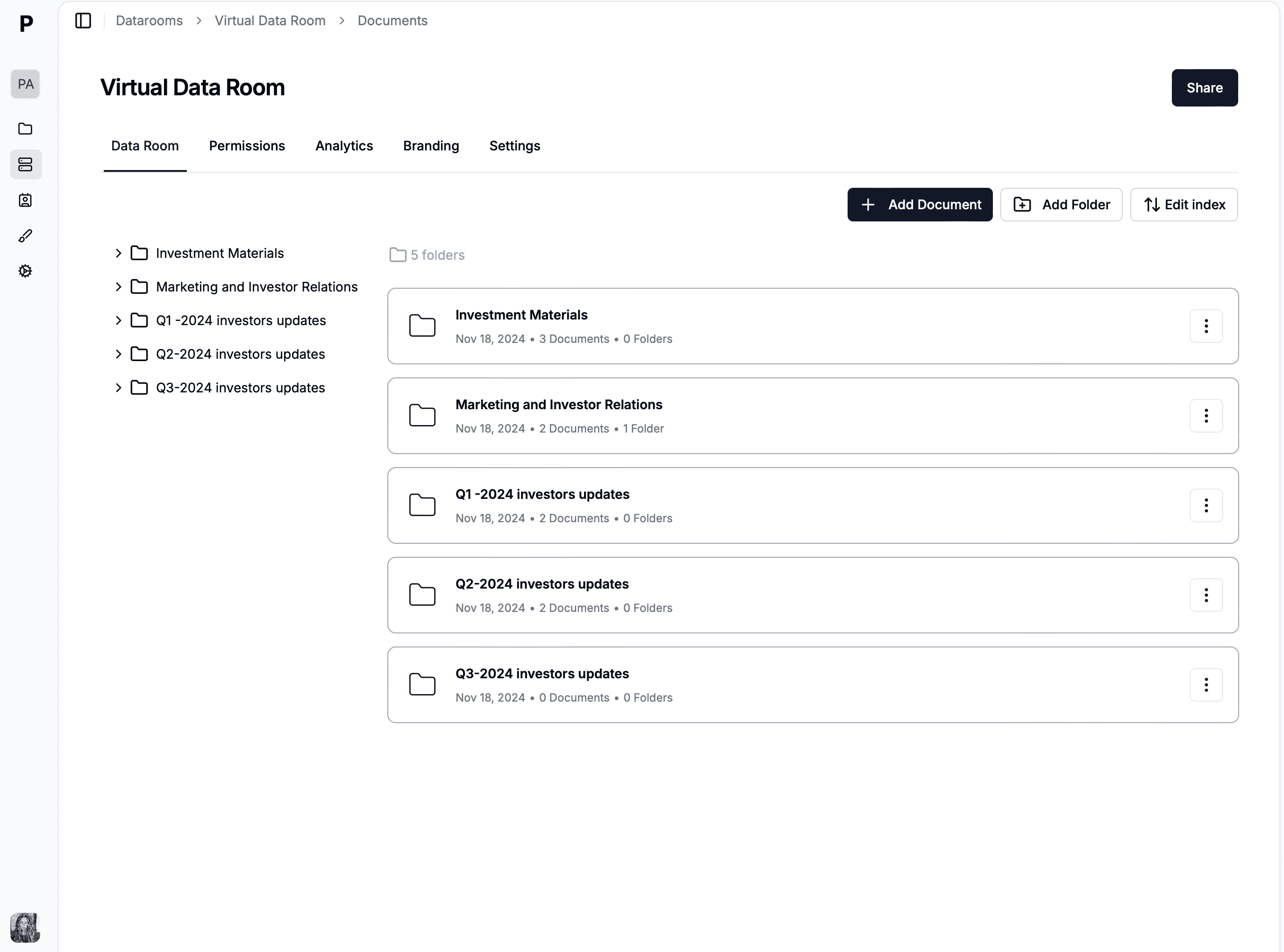
A structured M&A data room, the format Minneapolis business brokers expect before a sell-side engagement.

Papermark is our #1 VDR provider for M&A transactions right now. In two deals we used custom branding, dynamic watermarking, and granular permissions.
Tyler
Start with the transaction record, not the marketing site. The useful question is not how many deals a firm has closed since 1985, but how many closed in your revenue band and industry in the last 24 months. An advisor whose last five deals were $80M medical device suppliers will not run a $4M excavating company sale.
Credentials matter more in Minnesota than in most states. Minnesota Statutes chapter 82 defines a real estate broker to include anyone who, for a fee, lists, sells, or negotiates the sale of a business or business opportunity, including its goodwill or inventory. In practice a Minnesota business broker generally needs a real estate license, which is not the case in California or Texas. The M&A Source and IBBA also issue the M&AMI and CBI designations. Ask which the individual holds, not the firm.
Then work the referral network. Twin Cities deals travel through CPAs, transaction attorneys, and bank relationship managers far more than through any directory. ACG Minnesota and the Twin Cities Metro Area chapter of the Exit Planning Institute put the same few dozen deal professionals in a room every month, and a warm introduction beats a contact form.
Approach three to five firms, not one. A competitive selection costs two weeks and routinely changes both the fee scale and the valuation range you are quoted. Send each firm the same package: a one-page summary, three years of P&L and balance sheet, a trailing twelve month figure, and your add-backs.
Quoted valuation ranges for the same Minneapolis business commonly vary by 1.5x to 2x between firms, mostly because of different assumptions about who the buyer is. A generalist prices your machining shop against other job shops; a specialist prices it against strategic medtech acquirers.
Hennepin Partners is a middle market investment bank in downtown Minneapolis. Its professionals have executed hundreds of transactions comprising more than $50 billion in aggregate value, working with entrepreneurs, private equity firms, and corporations across eight industry groups.
Cherry Tree & Associates is a Minneapolis headquartered private investment bank with four decades of transaction experience, focused primarily on sell-side M&A. Every engagement is led by a managing director with a C-level operating background as a former CEO or CFO.
Chartwell is a national financial advisory firm with a Minneapolis office and eleven others across the US. It combines corporate finance and M&A with valuation and ESOP transaction advisory, a natural fit for Minnesota owners weighing employee ownership against an outright sale.
Quazar is a boutique lower middle market investment bank that has run sell-side and buy-side M&A processes for over 30 years. It sits in the band where a Minnesota family business is too large for a main street broker, too small for a national bank.
Established in 1996, Aethlon Capital is a Minneapolis investment bank covering M&A, growth capital, and strategic advisory for privately owned companies. Its pitch is senior continuity: the people who win the mandate stay on the deal rather than handing it to an analyst.
Founded in 1993 and based in Bloomington, SealedBid Marketing runs sell-side and buy-side intermediary work, recapitalizations, and succession planning for closely held businesses. In July 2024 it became a division of BGM Group, a top 200 accounting firm, adding tax and diligence capacity in-house.
True North spun out of Sunbelt Business Advisors in September 2021 and is headquartered in Minneapolis with advisors working nationally. It handles sell-side and buy-side mandates where main street brokerage hands off to a structured limited auction.
Sunbelt's Minneapolis office describes itself as Minnesota's largest seller of companies, with more than 2,000 businesses sold. It runs a main street brokerage practice alongside an M&A group for companies with EBITDA above $2 million, and has been named the top Sunbelt firm in the country by the IBBA.
Lingate has operated since 1945, one of the oldest continuously running M&A firms in the region. It handles business sales, recapitalizations, internal transitions to family or management, and standalone valuation work for owners not yet ready to go to market.
Faelon Partners has advised business owners from the Twin Cities since 1985, combining confidential brokerage with full M&A representation. It publishes a proprietary range of value report that owners use for estate and financial planning years before a sale.
Kroll Capital is a Minneapolis M&A advisor covering sales, divestitures, recapitalizations, and acquisitions. Its industry coverage maps unusually well onto the Minnesota economy, from aerospace and defense through medical devices to packaging and logistics.
Corporate Finance Associates is a national middle market M&A network with a Minneapolis office offering sell-side and buy-side advisory, capital markets work, and exit planning. The advantage of the network model is buyer reach, which matters when the natural acquirer for a Minnesota manufacturer sits in Ohio or Germany.
Revenue Rocket has spent more than two decades working exclusively with technology services firms, making it the specialist choice for a Twin Cities MSP. IT services valuations turn on recurring revenue mix, contract terms, and technician utilization, which generalist brokers routinely misprice.
The standard Lehman formula charges 5% on the first $1 million and steps down to 1% above $4 million, but most lower middle market Minneapolis firms use a modified or double Lehman scale starting at 10% on the first $1 million. Retainers are almost always credited at close.
| Deal size | Success fee | Retainer | Minimum fee |
|---|---|---|---|
| Under $1M | 8% to 12% of sale price | $0 to $2,500 upfront | $15,000 to $25,000 |
| $1M to $5M | 6% to 10% blended | $3,000 to $7,500/month | $50,000 to $100,000 |
| $5M to $50M | Modified Lehman, 3% to 8% blended | $7,500 to $15,000/month | $100,000 to $150,000 |
| $50M+ | 1% to 3% blended | Negotiated, often credited | Negotiated |
Once an advisor is engaged, the sale becomes a document exercise. A Minneapolis deal in the $5M to $50M band runs 300 to 600 files through diligence over four to six months, shared with five to thirty buyer groups. Diligence pulls audited or reviewed financials and an add-back schedule, OEM supply agreements and purchase orders, quality system records and device history files for a medical device supplier, ingredient and co-manufacturing contracts for a food business, tooling ownership, customer concentration by account, payroll and union agreements, plus every lease and permit on the plant.
Several of those buyer groups are competitors. The likeliest strategic buyer for a contract manufacturer in the Medtronic and Boston Scientific supply base is another contract manufacturer bidding for the same programmes, and the acquirer of a food or agriculture business feeding General Mills, Cargill, Hormel or Land O'Lakes is often the supplier quoting against you for the next award. Your quality records, your per-account pricing and the list of programmes you hold are exactly what those parties want. Twenty of the thirty who sign an NDA will never bid, and every one of them keeps what you sent.
A leak costs you locally in engineers and in awards. The Twin Cities device and precision manufacturing talent pool is deep but tightly connected, and quality engineers, tooling leads and programme managers hear about a sale through suppliers and industry meetups long before it is announced. An OEM procurement team that learns of an ownership change from a competitor rather than from you can slow or requalify an award, customers ask for dual sourcing, and a landlord on an industrial lease or a franchisor whose consent you need gains leverage at exactly the wrong moment. Email attachments cannot be recalled, cannot be watermarked, and tell you nothing about who actually opened them.
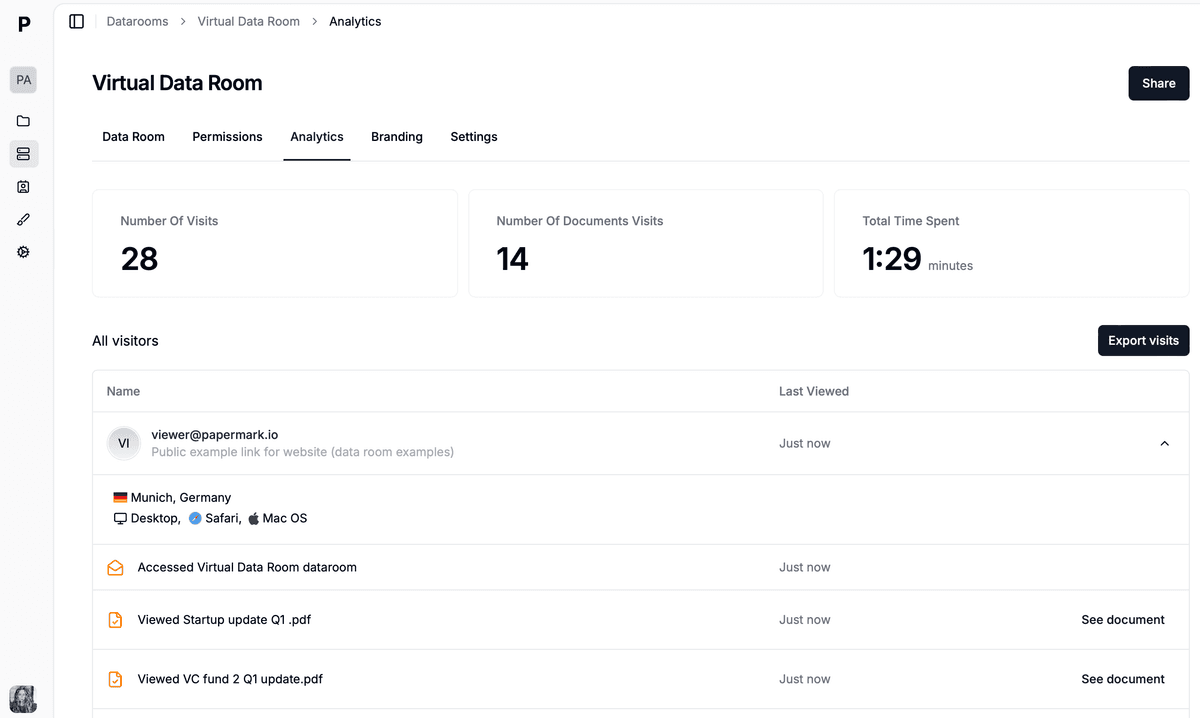
Page-by-page analytics show which Minneapolis buyers actually read the financials and which only skimmed the teaser.
A data room for Minneapolis M&A is the permissioned workspace where your advisor stages 300 to 600 diligence files and runs five to thirty buyer groups through them at once, without any of them seeing what the others see. This is what advisors mean when they ask whether your documents are ready.
Papermark is a secure, fully customizable, and developer-friendly data room built for modern dealmakers, and a secure data room is what keeps the sensitive parts of the file locked while the process runs. Granular permissions open the financial folder to a shortlisted buyer while OEM supply contracts stay closed until an LOI is signed. Dynamic watermarking stamps each viewer's email, IP, and timestamp on every page, so a leaked CIM traces back to a specific buyer. The audit log records every view down to the page and second, which is how advisors separate a serious bidder from a tire kicker, and the Q&A module keeps buyer questions and answers in one threaded record instead of scattered across email.
The Data Rooms plan is €149/month, or €99/month billed annually, with a 7-day free trial, and includes 3 team members, unlimited data rooms, unlimited documents, a custom domain, dynamic watermarking, NDA agreements, and granular file-level permissions. Our breakdown of the best virtual data rooms compares Papermark against Datasite, Intralinks, iDeals, and DocSend.
Most virtual data rooms were built for bankers and priced for them. Papermark is a secure data room for modern dealmakers, and it is more customizable and more branded than any other VDR on the market.
Fit is usually about band and sector rather than reputation. If none of the thirteen firms above match your revenue range, widen the search to Chicago and Milwaukee, where several middle market banks cover Minnesota deals.
If none of the thirteen above fits, the M&A advisors database lists every firm we have researched by city and by industry, with deal sizes and sectors side by side. Filter to Minneapolis to compare these against each other, or switch to Chicago or Milwaukee if the local bench is thin in your sector.
Compare 13 business brokers and M&A advisors in San Diego for 2026, with deal sizes, sectors, fee ranges, and how to pick the right firm to sell your business.
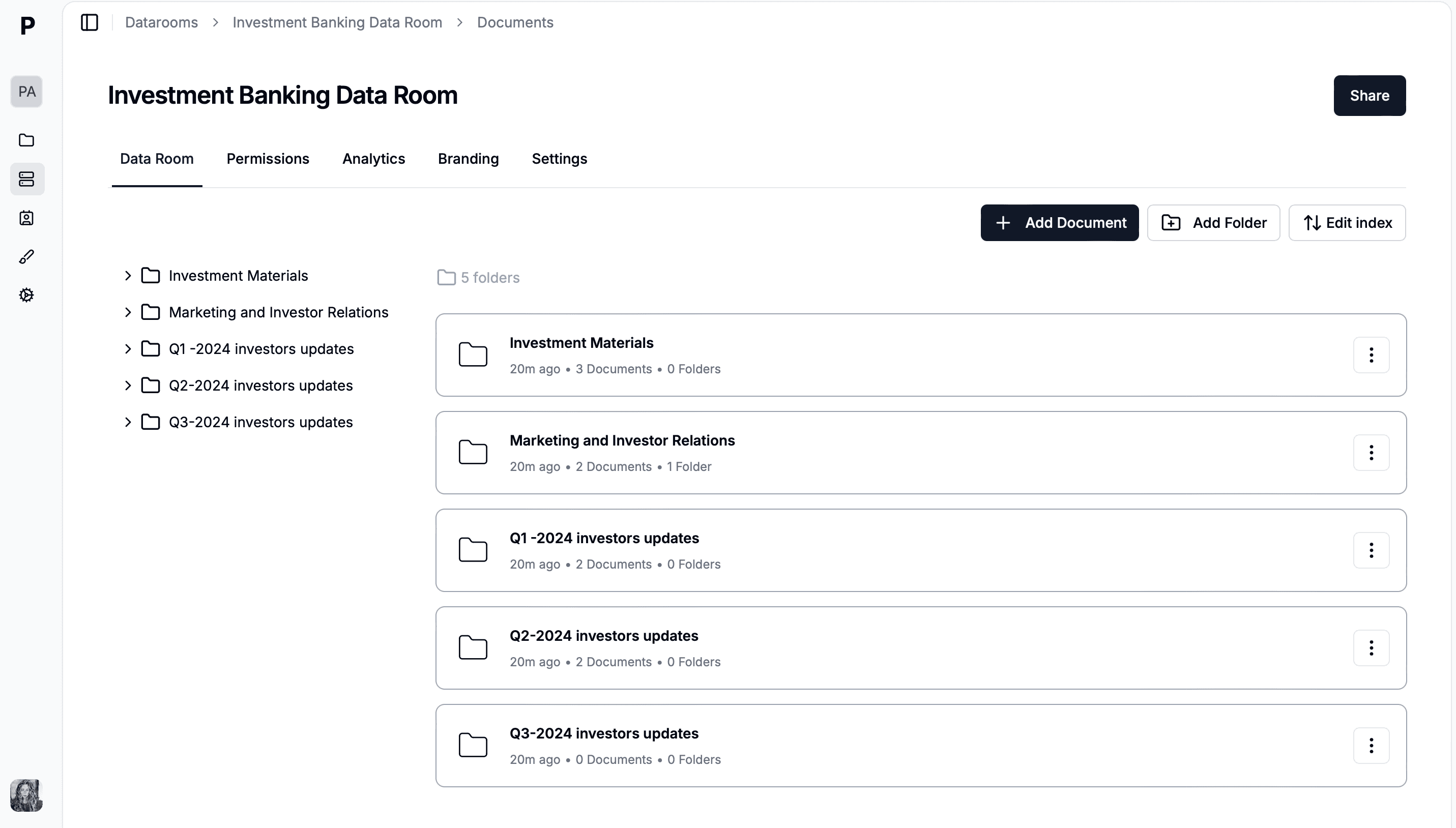
Compare 13 business brokers and M&A advisors in Pittsburgh for 2026, with deal sizes, sectors, fee ranges, and how to pick the right firm to sell your business.
Compare 12 verified business brokers in San Francisco by deal size, fee model and sector focus, plus what Bay Area buyers pay and how to sell quietly in 2026.