

mergers-and-acquisitions
14 Best Healthcare Investment Banks and M&A Advisors in 2026
Compare 14 verified healthcare investment banks by subsector, deal size and client type, plus how owners of provider and health tech companies run a sale in 2026.
Real estate capital markets split into three jobs that different firms do: selling assets, raising debt, and raising equity or selling the sponsor itself. This guide profiles 13 verified real estate investment banks and capital advisors, with the mandates each one takes and the asset classes they cover.
The distinction matters more than most owners expect. A brokerage that leads the market in single-asset multifamily sales is not the firm you call to sell a management company, recapitalise a fund, or place a joint venture equity cheque with a sovereign wealth investor. Those are separate businesses staffed by separate people, even inside the same global brand.
Rate volatility since 2022 pushed more work toward recapitalisations, preferred equity and loan modifications, and away from clean disposals. Owners facing a maturing loan on an asset worth less than the debt need someone who can run a debt placement, an equity raise and a sale process at once and say which clears. That is an investment banking mandate, not a listing. The firms below cover that range, from the global platforms to the boutiques that only place capital into funds. Pick by mandate first and asset class second.
The 13 firms below are the Real Estate shortlist. The full M&A advisors database adds every other adviser we have researched, so you can compare a sector specialist against a strong bank in your own metro.
Capital markets teams work on success fees, so they screen for closability before size. A $200M asset with a debt stack no one will refinance is worth less of their time than an $80M asset with clean title, a current rent roll and no litigation.
The rent roll and trailing operating statements do most of the talking. Bankers want a current rent roll with expiries, escalations, options and concessions, plus trailing twelve month statements reconciled to the general ledger. If your T12 does not tie to the tax return, that comes up in the first meeting rather than the last.
Debt is the second screen. Loan documents, the maturity date, prepayment or defeasance costs and any lender consent on transfer decide whether a sale, a recap or an extension is even the right process. Owners who arrive without the loan agreement get a generic pitch instead of a strategy.
Third is document readiness. Leases, estoppels, service contracts, environmental reports, surveys, title, zoning letters and capital expenditure history all get requested at once. Staging them in a permissioned workspace before the offering memorandum goes out is the fix, and our review of the best virtual data rooms covers what each tier costs.
Bring these to a first capital markets meeting:
No credit card required.

Papermark is our #1 VDR provider for M&A transactions right now. In two deals we used custom branding, dynamic watermarking, and granular permissions.
Tyler
Start with the mandate, not the brand. Ask each firm what it would actually do with your situation, and listen for whether the answer is a listing or a strategy.
Approach capital markets teams in parallel rather than one at a time. Pitches take two to three weeks to assemble, and running four at once gives you comparable pricing views on the same day. Confidentiality matters less on a marketed asset sale than in operating company M&A, but it matters enormously in an entity or platform sale: if you are selling a management company, tenants, lenders and employees should learn about it from you rather than from the market.
| # | Firm | Primary mandate | Focus |
|---|---|---|---|
| 1 | Eastdil Secured | Large asset and entity level | Office, multifamily, hotels, industrial, entity M&A |
| 2 | JLL Capital Markets | Investment sales, debt, equity | All commercial asset classes, global |
| 3 | CBRE Capital Markets | Investment sales, debt and structured finance | All commercial asset classes, global |
| 4 | Newmark | Debt, structured finance, sales | Multifamily, office, industrial, entity advisory |
| 5 | Cushman & Wakefield | Investment sales, debt and equity | All commercial asset classes, global |
| 6 | Walker & Dunlop | Agency debt, sales, advisory | Multifamily, affordable, seniors housing |
| 7 | Berkadia | Mortgage banking and investment sales | Multifamily, seniors housing, student housing |
| 8 | Marcus & Millichap | Private client to institutional sales | Multifamily, retail, net lease, self storage |
| 9 | Northmarq | Debt, equity and investment sales | Multifamily and commercial property types |
| 10 | Greystone | Agency and FHA lending | Multifamily, affordable, healthcare real estate |
| 11 | Ackman-Ziff | Structured finance and equity | Complex capital structures across asset classes |
| 12 | Hodes Weill & Associates | Fund capital raising and manager M&A | Real estate and real assets fund managers |
| 13 | Park Madison Partners | Private capital placement | Real estate funds, joint ventures, separate accounts |
Eastdil invented the category, having operated as a real estate investment bank since 1967, and remains the default choice for trophy assets, large portfolios and entity level transactions. It became independent again in 2019 after Wells Fargo sold its stake.
JLL's capital markets business covers investment sales, debt and equity placement and loan sales globally, and absorbed the HFF platform in 2019, which is where much of its debt origination bench came from.
CBRE is the largest commercial real estate services firm in the world by revenue, and its capital markets arm pairs investment sales with a very large debt origination and servicing business.
Newmark has one of the strongest debt and structured finance benches in the market and is often used for recapitalisations and entity level advisory where a straight sale is not the answer.
Cushman & Wakefield runs a global capital markets group covering investment sales alongside debt and equity advisory, a genuine alternative to CBRE and JLL on a large marketed process.
Walker & Dunlop is one of the largest multifamily lenders in the United States and has expanded beyond origination into investment sales, appraisal and advisory. If your deal is multifamily and agency financed, it belongs on your list.
Berkadia is a joint venture of Berkshire Hathaway and Jefferies Financial Group, unusual balance sheet backing for a mortgage banking and investment sales platform.
Marcus & Millichap transacts more commercial properties by count than any other North American brokerage, largely because it serves the private client market institutional platforms decline.
Northmarq combines debt and equity placement with investment sales and loan servicing, a common choice for private and mid-sized institutional owners wanting both sides handled by one team.
Greystone is one of the most active agency and FHA multifamily lenders in the country and also covers healthcare real estate, which makes it the right call for a skilled nursing or seniors housing recapitalisation.
Ackman-Ziff is the boutique owners call when the capital stack is complicated: structured finance, preferred equity, joint venture equity and situations where a straightforward loan will not clear.
Hodes Weill advises managers rather than assets. It raises capital for real estate funds and advises on manager level M&A, the mandate you need if you are selling or recapitalising the sponsor itself.
Park Madison places institutional equity into real estate funds, joint ventures and separate accounts, a narrower mandate than the platforms above and a useful one for emerging sponsors.
Real estate transactions are unusually document dense. A single multifamily sale generates a rent roll, leases, estoppels, service contracts, a survey, title commitment, environmental report, capital expenditure history and loan documents, and a portfolio multiplies that by the number of assets.
The parties requesting all of that are frequently your competitors. On a marketed asset sale, the tour list is made up of owners and sponsors who hold buildings in the same submarket, and several of them will register, download the rent roll and never bid. What they take away is your actual achieved rents, your concession package, your expense load per unit or per square foot and the loan terms you are carrying, which is exactly the information they need to underwrite against you on the next deal and to price the space they are leasing across the street. In an entity or platform sale the problem is sharper still, because the buyer list is other managers who would happily hire your team.
A leak here is expensive in ways a price cut is not. Tenants who hear the building is trading go quiet on renewals or reopen terms they had already agreed. Employees at a management company being sold start looking, and in a sponsor sale the promote holders are the asset. Your lender, whose consent you may need on assumption or transfer, would rather learn about a process from you than from a broker's email chain. Attachments sent by email cannot be recalled, cannot be watermarked, and tell you nothing about who actually opened them.
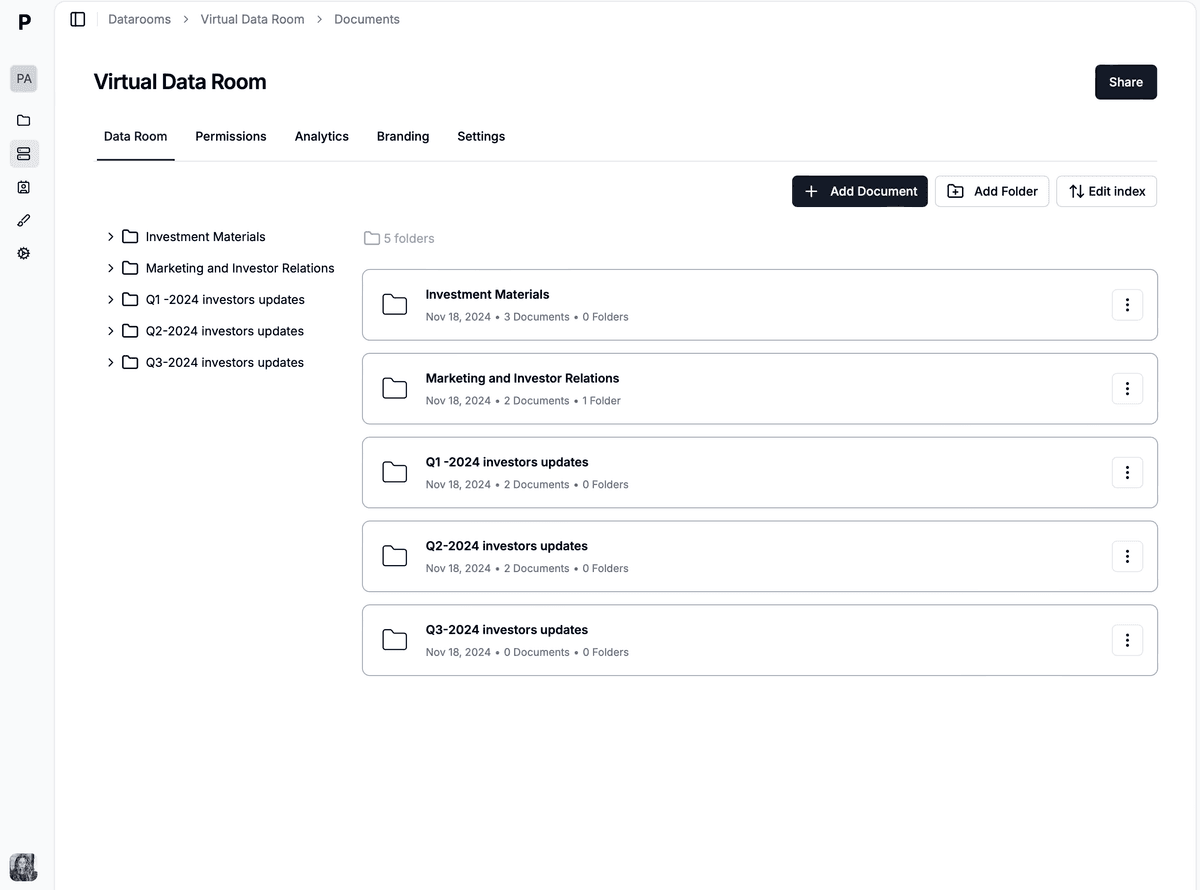
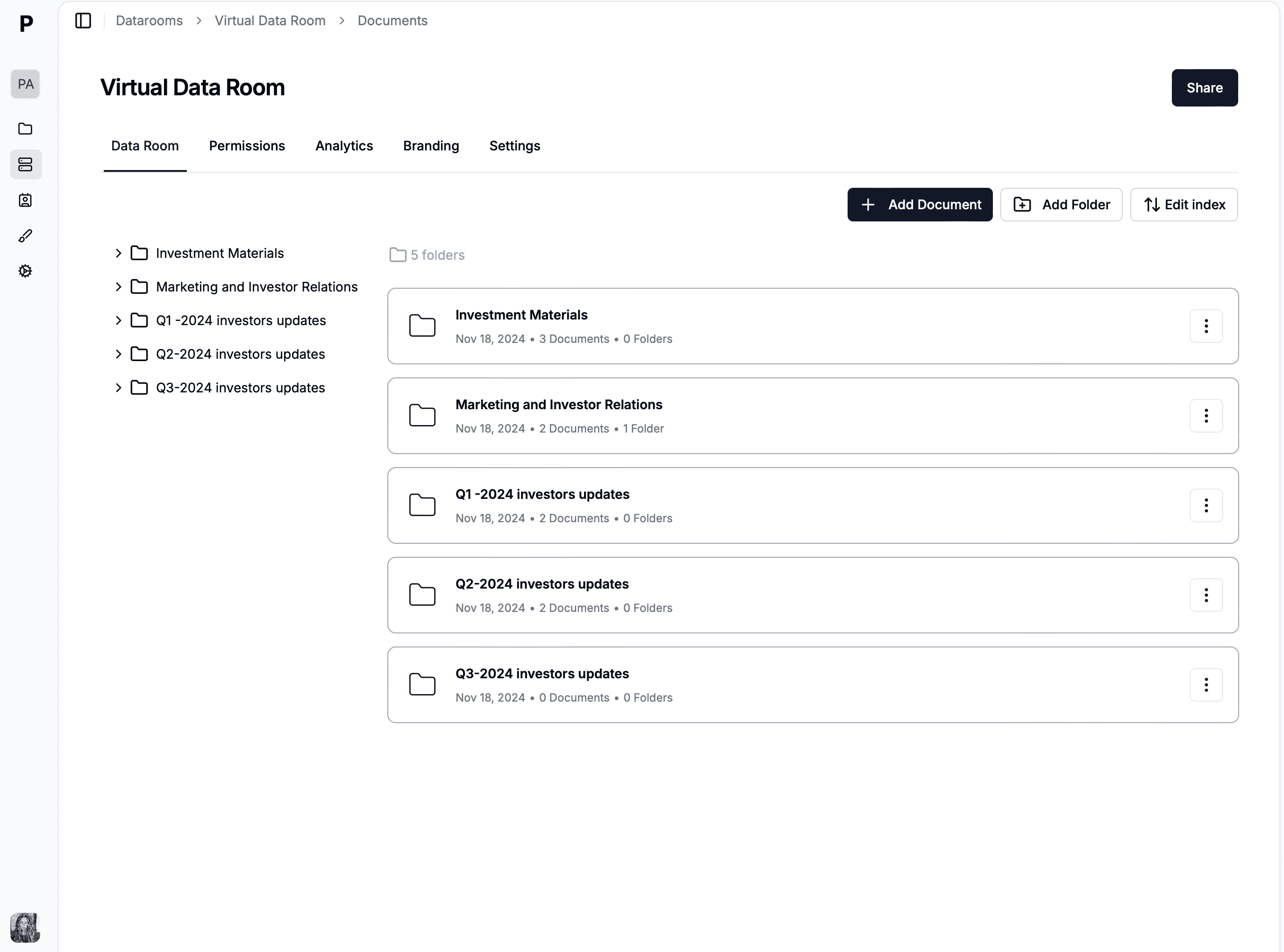
Folder-level permissions let a banker open the general file to thirty tour parties and loan documents to one.
A data room for real estate M&A is the permissioned workspace where your banker stages the rent roll, leases, estoppels, loan documents and third party reports and runs tour parties, lenders and equity partners through them at once, without any of them seeing what the others see. On a portfolio or entity deal it is the only practical way to run the process.
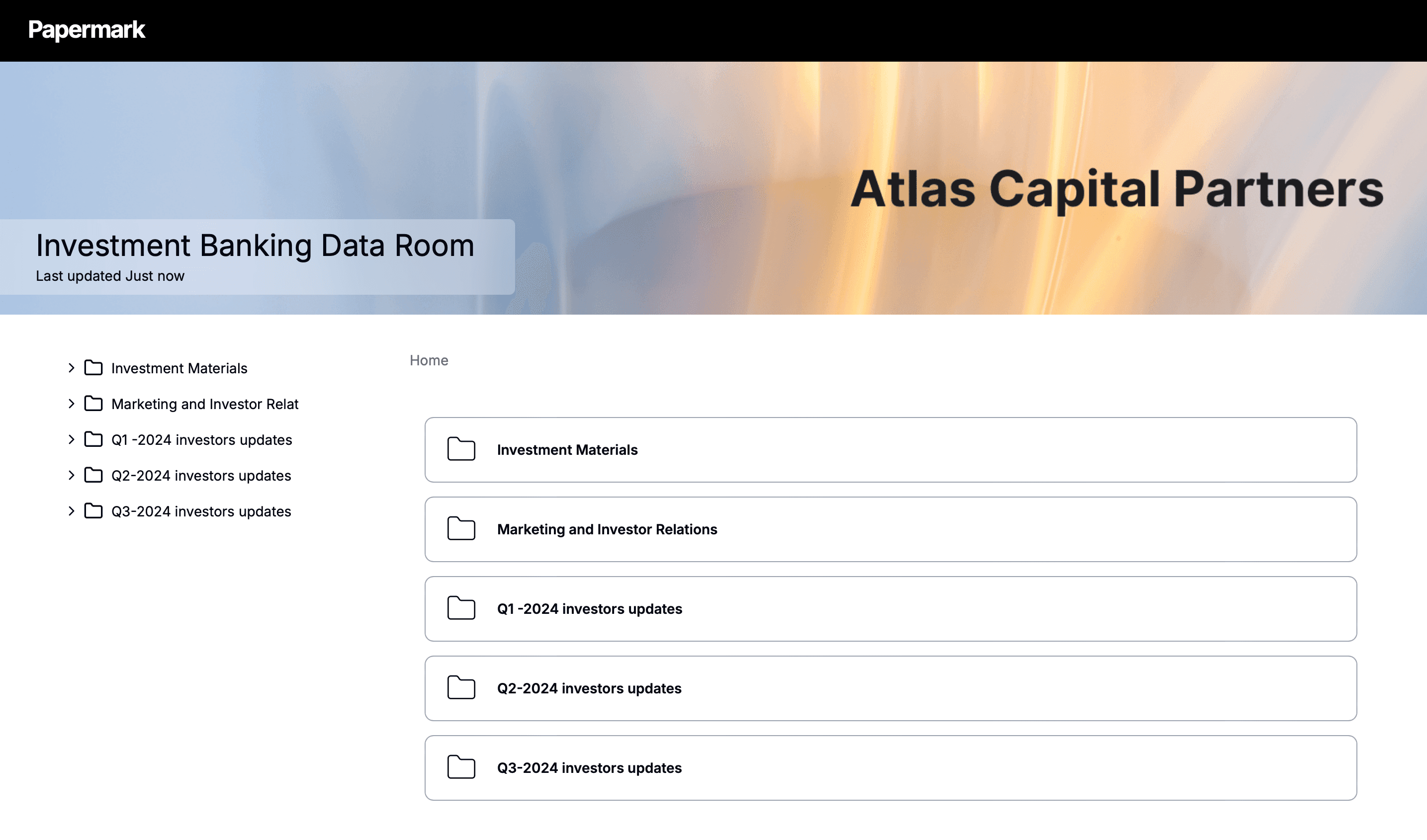
Papermark is a secure, fully customizable, and developer-friendly data room built for exactly this: a secure data room for an asset, portfolio or entity level process that keeps the sensitive parts of the file locked while bidding runs.
NDA agreements sit on the link itself, so a competing owner signs before the offering memorandum renders. Dynamic watermarking burns each viewer's email and the timestamp onto every page, which stops a rent roll circulating in a market where everyone knows everyone. Granular file-level permissions let your banker open the general folder to thirty tour parties while loan documents and estoppels stay locked to the buyer under contract.
Page-by-page analytics tell your banker where the real interest sits. When one bidder spends fifteen minutes on the capital expenditure schedule and another has not opened the room since the tour, the follow-up list writes itself. Automatic file indexing keeps a portfolio navigable instead of collapsing into an unsearchable folder tree.
The Data Rooms plan is €149/month, or €99/month billed annually, with a 7-day free trial, and includes 3 team members, unlimited data rooms, unlimited documents, a custom domain, dynamic watermarking, NDA agreements, and granular file-level permissions. Open a secure data room before the offering memorandum goes out and reuse it through closing.
Most virtual data rooms were built for bankers and priced for them. Papermark is a secure data room for modern dealmakers, and it is more customizable and more branded than any other VDR on the market.
If your asset sits below the thresholds these platforms cover, or you want to test pricing before signing an exclusive, the alternative is approaching buyers and lenders directly with counsel supporting you.
If none of the thirteen above fits, the M&A advisors database lists every firm we have researched by city and by industry, with deal sizes and sectors side by side. Filter to Real estate to compare these against each other, or check another market if you would rather work with a specialist elsewhere.
Compare 14 verified healthcare investment banks by subsector, deal size and client type, plus how owners of provider and health tech companies run a sale in 2026.
Compare 13 verified insurance investment bankers by deal size, segment and fee model, plus what agency owners and carriers should prepare before a sale in 2026.
Compare 13 Charlotte investment banks and M&A advisory firms for 2026, with typical deal sizes, sector focus, fee ranges, and how to choose the right advisor.