Commercial real estate due diligence in 2026: don't miss the estoppel deadline
·17 min read
Marc Seitz
Commercial real estate due diligence is the investigation a buyer runs on an office, industrial, retail, or multifamily asset during a contractual window after the purchase and sale agreement is signed. It tests whether the property, the title, and the income stream match what the seller represented, and at what price.
Quick recap
The due diligence period is a negotiated window in the purchase and sale agreement, commonly 30 to 60 days, in which the buyer can terminate for any reason and recover the deposit.
When the window expires the earnest money goes hard: it becomes non-refundable, and the buyer closes or forfeits it.
The review splits into 7 workstreams: title and survey, zoning, environmental, physical condition, financial and lease audit, contracts and insurance, and lender diligence.
A Phase I environmental site assessment is performed to ASTM E1527-21, which satisfies the EPA All Appropriate Inquiries rule and preserves landowner liability protections.
A property condition assessment produces a capital reserve schedule over a 10 or 12 year term, and its immediate repairs line most often triggers a price retrade.
Tenant estoppel certificates delay closing more than anything else, because the seller cannot compel a tenant to sign one but the agreement makes delivery a condition to close.
Third-party reports on one asset typically cost $2,200 to $4,000 for a Phase I, $3,000 to $8,000 for an ALTA/NSPS survey, and $3,000 to $8,000 for a condition assessment.
The lender runs a parallel review with its own document list and its own appraisal.
A data room for commercial real estate due diligence is organised by asset and workstream, not by function, because five outside parties each need one slice.
Papermark hosts a data room for commercial real estate due diligence with granular file-level permissions, dynamic watermarking and per-visitor analytics from €99/month.
Most buyers treat the window as a checklist and then spend its last ten days in a panic. The reports land on schedule, the financial review sits close to underwriting, and the timetable stalls on a handful of tenants who will not return a signed estoppel.
Running the review means putting a title commitment, a rent roll, sixty leases and two environmental reports in front of a buyer, a lender, an environmental consultant, a title company and tenant-side counsel, none of whom should see the same things. A data room for commercial real estate due diligence does that with one link per party.
1. What is commercial real estate due diligence?
Commercial real estate due diligence is the structured investigation an acquirer runs on an income-producing property between signing the purchase and sale agreement and the expiry of the inspection window. It covers what is being acquired, meaning the estate as qualified by the title commitment, what physically exists on the land, what the law permits, and what the income stream really is once the leases are read rather than summarised.
The structure differs from corporate M&A in a way that shapes everything. In an M&A process the buyer investigates before signing, and the findings shape the representations and indemnities. Here the sequence reverses: the buyer signs, posts a deposit, then investigates inside a window that carries an unconditional right to walk. The agreement is signed on incomplete information by design.
Every day of the window is an option already paid for, and it expires whether or not the reports arrived. A survey ordered on day 12 that takes five weeks does not extend the period, and a silent tenant does not extend it either.
The output is a decision with four outcomes: proceed and waive the contingency, retrade on a specific finding, require a cure before closing, or terminate. A finding that supports none of those moves is not worth paying for.
2. The due diligence period and when the earnest money goes hard
The due diligence period, also called the inspection or feasibility period, is a negotiated term in the purchase and sale agreement. Thirty to sixty days is standard for a stabilised single asset. Portfolios, ground-leased assets and entitlement plays routinely get ninety days or more, while buyers competing in a tight market shorten the window deliberately as a bidding tactic.
Inside the window the buyer can terminate for any reason or none and recover the deposit, which is why sellers negotiate hard on length. When the window closes without a termination notice the earnest money goes hard: the deposit becomes non-refundable, credited to the price at closing but forfeited if the buyer fails to close. From that moment the buyer's leverage collapses, because walking away now costs real money. Deposits are often tranched to reflect this, with an initial refundable amount at signing and a further sum going hard on expiry.
Buyers also negotiate one or two thirty-day extensions, purchased with a non-refundable payment applied to the price. Extensions are cheap insurance when a survey or an estoppel package is late. One mechanical point matters more than it sounds: diary the termination deadline with the exact notice mechanics from the agreement, because a late or misdelivered notice can cost the whole deposit.
3. The 7 workstreams of a commercial real estate review
Diligence is usually written up as a checklist, which makes it sound sequential. It is better understood as seven parallel workstreams with different owners and durations. The deal is ready to close only when the slowest one finishes.
Title and survey comes first and produces the most genuine surprises. The title company issues a commitment: Schedule A describes the estate insured, Schedule B-I the requirements to satisfy before the policy issues, and Schedule B-II the exceptions the policy will not cover. Those exceptions are the substance. Easements, restrictive covenants and reciprocal easement agreements all sit there, and each has to be pulled and read rather than accepted as a title. An ALTA/NSPS land title survey then plots them, which is how encroachments and buildings crossing a setback get found. Order it to the current 2026 ALTA/NSPS Minimum Standard Detail Requirements.
Zoning and entitlements runs alongside. A zoning report confirms the classification, permitted uses, parking ratios and setback compliance, and certificates of occupancy are pulled for each building. Legal nonconforming status matters most: a building that complies only because it predates the code may not be rebuildable after a casualty.
Appraisal, lender Phase I, PCA, SNDAs, entity documents
4 to 8 weeks
Lender and its counsel
The financial workstream hides the most work, because a rent roll is a summary the seller wrote and a lease is a contract lawyers wrote.
What each workstream asks the seller to produce
The table below maps each category to the documents a reviewer will request. It is also the folder structure the seller or broker should build before the room opens, because the first request list from buyer counsel looks almost exactly like it.
Service and management agreements, commission agreements
10 to 40
Buyer, counsel
Insurance
Policies, certificates, five-year loss runs, flood determination
5 to 15
Buyer, broker, lender
The counts look modest until the lease row. A retail centre with 28 tenants has 28 leases, roughly 60 amendments, and 28 estoppel requests that all have to come back.
Family offices buying property directly hit the same structure. G.P. Loree & Co. organises its data rooms by deal or asset rather than by document type, with separate folders for financials, legal documentation, operational information and third-party due diligence reports, which is the folder logic a broker builds for a property file.
4. The estoppel trap: lease audit, estoppel certificates, and SNDAs
The financial workstream starts with the rent roll and the trailing-12 operating statements. The rent roll states each tenant, suite, area, term dates, base rent, escalations, recovery method, deposit and options. Every field is a claim, and the lease audit checks each claim against the executed document.
Discrepancies are the norm. Base rent frequently omits a free-rent period still running, a step-up not yet applied, or an abatement granted in a side letter that never reached the abstract. Recovery clauses are worse: a roll may show a tenant as triple-net when the lease caps controllable expense recoveries at a percentage increase per year. Options are worst, because a below-market renewal changes what the asset is worth and appears nowhere in the trailing-12.
What comes out is the underwriting bridge from in-place net operating income to stabilised NOI. In-place NOI is what the asset earns today on the leases as written, corrected for audit findings. Stabilised NOI adds contractual steps already signed, marks vacant space to achievable rent net of downtime and leasing costs, normalises operating expenses for the reassessment that follows a sale, and subtracts a realistic reserve. Our guide to financial due diligence covers the same discipline for companies.
Then come the estoppels, and this is where closings actually slip. A tenant estoppel certificate is the tenant's own signed statement of its lease facts: rent, term, deposit held, outstanding landlord obligations, undisclosed amendments, and whether either party is in default. It is the only document in the file the seller did not write, which is why buyers and lenders insist on it and why it is hard to get.
The mechanics create the trap. Most leases require return within 10 to 20 business days, but the request reaches a regional manager who forwards it to a legal department with no reason to hurry, and the seller cannot compel performance. Meanwhile the agreement makes delivery a condition to close, usually framed as certificates from every major tenant plus tenants representing a stated share of the remaining leased area. Miss the threshold and the buyer holds a termination right nobody wants to exercise.
Subordination, non-disturbance and attornment agreements sit beside estoppels and get confused with them. An estoppel confirms the lease as it stands today. An SNDA is forward-looking: the tenant subordinates its lease to the mortgage, the lender agrees not to disturb possession on foreclosure, and the tenant attorns to the lender as landlord. Lenders require SNDAs from material tenants, so both packages depend on the same slow legal departments.
Finding
How it surfaces
Commercial remedy
Estoppel contradicts the rent roll
Tenant states different rent, term, or deposit
Price adjustment sized to the capitalised difference
Outstanding landlord obligation
Estoppel discloses unfinished tenant improvement work
Escrow holdback until the work completes
Undisclosed side letter appears
Estoppel references an amendment absent from the file
Reunderwrite the tenant, then retrade or cure
Tenant will not return the estoppel
Deadline passes with no response
Seller estoppel with a survival period and a cap
Material tenant refuses an SNDA
Lender condition unsatisfied at loan approval
Extend, reprice the debt, or reduce proceeds
A seller estoppel is the usual fallback, not an equivalent, because it substitutes the seller's word for the tenant's.
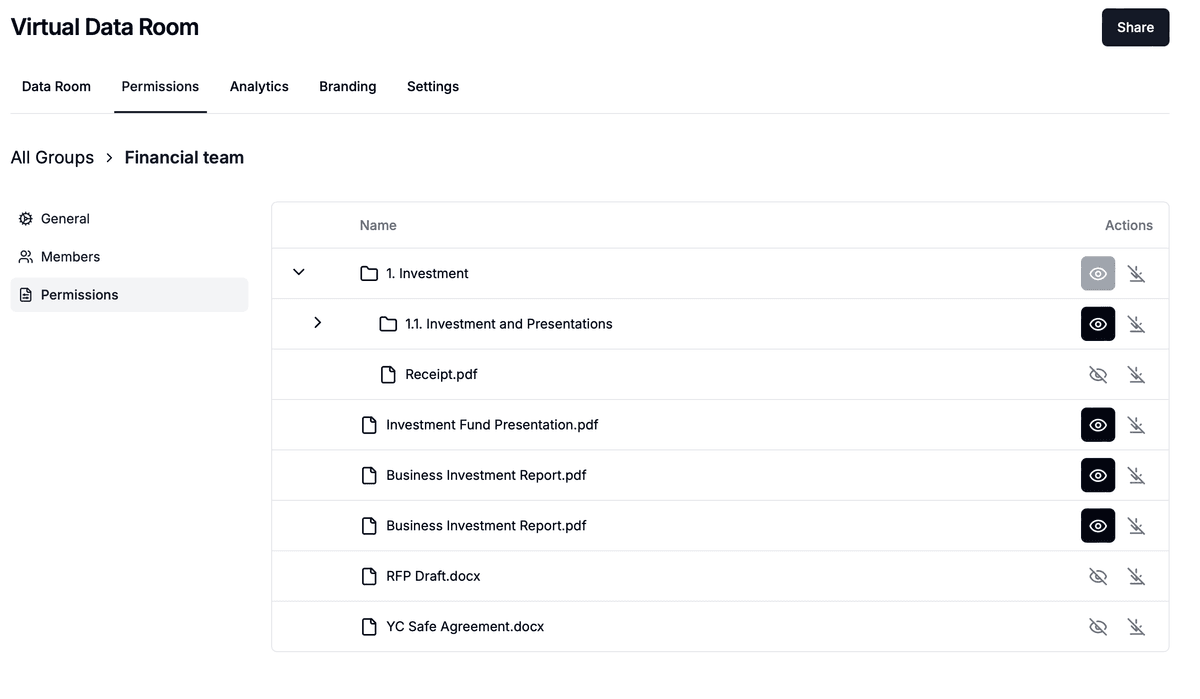
Tenant-side counsel gets a link that opens on that tenant's lease and estoppel form, and nothing else in the property file.
The fix is to start estoppels on day one of the window, not after the reports come back. Send the form with the lease attached, track responses against a live list rather than an email thread, and escalate through the leasing broker.
5. Environmental, physical condition, and the capital reserve surprise
The environmental workstream starts with a Phase I environmental site assessment performed to ASTM E1527-21. A Phase I is records and reconnaissance rather than testing: the consultant reviews historical aerial photographs, regulatory databases and chain of title, walks the site, and interviews people with knowledge of it. Performing one satisfies the EPA All Appropriate Inquiries rule, which preserves the buyer's landowner liability protections. Skipping it forfeits a statutory defence.
What matters is whether the consultant identifies a recognised environmental condition, meaning the presence or likely presence of a hazardous substance release. A REC triggers a Phase II, the intrusive stage of soil borings, monitoring wells and vapour sampling, which adds two to six weeks. Phase I reports also age, with key components generally requiring update after 180 days, so a seller's report from the last marketing cycle is usually not reusable. Our guide to environmental due diligence goes deeper on when contamination stops being a price adjustment.
Physical diligence produces a very different number. The property condition assessment, commonly performed to the ASTM E2018 guide, returns two things: an immediate repairs table covering deferred maintenance and life-safety deficiencies, and a capital reserve schedule projecting replacement costs year by year across a 10 or 12 year term.
That reserve schedule is the item most often underweighted, and it is a quieter problem than contamination because nothing about it looks alarming. A buyer models $0.20 per square foot because the last three deals used that, and the assessment comes back with $2.4M across twelve years on a 312,000 square foot park because two of six roofs are at end of life. That is not a defect. It is a real cost that was never in the model.
6. Lender diligence, service contracts, and insurance
If the acquisition is financed, and most are, a second full review runs in parallel. The lender has its own list, standards and timetable, and it is usually the longest workstream in the matrix. Treating it as an afterthought is how a deal that cleared its contingency still misses its closing date.
The lender orders its own appraisal, which for a regulated institution follows USPAP and the FIRREA appraisal rules, and that appraisal does not care what the buyer agreed to pay. It also typically requires environmental and property condition reports addressed to it or accompanied by a reliance letter, so instruct consultants at the outset to issue reports the lender can rely on. Beyond that it wants flood determinations, evidence of conforming insurance, borrower entity documents, estoppels and SNDAs from material tenants.
The lender needs leases, financials and the third-party reports, and has no reason to see the buyer's internal underwriting.
Service contracts are a smaller workstream that produces disproportionate friction at closing. Landscaping, janitorial, security, elevator maintenance and the management agreement all have to be read for assignability and termination rights, and many carry auto-renewals whose notice windows have already passed. The standard buyer position is that the seller terminates everything at closing except what the buyer elects to assume, which only works if the notice periods, commonly 30 days, are diaried against the closing date. Leasing commission agreements deserve attention too, since unpaid commissions on future renewals travel with the property.
Insurance closes the loop. The buyer needs current policies, certificates and five years of loss runs, because loss history drives what the asset costs to insure under new ownership rather than what the seller pays today. In coastal and wildfire-exposed markets that gap can change a deal's economics, so source the quote inside the window.
7. Worked scenario: Kestrel Yards industrial park
A mid-market fund agrees to acquire Kestrel Yards, a six-building, 312,000 square foot light industrial park with 14 tenants, for $48.6M. In-place net operating income is $3.16M, a 6.5 percent going-in yield, and the model reaches a stabilised NOI of $3.6M in year three on contractual steps plus lease-up of a 24,000 square foot vacancy. The agreement gives a 45-day inspection period with a $1.5M deposit that goes hard on expiry, plus one 30-day extension for $250,000.
Title and survey return one real issue: a recorded access easement crossing the truck court of building four, unmapped on the prior survey and disclosed only as a Schedule B-II exception nobody had pulled. It constrains the trailer parking the fund had underwritten as future income.
The property condition assessment is the expensive finding, a 12-year capital reserve of $2.4M. Of that, $1.15M is immediate, because two of the six roofs are at end of life and the fire alarm panel in building two needs replacement. A further $0.85M falls in years two to five, and $0.4M sits in years six to twelve.
Kestrel Yards: 12-year capital reserve from the property condition assessment
2.4$M capital reserve
Immediate, year one1.15 · 48%
Two roofs at end of life plus a fire alarm panel
Short term, years two to five0.85 · 35%
Rooftop HVAC units and the first paving phase
Long term, years six to twelve0.4 · 17%
Remaining paving, facade sealant, life safety
Worked scenario. The $1.15M immediate line drove the retrade, because it lands in year one against a model that budgeted $0.20 per square foot.
The lease audit finds two things. A tenant in 31,000 square feet holds a renewal option at 90 percent of market with a fixed ceiling, which the model had treated as a market renewal. And 11 of 14 estoppels come back inside the window; one of the three that do not is a 41,000 square foot tenant above the major-tenant threshold, so its certificate is a condition to close. The fund buys the extension rather than accept a seller estoppel on a tenant carrying 13 percent of income, and the certificate arrives on day 63 confirming an unrecorded expansion right nobody had abstracted. The deal closes at $47.45M, a $1.15M reduction matching the immediate repairs line, run through a data room holding 224 documents across eight folders.
8. Common mistakes, and what the review costs
The most common mistake is ordering the long-lead items late. Buyers reliably instruct the Phase I and the property condition assessment in week one because those feel like the real diligence, then order the survey in week two and send estoppel requests in week three. Those last two have the least controllable duration, and starting them late is the most reliable way to pay for an extension.
The second is reading the title commitment as a summary rather than pulling the exception documents, because a Schedule B-II reference tells you nothing about the use restrictions, operating covenants and consent rights a recorded easement agreement can carry.
The third is treating the property condition assessment as a compliance document rather than an underwriting input. Buyers who raise a high reserve schedule early, with the report attached, tend to get a price response; buyers who raise it in the last 72 hours get treated as retraders. The fourth is running the whole thing over email, because when five outside parties pull from a file the seller is still adding to, version confusion arrives at the moment it is most expensive. Our real estate due diligence checklist covers the document list.
On cost, the third-party budget for a single stabilised asset is predictable. A Phase I typically runs $2,200 to $4,000, an ALTA/NSPS land title survey $3,000 to $8,000 depending on acreage and Table A items, a property condition assessment $3,000 to $8,000, and a zoning report roughly $1,000 to $2,500. A Phase II moves the environmental line into five figures, and lease abstraction is quoted per lease, which is why a 60-tenant retail asset costs several times a single-tenant building.
Legal fees are the larger and less predictable line, since buyer counsel handles title and survey review, the lease audit, contracts, estoppel negotiation and closing. Set against a $48.6M acquisition the whole review is a fraction of a point of the price, worth remembering before anyone proposes skipping the survey to save $6,000.
Manage due diligence with a virtual data room
No credit card required
Page by page analytics
Unlimited documents & folders
Permission management
Dynamic watermarks
NDA collection
Real-time alerts
Custom branding
Audit trail
9. Data room for your commercial real estate due diligence
A data room for commercial real estate due diligence is a different artifact from a corporate M&A room. A corporate room is organised by function: financials, legal, HR, IT. A property room is organised by asset and then by workstream, because the reviewers are specialists who each need one slice. Tenant-side counsel needs one lease out of sixty.
The second difference is that the file keeps growing after the room opens. Estoppels arrive one at a time over four weeks, the lender adds requirements after credit review, a Phase II gets commissioned mid-window. Indexing and per-link permissions matter more here than where the document set is complete on day one.
Papermark is a secure, fully customizable, and developer-friendly data room built for modern dealmakers, with page-by-page analytics, dynamic watermarking, and transparent pricing (open-source and self-hosting available).
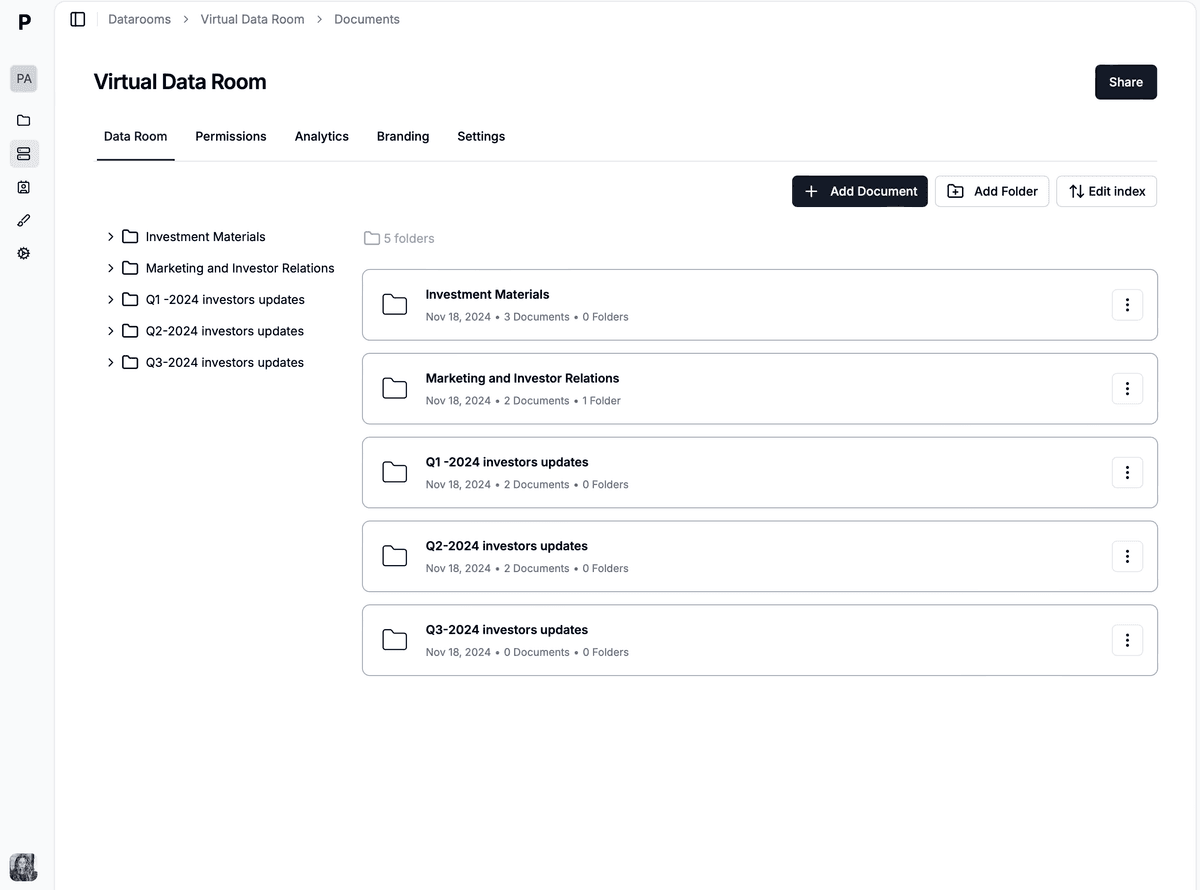
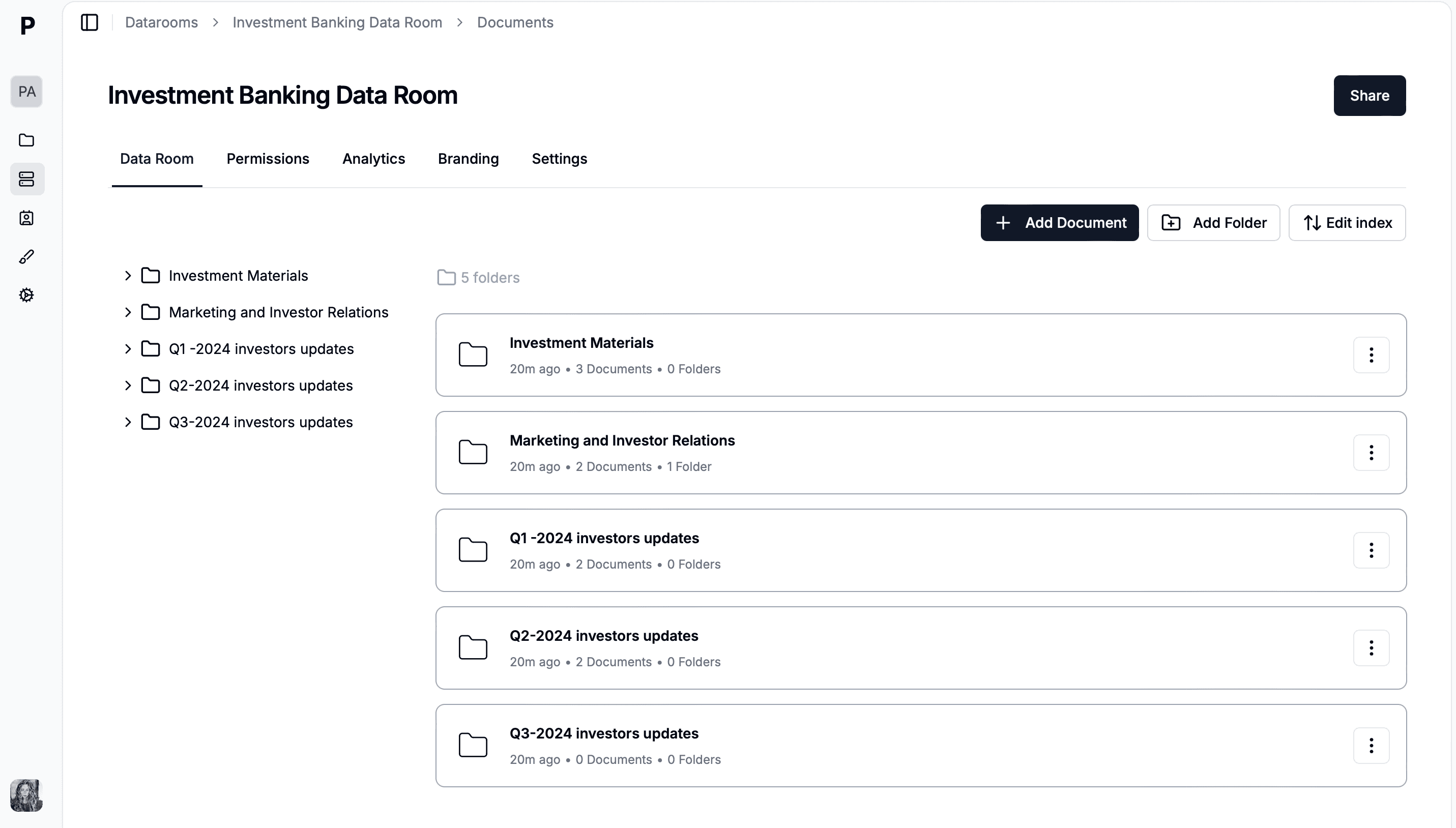
A property file with one folder per workstream, so permissions differ by folder rather than by document.
Why you need a data room for commercial real estate due diligence
Most property diligence still runs over email and a shared drive link, and a contractual window is the wrong place to lose a week to version confusion. There are four reasons a dedicated data room for commercial real estate due diligence earns its place. If you are still choosing a platform, our comparison of the best virtual data rooms covers pricing model, bidder management and compliance across the main providers.
Five parties need five different views of one file. The buyer sees everything. The lender sees leases, financials and third-party reports but not the buyer's internal underwriting. The environmental consultant sees the environmental folder alone, the title company sees title, survey and entity documents, and tenant-side counsel sees one lease. A shared drive gives you one permission set and forces you to overshare or to maintain five parallel folder copies.
Leases are confidential to someone other than the seller. An estoppel request asks a third party to engage with your transaction, and that party is entitled to see its own lease and nothing else. Circulating a full lease binder to twenty tenant contacts discloses every other tenant's rent, concessions and options across the centre, which is a confidentiality problem under many leases. Per-link scoping solves it without building twenty separate folders.
The window is fixed and the file is not. Documents arrive throughout the period: estoppels one at a time, a Phase II mid-stream, revised operating statements after a CAM true-up. Automatic file indexing rebuilds the index as items land, so counsel opening the room on day 30 sees a current structure rather than a folder called new documents v3.
The file has to survive the closing. Property disputes surface years later, when a tenant asserts a right nobody abstracted or a lender in a later refinancing asks what was disclosed at acquisition. A per-visitor audit log and an immutable archive answer that, and an inbox does not.
The rest of this section is the practical setup: five steps to build a data room for commercial real estate due diligence that handles all four.
Step 1: build the folder tree by workstream before signing
Create one folder per workstream from the matrix earlier in this guide: title and survey, zoning, environmental, physical, leases, financial, contracts, insurance. Build it at the letter of intent stage, because the clock starts the day the agreement is executed and every day spent uploading is a day not spent reviewing.
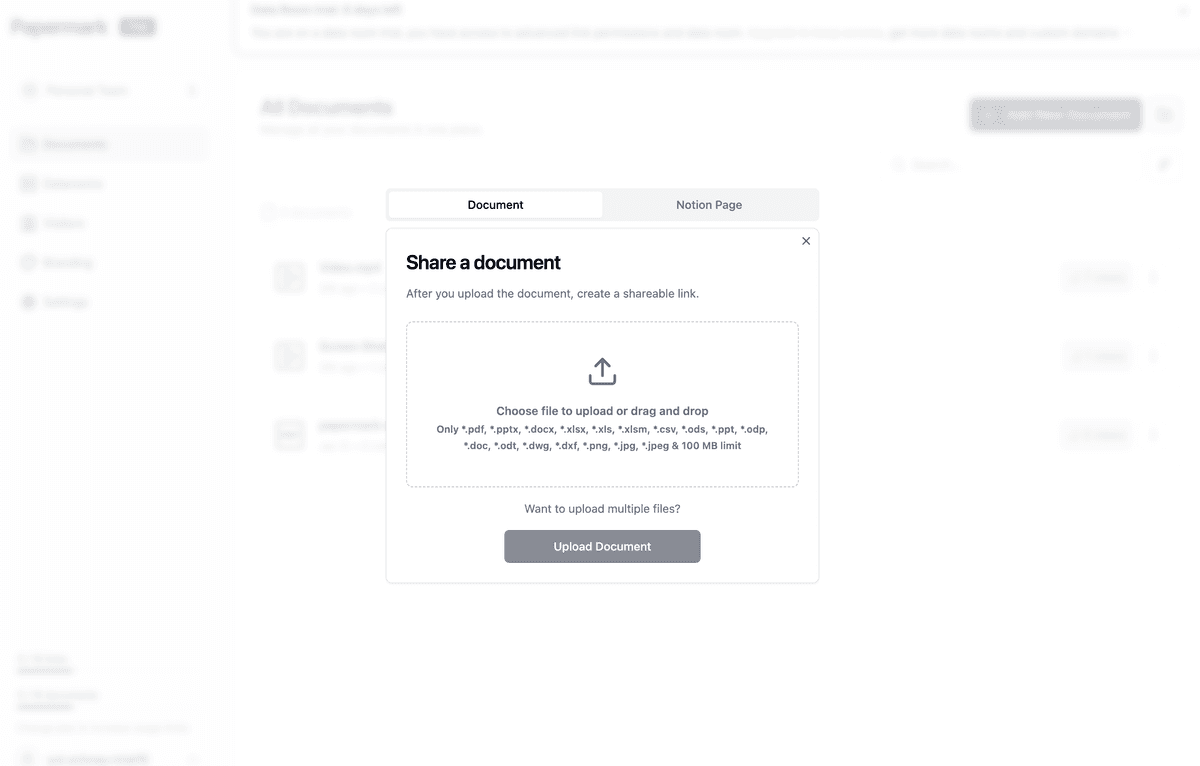
Upload in bulk by dragging the folder tree straight in. A commercial real estate corporate development manager who left DataSite after a price increase described the same need: one to two deals a year, up to 30GB per deal, and a sandbox period to prepare the room before it goes live.
Drag the whole property folder tree in at once, then adjust the structure rather than uploading file by file under time pressure.
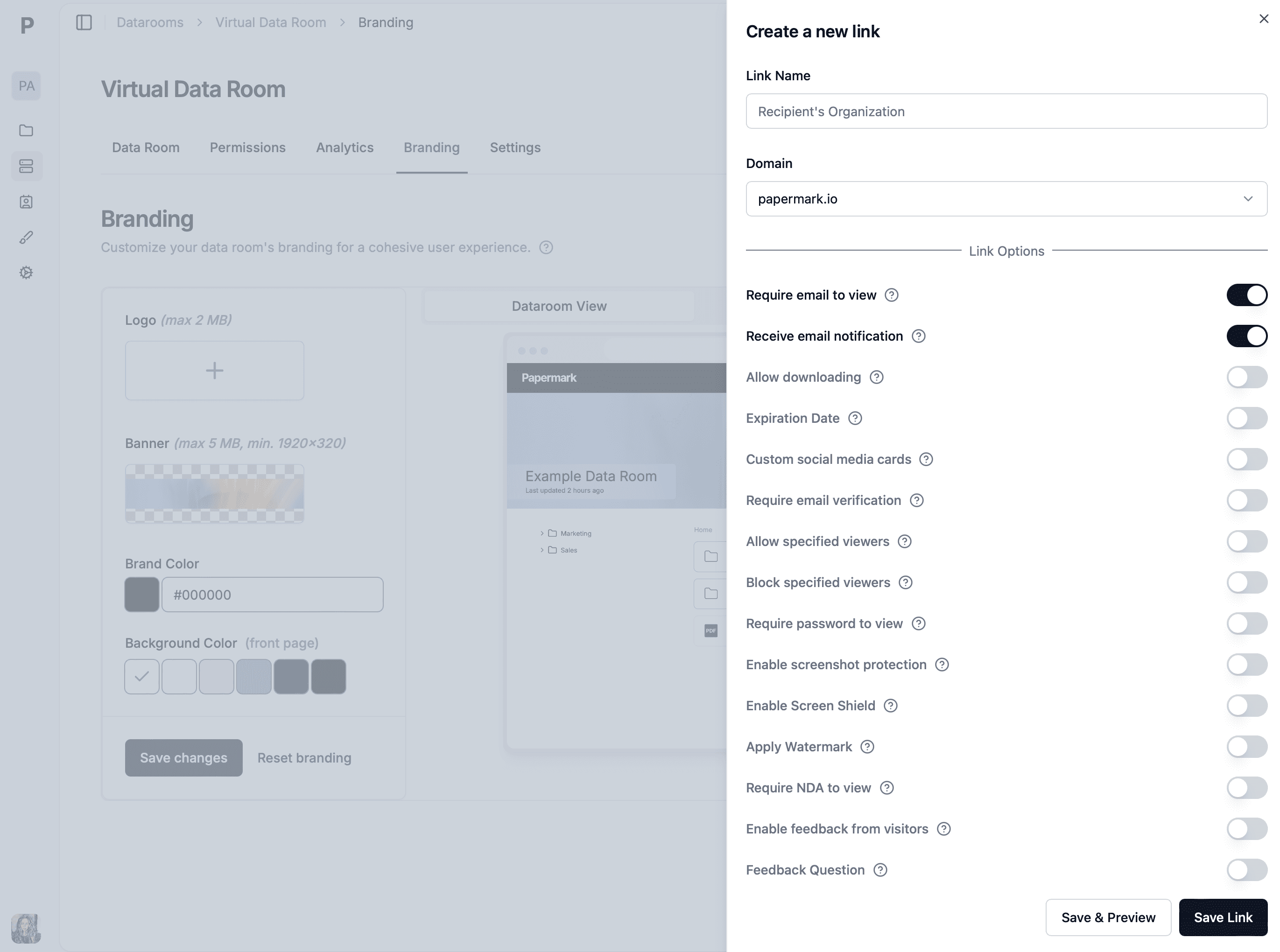
Step 2: give each reviewer its own scoped link
This is where a property room differs most from a corporate one. Five outside parties need five different views of the same documents, and each is instructed by someone different.
Reviewer
Folders granted
Rights
Buyer and buyer counsel
All eight workstream folders
View and download
Lender and lender counsel
Leases, financial, title, environmental, physical
View and download
Environmental consultant
Environmental only, plus site plans
View only, watermarked
Title company
Title and survey, zoning, entity documents
View and download
Tenant-side counsel
That tenant's lease and estoppel form only
View only, watermarked
Granular file-level permissions are set per link rather than per user, so each party gets its own link carrying its own folder scope, email allowlist or domain restriction, and download rule. Access is link-based and nobody creates an account, which matters when the recipient is a tenant's facilities manager who will not sign up for a portal.
Step 3: watermark the lease and financial folders
Switch the lease and financial folders to view-only for anyone outside the buyer and lender, and turn on dynamic watermarking, which stamps every page with the viewer's email, IP address and timestamp as it renders. On a marketed asset with several bidders that is the practical control on rent rolls travelling beyond the process, and screenshot protection adds a deterrent.
The honest limit is worth stating: a downloaded file is legally treated as read, and no platform can recall it. That is why download is disabled rather than discouraged on the tenant-side links.
Step 4: run the estoppel chase and the request list through Q&A
Estoppels and request lists fragment worst over email. Counsel asks for the exception documents behind Schedule B-II items 7 through 14, then for the easement agreement they reference, while 14 estoppel requests sit with 14 tenant contacts at different stages.
The Q&A module attaches each question to the document that prompted it, with permissions controlling who sees which threads, so the lender never sees tenant-side correspondence. Request files from visitors lets tenant counsel return the signed estoppel into the same room rather than as a loose attachment.
Step 5: read the analytics, then freeze the room at closing
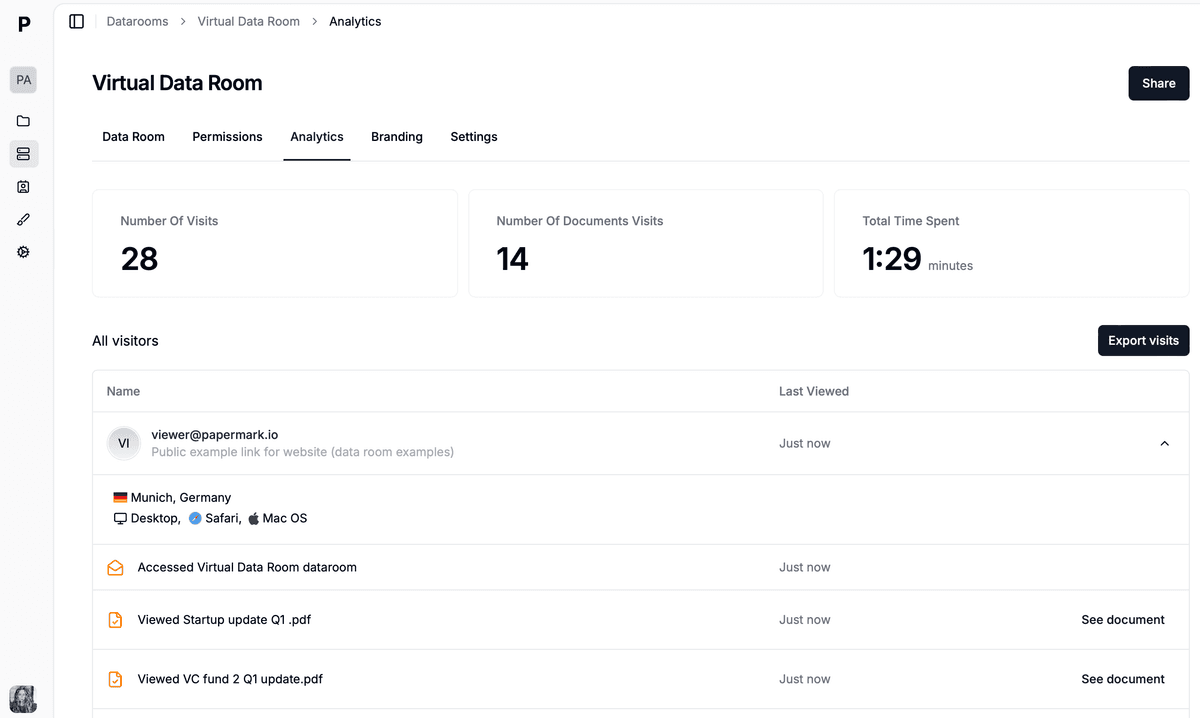
Page-level analytics show which reviewer opened which document, when, and for how long. During a fixed window that is a scheduling signal: if the lender has not opened the leases folder by day 20, the loan is behind, which is much better learned on day 20 than day 40.
Per-visitor analytics show which reviewer opened which part of the property file, which is how you spot a stalled workstream.
After closing, data room freeze makes the room immutable and exports it as an archived ZIP with a certificate. A real estate advisor in the Netherlands who sold 125 apartments to 3 buyers needed exactly this shape: multi-party buyer access, a flat fee rather than per-project billing, and an archive that outlives the deal.
What it costs
The Data Rooms plan is €99/month with a 7-day free trial and includes 3 team members, unlimited data room visitors, unlimited data rooms, unlimited documents, custom domain, dynamic watermarking, NDA agreements, and granular file-level permissions. Data Rooms Plus at €249/month adds 5 team members, the Q&A module, the audit log, automatic file indexing, and SOC 2 Type II. Premium at €549/month adds 10 team members, AI redaction, the public API, SSO and white-labelling. Data Rooms Unlimited at €999/month removes per-seat charges entirely, so teams that add reviewers mid-deal pay one number regardless of headcount, and it carries every Premium capability including AI redaction. For buyers closing one or two acquisitions a year, unlimited data rooms under one subscription means one room per asset with no per-project fee.