


mergers-and-acquisitions
Sell-side due diligence in 2026: how to stop buyers retrading the price
Sell-side due diligence in 2026: the 6-step process, what a sell-side QoE costs, the retrade it prevents, and the data room for sell-side due diligence.
Financial due diligence is the buyer's independent investigation of a target's historical financial performance, working capital needs, and debt obligations before a transaction closes. It rests on three pillars: quality of earnings, net working capital, and net debt. Each one directly changes the price paid.
Sellers prepare for the earnings argument and lose the money somewhere else. In the worked scenario below, rejected add-backs cost $2.5 million of enterprise value and the working capital peg costs another $1.4 million, on a deal where the seller had never modelled a trailing twelve month average. This guide covers all three pillars, the request list, a realistic six-week sequence, and the red flags that trigger a retrade.
Seven parallel workstreams will ask for slices of the same 430-document set, and none of them should see the others' scope or questions. A data room for financial due diligence gives you one scoped link per team plus the audit record you will want if a warranty claim arrives. Section 7 covers the setup step by step.
Financial due diligence is not an audit and it is not a valuation. It is a targeted investigation into whether the financial picture a seller has presented would survive contact with new ownership. The buyer, or more usually a transaction advisory team the buyer hires, works through the accounting records line by line to answer three questions: what does this business really earn, how much cash does it need to operate, and what obligations come with it that are not obvious from the headline price.
The scope is deliberately deep and narrow. A financial due diligence team will review 3 to 5 years of monthly profit and loss data, the balance sheet, cash flow, accounts receivable and payable ageing, the general ledger, bank statements, payroll registers, and the customer contract file. It will reconcile revenue to cash receipts, test margin trends by product and customer, look at seasonality, and examine tax exposures. What it will not do is form a view on whether the market is attractive or whether the technology works, which is the job of commercial due diligence and technical diligence respectively.
Timing follows the deal structure. Preliminary financial review often happens before an offer, using whatever the seller has published in a confidential information memorandum. Full financial due diligence begins once a letter of intent grants exclusivity, and runs alongside legal, tax, and commercial workstreams. Buyers in 2026 typically run seven parallel workstreams on a mid-market deal, and financial diligence is the one that determines the number on the purchase agreement.
The output is a report, but the deliverable that matters is a set of adjustments. Adjusted EBITDA sets the enterprise value through the multiple. The working capital analysis sets the closing peg. The debt-like items schedule reduces the equity price. Everything else in the report is supporting evidence for those three numbers.
Every financial due diligence engagement, on either side of a deal, is built on the same three analytical pillars. They are usually presented separately in the report and they are frequently negotiated separately in the purchase agreement, but they interact: an aggressive revenue cut-off adjustment shifts both earnings and receivables, and a deferred revenue balance is simultaneously an earnings question and a debt-like item.
The first pillar is quality of earnings, which normalizes reported EBITDA into a repeatable run rate by removing non-recurring, non-cash, non-operating, and owner-specific items. The second is net working capital, which establishes how much receivables, inventory, and payables the business needs to run at a normal level of activity. The third is net debt, which captures every obligation that reduces equity value on a cash-free, debt-free basis.
Sellers consistently underweight the second and third pillars. A seller who negotiates hard on adjusted EBITDA and then accepts the buyer's working capital peg without analysis can lose more at the true-up than they gained in the multiple.
| Pillar | What it establishes | How it changes the price |
|---|---|---|
| Quality of earnings | Adjusted, repeatable EBITDA | Multiplied by the multiple to set enterprise value |
| Net working capital | The normal level of operating capital | Sets the closing peg and the post-close true-up |
| Net debt | Debt and debt-like obligations, net of cash | Deducted from enterprise value to reach equity value |
The earnings pillar is where most of the argument happens. The provider takes reported EBITDA and tests every proposed add-back against the evidence: does the item genuinely not recur, is it documented, and would a new owner really avoid the cost. Owner compensation is normalized to a market rate, personal expenses are added back where documented, related-party rent and supply agreements are restated to market terms, and revenue recognized in the wrong period is moved.
It is common for 10 to 30 percent of the add-backs a seller proposes to be disallowed. The most frequent casualty is the item labelled one-off that has appeared in three consecutive years. Because the multiple applies to whatever survives, the arithmetic is unforgiving: at a 6x multiple, $200,000 of rejected add-backs costs the seller $1.2 million of headline price.
Net working capital is the operating capital a business needs to function, generally current assets excluding cash minus current liabilities excluding debt. Because a buyer is acquiring a going concern, the purchase agreement includes a target level, or peg, usually set from a trailing twelve month average to smooth out seasonality. At closing, actual working capital is compared to the peg, and the price adjusts up or down.
The analysis has to unpick a lot of noise. Receivables ageing shows whether collections are deteriorating, inventory turns show whether stock is genuinely saleable, and payables stretching shows whether the seller has been managing cash by paying suppliers late in the months before a sale. All three can make a peg look artificially favourable to whichever side set it.
Net debt is straightforward in principle and contentious in practice. Bank debt, overdrafts, and finance leases are uncontroversial. The disputes are about debt-like items: deferred revenue for services not yet delivered, accrued but unpaid bonuses, unfunded pension obligations, unpaid sales or payroll taxes, deferred consideration on previous acquisitions, customer deposits, and unusual accrued liabilities. Each reduces the equity price even though none appears as borrowing.
The request list is the operational heart of financial due diligence, and its size is what makes the process a document management problem as much as an accounting one. Requests arrive in waves: an initial list, then follow-ups triggered by what the first wave revealed, then targeted questions on specific accounts. A mid-market deal typically moves 400 to 500 documents through the process.
Preparing the core set before the buyer asks is the single highest-return thing a seller can do. Every day the provider spends waiting for a general ledger export is a day of exclusivity spent, and a slow seller invites the suspicion that something is being managed rather than merely retrieved. The core list below is what a provider will want in the first wave on almost any deal.
Volume alone is not the problem. The problem is that different workstreams need different slices of the same list, and a seller who uploads everything into one folder has effectively given the lender's credit team the employee census. The table below is both a request checklist and the folder structure a data room for financial due diligence should use.
| Folder | Documents requested | Period covered | Sensitivity |
|---|---|---|---|
| Financial statements | Monthly P&L, balance sheet, cash flow, TTM view | 3 to 5 years | Medium |
| Accounting records | General ledger, trial balance, bank statements | 3 to 5 years | High |
| Working capital | Receivables and payables ageing, inventory listings and reserves | Each period end | Medium |
| Revenue and customers | Revenue by customer, product and geography, top 20 contracts | 3 years | Very high |
| People | Payroll registers, employee census, bonus arrangements | 3 years | Very high |
| Tax | Federal, state and local returns, correspondence, open audits | 3 to 5 years | High |
| Assets and capex | Fixed asset register, capex detail split maintenance versus growth | 3 to 5 years | Low |
| Obligations | Debt agreements, leases, deferred consideration, board minutes | Current plus history | High |
The two folders marked very high are the ones that decide how the room is configured. Revenue by customer is exactly what a competitor would want if the buyer walks away, and the employee census carries personal data that brings GDPR obligations with it. Neither belongs in a link that the whole buy side can open.
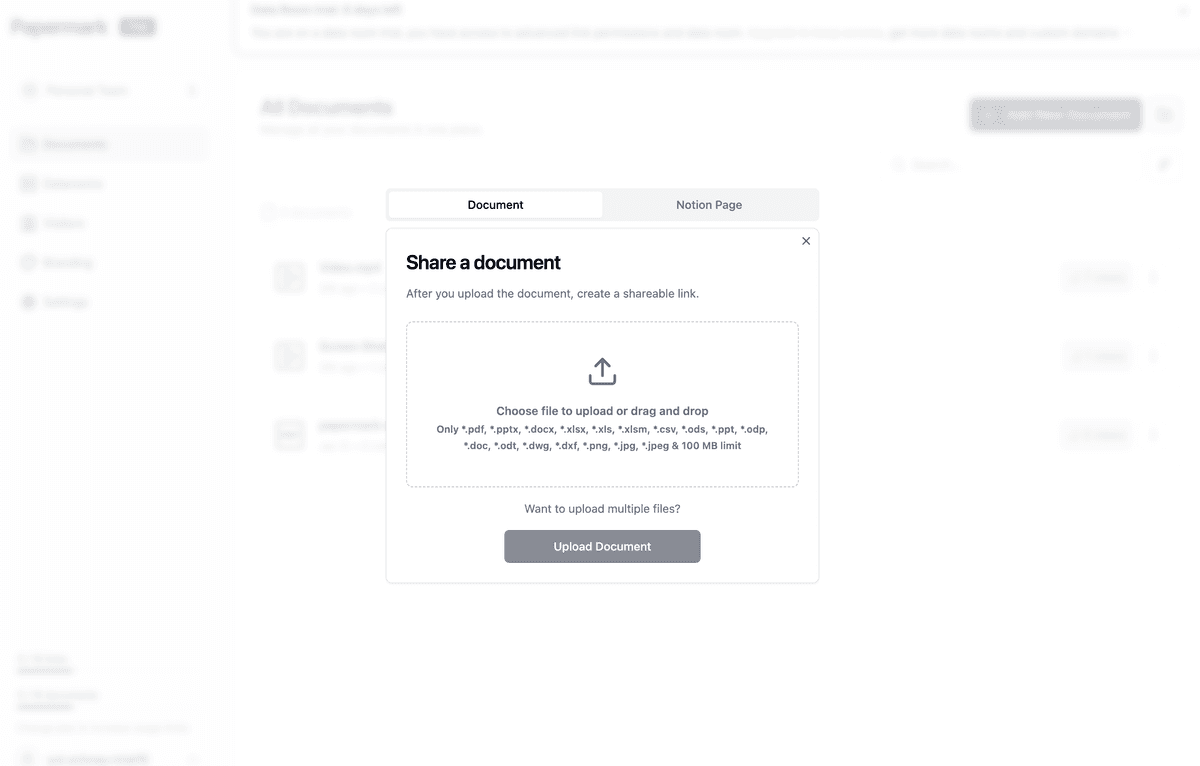
Pre-loading the first request wave before the letter of intent is signed is the single highest-return preparation a seller can do.
Financial due diligence compresses badly. The standard engagement runs 30 to 45 days, a full 4 to 8 weeks is common, and a comprehensive scope with tax and IT coordination stretches to 60 to 90 days. The sequence below reflects how a six-week buy-side engagement actually unfolds on a mid-market deal, assuming the letter of intent is signed at day zero and the data room is already populated.
Delays almost never come from the provider's analysis. They come from documents arriving late, from a controller who is also running month-end, and from question threads that get lost in email. Sellers who assign one person to own the request list, and who keep every question threaded against the document it relates to, routinely finish a week earlier than those who do not.
Vantry Logistics Group is a regional freight brokerage with revenue of $46 million and reported EBITDA of $5.1 million. A private equity buyer signs a letter of intent at 6.5x, implying an enterprise value of $33.2 million, and commissions financial due diligence with a six-week scope alongside legal and tax workstreams.
The earnings work moves the number in both directions. The provider adds back $340,000 of genuinely non-recurring costs from a terminated ERP implementation and normalizes the founder's below-market salary, which reduces EBITDA by $120,000. It then rejects $410,000 of add-backs relating to driver recruitment costs the seller described as exceptional but which appear at similar levels in each of the last three years, and it reclassifies $180,000 of revenue recognized on loads not yet delivered at year end. Adjusted EBITDA settles at $4.73 million, cutting enterprise value to $30.7 million.
Working capital does more damage than the earnings adjustments. The seller proposed a peg based on the most recent month end, when receivables happened to be low. The trailing twelve month average is $1.4 million higher, and the buyer insists on it. Net debt adds a further $760,000 once accrued but unpaid driver bonuses, two capital leases, and an unpaid state tax assessment are captured.
The process runs on one data room with four scoped links: financial, legal, tax, and the lender's credit team. Vantry's controller uploads 430 documents across three request waves. Because each team has its own permissions and its own Q&A thread, the tax adviser never sees the customer contract file and the same question is not answered twice. The deal closes at $28.5 million of equity value, $4.7 million below the letter of intent, with a $1.2 million escrow covering the disputed tax assessment.
Worked scenario. The earnings argument the seller prepared for accounts for just over half the loss. The working capital peg and the debt-like items schedule, which the seller had not modelled, account for the rest.
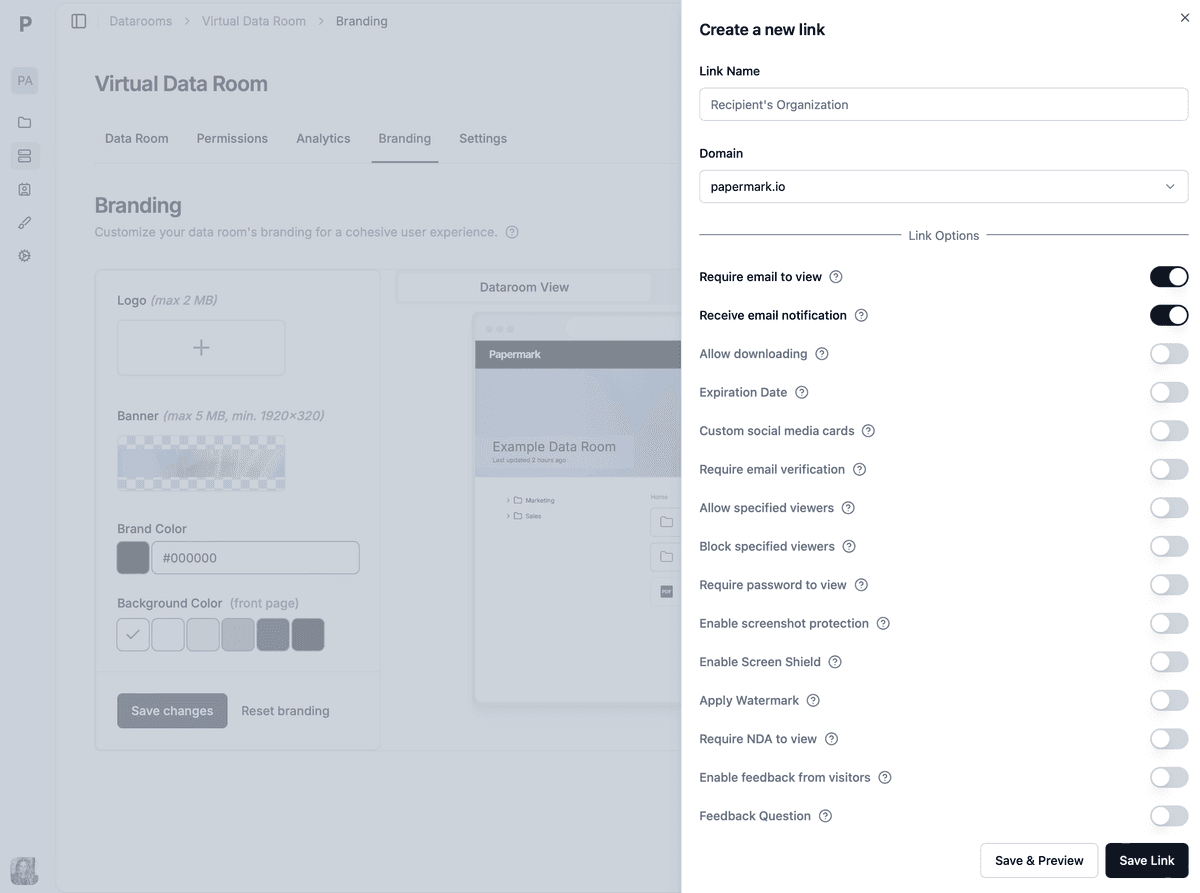
Vantry's 430 documents sit in one data room for financial due diligence with four scoped links, so the tax adviser never opens the customer contract file.
Certain findings recur often enough to function as an early warning system. None automatically kills a deal, but each should trigger deeper work and usually a price or structure conversation. The most consequential is a pattern of add-backs that do not survive testing, because it says something about management's credibility that extends well beyond the specific items.
The rest cluster around cash, concentration, and control. A widening gap between reported EBITDA and operating cash flow is the classic signal that earnings are not converting. Receivables ageing beyond 90 days and rising, payables being stretched in the months before a sale, inventory reserves that have not moved in years, and revenue concentrated in a handful of accounts are all standard triggers. Weak month-end close discipline, frequent restatements, and an absence of board-level management accounts suggest that even honest numbers may be unreliable.
Each red flag has a characteristic remedy, and knowing which one a buyer will reach for is what lets a seller pre-empt it. A finding that is quantifiable becomes a price adjustment; a finding that is real but unquantified becomes an escrow or an indemnity; a finding about credibility becomes a broader scope and a longer timeline.
| Red flag | What it signals | Usual remedy |
|---|---|---|
| Add-backs that do not survive testing | A credibility problem beyond the specific items | Wider scope, longer timeline, and a price adjustment |
| EBITDA to operating cash flow gap widening | Earnings are not converting to cash | Working capital peg reset and a deeper receivables review |
| Receivables beyond 90 days and rising | Collections deteriorating or revenue quality falling | Specific reserve against the ageing, deducted at close |
| Payables stretched before the sale | Cash managed to flatter the peg | Peg set on a trailing twelve month average instead |
| Inventory reserves unchanged for years | Obsolete stock carried at cost | Debt-like item or a reduction to the working capital target |
| Revenue concentrated in a few accounts | Post-close revenue risk the buyer inherits | Earn-out or an escrow tied to customer retention |
| Unpaid or disputed tax assessments | Unquantified liability | Specific indemnity or a ring-fenced escrow |
A data room for financial due diligence carries more traffic than any other room in a transaction. Buyers in 2026 run around seven parallel workstreams on a mid-market deal, 400 to 500 documents move through three or more buy-side teams over four to six months, and the workstream that determines the number on the purchase agreement is the one most likely to be derailed by a lost email.
Papermark is a secure, fully customizable, and developer-friendly data room built for modern dealmakers, with page-by-page analytics, dynamic watermarking, and transparent pricing (open-source and self-hosting available).
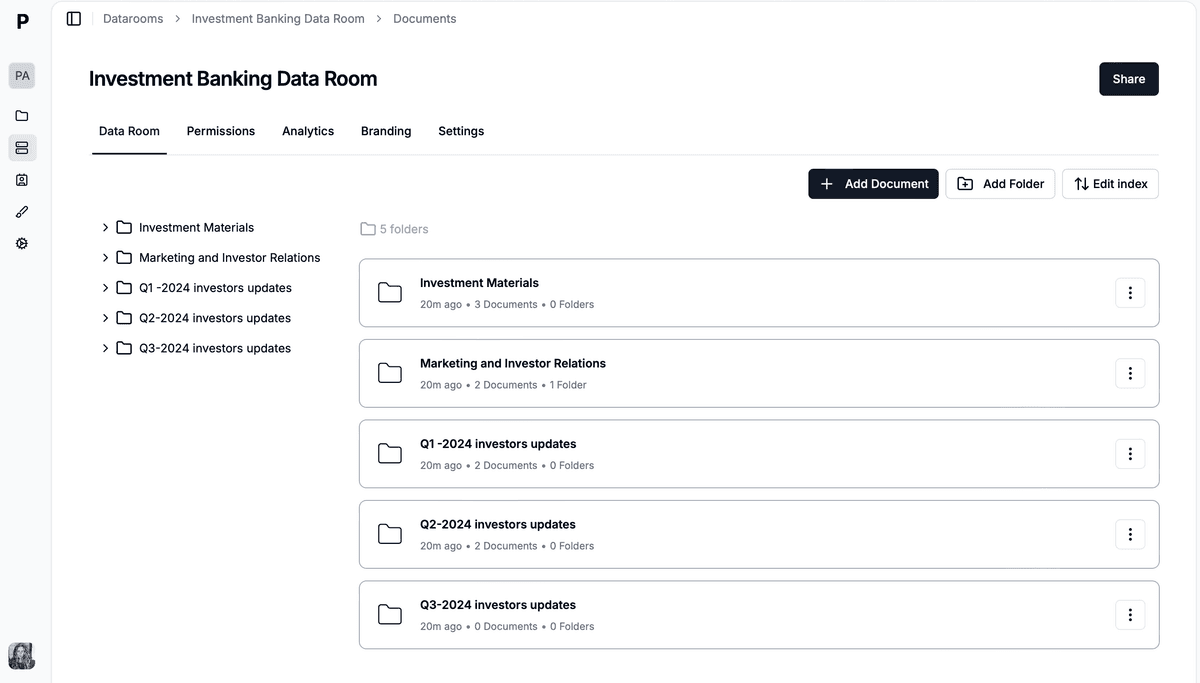
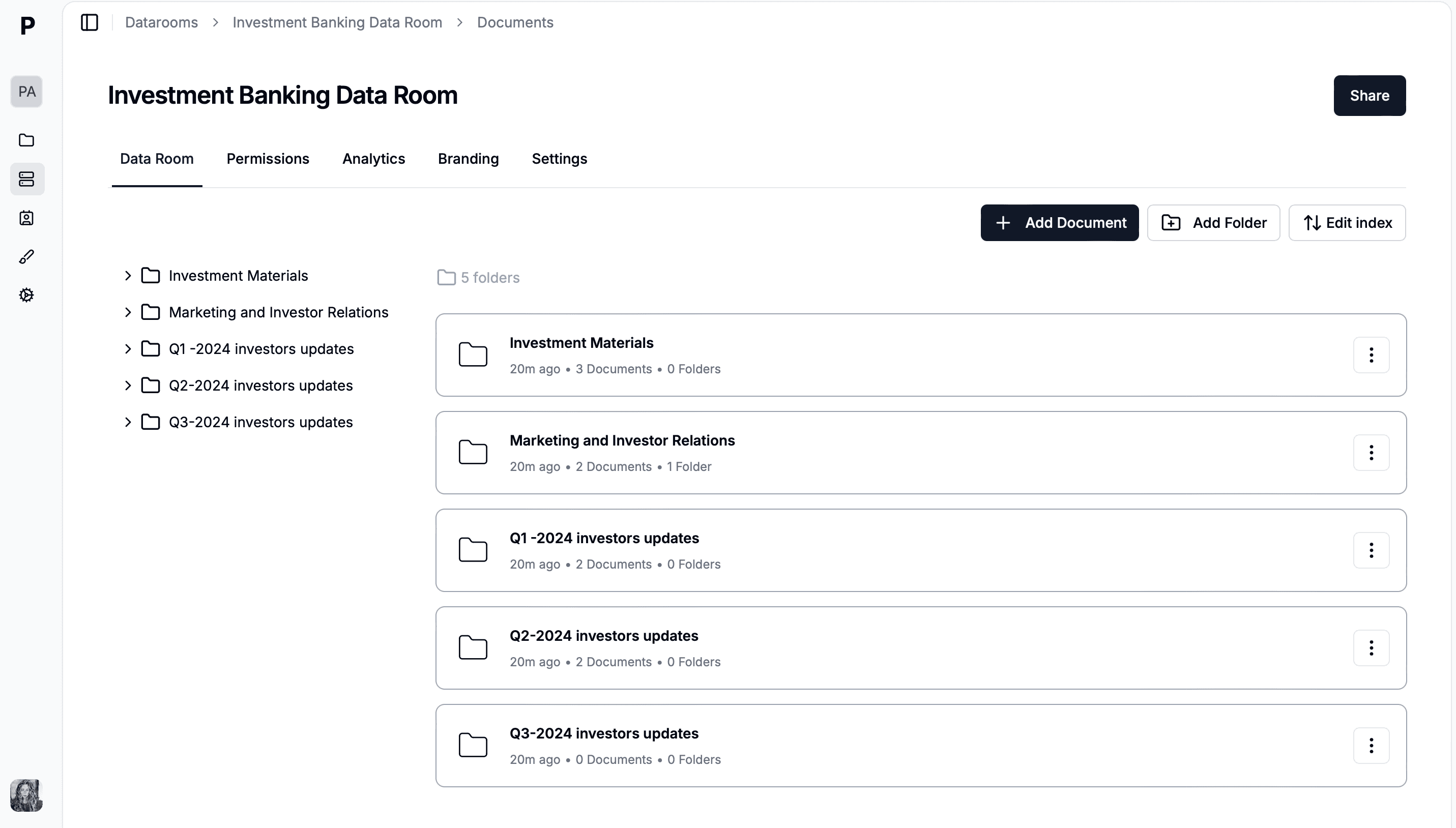
A financial due diligence data room in Papermark, with scoped links for the financial, legal, tax, and lender workstreams.
Shared drives survive small transactions and fail predictably on mid-market ones. Four specific reasons apply here. If you are still choosing a platform, our comparison of the best virtual data rooms covers pricing model, bidder management and compliance across the main providers.
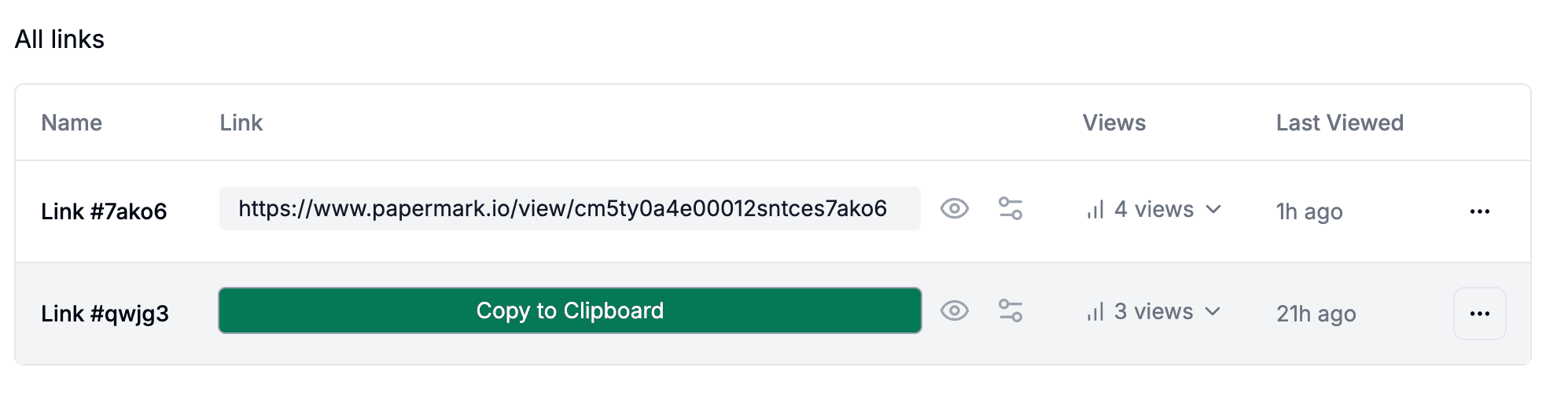
Seven workstreams need seven different scopes. Financial, legal, tax, commercial, operational, insurance, and the lender's credit team all want slices of the same request list, and the overlaps are partial rather than total. The tax adviser needs payroll and returns but not the customer contract file. The lender needs summary financials and collateral but not the employee census. A data room for financial due diligence sets that per link, over one copy of each document, so there is never a second version circulating.
Activity should be invisible between teams. On a competitive process the buy-side teams are not one client, and a seller who lets the commercial team see how long the lender spent in the covenant model has leaked something. Per-link scoping means each team's presence stays private.
Two of the folders carry real legal weight. Revenue by customer with pricing is the file a competing bidder most wants, and the employee census is personal data with GDPR obligations attached. View-only access, watermarking, and an email allowlist are the standard controls on both, and they are not optional once a European entity is in scope.
The peg is settled 60 to 90 days after you close. The working capital true-up is argued after the deal is done, and the evidence that decides it is what the provider was given and when. A per-visitor, page-level view history answers that; an inbox does not.
The rest of this section is the practical build: five steps to a data room for financial due diligence that keeps a six-week timeline on schedule.
Create one folder per row of the request table above: financial statements, accounting records, working capital, revenue and customers, people, tax, assets and capex, and obligations. Naming the folders after the request list means the provider's checklist maps one to one onto the room, which removes an entire category of "where is it" email.
Automatic file indexing on the Data Rooms Plus plan numbers documents and maintains the index as the second and third waves land, keeping the room consistent with the exhibit references in the final report.
This is the step that a shared drive cannot replicate at all.
| Workstream | Folders granted | Rights |
|---|---|---|
| Financial diligence and QoE provider | All financial folders including the general ledger | View and download |
| Legal counsel | Obligations, contracts, corporate records | View and download |
| Tax adviser | Tax, payroll, entity structure | View only |
| Commercial diligence | Revenue by customer and product, no pricing schedules | View only, watermarked |
| Lender credit team | Summary financials, ageing, collateral, covenant model | View only |
| Seller's controller | All folders plus upload rights | Full control |
Granular file-level permissions are set per link rather than per user, with an email or domain allowlist on each, and access is link-based so no reviewer creates an account. That last detail decides adoption: an analyst who has to register will ask a colleague to forward the file instead, and at that moment the audit record stops being true.
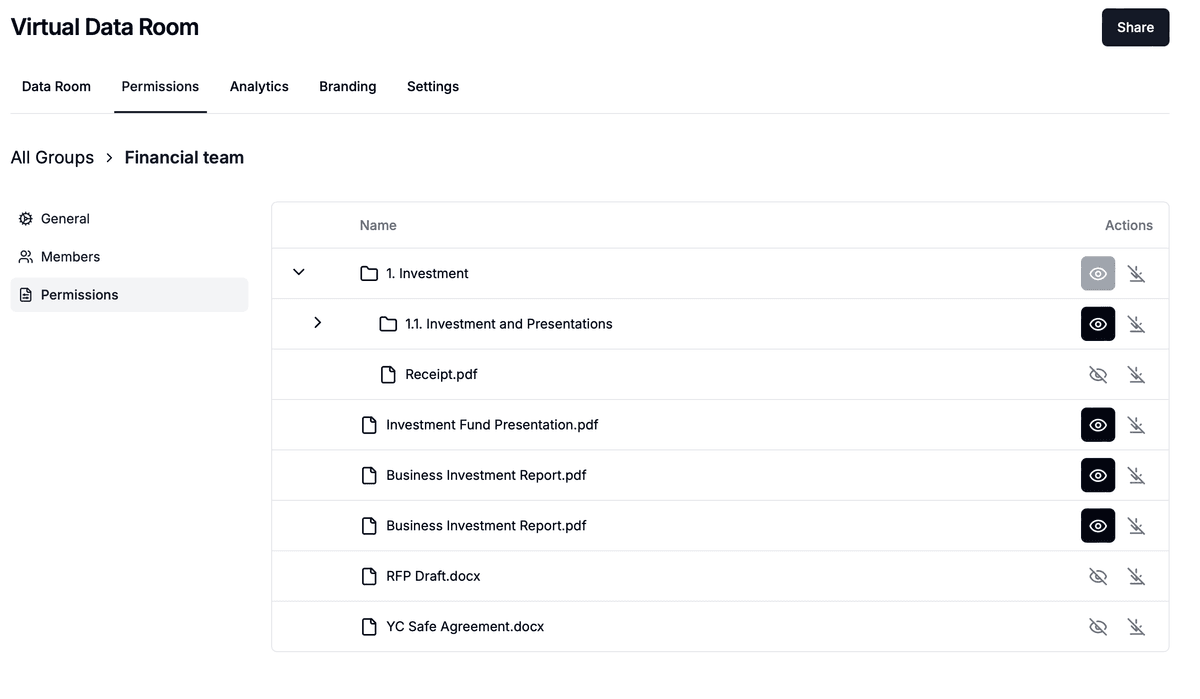
Permissions are set per link, so the lender's credit team and the commercial team open different folders of the same diligence room.
Set revenue by customer, the pricing schedules, and the employee census to view-only, and turn on dynamic watermarking, which stamps the viewer's email, IP address, and timestamp onto every page at render time. Summary financials stay downloadable because an analyst genuinely has to model from them. If you are the buyer holding the target's files, the setup for your own room is covered in how to secure a data room for M&A due diligence.
The limit is worth naming. A downloaded file is legally treated as read and cannot be recalled by any platform, which is exactly why download is off on these two folders rather than merely discouraged. Watermarking does not prevent a leak, it makes one attributable.

Dynamic watermarking on the customer and pricing folders is what makes a leak traceable to a named reviewer.
A controller can easily hold 60 open items at once across three waves. The Q&A module threads each question against the document that prompted it, with per-link permissions on who sees which threads, so nothing gets asked twice by two workstreams and nothing gets answered inconsistently by two people.
Request files lets a provider ask for a missing general ledger export inside the room rather than by email, and new-document notifications tell them the moment it lands. Sellers who assign one person to own the request list and keep every question threaded routinely finish a week ahead of those who do not.
Page-by-page analytics record which team opened which schedule, when, and for how long. That is early warning: forty minutes in the deferred revenue schedule means a debt-like item is coming, and you usually have a week to prepare the argument.
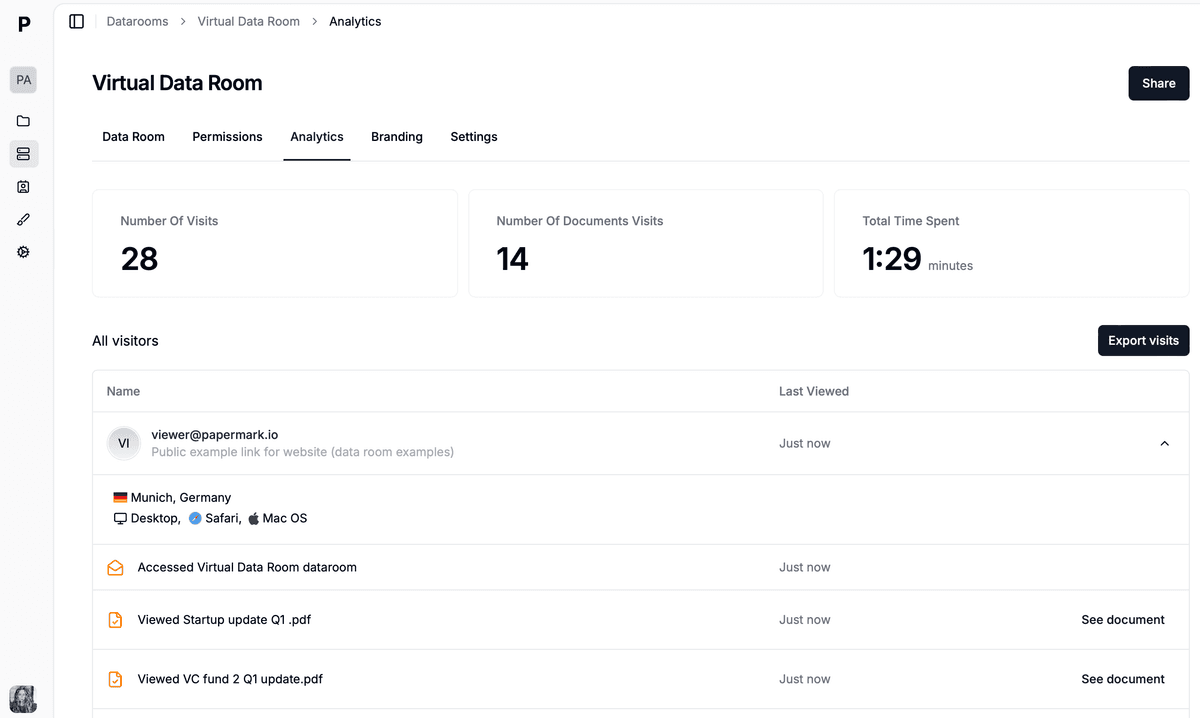
Per-visitor analytics show which diligence team opened which financial schedule and for how long.
At closing, data room freeze makes the room immutable and exports it as an archived ZIP with a certificate. When the working capital true-up is settled 60 to 90 days later, or a warranty claim arrives after that, that archive is the record of what was disclosed and when.

Papermark is our #1 VDR provider for M&A transactions right now. In two deals we used custom branding, dynamic watermarking, and granular permissions.
Tyler
The Data Rooms plan is €99/month with a 7-day free trial and includes 3 team members, unlimited data room visitors, unlimited data rooms, unlimited documents with no file size limit, a custom domain, dynamic watermarking, NDA agreements, and granular file-level permissions. Data Rooms Plus at €249/month adds 5 team members, the Q&A module, the audit log, automatic file indexing, and SOC 2 Type II, which is the tier a mid-market diligence process actually needs. Premium at €549/month adds 10 members, AI redaction, API access, SSO, and whitelabeling. Data Rooms Unlimited at €999/month removes per-seat charges entirely, so teams that add reviewers mid-deal pay one number regardless of headcount, and it carries every Premium capability including AI redaction.
On a 430-document process running four to six months, flat pricing is the point. Legacy providers that bill per page or per gigabyte turn a document-heavy workstream into an invoice nobody modelled, and unlimited data rooms under one subscription means a dual-track process can run a separate room per bidder without a second contract.
No credit card required.
Sell-side due diligence in 2026: the 6-step process, what a sell-side QoE costs, the retrade it prevents, and the data room for sell-side due diligence.
Working capital adjustment in 2026: how the peg is set, the 5-step true-up, debt-like items, the peg trap, and a data room for a working capital true-up.
Technical due diligence in 2026: a 9-area checklist, the 4-week process, real costs, the copyleft trap, and the data room for technical due diligence.