How to Create a Sales Pitch Deck That Actually Closes Deals
·6 min read
Marc Seitz
Creating a sales pitch deck is one of the most critical aspects of the sales process. With attention spans shorter than ever and decision-makers reviewing countless presentations, your deck needs to stand out and deliver results. In fact, studies show that prospects spend an average of just 3 minutes reviewing a sales pitch deck before making a decision.
In this comprehensive guide, you'll discover proven deck structures, learn best practices for design and content, and understand how to leverage Papermark's tracking features to monitor engagement and optimize your approach.
What is a Sales Pitch Deck?
A sales pitch deck is a visual presentation designed to persuade potential customers to purchase your product or service. Unlike investor pitch decks (which focus on securing funding), sales pitch decks are specifically crafted to address customer pain points, showcase your solution's benefits, and drive purchasing decisions.
Key characteristics of an effective sales pitch deck include:
Customer-centric focus: Addresses the prospect's specific challenges and needs
Clear value proposition: Articulates exactly how your solution delivers value
Visual storytelling: Uses imagery and design to engage and persuade
Concise messaging: Distills complex information into digestible, compelling points
Action-oriented: Guides prospects toward a specific next step
Sales pitch decks serve multiple purposes throughout the sales process:
Initial outreach: Introduce your solution to new prospects
Discovery meetings: Guide conversations about customer needs
Solution presentations: Demonstrate how your product addresses specific challenges
Proposal follow-ups: Reinforce value and address objections
Closing conversations: Provide final details and encourage purchase
What to include in a sales pitch deck
A well-structured sales pitch deck follows these key elements:
Element
Guidelines
Example
Opening slide
• Clear value proposition
• Compelling headline
• Visual that captures attention
• Company logo and contact info
Transform [Industry] Operations with [Your Solution]
Problem statement
• Identify specific pain points
• Use industry statistics
• Include visual representation
• Make it relatable
Companies lose $X billion annually due to [specific problem]
Solution overview
• Present your product/service
• Highlight key differentiators
• Use visuals over text
• Keep it simple
Our platform solves [problem] by [unique approach]
How it works
• 3-5 key steps or features
• Visual process flow
• Focus on benefits
• Include screenshots/demos
1. [Step 1]
2. [Step 2]
3. [Step 3]
Social proof
• Customer testimonials
• Case studies with metrics
• Logos of recognizable clients
• Industry recognition
Trusted by [Company Names]
[Specific results achieved]
Pricing/ROI
• Clear value proposition
• Pricing tiers if applicable
• ROI calculation
• Implementation timeline
Achieve [X%] ROI within [timeframe]
Call to action
• Clear next steps
• Multiple contact options
• Create urgency
• Make response easy
Schedule a demo today
[Contact information]
Sales pitch deck templates
Template 1: Problem-Solution-Proof approach
This classic structure is effective for most B2B sales situations.
Slide 1: Title
Company name and logo
Compelling headline
Your name and contact info
Slide 2: Problem Statement
Industry pain points with statistics
Visual representation of the problem
Cost of inaction
Slide 3: Solution Overview
Your product/service name
Tagline that captures value
Key differentiator
Slide 4: How It Works
3-5 step process
Visual workflow
Key features with benefits
Slide 5: Social Proof
Customer testimonials
Case study with metrics
Client logos
Slide 6: Pricing/ROI
Pricing tiers (if applicable)
ROI calculation
Implementation timeline
Slide 7: Call to Action
Next steps
Contact information
Meeting scheduler link
Template 2: Story-based approach
This narrative structure is effective for complex solutions or consultative selling.
Slide 1: Title
Company name and logo
Story headline
Your name and contact info
Slide 2: The Challenge
Industry context
Specific challenges faced
Visual representation
Slide 3: The Journey
Common approaches tried
Why they fail
Cost of traditional solutions
Slide 4: The Discovery
How your solution was developed
Unique approach
Key differentiators
Slide 5: The Solution
Your product/service
How it works
Key features with benefits
Slide 6: The Results
Customer success stories
Before/after metrics
Industry recognition
Slide 7: The Path Forward
Implementation process
Timeline and milestones
Support and resources
Slide 8: Call to Action
Next steps
Contact information
Meeting scheduler link
Template 3: Value-focused approach
This structure emphasizes ROI and business impact, ideal for executive audiences.
Slide 1: Title
Company name and logo
Value proposition headline
Your name and contact info
Slide 2: Executive Summary
Brief overview of solution
Key benefits
Target audience
Slide 3: Market Opportunity
Industry size and growth
Market trends
Competitive landscape
Slide 4: Business Impact
Cost savings
Revenue increase
Efficiency gains
Risk reduction
Slide 5: Solution Overview
Product/service features
How it works
Integration capabilities
Slide 6: Implementation
Timeline
Process
Support and training
Slide 7: ROI Analysis
Cost breakdown
Return calculation
Payback period
Slide 8: Call to Action
Next steps
Contact information
Meeting scheduler link
Where to make your sales pitch deck
Choosing the right tool to create your sales pitch deck is crucial for both design quality and sharing capabilities. Here are the most popular options:
Tool Type
Tool Name
Key Features
Best For
Presentation Software
Microsoft PowerPoint
• Industry standard with extensive features
• Professional templates and design tools
• Seamless integration with Microsoft ecosystem
• Export to PDF or online sharing via OneDrive
Teams already using Microsoft products who need advanced features
Presentation Software
Google Slides
• Free and cloud-based for easy collaboration
• Simple interface with essential features
• Automatic saving and version history
• Direct sharing via links
Teams needing real-time collaboration on a budget
Presentation Software
Apple Keynote
• Elegant design templates
• Smooth animations and transitions
• High-quality visual capabilities
• Export to various formats
Non-designers who need professional-looking decks quickly
Specialized Pitch Deck Tools
Beautiful.ai
• AI-powered design suggestions
• Smart templates that adapt to content
• Brand consistency features
• Analytics for presentation engagement
Teams needing AI assistance for design and analytics
Specialized Pitch Deck Tools
Pitch
• Purpose-built for pitch decks
• Modern, clean design aesthetic
• Interactive elements and animations
• Built-in analytics
Startups and modern companies focused on design
Made our fundraising more effective. I love sharing my pitch deck with Papermark, and see if investors view it.
Georgi
Founder of Taita
The best way to send and analyze your sales pitch
Creating a compelling sales pitch deck is only half the battle. The real challenge is understanding how prospects interact with your presentation after you send it. Without proper tracking and analytics, you're operating blindly—unable to know if your message is reaching decision-makers or generating interest.
This lack of visibility creates critical inefficiencies in your sales process:
You waste time following up with uninterested prospects
You miss opportunities with highly engaged prospects
You can't identify which parts of your pitch resonate most with stakeholders
You risk losing valuable intellectual property through unauthorized sharing
Modern sales enablement tools like Papermark transform this challenge by providing:
Real-time visibility into prospect engagement
Behavioral insights about which slides capture attention
Extended reach tracking to see who else in the organization views your content
Content protection through dynamic watermarking
With these insights, you can focus your follow-up efforts on genuinely interested prospects, dramatically improving your conversion rates and sales efficiency.
Setting up trackable pitch links
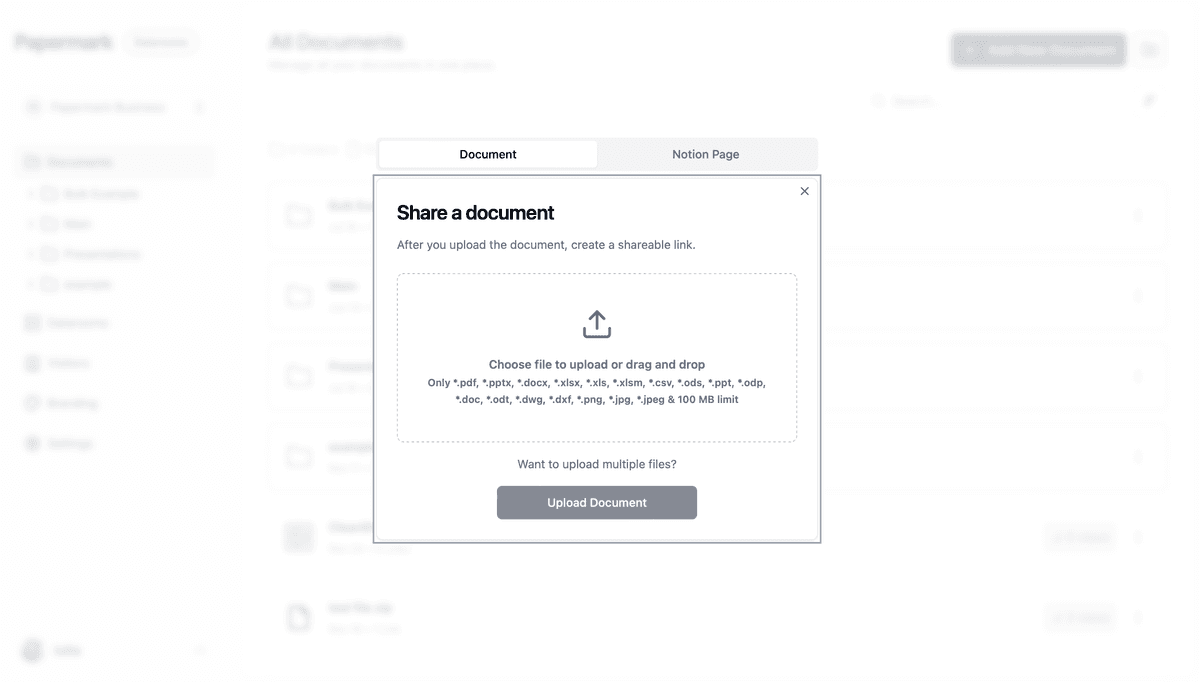
Getting started with Papermark is straightforward:
Configure tracking: Enable the analytics features that matter most to you
Add security layers: Set up password protection or other security measures as needed
Understanding prospect engagement
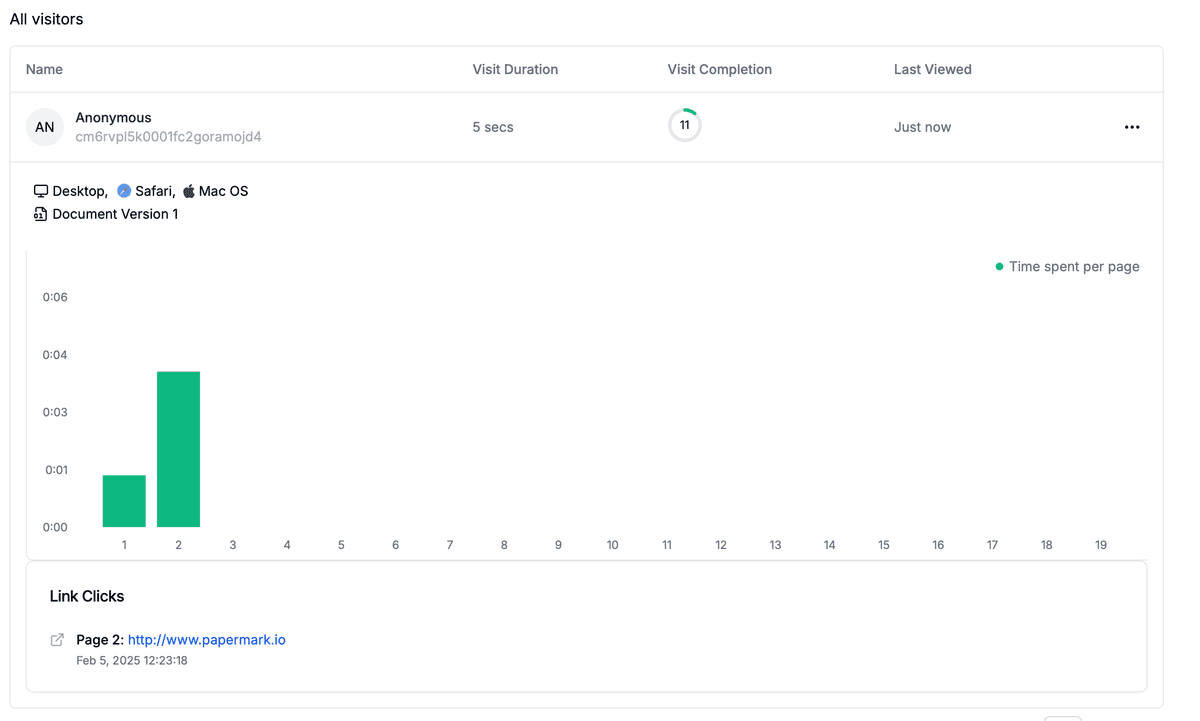
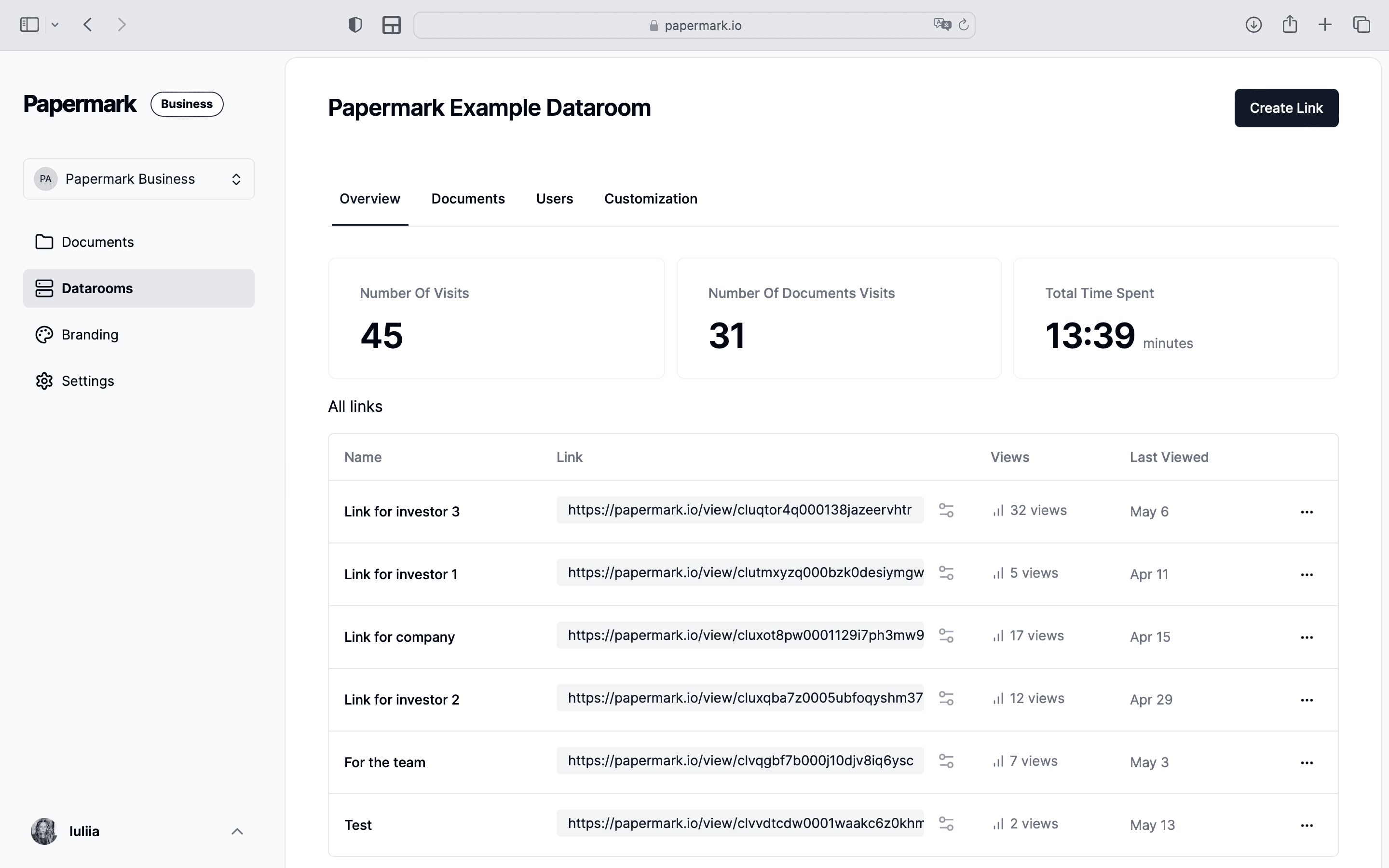
Papermark's analytics dashboard gives you unprecedented visibility into how prospects interact with your pitch deck:
See exactly when your prospect first opened your deck
Track how much time they spend on each slide
Identify which sections they revisit
Get instant notifications when engagement occurs
Additional features
Papermark offers several advanced capabilities specifically designed for sales teams:
Intelligent watermarking:
Automatically embeds the viewer's identity and access time
Allows customization of watermark placement and style
Creates accountability and discourages unauthorized sharing
Provides an audit trail of document access
Content protection:
Blocks unauthorized screenshots across all devices
Automatically blurs content when screenshot attempts are detected
Works seamlessly across desktop and mobile platforms
Maintains detailed logs of any security breach attempts
Building comprehensive sales data rooms
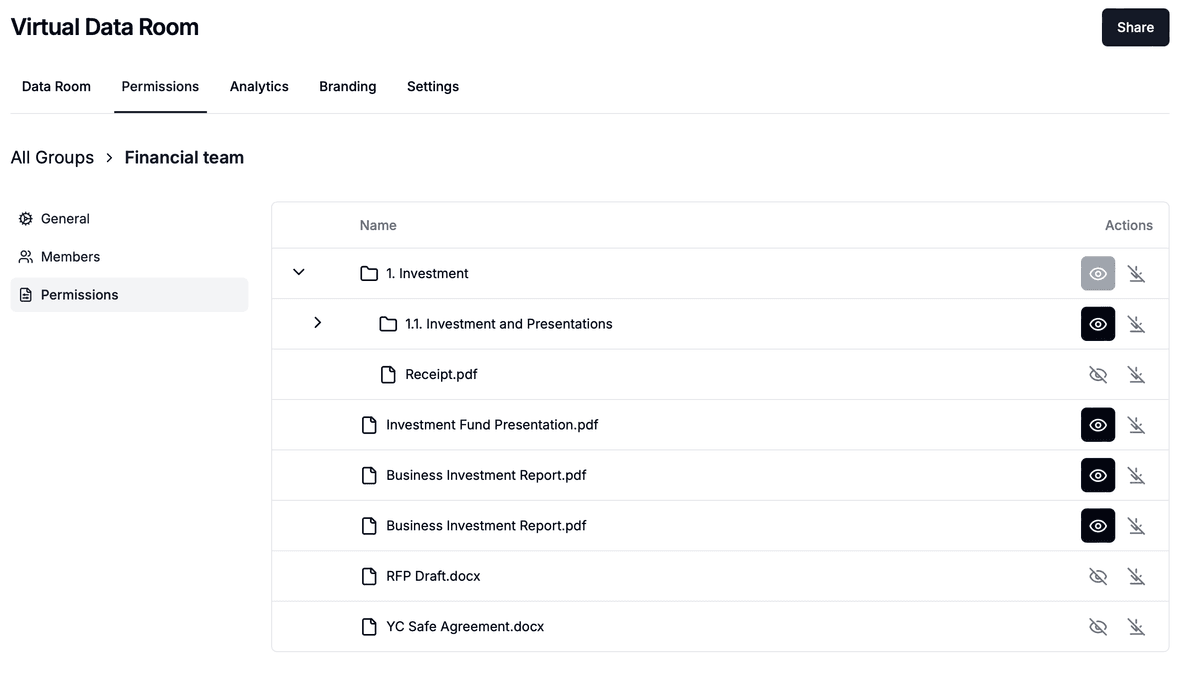
For complex sales cycles requiring multiple documents, Papermark's data rooms provide an elegant solution:
Structure your data room:
Organize documents into logical categories
Create sections for different aspects of your pitch (e.g., case studies, pricing, implementation)
Establish granular permission controls
Apply consistent security policies across all content
Streamline document management:
Upload entire collections of files at once
Maintain your organizational structure
Set document-specific access controls
Apply security features consistently
Share with confidence:
Generate a single, secure access point for your entire data room
Control who can access what content
Track engagement across all documents in one view
Receive alerts when prospects access any content
Ready to create winning sales pitch decks?
Creating a sales pitch deck doesn't have to be a shot in the dark. By following these best practices and leveraging Papermark's tracking features, you can ensure your decks are both professional and effective, while gaining valuable insights into prospect engagement.