

mergers-and-acquisitions
14 Best Business Brokers in Atlanta, GA: Fees and Deal Sizes 2026
Compare 14 verified business brokers in Atlanta by deal size, fee model and sector focus, plus what local buyers pay and how to run a quiet sale in 2026.
Illinois is one of the few states where business brokers face a registration requirement, and Chicago is one of the deepest markets anywhere for selling a privately held industrial company. This guide profiles 13 verified business brokers in Chicago with deal bands, sectors and fee models.
The reason this market has so many advisers is the shape of the local economy. Chicago and the collar counties hold a huge base of second and third generation manufacturers, metal fabricators, machine shops, plastics processors, food producers, printers and distributors. Chicago is also the largest rail interchange in the country, which built an ecosystem of freight brokerages and warehousing operators around it.
A large share of those owners are now past retirement age with no family successor, which is why sell-side mandates dominate the local market. Buyers know it. Private equity groups along LaSalle Street and in the western suburbs actively hunt Illinois manufacturers, and employee stock ownership plans are more common here than in most metros.
One local rule is worth knowing before you start calling. Illinois maintains a business broker registration regime under state securities law, and reputable Chicago firms publish their number. Playbook Corporate Advisory, for example, lists Illinois registered business broker licence 310001536. If a firm cannot tell you its status, that is a reasonable place to stop.
Comparing more than one metro? The M&A advisors database holds every firm we have researched and opens filtered to Chicago, so you can line these 13 up against each other on deal size and sector.
Chicago advisers screen on two things: whether the business is sellable and whether the owner is ready. Plenty of Illinois manufacturers are profitable but not sellable, usually because the owner is the only person who quotes jobs, or because one customer carries half the revenue.
Clean numbers come first. Buyers here run quality of earnings work aggressively, especially on inventory and work in progress, and an add-back you cannot evidence gets removed in diligence at a 5x cost to the price. If your financials are cash basis, converting to accrual before market is worth more than any negotiating tactic.
Owner dependence is the second filter. A broker will ask who quotes, who sells, who manages the shop floor and what happens if you take four weeks off. Getting a general manager in place a year before you list changes both the multiple and the buyer pool.
The third is document readiness. Illinois industrial deals carry heavier diligence than service businesses because of equipment schedules, environmental history, union agreements and purchase orders. Staging that material in a permissioned workspace saves weeks, and our comparison of the best virtual data rooms explains what each tier includes.
Bring these to a first meeting:
No credit card required.
Papermark is our #1 VDR provider for M&A transactions right now. In two deals we used custom branding, dynamic watermarking, and granular permissions.
Tyler
Start with registration, a filter you cannot use in most states. Then check the national bodies: the International Business Brokers Association lists certified brokers by state, and M&A Source covers the lower middle market tier.
The harder judgement is matching the firm to the deal. Chicago has genuine investment banks, genuine Main Street brokerages, and a middle group that markets itself as both.
Run your own quiet process before committing. Talking to five firms costs nothing but time and gives you five independent reads on value.
Keep the early stage anonymous. Chicago manufacturing and logistics circles are small, suppliers talk, and the fastest way to lose a plant manager is to have them hear about a sale from a customer.
| # | Firm | Typical deal size | Focus sectors |
|---|---|---|---|
| 1 | Dresner Partners | Middle and lower middle market | Industrials, healthcare, business services |
| 2 | Livingstone Partners | Middle market | Industrial, consumer, healthcare, technology |
| 3 | Auctus Capital Partners | Lower middle market | Business services, industrials, food and beverage |
| 4 | Prairie Capital Advisors | Middle market | Manufacturing, distribution, construction, ESOP |
| 5 | Sikich Investment Banking | Middle market | Manufacturing, technology, healthcare, services |
| 6 | Lincoln International | Upper middle market | Industrials, healthcare, technology, consumer |
| 7 | Sun Acquisitions | Main Street to lower mid | All sectors, Chicago metro |
| 8 | American Business Acquisitions | $500K to $20M+ | Illinois and Indiana, diversified |
| 9 | Playbook Corporate Advisory | $1M to $15M | Manufacturing, distribution, services, technology |
| 10 | EBIT Associates | Lower middle market | Northern Illinois, diversified |
| 11 | Calder Capital | $1M to $250M | Manufacturing, distribution, construction |
| 12 | Kinsella Group | Middle market | Medical technology |
| 13 | Venture10 | Lower middle market | Printing, direct marketing, packaging |
Dresner has run sell-side mandates for middle market companies out of Chicago since 1991 and reports more than $8 billion in cumulative transaction value.
Livingstone is an independent M&A and debt advisory firm headquartered in River North, serving private companies and private equity investors across five sector groups. It suits a business selling into an international buyer pool.
Auctus positions itself as a lower middle market investment bank rather than a brokerage, working from LaSalle Street across six sector groups.
Prairie is the firm to call if an employee stock ownership plan is on the table alongside a third-party sale. It runs a dual path process testing both routes in parallel.
Sikich pairs investment banking with a large accounting and advisory firm, so quality of earnings and tax structuring sit under the same roof as the sale process.
Lincoln is headquartered in Chicago and is one of the largest independent mid-market M&A advisers in the world. It is the obvious call if your company clears roughly $100M in enterprise value.
Sun Acquisitions works from the northwest side across all industry sectors, a reasonable generalist option for an owner who does not fit a specialist firm.
ABA covers Illinois and Indiana from the Loop, handling everything from profitable Main Street businesses up to mid-market transactions. Most of its brokers have owned and sold companies themselves.
Playbook works the $1M to $15M band and publishes its Illinois registered business broker number, which is a useful transparency signal in a state with a registration requirement. The founder runs every deal personally.
EBIT works northern Illinois and the surrounding region as a lower middle market M&A practice, covering both buy-side and sell-side engagements for privately held companies.
Calder runs a Chicago metro office out of Deer Park as part of a Midwest brokerage with a heavy industrial bias. Its published transaction list is dominated by CNC machining, tool and die, wood products and commercial services businesses.
Kinsella is a Wacker Drive boutique working almost exclusively in medical technology, with an advisory team averaging over twenty years in the sector. If you own a MedTech business, a specialist buyer list beats a generalist one.
Venture10 is the other genuine specialist here, focused on printing, direct marketing and related industries from offices in Chicago, Dallas and Los Angeles.
| Deal band | Typical fee model | Retainer |
|---|---|---|
| Under $1M | 8% to 12% of sale price | Usually none |
| Smallest deals | 12% to 15% of sale price | Usually none |
| $1M to $5M | 10% flat or Double Lehman | $2,000 to $10,000 monthly |
| $5M to $50M | Double Lehman success fee | $5,000 to $25,000 monthly |
| Above $50M | Negotiated success fee | Monthly plus expenses |
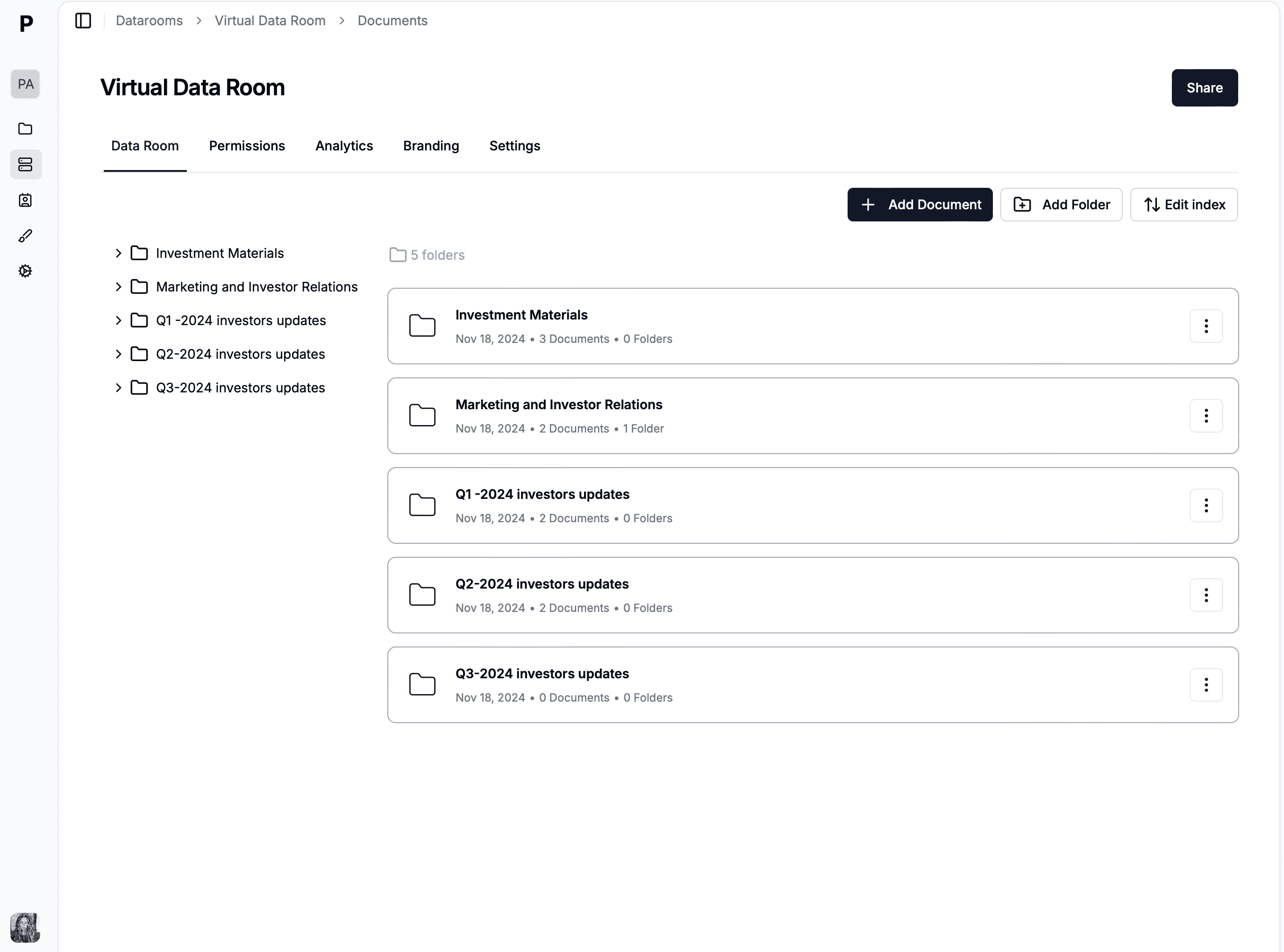
Industrial diligence in Chicago is document heavy. A single manufacturing sale can involve equipment schedules, environmental reports, union agreements, purchase orders, quality certifications and three years of inventory detail, sent to a dozen competing buyers at different stages.
The people asking for those files are frequently your competitors. A Midwest private equity group building a fabrication or distribution platform will approach two or three companies in the same market before it picks one, and the strategic most likely to pay a premium for your machine shop is often the machine shop in the next county. Emailing a folder of financials to a dozen parties, most of whom will not proceed, hands your job costing, your margin by customer and your supplier terms to businesses you will still be quoting against next quarter.
A leak costs more than price in a market this tight. Chicago manufacturing and logistics circles are small, and a plant manager who hears about the sale from a customer starts taking calls from recruiters within days. Purchasing managers at your largest accounts begin qualifying a second supplier, the union asks what the sale means for the contract, and your landlord or your bonding company starts asking questions you are not ready to answer. Email attachments cannot be recalled, cannot be watermarked, and tell you nothing about who actually opened them.
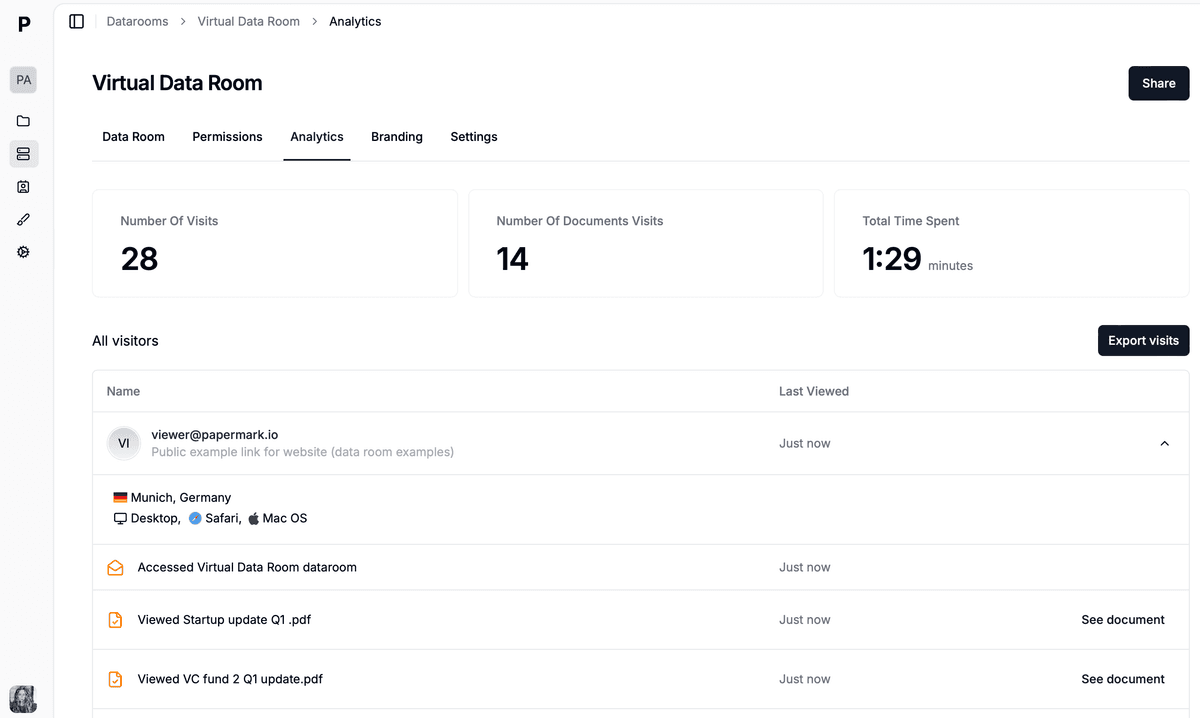
Page-by-page analytics show which buyers are working the file and which have gone cold.
A data room for Chicago M&A is the permissioned workspace where your adviser stages the diligence file and runs several buyers through it at once, without any of them seeing what the others see. It is what a Chicago banker means when they ask whether your documents are ready.
Papermark is a secure, fully customizable, and developer-friendly data room built for exactly this: a secure data room for your Chicago sale process that keeps the sensitive parts of the file locked while the process runs. NDA agreements attach to the link, so a buyer signs before the CIM renders. Dynamic watermarking stamps each viewer's email onto every page, which matters when several parties on your buyer list are direct competitors. Granular file-level permissions let you release financials to everyone while customer purchase orders stay locked to final bidders.
Page-by-page analytics change how your adviser prioritises. Seeing that one strategic spent twenty-five minutes in the equipment schedule while another has not opened the file since the NDA tells your banker who is real. The audit log records every view, download and permission change, which becomes the reference point if a buyer later disputes what was disclosed.
The Data Rooms plan is €149/month, or €99/month billed annually, with a 7-day free trial, and includes 3 team members, unlimited data rooms, unlimited documents, a custom domain, dynamic watermarking, NDA agreements, and granular file-level permissions. Open a secure data room before the teaser goes out and keep using it through diligence.
Most virtual data rooms were built for bankers and priced for them. Papermark is a secure data room for modern dealmakers, and it is more customizable and more branded than any other VDR on the market.
If your company falls outside these bands, or you want to see who is buying in your sector before signing an exclusive, going to buyers directly with an attorney and a CPA is a workable alternative.
If none of the thirteen above fits, the M&A advisors database lists every firm we have researched by city and by industry, with deal sizes and sectors side by side. Filter to Chicago to compare these against each other, or widen to a nearby metro if the local bench is thin.
Compare 14 verified business brokers in Atlanta by deal size, fee model and sector focus, plus what local buyers pay and how to run a quiet sale in 2026.
Compare 10 verified business brokers in Dallas by deal size, fee model and sector focus, plus what DFW buyers pay and how to run a confidential sale in 2026.
Compare 9 verified business brokers in Colorado Springs by deal size, fee model and sector focus, plus what defense and trades buyers pay in 2026.