Buy-side due diligence in 2026: what it really costs before you sign
·18 min read
Marc Seitz
Buy-side due diligence is the investigation an acquirer runs on a target between the letter of intent and closing. The buyer pays for it, the buyer owns the output, and its job is to confirm the deal thesis, price the risk that survives, and turn every material finding into a term in the purchase agreement.
Quick recap
Buy-side due diligence is commissioned and paid for by the acquirer after a letter of intent, and it exists to protect the buyer rather than to market the business.
A full review covers 7 workstreams: financial and quality of earnings, commercial and market, legal, tax, IT and technology, HR and people, and ESG and environmental.
Most lower mid-market buyers commission only three or four of those workstreams; a full seven-workstream review is the exception, not the default.
Typical mid-market timing is 6 to 12 weeks from kickoff to signing, inside an exclusivity period of 45 to 90 days granted in the letter of intent.
Buy-side fees commonly run 0.3 to 0.8 percent of enterprise value on deals between $10M and $100M, roughly $50,000 to $150,000 for three or four workstreams.
A buy-side quality of earnings report typically costs $25,000 to $50,000 below $25M of enterprise value and $50,000 to $150,000 in the mid-market, and providers commonly disallow 10 to 30 percent of a seller's proposed add-backs.
Buyers cannot rely on a seller-funded report unless a reliance letter is issued, which usually happens only at signing and carries a negotiated liability cap.
Findings convert into five instruments: a price adjustment, a specific indemnity, an escrow or holdback, a condition precedent, or a decision to walk.
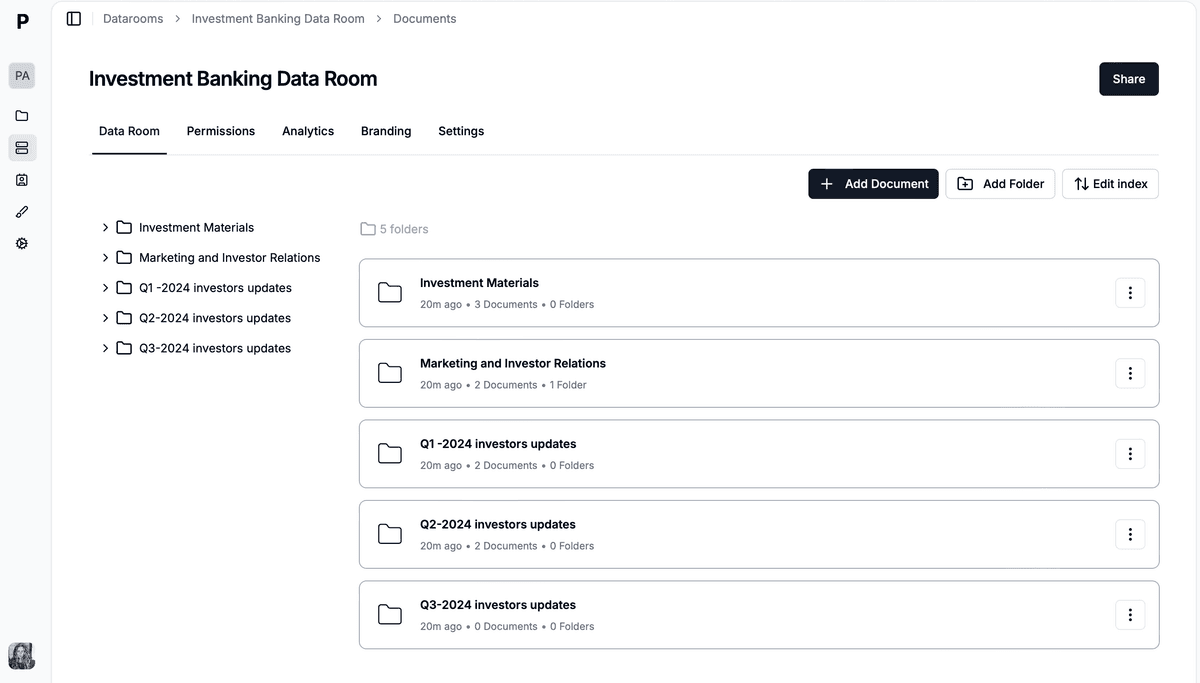
A data room for buy-side due diligence is the buyer's own room, separate from the seller's, holding adviser work product, the model, and investment committee papers for lenders and co-investors.
Papermark hosts a data room for buy-side due diligence with granular file-level permissions, dynamic watermarking, per-visitor audit logs, and data room freeze from €99/month.
Buyers tend to think of diligence as a verification exercise: confirm the numbers, sign the papers. In practice it is a pricing exercise. Every workstream produces findings, and each finding is worth something in the negotiation only if it is quantified, evidenced, and raised while exclusivity still has weeks left to run. Findings raised in the last five days before signing rarely move the price.
Running the workstreams also means managing documents in two directions at once: reading the seller's room, and building your own. A data room for buy-side due diligence is where the adviser reports, the model, and the investment committee pack live so lenders and co-investors can be brought in without emailing anything. Section 8 covers the setup step by step.
1. What is buy-side due diligence?
Buy-side due diligence is a structured investigation of a target company commissioned by the acquirer, normally beginning once a letter of intent has been signed and exclusivity granted. The buyer engages accountants, lawyers, tax specialists and, depending on the sector, commercial, IT, HR and environmental reviewers. The output is a set of reports addressed to the buyer, written for the buyer, and used to negotiate against the seller.
The defining characteristic is who the work protects. A buy-side report is allowed to be unflattering. It is allowed to conclude that the growth in the information memorandum is a pricing effect rather than a volume effect, or that two of the top five customers are on rolling contracts with 30 days notice. Nobody on the seller's side reads it unless the buyer chooses to share an extract, which is usually done only when the buyer wants to justify a price move.
That contrast with sell-side due diligence matters commercially. Sell-side work is commissioned by the owner before launch, to find and fix problems while the seller still has options. Buy-side work is commissioned afterwards, by the party with the money, and every finding it produces is leverage. The same accounting issue is a project on one side of the table and a price cut on the other.
Vendor due diligence, the European convention, sits between the two and is where the reliance question becomes concrete. The seller engages advisers to produce full reports written to a standard buyers can eventually depend on. Bidders read drafts on a strictly non-reliance basis, meaning no duty of care runs to them and they have no claim if the report is wrong. At signing, the winning bidder and its lenders receive the definitive report under a reliance letter, subject to a negotiated liability cap that is often a multiple of the adviser's fee rather than a share of deal value.
No serious acquirer treats a vendor report as a substitute for its own work. It narrows scope and shortens the timetable, which is what the seller intended, but a buyer who skips confirmatory work on the items driving its own model is relying on an analysis paid for by the counterparty.
2. The 7 workstreams of buy-side due diligence
Buy-side diligence is organised by workstream rather than by document, because each workstream has its own reviewer, its own request list, and its own way of converting a finding into money. The seven below are the standard set. Which of them get commissioned depends on deal size, sector, and how much the deal thesis rests on any one of them.
Financial and quality of earnings is the anchor workstream and the one nobody skips. It normalizes reported EBITDA by removing non-recurring, non-cash, non-operating and owner-specific items, then tests whether what remains is repeatable. It also sets the net working capital peg and schedules debt-like items, both of which change the cash the seller actually receives. Our guide to quality of earnings covers the eight adjustment categories in detail.
Commercial diligence is the workstream buyers most often underspend on and most often regret. It tests the market rather than the accounts: how large the addressable market is, whether the target is gaining or losing share, how sticky the customer base is, and whether the pipeline the seller presented converts at the rates claimed. Legal and tax follow, covering the contractual and fiscal machinery of the business, and the remaining three cover systems, people, and environmental exposure.
#
Workstream
What it checks
Characteristic red flag
1
Financial and QoE
Normalized EBITDA, working capital peg, debt-like items, cash conversion
Site contamination, permits, emissions, supply chain, governance
Historic contamination at an owned site
The red flag column is a list of things that are cheap to check and expensive to miss. Every one is discoverable in the first two weeks of a properly scoped review, and every one has repriced deals. A non-transferable enterprise agreement is a first-year cash cost. Misclassified contractors are a back-payroll-tax exposure with interest. Historic contamination at an owned site can exceed the equity value of a small manufacturer.
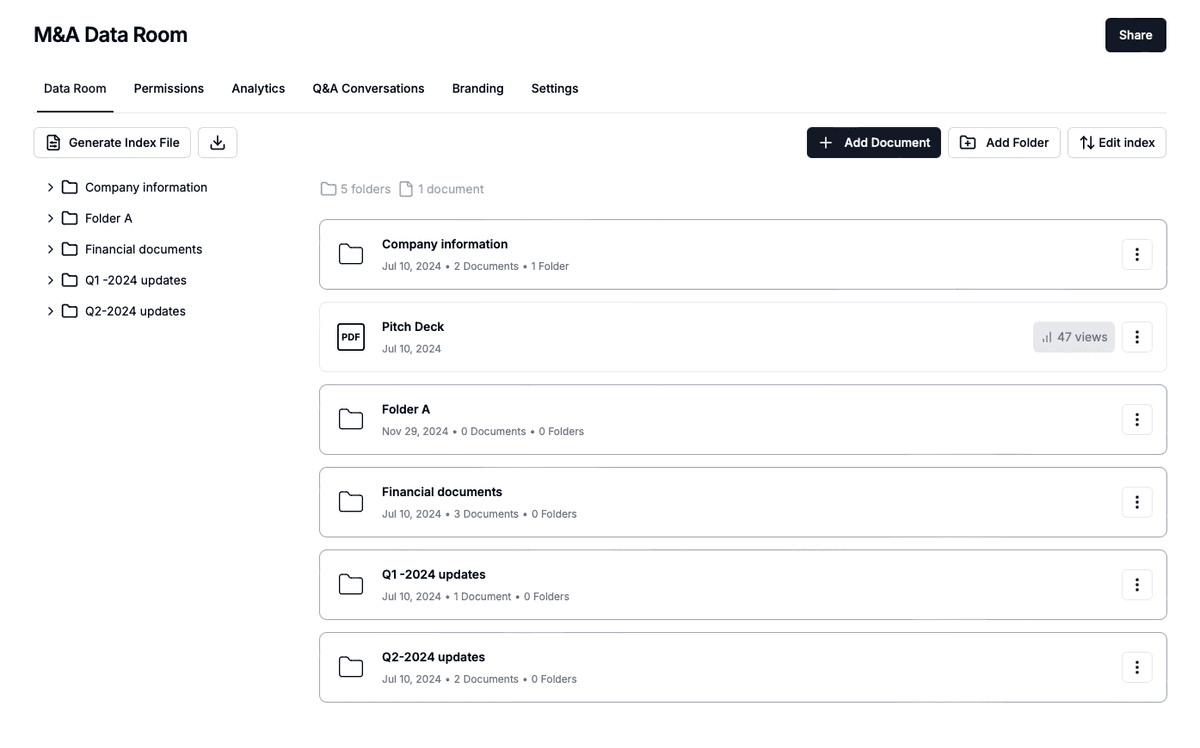
Organising diligence by workstream rather than by document is what lets each reviewer get a scoped link into only their own material.
Scoping is a real decision, not an administrative one. A distribution business with 40 employees and no proprietary technology needs financial, legal and tax, plus a hard look at customer concentration. A software acquisition needs both an IT due diligence review of the internal estate and a technical review of the product. Paying for all seven workstreams on every deal burns budget the buyer will need on the deals that actually close.
3. The timeline from letter of intent to signing
Buy-side diligence runs on a clock the letter of intent sets. Exclusivity in a lower mid-market deal is typically 45 to 60 days; in the mid-market it is more often 60 to 90 days, sometimes with one automatic extension if the buyer has acted in good faith. That window is the entire negotiating position. Once it lapses, the seller is free to talk to other parties again, and every finding the buyer has accumulated loses most of its force.
Week one is kickoff and the information request list. Each workstream submits its own list, and a good buy-side lead consolidates them before they reach the seller, because sending four overlapping lists to a finance team of three is the fastest way to lose two weeks. The consolidated list on a mid-market deal runs 150 to 300 line items, and the seller's room commonly holds 400 to 500 documents once fully populated.
Weeks two to five are the core review. Accountants build the normalized EBITDA bridge, lawyers work through contracts and corporate records, and commercial reviewers start customer interviews. Management sessions happen here too, usually two to four half-days covering finance, sales and operations. They are worth preparing for properly, because a management session is the only part of diligence where the buyer gets unfiltered answers rather than curated documents.
Site visits sit in weeks three to six for anything with physical operations, and they are not a formality: the condition of the plant, the state of the inventory and the actual headcount on the floor are the three things most likely to differ from the pack. Environmental reviewers normally attend the same visits, since a Phase I assessment starts with the site.
The confirmatory phase runs from week six to signing. The reports are in draft, the buyer knows which findings it will price and which it will accept as risk, and the work becomes verification: the final trial balance, the updated working capital calculation, the consents obtained, the insurance bound. Legal drafting of the purchase agreement runs in parallel from about week four, which is why findings need to land before then to reach the warranty and indemnity package.
A lower mid-market deal under $25M of enterprise value with three workstreams typically completes in 4 to 7 weeks. A mid-market deal with five to seven workstreams, multiple sites and a debt package runs 8 to 12 weeks, and cross-border structures add 2 to 4 weeks. The binding constraint is almost never adviser capacity. It is document availability and the bandwidth of a finance function that is usually one controller running a month-end close while answering 200 questions.
4. What buy-side due diligence costs
Buy-side diligence is a real budget line and it is spent whether or not the deal closes. That is the part buyers underestimate. A private equity fund or serial acquirer that signs six letters of intent to close two is paying for six diligence processes, which is why disciplined acquirers phase the spend: a limited financial and legal review first, and the expensive commercial and environmental work only once the first phase produces nothing that kills the thesis.
As a rule of thumb, total buy-side fees land at 0.3 to 0.8 percent of enterprise value on deals between $10M and $100M, tapering below 0.5 percent as deals get larger. That translates to roughly $50,000 to $150,000 for a typical mid-market deal running three or four workstreams. Our breakdown of due diligence cost goes deeper into how deal type, adviser tier and timeline pressure move the number.
The ranges below are typical market ranges rather than quotes, and real proposals vary widely with sector, jurisdiction count and data quality. Treat them as a budgeting starting point and expect a boutique specialist to come in 30 to 50 percent under a Big Four proposal for comparable scope.
Workstream
Under $25M EV
$25M to $250M EV
What drives the range
Financial and QoE
$25K to $50K
$50K to $150K
Entity count, revenue streams, accounting quality
Commercial and market
$15K to $40K
$40K to $150K
Customer interview count and market research depth
Legal
$15K to $30K
$30K to $75K
Contract volume, IP portfolio, open litigation
Tax
$8K to $20K
$20K to $50K
Jurisdictions, transfer pricing, historic exposures
Read the table as a menu rather than a bill. A lower mid-market buyer commissioning financial, legal and tax only is looking at roughly $48,000 to $100,000, which sits comfortably inside the percentage rule of thumb. A mid-market buyer running all seven workstreams at full scope is looking at $205,000 to $600,000, which is a defensible number on a $150M deal and an indefensible one on a $30M deal.
Three things reliably inflate the bill. Timeline compression adds 20 to 40 percent, because advisers staff up and work weekends to hit a signing date. Poor data quality adds more, since every hour a reviewer spends reconstructing a trial balance from spreadsheets is an hour billed at $350 to $700. And uncoordinated request lists add cost on both sides, because the same question asked by three workstreams gets answered three times and reconciled once.
The cost that never appears in a fee proposal is the deal that should have died in week two and did not. Phasing the spend and setting an explicit kill criterion before kickoff is worth more than negotiating 10 percent off an adviser's rate.
5. From findings to deal terms
A finding that is not converted into a term in the purchase agreement is a finding the buyer paid for and then gave away. This is the part of buy-side diligence that separates experienced acquirers from first-time ones. The reports are only inputs. The output is the price, the warranty package, the indemnity schedule, the escrow, and the conditions to closing.
The conversion logic is more mechanical than it looks. Ask two questions about every material finding. Is the exposure permanent or one-off? And is it quantified or open-ended? A permanent, quantified finding belongs in the price, because it changes the earnings the multiple is applied to. A one-off quantified finding belongs in a completion adjustment or a specific indemnity, because it does not affect run-rate earnings. An open-ended exposure belongs in an escrow or a specific indemnity, because nobody can size it yet.
The arithmetic on the first category is what buyers should keep in front of them. If a quality of earnings review removes a $180,000 add-back that turns out to recur every year, and the deal is priced at 7x EBITDA, that finding is worth $1.26M of purchase price. It has already paid for the entire diligence budget several times over, which is the strongest argument against scoping the financial workstream thinly to save $30,000.
Finding
Why
Instrument
Add-back disallowed and recurring
Permanent reduction in run-rate earnings
Price adjustment at the deal multiple
Working capital below the normal level
Buyer funds the shortfall after closing
Completion adjustment against the peg
Unpaid historic payroll or VAT liability
Quantified past exposure, seller-caused
Specific indemnity outside the general cap
Open litigation with unknown outcome
Exposure cannot be sized before signing
Escrow or holdback until resolution
Change-of-control consent in a key contract
Revenue disappears if consent is refused
Condition precedent to closing
Missing environmental permit at a site
Operations are technically unlawful
Condition precedent plus remediation budget
Key employee with no restrictive covenant
Value walks out with the person
Signed retention package before closing
Undisclosed related-party arrangement
Signals a disclosure problem, not just an item
Reopen the thesis or walk
Warranty and indemnity insurance changes how some of this plays out and is now standard on mid-market private equity deals. Underwriters will not cover a known issue, which means anything diligence has identified is excluded from the policy and has to be handled directly between the parties. That creates a small perverse incentive to look away, and buyers should resist it: an uninsured known risk that is priced is safer than an insured unknown that is not.
The last row of the table deserves its own weight. Most walk-away decisions are not caused by a single large number. They are caused by a pattern, usually a series of small disclosure failures that suggest management has been managing the process rather than answering it. Buyers who set a kill criterion before kickoff walk faster and cheaper than buyers who negotiate their way down from a thesis they have grown attached to.
6. Worked scenario: Halden Industrial acquires Vantberg Systems
Halden Industrial, a hypothetical mid-market acquirer, signs a letter of intent to buy Vantberg Systems, a €58M enterprise value industrial controls business with two manufacturing sites, 260 employees, and a software product sold alongside the hardware. Exclusivity is 75 days. Halden commissions all seven workstreams because the software line is 22 percent of revenue and nobody internally can price it.
The total buy-side budget comes to €400,000, roughly 0.69 percent of enterprise value, which is at the upper end of the normal mid-market band and justified by the two sites and the software product.
Halden Industrial: buy-side diligence budget by workstream
400€K budget
Financial and QoE122 · 31%
Two entities, three revenue streams, no audit history
Commercial and market96 · 24%
38 customer interviews across two geographies
Legal70 · 18%
Contract review, IP ownership on the software line
Tax42 · 11%
Two jurisdictions plus transfer pricing on intercompany sales
IT and technology34 · 9%
Internal estate plus a technical review of the product
ESG and environmental20 · 5%
Phase I assessment at both manufacturing sites
HR and people16 · 4%
Pension scheme and contractor classification review
Worked scenario. Financial and commercial together take 55 percent of the budget because both feed directly into the price rather than into the warranty package.
The findings arrive in the expected order. The quality of earnings work disallows €310,000 of the €1.1M of add-backs the seller proposed, most of it a management consulting arrangement presented as one-off that has run for four consecutive years. At the agreed 7x multiple that is a €2.17M price reduction, and it alone is more than five times the entire diligence budget.
Commercial diligence finds something the accounts did not show. Vantberg's second-largest customer, 14 percent of revenue, has already run a competitive tender and is expected to split volume in the next cycle. Halden does not reprice for it; it moves €3M of the consideration into an earn-out tied to two-year revenue retention.
Legal finds a change-of-control consent in the distribution agreement covering the Nordic region and a missing air permit renewal at the smaller site. Both become conditions precedent. Tax finds a €240,000 historic VAT exposure in the secondary jurisdiction, which becomes a specific indemnity outside the general cap.
Halden closes at €55.8M against a €58M letter of intent, with €3M in an earn-out and a €240,000 specific indemnity. The diligence spend of €400,000 returned a €2.2M price move plus three protections the buyer would otherwise have owned outright.
7. Common mistakes in buy-side due diligence
The most expensive mistake is starting the commercial workstream late. Financial and legal reviews are easy to launch because the document requests are standard, so they go first and consume the early weeks. Commercial diligence needs customer interviews, which need scheduling, which needs the seller's permission, which sellers grant slowly. A commercial finding that lands in week ten of a twelve-week process arrives after the purchase agreement has been drafted and after the buyer has told its investment committee the deal is happening.
The second is sending uncoordinated request lists. Four workstreams each producing their own list means the seller receives overlapping demands, answers them inconsistently, and loses confidence in the buyer's organisation. Consolidate into one list with a workstream tag per line, and track answers in one place. Our M&A due diligence checklist is a reasonable starting structure to consolidate against.
The third is treating the seller's vendor report as a substitute rather than a shortcut. It was paid for by the counterparty, drafted with the sale in mind, and carries no duty of care to the buyer until a reliance letter is signed at completion. Use it to narrow scope, never to skip the workstreams that carry the thesis.
The fourth is failing to convert findings into terms early enough. A finding raised with 40 days of exclusivity left is a negotiation. The same finding raised with five days left is a request for a favour, and the seller knows it.
The fifth is running the buyer's own diligence material over email. Adviser drafts, the model, the investment committee memo and the debt package are the most sensitive documents in the transaction, and they routinely circulate as attachments among a deal team, two lenders, a co-investor and four advisory firms. A data room for buy-side due diligence puts a permission boundary around that material and produces a record of who read what.
Manage due diligence with a virtual data room
No credit card required
Page by page analytics
Unlimited documents & folders
Permission management
Dynamic watermarks
NDA collection
Real-time alerts
Custom branding
Audit trail
8. Data room for your buy-side due diligence
Buyers deal with two rooms and confuse them constantly. The first is the seller's room, which the buyer enters as a guest with whatever access the seller grants. The second is the buyer's own room, which holds everything the seller never sees: adviser reports, the internal model, the red flag summary, the debt package, and the investment committee papers. Almost all of the buyer's real security exposure sits in the second room, and almost all of the tooling attention goes to the first.
Papermark is a secure, fully customizable, and developer-friendly data room built for modern dealmakers, with page-by-page analytics, dynamic watermarking, and transparent pricing (open-source and self-hosting available). For a serial acquirer, that means one subscription covering a room per live target rather than a per-project fee every time a letter of intent gets signed.
A buy-side room holds adviser work product, the model, and the investment committee pack, with a different scoped link for each lender and co-investor.
Why you need a data room for buy-side due diligence
Most buy-side teams run their own diligence material on a shared drive plus an email thread, and it works right up until a lender, a co-investor and a W&I underwriter all need different subsets of the same files in the same week. If you are still choosing a platform, our comparison of the best virtual data rooms covers pricing model, bidder management and compliance across the main providers. There are four concrete reasons a dedicated room earns its place on the buy side.
Your own work product is more sensitive than the seller's. The seller's room holds facts about the business. Your room holds your valuation, your synergy assumptions, your walk-away price, and an adviser's honest assessment of what is wrong with the target. If any of that reaches the seller, your negotiating position is gone. It is a genuinely asymmetric risk, and it is carried entirely by the buyer.
Four external parties need four different views. The senior lender needs the financial and tax reports plus the model. The co-investor needs the investment committee papers and the commercial report. The W&I underwriter needs the diligence reports and the disclosure schedules but never the model. Each advisory firm needs its own workstream and nothing else. A shared drive gives you one permission set; a data room for buy-side due diligence gives you one per link over the same underlying files.
Report versions multiply fast. Seven workstreams producing draft, revised and final reports across a ten-week process is more than twenty documents that all look similar and all have a date in the filename. Version control on the buy side is not tidiness, it is the difference between the lender reading the draft that still contains the €310,000 add-back issue and the final that resolved it.
The disclosure record decides warranty claims later. If a warranty claim is brought two years after closing, the question is what the buyer knew at signing and when it knew it. Buyer knowledge is a defence sellers use routinely. A per-visitor audit log showing exactly which report each person opened, and when, is the record that settles it. An inbox is not.
The rest of this section is the practical setup: five steps to build a data room for buy-side due diligence that handles all four.
Step 1: build the room by workstream and party, not by date
Create one folder per workstream from the table in section 2, plus three more: model and valuation, investment committee, and financing. That structure is what makes scoped access possible later, and it maps directly onto how the reports arrive. A room organised as a flat pile of files named by date forces you to hand-pick documents every time a new party joins, and on a mid-market deal with 400 to 500 documents flowing between the two rooms, that stops being viable in week three.
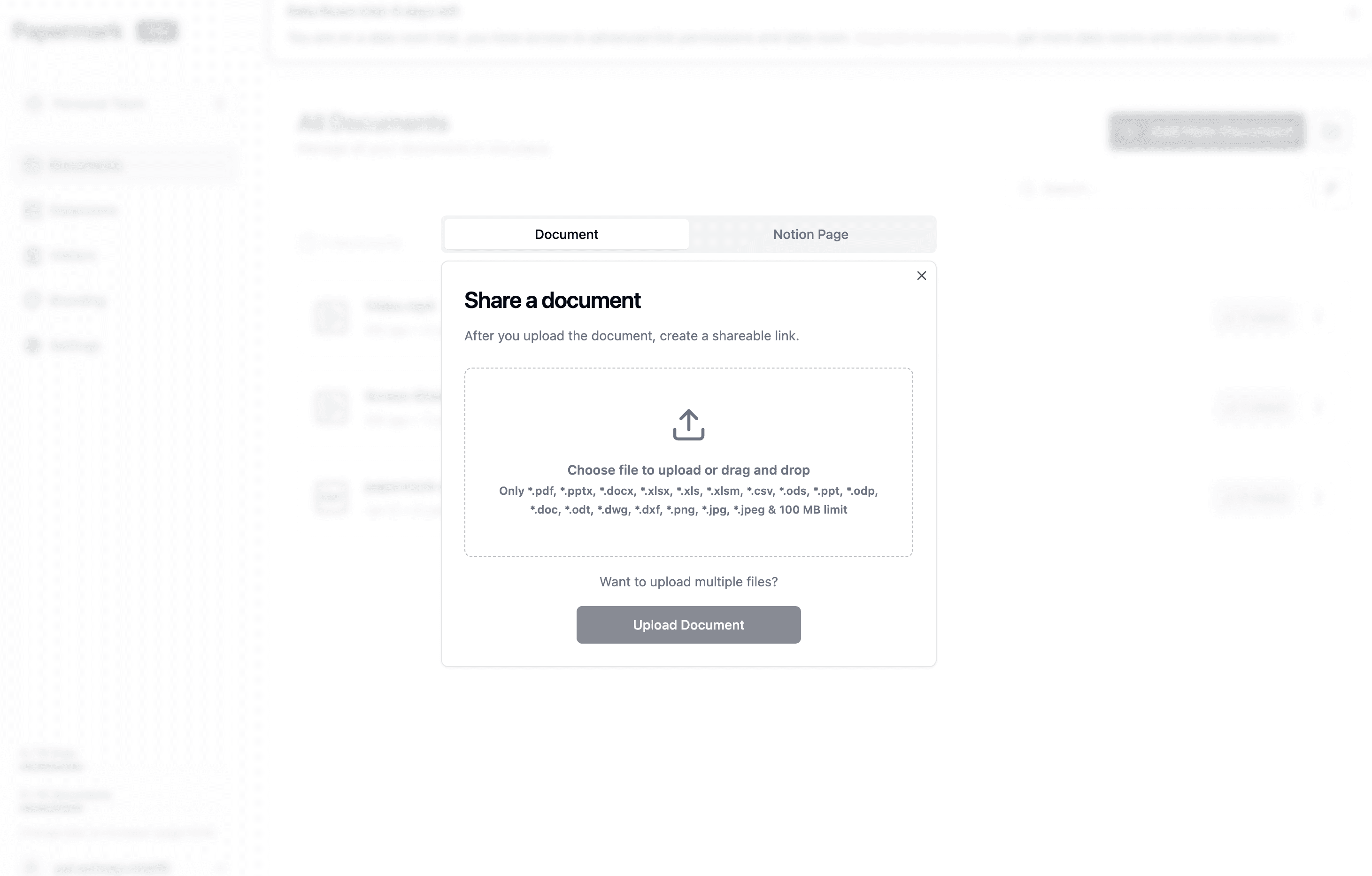
Upload by dragging the folder tree straight in. Automatic file indexing on the Data Rooms Plus plan builds and maintains the index as adviser drafts arrive, which matters on the buy side because material lands in waves across ten weeks rather than in one populated batch. Reordering folders after the fact rebuilds the index automatically.
Step 2: give each external party its own scoped link
This is the step that justifies the room. Buy-side material is read by parties with genuinely different entitlements, and the differences are not subtle.
Party
Folders granted
Rights
Internal deal team
All folders
View, download, upload
Senior lender
Financial, tax, legal summary, model
View and download
Co-investor
Investment committee, financial, commercial
View only, watermarked
W&I underwriter
All diligence reports, disclosure schedules
View only, watermarked
Each advisory firm
Its own workstream folder only
View and upload
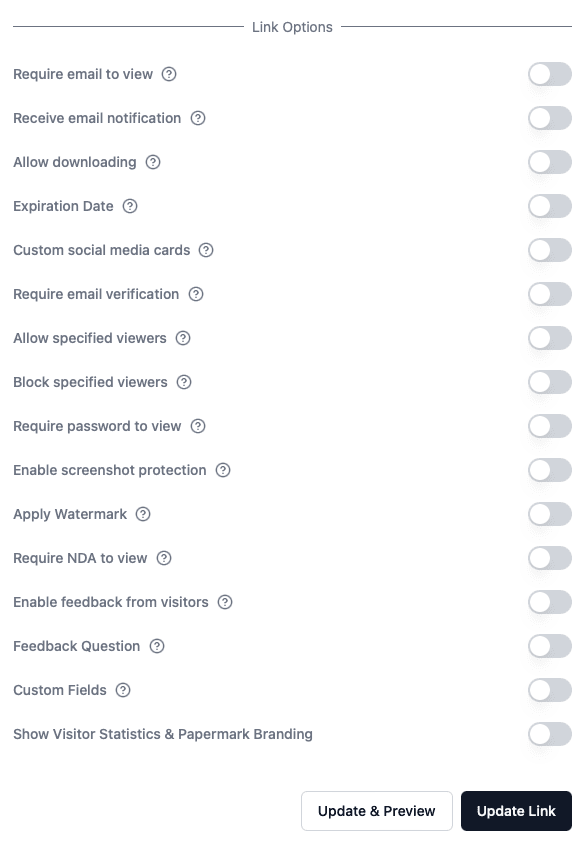
Granular file-level permissions are set per link rather than per user, so each party gets a link carrying its own folder scope, email allowlist or domain restriction, and download rule. Access is link-based with no account creation, which removes the friction that makes a busy lending analyst ignore a room and ask for an email attachment instead.
Permissions are set per link, so the lender sees the model and the W&I underwriter never does.
Step 3: watermark the work product that must not reach the seller
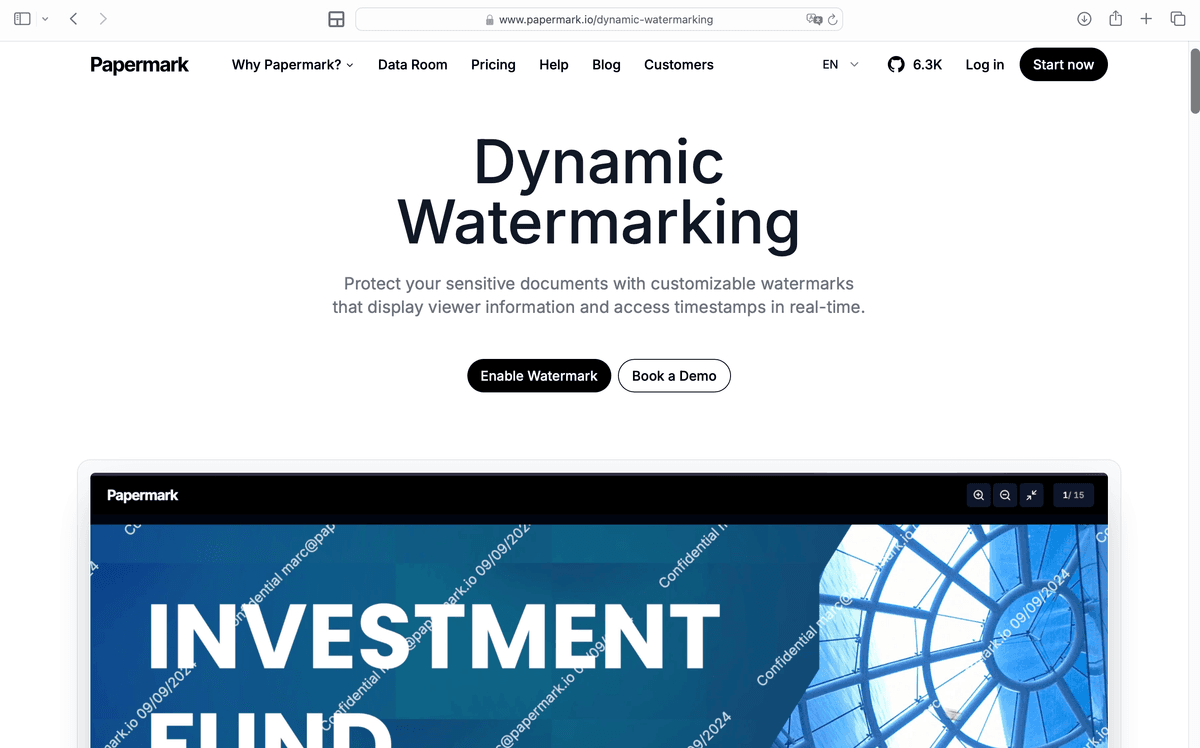
Adviser reports and the investment committee memo are the two documents where a leak is unrecoverable. Set both folders to view-only and turn on dynamic watermarking, which renders the viewer's email, IP address and timestamp onto every page at view time rather than baking a static mark into the file.
The honest limit is worth stating plainly, and it is the question buyers ask most often: a file that has been downloaded is legally treated as read, and no platform can recall it. That is precisely why download is disabled rather than discouraged on these folders. Watermarking does not prevent a leak; it makes any leak traceable to a named viewer, which changes behaviour more effectively than a policy does. Screenshot protection adds a further deterrent on the red flag summary specifically.
Dynamic watermarking renders viewer identity onto every page, which is what makes a leak traceable to a person.
Step 4: let advisers upload into their own folder
Buy-side reports arrive as attachments from seven different firms, on seven different schedules, in three versions each. Chasing them across inboxes is how a lender ends up reading a superseded draft. Give each advisory firm a link into its own workstream folder with upload permissions, so drafts land where they belong and the version history stays attached to the document rather than to a filename.
The Q&A module on Data Rooms Plus handles the other direction. Questions from the lender and the co-investor attach to the specific document that prompted them, with permissions controlling who sees which threads, so the co-investor never reads the lender's credit questions. Answers can be published to one group or to everyone, and the whole log exports to Excel for the closing file.
Step 5: read the analytics, then freeze the room at closing
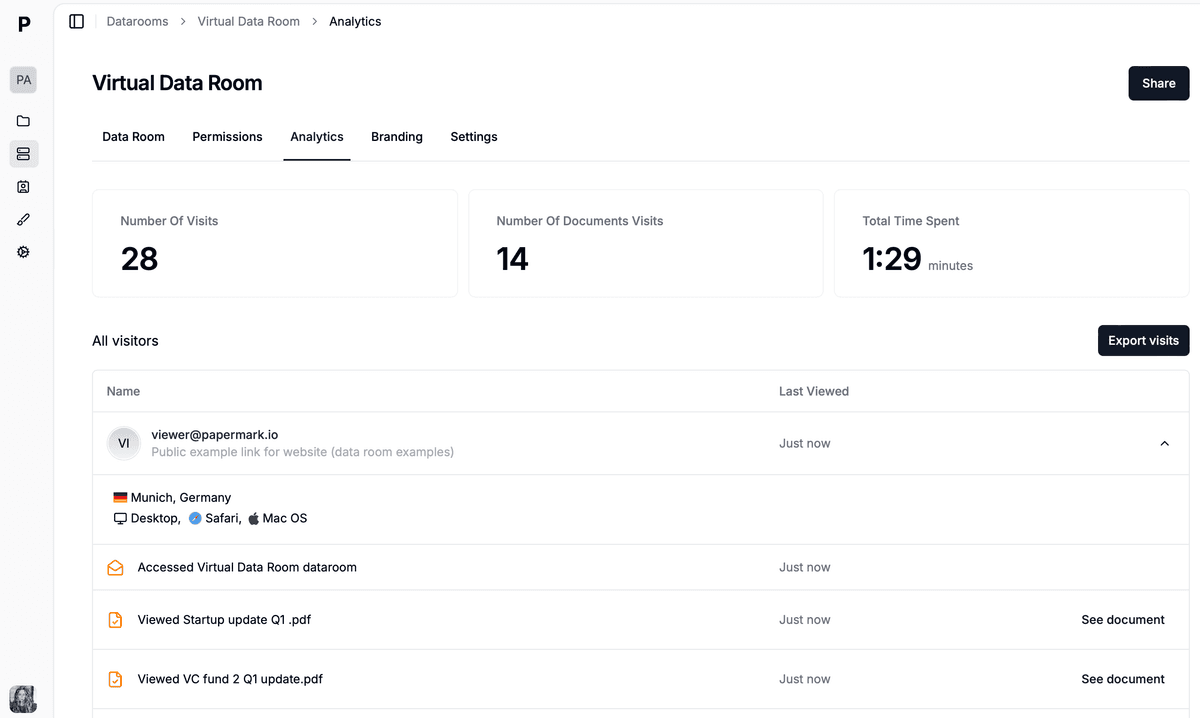
Page-level analytics show which party opened which report, when, and for how long. On the buy side this is a live signal about the financing: a credit analyst who has spent 40 minutes in the working capital section of the QoE has a question coming, and you will usually see the engagement before you get the email. The same data tells you whether the co-investor has actually read the investment committee pack before the meeting.
Per-visitor analytics show which diligence report each party opened and how long they spent in it.
After closing, data room freeze makes the room immutable and exports it as an archived ZIP with a certificate. When a warranty claim arrives two years later and the argument turns on what the buyer knew at signing, that archive is the record of which report each person opened and on what date.
Papermark is our #1 VDR provider for M&A transactions right now. In two deals we used custom branding, dynamic watermarking, and granular permissions.
The Data Rooms plan is €99/month with a 7-day free trial and includes 3 team members, unlimited data room visitors, unlimited data rooms, unlimited documents, custom domain, advanced data room branding, data room analytics, NDA agreements, dynamic watermarking, and granular file-level permissions. Data Rooms Plus at €249/month adds 5 team members, the Q&A module with permissions, the visitor audit log, automatic file indexing, email invite viewers, a dedicated account manager, and SOC 2 Type II. Data Rooms Premium at €549/month adds 10 team members plus multi-team, AI redaction, unlimited encrypted storage, full API access, SSO on request, whitelabeling and custom layouts. Data Rooms Unlimited at €999/month removes per-seat charges entirely, so teams that add reviewers mid-deal pay one number regardless of headcount, and it carries every Premium capability including AI redaction.
For a serial acquirer the unlimited data rooms matter more than any single feature. A fund signing six letters of intent a year to close two runs six rooms, and only two of them ever become deals. Paying a per-project fee on the four that die is a meaningful tax on a disciplined pipeline.