



mergers-and-acquisitions
Independent Sponsor in 2026: 7 Steps and the Carry Split Trap
The independent sponsor model in 2026: three fee layers, promote tiers, capital partners, and running the deal in a data room for independent sponsors.
A management buyout (MBO) is a transaction in which a company's existing management team acquires the business it already runs, usually funding the purchase with a mix of personal equity, senior bank debt, and seller financing. This guide covers the seven stages, the financing structure, and the conflicts to manage.
The gap between what a business is worth and what its managers can personally fund is the defining feature of every MBO. Senior lenders stop at 70 to 80 percent of consideration, management contributes 10 to 30 percent, and the space in between is where seller notes, mezzanine, and earn-outs live. This guide covers the seven stages, the financing layers, the conflict of interest, and what the process costs.
Every one of those layers brings its own reviewer, and each reviewer should see a different slice of the same disclosure bundle. A data room for a management buyout gives you one scoped link per funder plus the audit trail the seller will need if the price is ever challenged. Section 8 covers the setup step by step.
A management buyout is an acquisition in which the incumbent management team buys the company, division, or business unit it already operates. The buyers are not outside investors learning the business from a confidential information memorandum. They are the people who wrote the forecast, know which customer contracts renew in March, and understand exactly how much of last year's EBITDA came from a one-off project. That asymmetry is what makes an MBO both efficient and delicate.
Structurally, an MBO is a leveraged buyout with a specific buyer identity. A new holding company (often called Newco) is formed, management subscribes for equity in it, lenders and any financial sponsor fund the rest, and Newco acquires the shares or assets of the target. The operating company's own cash flow then services the acquisition debt. The mechanics are identical to any sponsor-led buyout; what changes is that the management team sits on the buy side of the table rather than being recruited by it.
MBOs cluster around three situations. The first is owner succession, where a founder wants liquidity and would rather sell to a team that will keep the business intact than to a competitor who will fold it in. The second is corporate divestiture, where a parent wants to exit a non-core division and the division's own leadership is the most credible buyer. The third is a take-private, where management partners with a private equity firm to buy out public shareholders. A related variant, the management buy-in, involves an external team acquiring and then running the business, and a buy-in management buyout (BIMBO) blends the two.
For a selling owner, the appeal is continuity and certainty. There is no need to expose customer lists, pricing models, and employee data to a trade buyer who may walk away and compete. Confidentiality is easier to maintain, the deal is less likely to leak to staff and customers mid-process, and completion risk is lower because the buyer already understands the operational reality. Owners with a strong preference for legacy, particularly family businesses, often accept a modest discount to a strategic buyer's price in exchange for knowing the business will survive in recognizable form.
For managers, the attraction is straightforward: ownership of the equity upside they have been creating for someone else. A team that has doubled EBITDA over five years on a salary and a small bonus can convert that track record into a meaningful stake. Because they know the business intimately, they can also underwrite the plan with more confidence than any outside buyer, which is why lenders often view a credible MBO as lower execution risk than a third-party sale.
There are real drawbacks on both sides. Management teams rarely have enough personal capital, which forces heavy leverage and personal guarantees, and a buyout that goes wrong can cost them both their savings and their jobs. Sellers face the risk that the price is suppressed by a buyer with better information, and minority shareholders in a public or partly owned company may challenge the process if it is not run at arm's length. The best MBOs address these risks explicitly rather than assuming goodwill will cover them.
Most MBOs follow the same sequence, and the discipline matters more than the labels. The whole process typically runs 4 to 9 months, with financial and legal due diligence taking 6 to 10 weeks and financing running in parallel rather than after. Teams that try to raise debt before they have a defensible valuation almost always restart.
The critical early move is separating the two roles management now plays. From the moment the team declares an interest in buying, it needs its own advisers, its own information flow, and a clear protocol for what it can do with company data. Skipping that step is the single most common reason MBOs unravel late.
Stage length is the part teams underestimate. The declaration and valuation work looks administrative and is usually the slowest, because it depends on a third party's calendar rather than the deal team's energy. The table below maps the seven stages onto a typical six to nine month timetable and names who owns each one, which is also the order in which folders should appear in the data room.
| # | Stage | Typical duration | Who owns it |
|---|---|---|---|
| 1 | Declare interest, appoint advisers | 2 to 4 weeks | Seller board and special committee |
| 2 | Independent valuation and sell-side QoE | 4 to 6 weeks | Seller's adviser and accounting firm |
| 3 | Business plan and financial model | 3 to 5 weeks | Management team |
| 4 | Assemble the financing package | 6 to 12 weeks | Management and debt adviser |
| 5 | Negotiate heads of terms | 2 to 4 weeks | Both sides' corporate finance advisers |
| 6 | Due diligence and documentation | 6 to 10 weeks | Buy-side advisers and lawyers |
| 7 | Complete and transition | 1 to 2 weeks | Lawyers and lenders |
Stages 4 and 6 overlap in almost every well-run process. A team that finishes the financing package before opening diligence has usually lost two months, because lenders re-underwrite against the diligence findings anyway.
Financing is where most MBOs succeed or fail, because the gap between what a business is worth and what management can personally fund is always large. The purchase price is assembled in layers, each with a different cost and a different claim on cash flow. Understanding the layers is what lets a team negotiate the price it can actually pay rather than the price it wishes it could.
Management equity usually contributes 10 to 30 percent of the purchase price, and lenders care as much about the proportion relative to each individual's personal wealth as they do about the absolute number. A CFO putting in a modest sum that represents most of their savings often reads as stronger commitment than a larger cheque from someone for whom it is immaterial. Senior debt does the heavy lifting, typically 3x to 5x normalized EBITDA in the lower middle market, secured on assets and cash flow and carrying maintenance covenants. Lenders rarely fund more than 70 to 80 percent of total consideration, which leaves a deliberate gap.
That gap is closed with seller financing and mezzanine capital. A subordinated seller note, commonly 5 to 7 years at 6 to 9 percent, is the most common bridge and has the useful side effect of keeping the seller economically invested in a smooth handover. Mezzanine debt sits between senior and equity, prices higher, and often carries warrants. Earn-outs shift part of the price into the future and tie it to performance, which reduces upfront funding need but creates its own disputes. A representative structure across the buyout market looks roughly as follows.
| Layer | Typical share of price | Cost and terms |
|---|---|---|
| Senior debt | 35 to 45 percent | 3x to 5x EBITDA, secured, maintenance covenants |
| Mezzanine or subordinated debt | 10 to 15 percent | Higher coupon, often with warrants |
| Equity (management and any sponsor) | 30 to 40 percent | Management contributes 10 to 30 percent of price |
| Seller note | 10 to 15 percent | 5 to 7 year tenor, 6 to 9 percent interest, subordinated |
| Earn-out | 0 to 15 percent | Contingent on post-close performance targets |
Valuation in a management buyout is technically ordinary and politically difficult. The methods are the same ones used in any private company sale: a multiple of normalized EBITDA benchmarked against comparable transactions, a discounted cash flow when the forecast is reliable, and an asset-based floor for capital-intensive businesses. What differs is that one side of the negotiation built the forecast and knows exactly which assumptions are soft.
The standard response is to move the pricing evidence outside the management team's control. A sell-side quality of earnings report prepared by an independent accounting firm normalizes EBITDA, tests add-backs, and produces a number both sides can argue from. An independent valuation opinion does the same for the multiple. Where there are outside or minority shareholders, a special committee of independent directors runs the process, retains its own advisers, and can test the market with a limited number of alternative buyers to confirm the MBO price is competitive.
Information governance matters just as much. Management should not be preparing the sell-side materials it will later be buying against, and the data room should be built and controlled by the seller's adviser with a documented record of exactly what was disclosed and when. That audit trail is the seller's protection if the price is challenged later, and it is management's protection against an accusation that it withheld or shaded something. A page-level log showing which documents each party opened, and when, converts a he-said-she-said dispute into a factual record.
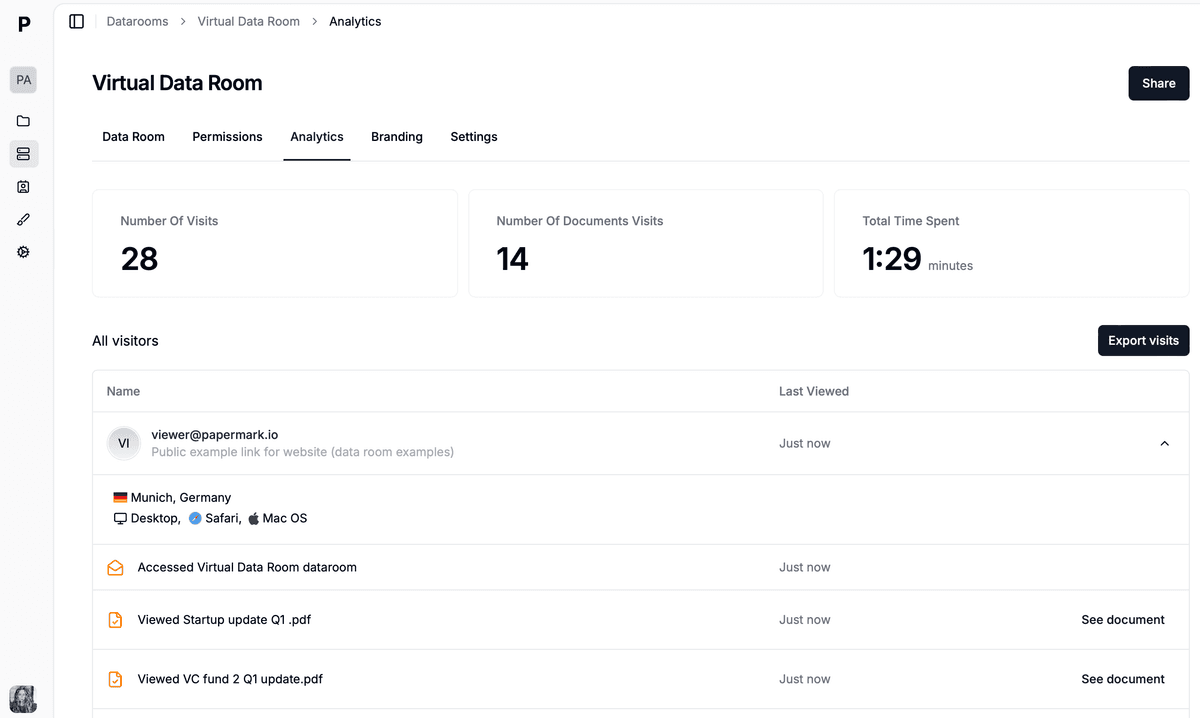
A per-visitor view history is the evidence that answers a fairness challenge two years after the buyout completes.
The three controls work together rather than individually. An independent valuation without a documented disclosure record still leaves the seller arguing from memory about what management knew. A special committee that meets three times but lets management keep circulating documents by email has created governance theatre. The combination of an outside number, an outside decision-maker, and a room that logs every view is what makes a management buyout price defensible to a minority shareholder, a tax authority, or a court.
Halden Precision Components is a UK contract manufacturer with revenue of £24 million and normalized EBITDA of £3.6 million. Its founder, now 68, wants out within a year. The management team, a managing director and a finance director who have run the business for eight years, tell the board in January that they want to buy it.
The founder appoints a corporate finance adviser and commissions a sell-side quality of earnings report, which strips £310,000 of owner-related costs out of reported EBITDA and rejects a £180,000 add-back for a "one-off" tooling program that has recurred three years running. Normalized EBITDA lands at £3.6 million. At a 5.5x multiple, the enterprise value is £19.8 million.
The team cannot fund that alone. They contribute £2.4 million between them, most of it raised against property, which is about 12 percent of the price. A clearing bank offers £14.4 million, exactly 4x EBITDA, against assets and cash flow with a covenant package testing leverage quarterly. That leaves a £3 million hole. The founder agrees to take £2.5 million as a subordinated seller note over six years at 7 percent, and the last £500,000 is structured as an earn-out payable if EBITDA holds above £3.4 million for two consecutive years.
Worked scenario. Management funds 12 percent of the price and the bank stops at 4x EBITDA, which is what leaves the £3M gap that the seller note and earn-out close.
Diligence runs for seven weeks. The adviser builds the data room, grants the bank's advisers access to the financial and legal folders only, and gives the management team's own lawyers a separate scoped link. When a minority shareholder later questions whether the price was fair, the adviser produces the independent QoE, the valuation opinion, and an audit log showing every document each party viewed. The deal completes in month six.
The failures are predictable, which makes them avoidable. The most damaging is over-leverage: a team that stretches to win the deal at 5.5x EBITDA discovers that debt service consumes the cash it needed for the capital expenditure that made the plan work in the first place. Model the downside case first and negotiate covenant headroom before you negotiate price.
The second common error is treating the conflict of interest as a formality. Managers who continue to run the sell-side process while bidding, or who quietly slow down performance ahead of a valuation date, create legal exposure that outlives the transaction. The third is underestimating the cultural shift. Running a business you own with a bank covenant attached is materially different from running one for a founder who absorbs the risk, and teams that have never had to manage a lender relationship often find the reporting burden a shock.
Each of those failures has a standard control, and none of the controls is expensive relative to the cost of the failure. The mapping below is the one a seller's adviser should walk through at the first board meeting after management declares its interest.
| Mistake | What it costs | Standard control |
|---|---|---|
| Bidding before an independent valuation | Price anchored to management's own model | Third-party valuation plus sell-side QoE before any offer |
| Management still running the sell-side process | Legal exposure that outlives the deal | Special committee of independent directors with its own advisers |
| Over-leveraging at 5x or more EBITDA | Debt service consumes the capex the plan needs | Model the downside case and negotiate covenant headroom first |
| Equity split not agreed in writing | Team disputes surfacing during exclusivity | Signed term sheet among the managers before approaching the seller |
| Working capital ignored | More cash needed at close than anyone modelled | Trailing twelve month working capital peg set during diligence |
| Diligence run over email and shared drives | No disclosure record if the price is challenged | Seller-controlled data room with a per-visitor audit log |
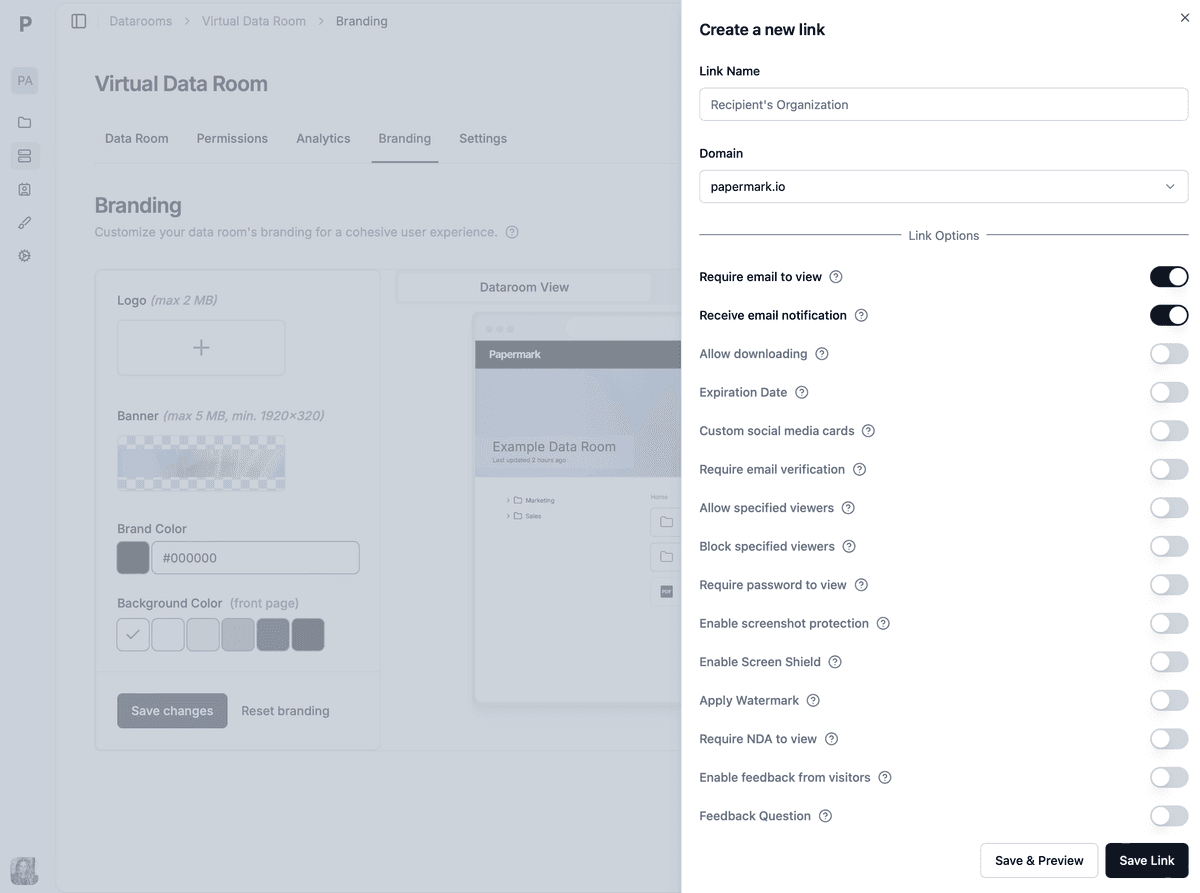
A data room for a management buyout gives the lender, the mezzanine provider, and management's lawyers three different views of one document set.
A data room for a management buyout carries a burden that an ordinary sale room does not. In a trade sale, the room exists so a stranger can learn the business. In an MBO the buyer already knows it, so the room exists to prove what was disclosed, to whom, and when. That single difference should change how the room is owned, how links are scoped, and what happens to the archive after completion.
Papermark is a secure, fully customizable, and developer-friendly data room built for modern dealmakers, with page-by-page analytics, dynamic watermarking, and transparent pricing (open-source and self-hosting available).
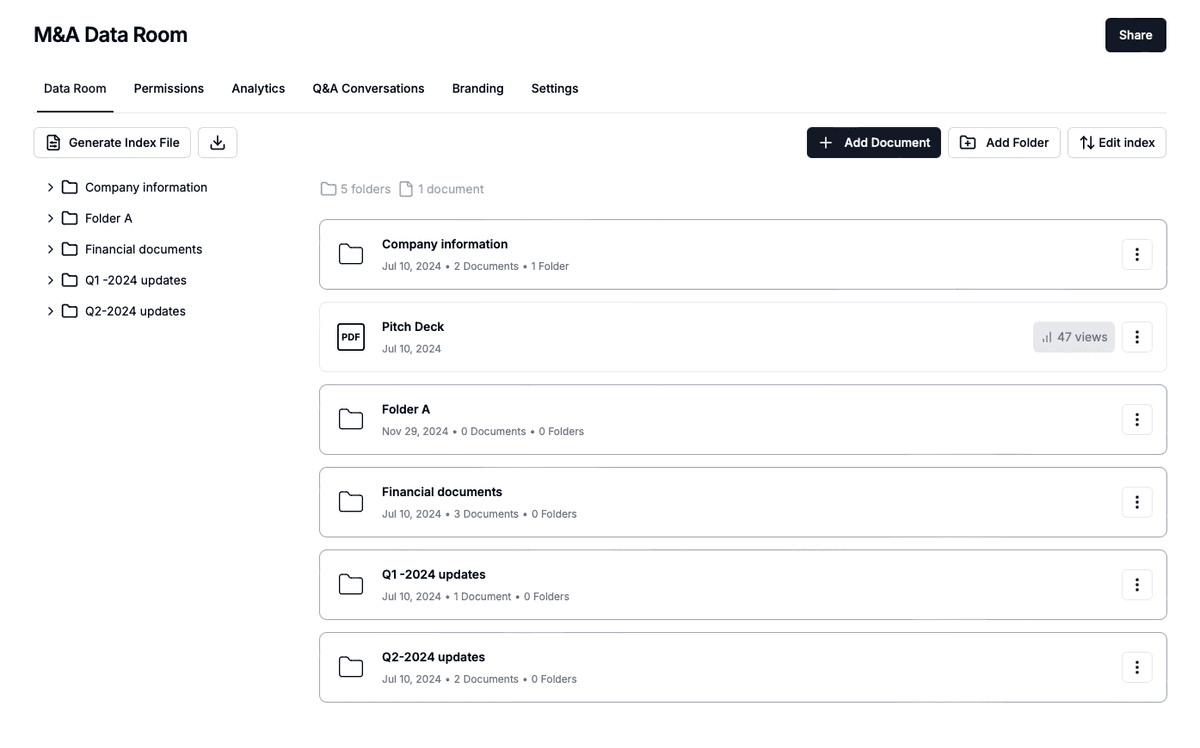
A management buyout data room in Papermark, with scoped links for the management team, the senior lender, and the mezzanine provider.
Most lower middle market buyouts still run on email attachments and a shared folder, and it is the deal type where that habit is least defensible. Four reasons make a dedicated room worth the setup time. If you are still choosing a platform, our comparison of the best virtual data rooms covers pricing model, bidder management and compliance across the main providers.
The buyer is also an employee. In every other transaction the counterparty loses access when they leave the building. Here the managing director who is bidding for the company also has the shared drive, the accounting system, and the customer file on their laptop every day. A seller-controlled room is the only way to draw a line between what management sees as an employee and what it receives as a bidder, and the timestamped record of that line is what a minority shareholder will ask for later.
Four funders need four different views. A typical buyout involves a senior lender's credit team, a mezzanine provider or equity sponsor, management's own lawyers, and the seller's advisers. The lender needs the financial and legal folders and has no business in employee compensation. The mezzanine provider needs the model and the covenant analysis. A shared drive gives you one permission set, whereas a data room for a management buyout gives you one per link over the same underlying files.
The disclosure record is the seller's defence. MBO prices get challenged more often than trade sale prices, by minority shareholders, by family members, and occasionally by tax authorities testing whether the price was at arm's length. The question in every one of those disputes is what was disclosed and when. A per-visitor, page-level view history answers it in an afternoon. An inbox does not answer it at all.
Questions arrive in waves and from five directions at once. Over a 400-document disclosure bundle, a lender's credit analyst, a tax adviser, and two sets of lawyers will generate 60 or more open questions. Threaded against the document that prompted them, they close. Scattered across inboxes, they get answered twice, inconsistently, by two different people.
The rest of this section is the practical build: five steps to a data room for a management buyout that handles all four.
Ownership matters before structure does. The room should be created and administered by the seller's corporate finance adviser, not by the finance director who is part of the buying team. Then build one folder per diligence workstream: financial, legal, tax, commercial, employment, property, and IT, matching the headings the disclosure letter will use.
Upload by dragging the whole folder tree in at once. Automatic file indexing on the Data Rooms Plus plan builds and maintains a numbered index as documents arrive, which is what keeps the disclosure bundle numbering consistent with the disclosure letter when 400 documents land across three waves.
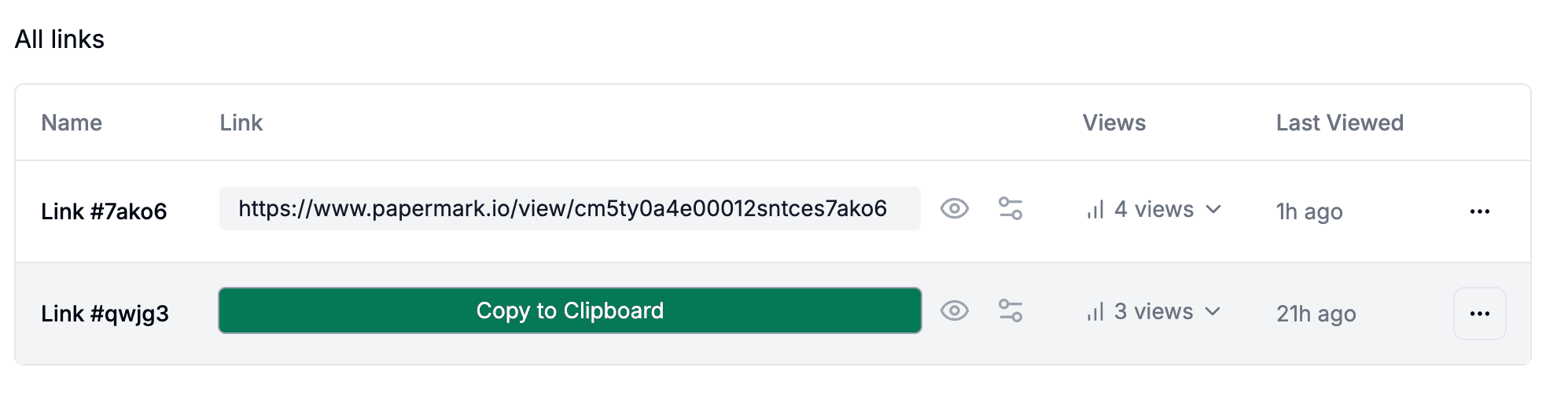
This is the step that a shared drive cannot do at all. Each party gets its own link carrying its own folder scope, its own email or domain allowlist, and its own download rule.
| Party | Folders granted | Rights |
|---|---|---|
| Seller's corporate finance adviser | All folders, plus room administration | Full control |
| Senior lender's credit team | Financial, legal, property | View and download |
| Mezzanine provider or sponsor | Financial, commercial, model | View only, watermarked |
| Management's lawyers | Legal, employment, tax | View and download |
| Special committee | All folders plus the full audit log | View only |
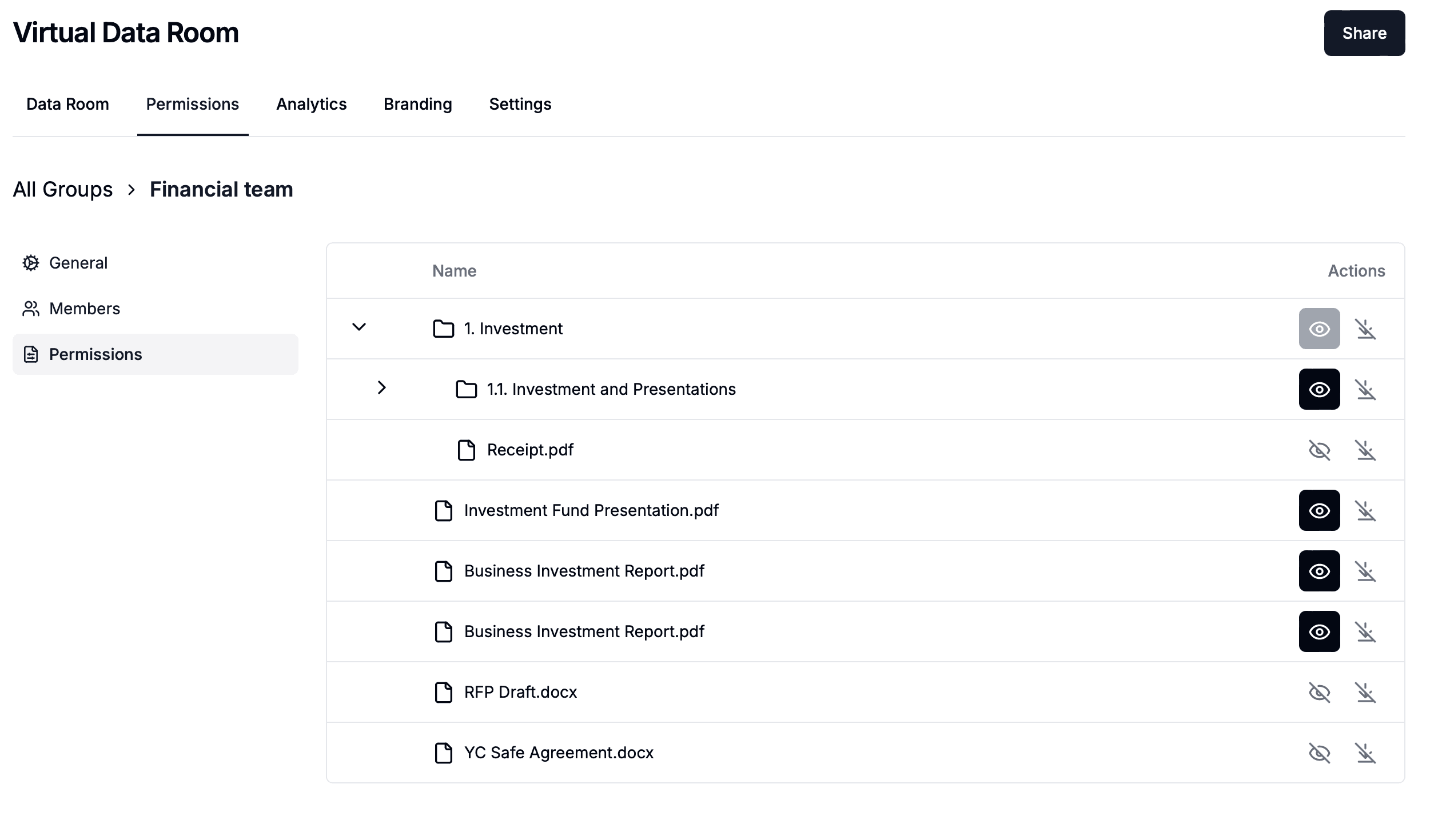
Granular file-level permissions are set per link rather than per user, so nobody has to create an account to open the room. That matters more than it sounds: a credit analyst who has to register for a product will forward the file to a colleague instead, and the disclosure record breaks at exactly that point.
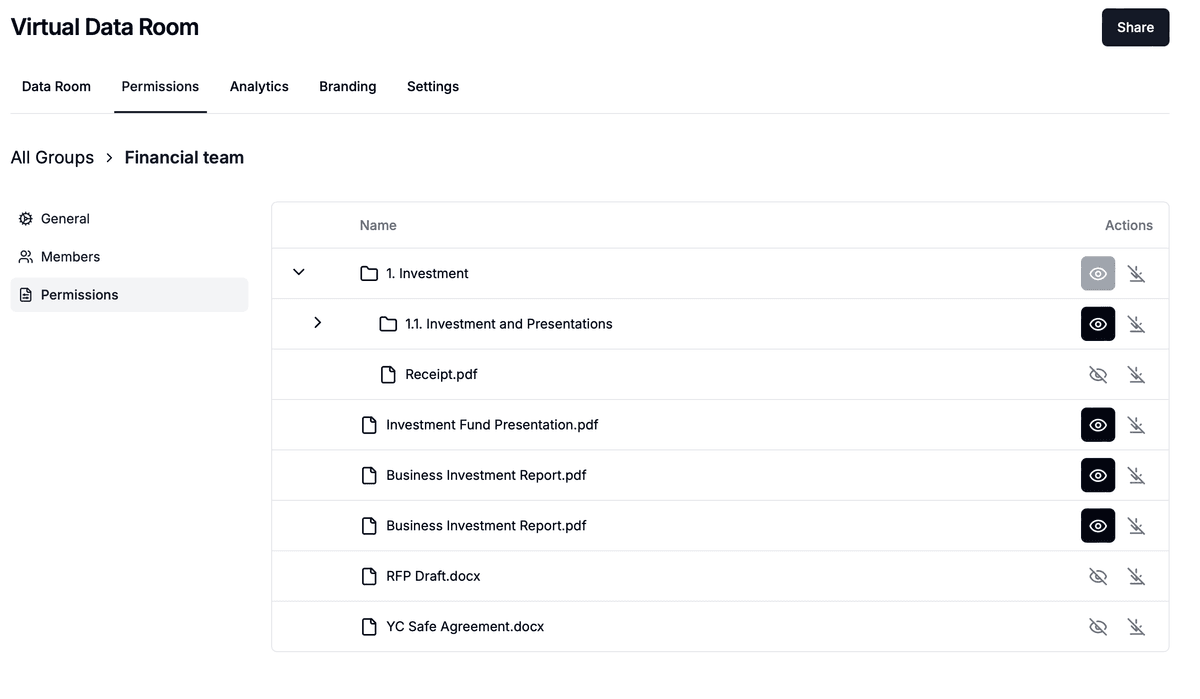
Permissions are set per link, so the senior lender and the mezzanine provider open different folders of the same buyout room.
Set the valuation model, the customer contract file, and the employee census to view-only, and turn on dynamic watermarking, which renders the viewer's email, IP address, and timestamp onto every page at the moment it is displayed. In a buyout the deterrent value is unusually high, because the person opening the document works at the company and will still be there if the deal collapses.
The honest limit is worth stating plainly. A downloaded file is legally treated as read, and no platform can pull it back. That is why download is switched off on these folders rather than merely discouraged, and why watermarking exists at all: it makes a leak attributable to a named viewer rather than simply regrettable.

Dynamic watermarking stamps viewer identity onto every page, which is the deterrent that matters when the buyer is also an employee.
Diligence questions in a buyout arrive from the lender, the mezzanine provider, and two sets of lawyers, often about the same schedule. The Q&A module attaches each question to the document that prompted it, with permissions controlling who can see which threads, so the mezzanine provider never sees what the senior lender asked about covenant headroom.
Answers can be published to one party or to everyone, and the whole log exports for the completion bible. Request files lets an adviser ask the finance director for a missing export inside the room instead of by email, and new-document notifications tell each party the moment it lands.
Page-level analytics show which party opened which document, when, and for how long. In an MBO that is more than curiosity: a lender's credit team spending forty minutes in the working capital schedule is usually about to reprice, and you will hear about it a week before the credit paper lands.
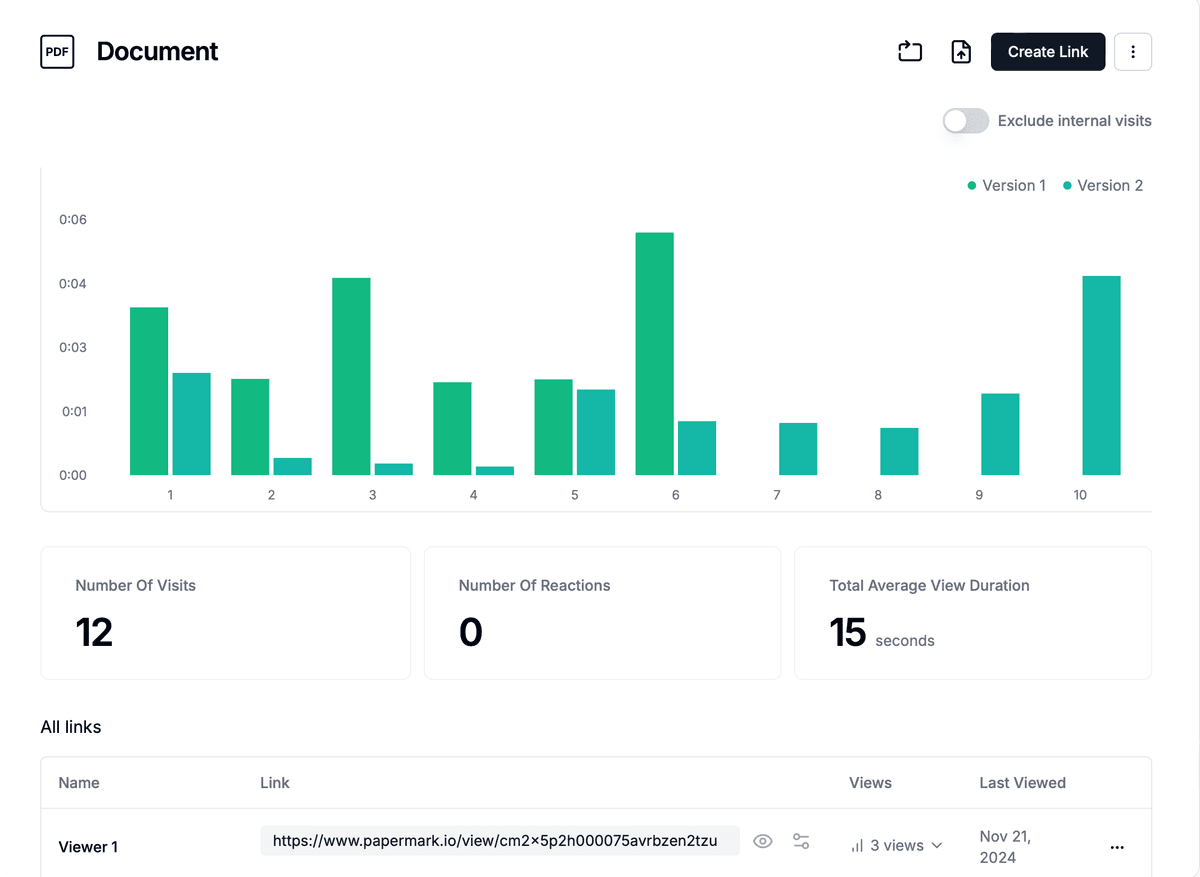
Page-by-page analytics show which buyout schedules each funder reviewed and for how long.
After completion, data room freeze closes the room to edits, makes the contents immutable, and exports the whole thing as an archived ZIP with a certificate. When a warranty claim or a fairness challenge arrives 12 to 24 months later, that archive is the answer to what was disclosed and when.

Papermark is our #1 VDR provider for M&A transactions right now. In two deals we used custom branding, dynamic watermarking, and granular permissions.
Tyler
The Data Rooms plan is €99/month with a 7-day free trial and includes 3 team members, unlimited data room visitors, unlimited data rooms, unlimited documents with no file size limit, a custom domain, dynamic watermarking, NDA agreements, and granular file-level permissions. Data Rooms Plus at €249/month adds 5 team members, the Q&A module, the audit log, automatic file indexing, and SOC 2 Type II, which is the tier most buyouts need because the audit log is the whole point. Premium at €549/month adds 10 members, AI redaction, API access, SSO, and whitelabeling. Data Rooms Unlimited at €999/month removes per-seat charges entirely, so teams that add reviewers mid-deal pay one number regardless of headcount, and it carries every Premium capability including AI redaction.
On a buyout that runs six months and 400 documents, flat pricing is the difference between a €600 line item and an unpredictable one, because legacy providers that bill per page or per gigabyte turn a document-heavy disclosure exercise into a bill nobody budgeted. Unlimited data rooms under one subscription also means a seller running a dual-track process can open a separate room for a trade buyer without a second contract.
No credit card required.
The independent sponsor model in 2026: three fee layers, promote tiers, capital partners, and running the deal in a data room for independent sponsors.
Entrepreneurship through acquisition in 2026: four search models, SBA financing up to $5M, an 8-step process, and the data room for an ETA acquisition.
HSR filing in 2026: the $133.9M threshold, fees from $35,000 to $2.46M, the 30-day wait, the Item 4(c) trap, and the data room for an HSR filing you run it from.