


mergers-and-acquisitions
Independent Sponsor in 2026: 7 Steps and the Carry Split Trap
The independent sponsor model in 2026: three fee layers, promote tiers, capital partners, and running the deal in a data room for independent sponsors.
Entrepreneurship through acquisition (ETA) is the path where an operator buys an existing profitable business instead of founding one, then runs it as owner-CEO. It replaces product risk with execution risk: the revenue already exists, the customers already pay, and the searcher's job is to keep and grow what they bought.
ETA has moved from a niche business school idea to a recognized asset class with dedicated investors, lenders, brokers, and conferences. What has not changed is the difficulty of the middle part: finding a business worth buying, getting a seller who has never sold anything to trust you, and running diligence rigorously enough to avoid buying someone else's problem. This guide covers the models, the financing, the eight-step process, and the diligence work that decides whether the deal was a good one.
Most of that diligence work is document work. A first-time buyer chasing tax returns, contracts, and payroll records from a 67-year-old owner needs somewhere structured to put them, and the lender needs to see the financials without seeing the searcher's own model. A data room for an ETA acquisition does both. Section 8 covers the setup step by step.
Entrepreneurship through acquisition is a career and investment path in which an individual, usually called a searcher, raises capital to find and buy a single established company and then operates it. The searcher becomes CEO on day one after closing, and the returns come from running the business well, paying down acquisition debt, and eventually selling or holding for cash flow.
The appeal is that it removes the hardest part of a startup, which is proving that anyone wants the product. An ETA target already has customers, staff, suppliers, and a track record. What it usually lacks is professional management, a growth plan, modern systems, and a succession answer. That gap is exactly the searcher's opportunity, and it is why the classic profile of an ETA target is a founder-owned business where the owner is over 60 and has no family successor.
The trade-off is real. A searcher inherits an organization with entrenched habits, employees who have known the previous owner for twenty years, and customers whose loyalty may be personal rather than contractual. There is also leverage: most ETA deals are debt-financed, so a soft first year is far less forgiving than it would be for a venture-backed startup. The skill set that matters is operating discipline and people management, not product invention.
Searchers choose between four financing and support structures, and the choice determines how much control they keep, how fast they can move, and what size of business they can realistically buy. None is objectively better. They trade equity and autonomy against capital and support in different proportions.
The traditional search fund is the model taught in business schools. The searcher raises a small pool of search capital from a group of investors, typically 10 to 20 of them, to cover salary and deal expenses for 18 to 30 months. Those investors get the right, but not the obligation, to fund the eventual acquisition, and they take a meaningful equity stake. The searcher earns their equity in tranches vested against time, acquisition, and performance hurdles.
The self-funded search means paying your own way. The searcher covers living costs and diligence expenses personally, then finances the acquisition with an SBA loan, a seller note, and a small amount of outside equity. It is slower and riskier personally, but the searcher typically keeps a much larger ownership stake, often a majority.
| # | Model | Search funding | Typical searcher equity | Best for |
|---|---|---|---|---|
| 1 | Traditional search fund | Raised from 10 to 20 investors upfront | 20 to 30 percent, vested | First-time buyers wanting a board and capital certainty |
| 2 | Self-funded search | Personal savings | Often a majority | Operators comfortable with personal risk and SBA debt |
| 3 | Sponsored or independent | One backer or family office | Negotiated deal by deal | Searchers with a specific thesis and a warm backer |
| 4 | Accelerator-backed | Program stipend plus shared services | Between traditional and self-funded | Searchers who want structure without a full raise |
The sponsored or independent search sits between the two. A single backer, often a family office or a former searcher turned investor, funds the search in exchange for a negotiated equity position and usually a right of first refusal on the deal. The accelerator-backed search adds shared services, a stipend, and a peer group, which shortens the learning curve at the cost of some equity.
The ETA process is long and mostly unglamorous. Most searchers spend far more time on outreach and rejected targets than on negotiating. The eight steps below describe the path from raising search capital to sitting in the CEO chair.
The first half is a numbers game. Searchers build a target list, run proprietary outreach to owners, and work broker listings, and the response rates are low enough that hundreds of contacts turn into a handful of serious conversations. The second half is a discipline game, where the work is diligence, financing, and not talking yourself into a deal you already know is wrong.
The timing is the part most first-time searchers get wrong, usually by budgeting for the deal and not for the search. The table below maps each step to a realistic duration and to the point at which a data room for an ETA acquisition starts earning its keep.
| # | Stage | Typical duration | What decides whether it slips |
|---|---|---|---|
| 1 | Thesis and search capital | 2 to 6 months | Investor availability and the clarity of the thesis |
| 2 | Target list build | 1 to 3 months | Data quality in the industry association lists |
| 3 | Outreach and conversations | 12 to 24 months | Response rate on direct mail and broker relationships |
| 4 | Screening and valuation | 2 to 6 weeks per target | How quickly the owner produces 3 years of financials |
| 5 | Letter of intent | 1 to 3 weeks | Agreement on price, structure, and exclusivity length |
| 6 | Due diligence | 60 to 90 days | Document collection speed, which is where a data room pays |
| 7 | Financing close | 45 to 90 days, in parallel | SBA underwriting, usually the critical path |
| 8 | Transition | 3 to 12 months | Seller availability and customer relationship handover |
For the diligence stage specifically, our M&A due diligence checklist covers the document set a buyer should request.
Financing is where self-funded and traditional searches diverge most sharply. A traditional search fund acquisition is mostly equity, drawn from the same investors who funded the search, with a modest layer of debt. A self-funded acquisition is mostly debt, and in the United States that debt is usually an SBA 7(a) loan.
The SBA 7(a) program is the backbone of small business acquisition finance in the US. The maximum loan is $5 million per borrower, terms for a business acquisition typically run 10 years, and the borrower must inject at least 10 percent equity on a change of ownership. That injection can include a seller note, but only if the note is on full standby, meaning no payments of principal or interest, for at least the first 24 months. That standby rule is why seller financing appears in so many ETA deals: it aligns the seller with a successful transition and satisfies the lender at the same time.
Outside the US, searchers rely on conventional bank debt, government-backed guarantee schemes where they exist, and a larger equity component. In every geography, seller notes and earnouts do double duty, bridging valuation gaps and keeping the departing owner invested in the handover.
Each of those pieces comes with its own diligence appetite, which is the practical reason a searcher needs scoped access rather than one shared folder. The SBA lender wants three years of tax returns and the debt service coverage calculation. The seller's own counsel wants the purchase agreement drafts and nothing else. Investors want the model and the quality of earnings report. Running all of that through one shared drive means everyone sees everything, including the searcher's valuation work.
Diligence is where inexperienced searchers lose the most money, usually by being too polite. A retiring owner will present the business favorably and may genuinely not know where the problems are, because nobody has audited their processes in twenty years. The buyer's job is to verify, not to trust.
The single most valuable workstream is a quality of earnings report, which normalizes the seller's earnings by stripping out owner perks, one-time items, and accounting choices that flatter the picture. On a business at a 4x multiple, a $200K adjustment to normalized EBITDA moves the purchase price by $800K, which is why this report pays for itself. Our guide to due diligence cost breaks down what these engagements typically run.
Beyond the numbers, five areas matter disproportionately in ETA. Customer concentration determines whether losing one account destroys the thesis. Owner dependence determines whether revenue walks out the door with the seller. Systems and technology determine how much reinvestment year one requires, which our IT due diligence and technical due diligence guides cover in depth. Employee retention determines whether you inherit the team that actually knows the business. And if the target owns or leases industrial property, environmental due diligence protects you from inheriting contamination liability.
The document request that follows is the same on almost every small business deal, and knowing it in advance is what lets a searcher build the folder structure before the owner sends anything.
| Workstream | Documents requested | Typical count | Who needs it |
|---|---|---|---|
| Financial | 3 years of financials, monthly P&L, AR and AP ageing, bank statements | 40 to 80 | Lender, QoE provider, searcher |
| Tax | Federal and state returns, payroll tax filings, sales tax records | 15 to 30 | Lender, accountant |
| Customers | Revenue by customer, contracts, renewal terms, concentration analysis | 20 to 60 | Searcher, investors |
| Employees | Census, compensation, benefit plans, key person agreements | 15 to 40 | Searcher, attorney |
| Corporate and legal | Formation documents, cap table, leases, litigation, insurance | 25 to 60 | Attorney, lender |
| Operations and IT | Systems inventory, licences, backup evidence, vendor contracts | 10 to 30 | Searcher, IT reviewer |
| Property and environmental | Deeds, leases, Phase I ESA, permits | 5 to 25 | Lender, environmental counsel |
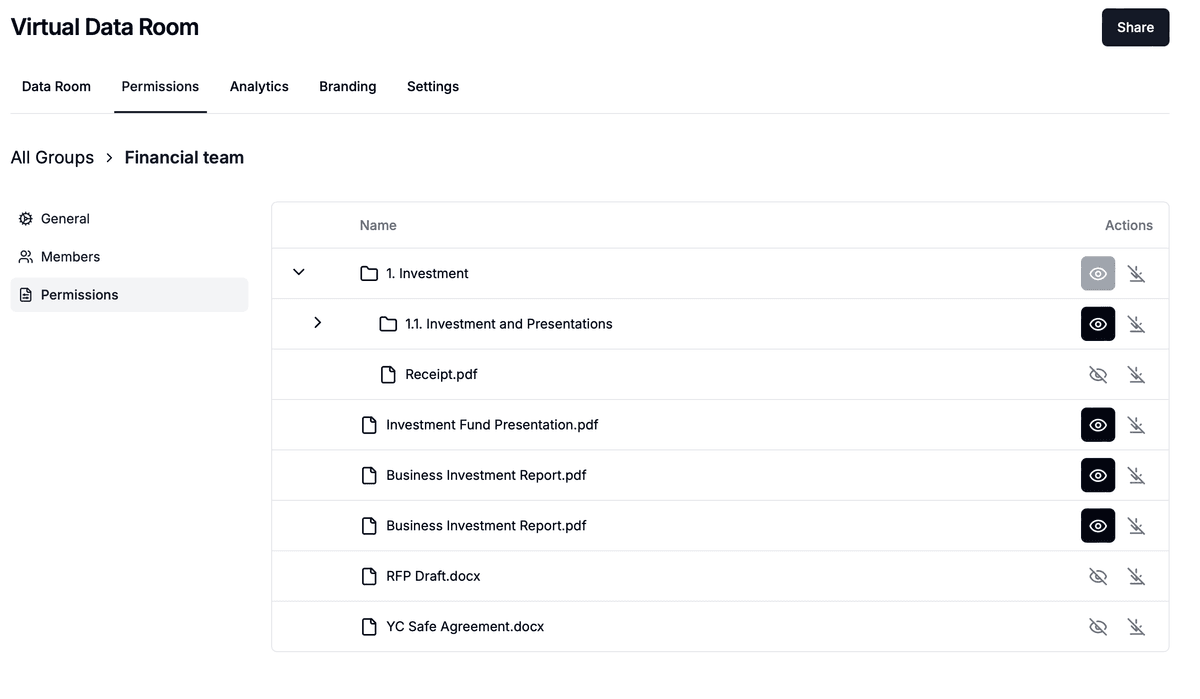
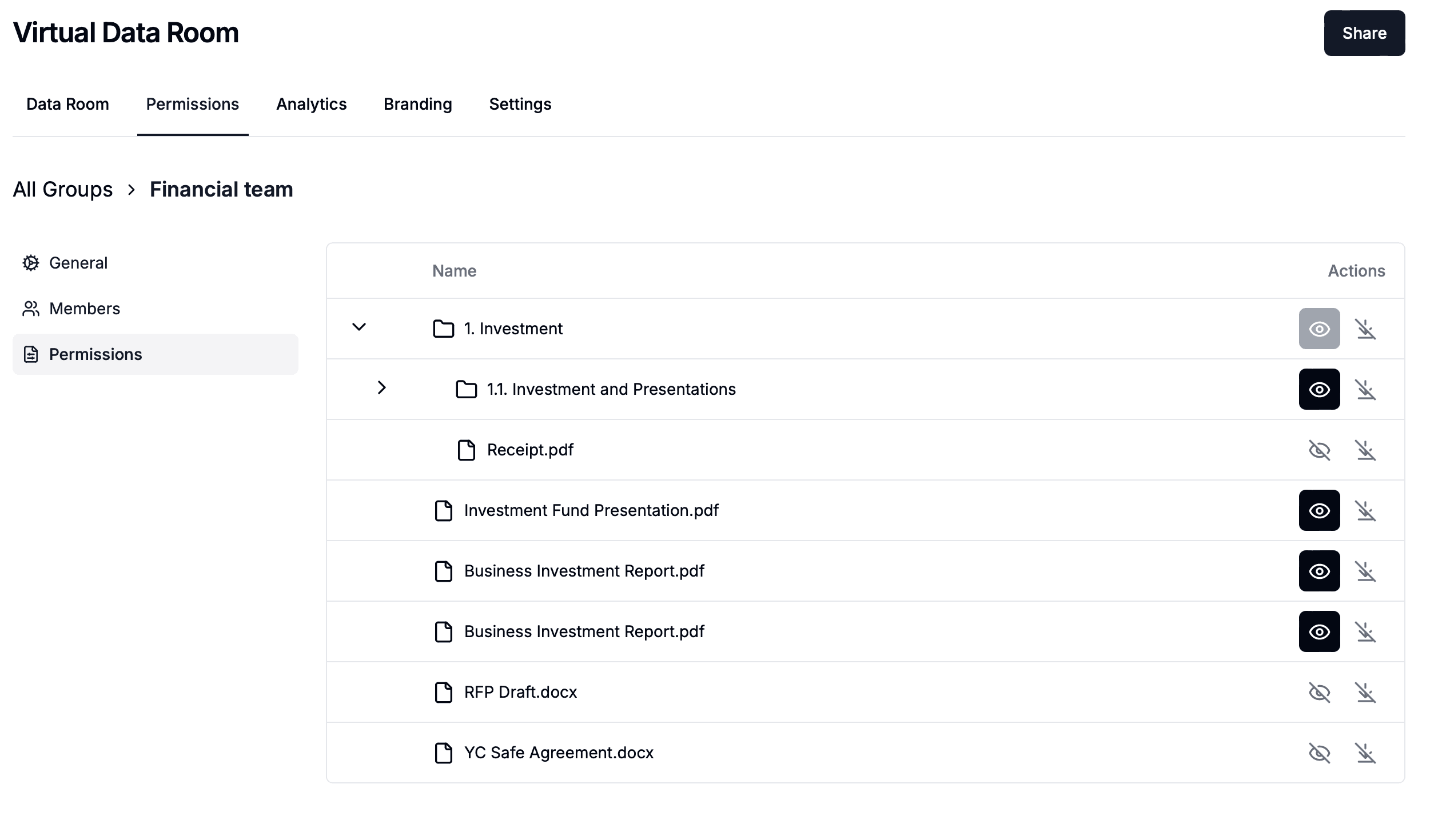
Folder permissions let the SBA lender see the financial and tax folders without seeing the searcher's valuation model.
Practically, all of this runs through a data room. The seller uploads financials, contracts, tax returns, insurance, and HR records, and the searcher, their lender, their accountant, and their lawyer all need scoped access to different parts of it. Sellers in this size range are rarely sophisticated about document security, which is one more reason the buyer should propose a proper structure rather than accepting a shared drive.
Dana, a self-funded searcher and former operations manager, spends 14 months building a list of 380 industrial services companies in the Midwest and sending direct mail plus follow-up calls. She gets 41 conversations, 9 sets of financials, and 2 letters of intent. The one she pursues is Halverstad Industrial Services, a 31-year-old commercial HVAC maintenance firm with $8.4M of revenue, $1.35M of reported EBITDA, and an owner who is 67 and has no successor.
She signs an LOI at 4.2x normalized EBITDA with a 75-day exclusivity window. The quality of earnings report finds $180K of owner compensation and personal vehicle expense that should be added back, but also $310K of maintenance contracts recognized upfront that should be spread across the service period. Normalized EBITDA lands at $1.22M rather than $1.35M, and the price adjusts from $5.67M to $5.12M.
Diligence surfaces three more items. Halverstad's largest customer is 22 percent of revenue on a contract that renews annually with no termination fee. The dispatch system runs on an unsupported on-premise application with no backup outside the office, an IT finding that adds a $95K first-year replacement line. And the owner personally holds the two largest customer relationships, so the purchase agreement is restructured to include a 12-month transition consulting agreement plus a $600K seller note on 24-month standby.
Worked scenario. The $600K seller note sits on 24-month full standby, which is what lets it count toward the SBA minimum 10 percent equity injection.
The final structure is a $3.75M SBA 7(a) loan, the $600K seller note, $520K of Dana's own capital, and $250K from two individual investors. Diligence runs through a data room with 240 documents in seven folders, with separate links for the lender, the accountant, and Dana's attorney, each restricted to the folders they need. The deal closes 96 days after the LOI.
The most expensive mistake is overpaying for a business whose earnings depend on the departing owner. A 4x multiple on $1.5M of EBITDA looks reasonable until you learn that the owner personally sells 60 percent of new work. Buyers should test owner dependence explicitly by asking who the top 20 customers would call if the owner disappeared tomorrow.
The second is skipping the quality of earnings report to save money. On a $5M deal, a $35K to $60K engagement is roughly one percent of the price and routinely finds adjustments worth many times that. It also gives the lender confidence, which matters when SBA underwriting is on the critical path.
The third is running diligence out of email and shared folders. A searcher chasing 240 documents from a 67-year-old owner across three months of email threads will lose track of versions, will not know which documents the lender has actually reviewed, and will have no record of what was disclosed if a dispute arises later. A data room for an ETA acquisition fixes this, and our data room checklist covers the folder structure to use.
The fourth is changing too much too fast after closing. Employees who have worked under one owner for two decades read rapid change as a threat, and the retention risk in the first six months is usually higher than the operational upside of any single improvement.
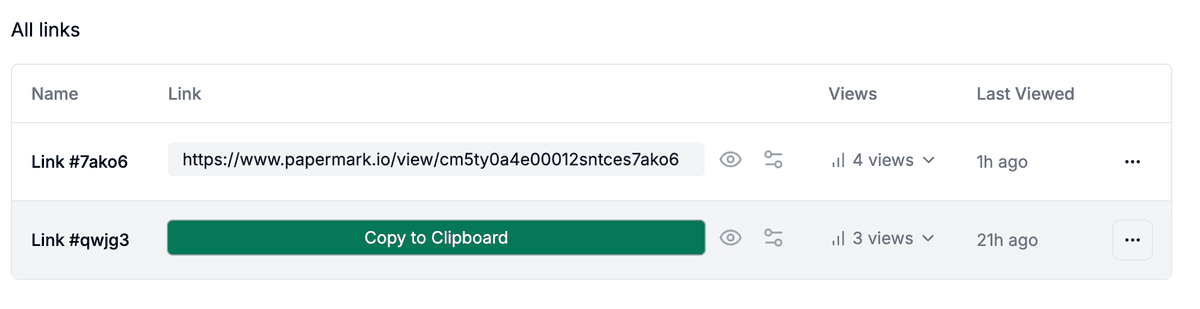
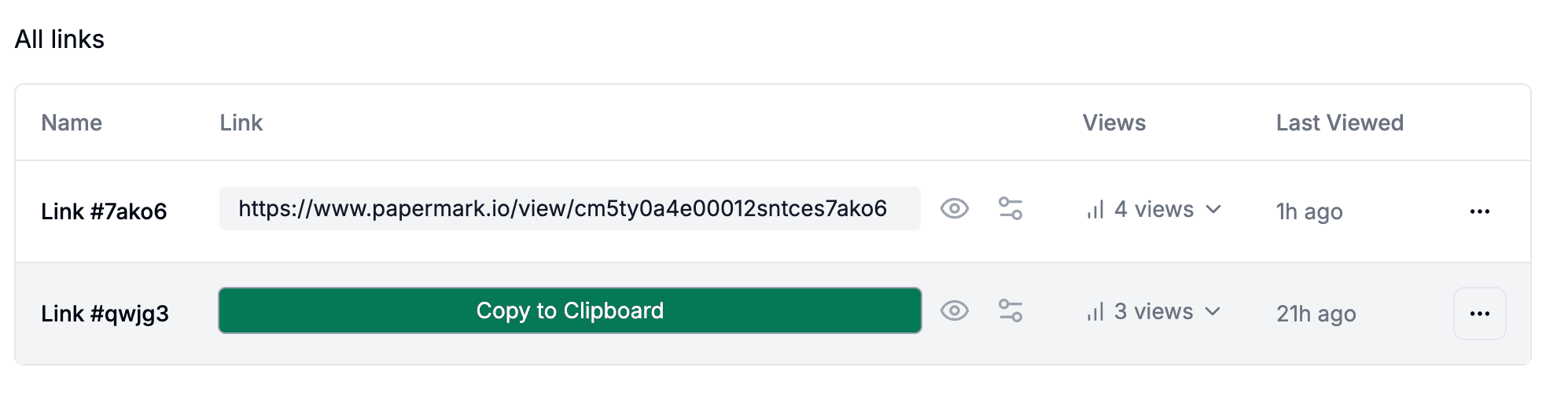
One link per counterparty means the searcher can see, at a glance, which advisor has actually opened the room.
A data room for an ETA acquisition has an unusual constraint that larger deals do not: one side of the table has never used one. The seller is a founder in their sixties who keeps the accounts in a filing cabinet and the customer list in their head, and any tool that asks them to create an account and learn an interface will quietly fail.
Papermark is a secure, fully customizable, and developer-friendly data room built for modern dealmakers, with page-by-page analytics, dynamic watermarking, and transparent pricing (open-source and self-hosting available).
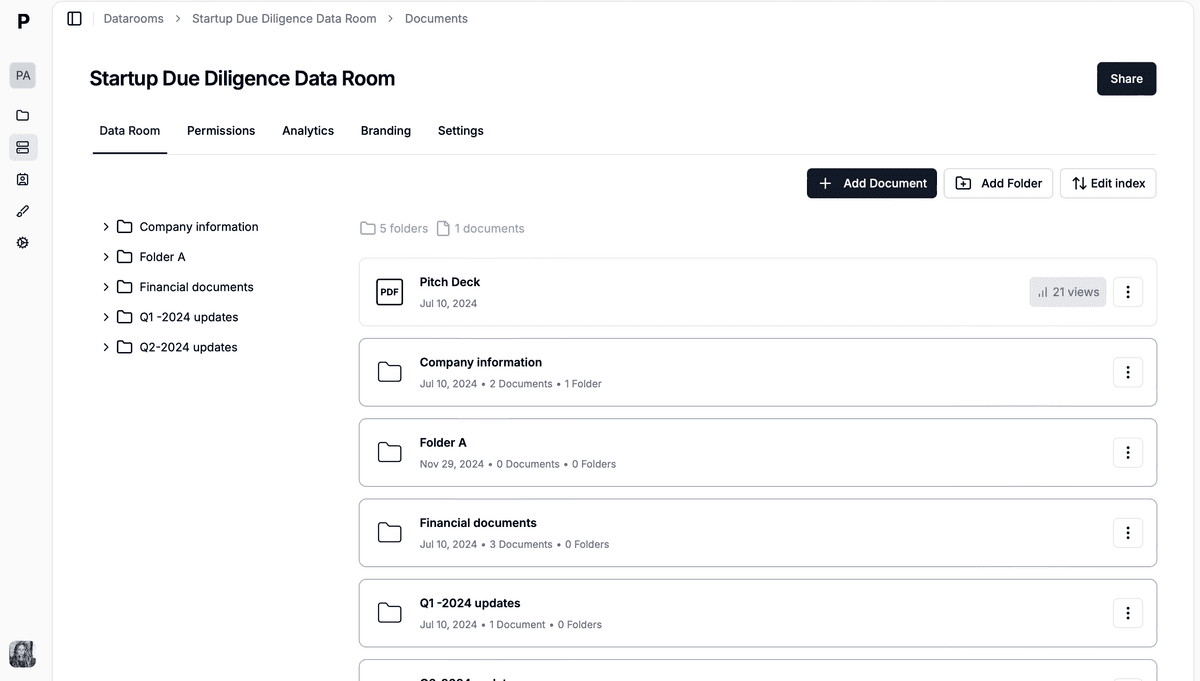
A data room for an ETA acquisition with one folder per workstream and separate links for the lender, the accountant, and the attorney.
Nearly every searcher starts on email and a shared folder, and nearly every searcher regrets it by week three of a 75-day exclusivity. There are four concrete reasons a data room for an ETA acquisition earns its place. If you are still choosing a platform, our comparison of the best virtual data rooms covers pricing model, bidder management and compliance across the main providers.
The seller has never done this before and will stall on friction. Small business owners do not have a document room ready, and every extra step between them and uploading a tax return costs the searcher days. A link that the owner, their bookkeeper, and their accountant can upload into without creating an account is the difference between a 75-day diligence period and an extension request.
Four counterparties need four different views, and one of them is your lender. The SBA lender needs financials and tax returns. The attorney needs corporate records and contracts. The quality of earnings provider needs the accounting folder. Your own investors need the model. A shared drive gives you one permission level for all four, which means your valuation work sits in the same place the seller can read it.
Exclusivity is a clock, and version confusion is what burns it. By the time the third revised customer list arrives by email, nobody is certain which version the lender priced against. A room with a single current version per document and dated upload records removes that whole class of argument.
The disclosure record protects a first-time buyer more than anyone. ETA deals are bought with personal guarantees on SBA debt. If a dispute arises after closing about whether the owner disclosed a customer loss, a per-visitor audit log showing exactly what was uploaded and when is the evidence. An inbox is not.
The rest of this section is the practical setup: five steps to build a room that handles all four.
Create one folder per workstream from the table in section 5: financial, tax, customers, employees, corporate and legal, operations and IT, and property and environmental. Doing this before the first document arrives is what turns an unstructured pile into a review a lender can move through quickly.
Then use file requests to collect. A single upload link goes to the seller, their bookkeeper, and their accountant, and they drop documents straight into the right folder without signing up for anything. New document notifications tell your team the moment the missing tax return lands, and automatic file indexing on the Data Rooms Plus plan keeps the index current as 240 documents arrive over eleven weeks.
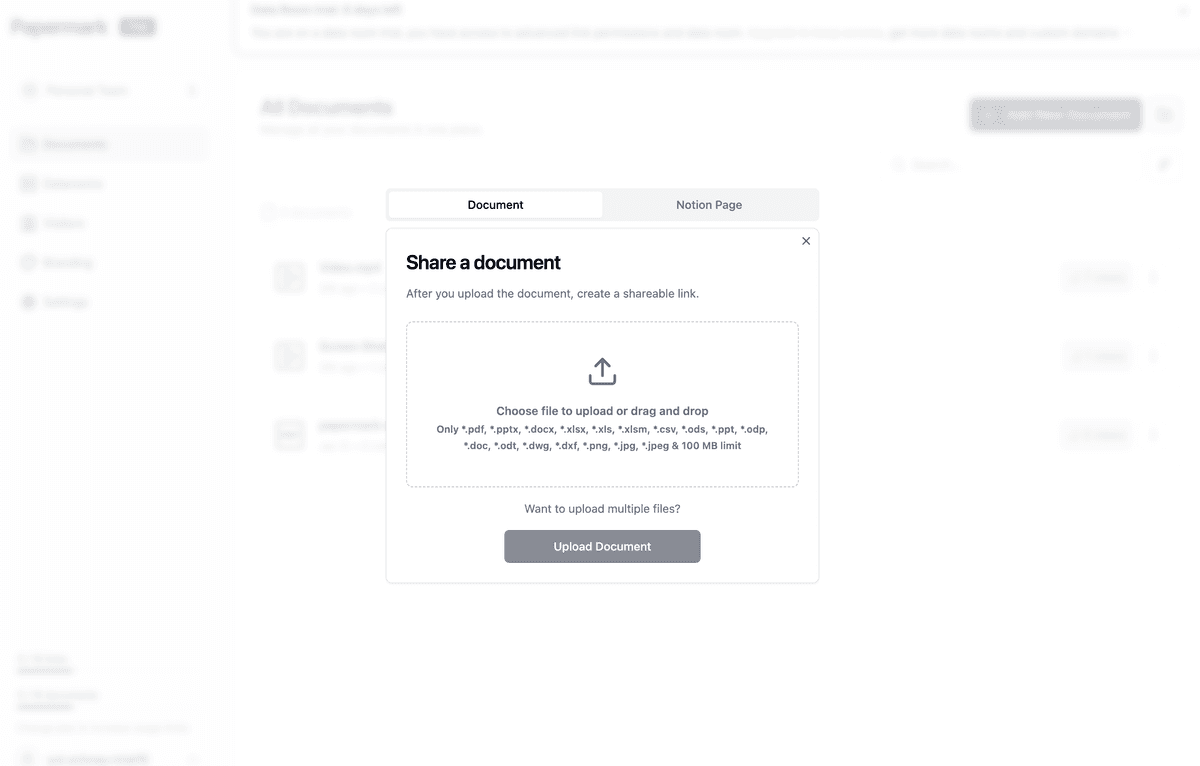
File requests let a non-technical seller and their bookkeeper upload directly into the right folder, with no account to create.
Each counterparty gets one link carrying its own folder scope, email allowlist, and download rules. On an SBA deal this matters more than usual, because the lender's credit file becomes part of the underwriting record and should contain only what it needs.
| Reviewer | Folders granted | Rights |
|---|---|---|
| SBA lender | Financial, tax, property and environmental | View and download |
| Quality of earnings provider | Financial, tax, customers | View and download |
| Buyer's attorney | Corporate and legal, customers, employees | View and download |
| Outside investors | Financial summary, model, QoE report | View only, watermarked |
| Seller and bookkeeper | Upload access only | Upload, no read across folders |
Granular file-level permissions are set per link rather than per user, so no reviewer creates an account and no counterparty ever sees a folder you did not grant. NDA gating requires acceptance before any file opens, which matters when the seller is nervous about their employees or customers finding out the business is for sale.
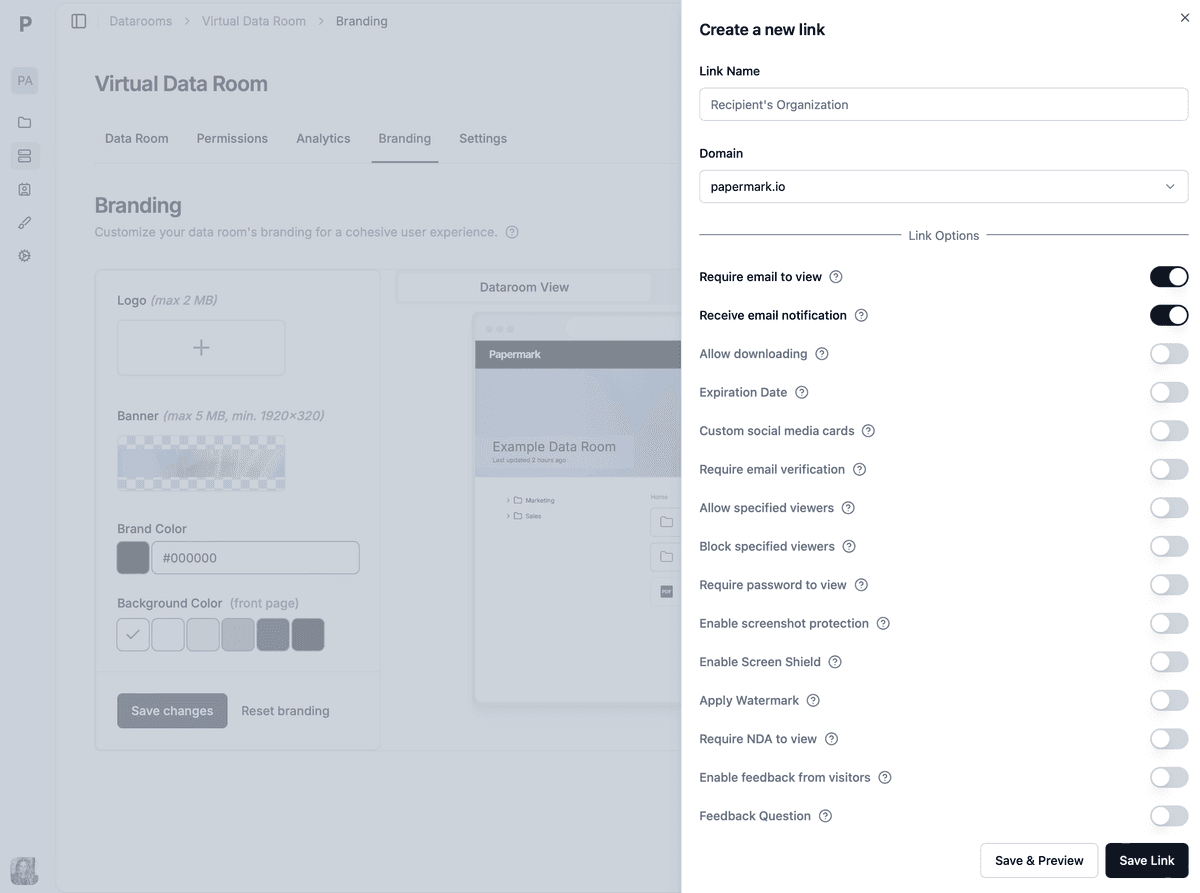
Permissions sit on the link, so the lender and the attorney open the same room and see different folders.
The two documents in a small business deal that hurt most if they leak are the customer list with revenue by account and the employee census with compensation. Switch those folders to view-only and enable dynamic watermarking, which stamps every page with the viewer's email, IP address, and timestamp as it renders.
Be clear about the limit: no platform can recall a file that has been downloaded. That is precisely why download stays off on those two folders rather than being merely discouraged, and why watermarking exists, so a leak traces back to a named viewer.
Diligence questions in ETA come in waves and they come from four directions at once. The lender asks about a working capital swing, the accountant asks about the same swing a week later, and the seller answers both slightly differently.
The Q&A module attaches each question to the document that prompted it, with permissions controlling who sees which threads, so the seller answers once and both reviewers see the same answer. The whole log exports for the closing file, which on an SBA deal is a document the lender will ask for.
Page-level analytics show which reviewer opened which document, when, and for how long. For a searcher this is an early-warning system: a lender who has spent thirty minutes in the customer concentration analysis is about to ask about the 22 percent account, and you have a week to prepare the answer.
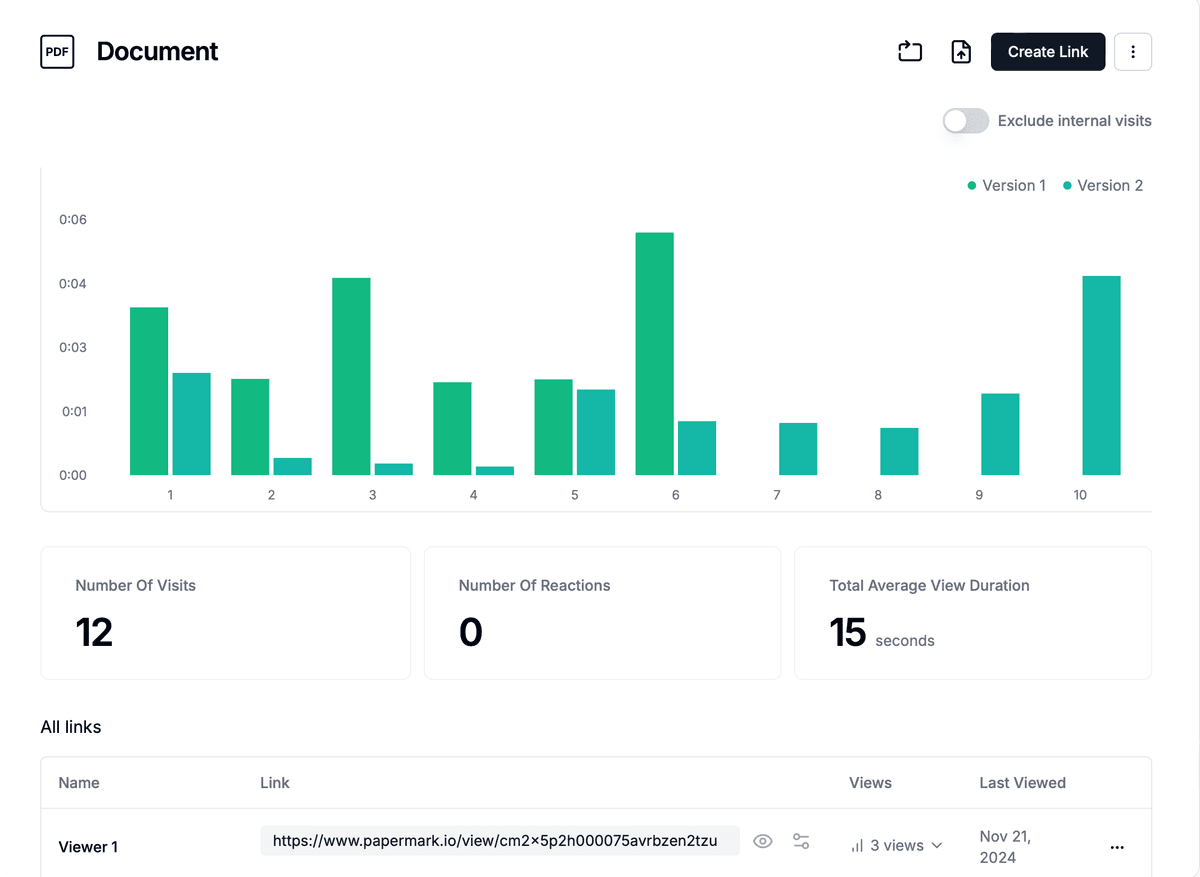
Per-document analytics tell a first-time buyer where the lender's questions are going to come from next.
After closing, data room freeze makes the room immutable and exports it as an archived ZIP with a certificate, which is the disclosure record behind a personal guarantee.

Papermark is our #1 VDR provider for M&A transactions right now. In two deals we used custom branding, dynamic watermarking, and granular permissions.
Tyler
The Data Rooms plan is €99/month with a 7-day free trial and includes 3 team members, unlimited data room visitors, unlimited data rooms, unlimited documents with no file size limit, a custom domain, dynamic watermarking, NDA agreements, and granular file-level permissions. Data Rooms Plus at €249/month adds 5 team members, the Q&A module, the audit log, automatic file indexing, and SOC 2 Type II. Premium at €549/month adds 10 members, AI redaction, the public API, SSO, and whitelabeling. Data Rooms Unlimited at €999/month removes per-seat charges entirely, so teams that add reviewers mid-deal pay one number regardless of headcount, and it carries every Premium capability including AI redaction. For a searcher running a 75-day diligence period on one deal at a time, the Data Rooms plan is a fixed cost of roughly €250 across the whole exclusivity window, against a $35K to $60K quality of earnings report.
No credit card required.
The independent sponsor model in 2026: three fee layers, promote tiers, capital partners, and running the deal in a data room for independent sponsors.

Letter of intent acquisition guide for 2026: the 9 terms that decide the deal, which clauses bind, the no-shop trap, and the data room for the LOI stage.
Merger vs acquisition in 2026: 7 differences in structure, control, tax, and consents, plus how to run a data room for a merger or acquisition.