BlogData RoomsPapermark GDPR Compliance in 2026: DPA, Sub-Processors, and EU Data Residency
Papermark GDPR Compliance in 2026: DPA, Sub-Processors, and EU Data Residency
·7 min read
Marc Seitz
Papermark is GDPR-compliant across its virtual data room, document sharing, and analytics workflows. We operate as a data processor (in GDPR terms) for customers handling EU resident data, offer a signed Data Processing Agreement (DPA), maintain a public sub-processor list, and support EU data residency for deployments requiring it. For the full security and compliance posture (encryption, hosting regions, certifications), see the Papermark security page.
This guide covers exactly how we meet each GDPR requirement and what it means for customers running EU-regulated workflows on Papermark.
Quick recap
GDPR (EU Regulation 2016/679) regulates the processing of personal data of EU residents, effective May 2018.
Papermark is GDPR-compliant as a data processor, operating under a signed DPA with customers who handle EU resident data.
Legal basis for processing: contract (customer service), legitimate interest (security, fraud prevention), and consent (marketing) as applicable.
Data subject rights supported: access, rectification, erasure ("right to be forgotten"), portability, object, and restriction.
Technical safeguards: AES-256 encryption at rest, TLS 1.3 in transit, MFA, role-based access, append-only audit logging, and SOC 2 Type II.
EU data residency available for enterprise deployments via self-hosted option or EU-region cloud.
Fines for non-compliance can reach 4% of global revenue or €20M (whichever is higher).
Sub-processors publicly listed with the services they provide and the jurisdictions they operate in.
What is GDPR compliance?
The General Data Protection Regulation (GDPR) is a comprehensive data protection law from the European Union that regulates how organizations collect, process, store, and protect personal data of EU residents. It applies to any organization handling EU resident data regardless of the organization's location. Non-compliance can result in fines up to 4% of global revenue or €20 million, whichever is higher.
GDPR is built on seven principles: lawful processing, purpose limitation, data minimization, accuracy, storage limitation, integrity and confidentiality, and accountability. For a VDR processing confidential business documents containing personal data of employees, investors, or counterparties, GDPR compliance is not optional.
Why GDPR matters for virtual data rooms
Virtual data rooms routinely process personal data as part of M&A, fundraising, and audit workflows: employee records during HR diligence, investor contact data, customer contract signatories, LP investor PII. Four reasons make GDPR compliance essential for VDR selection.
Global reach. GDPR applies to any organization processing EU resident data, regardless of the organization's own location. A US company raising from European LPs must use a GDPR-compliant VDR.
Legal exposure. Non-compliance fines scale with global revenue: up to 4% or €20M, whichever is higher. Using a non-compliant VDR creates liability for the customer, not just the vendor.
Vendor due diligence. EU customers increasingly require GDPR documentation (DPA, sub-processor list, data residency) as part of vendor onboarding. A non-GDPR-compliant VDR fails that screening.
Data subject trust. EU regulators and courts increasingly scrutinize cross-border transfers, especially to US cloud providers post-Schrems II. A VDR with documented GDPR posture reduces that risk.
How Papermark meets GDPR requirements
Papermark operates as a data processor for customers who are the data controllers of the information they upload. We process personal data on customer instructions as defined in our DPA.
Lawful processing and legal basis
Papermark processes personal data on four lawful bases, as applicable:
Contract: processing required to deliver the service (account management, document storage, analytics).
Encryption at rest (AES-256) across all stored documents, metadata, and audit logs.
Encryption in transit (TLS 1.3) for all client-server communications.
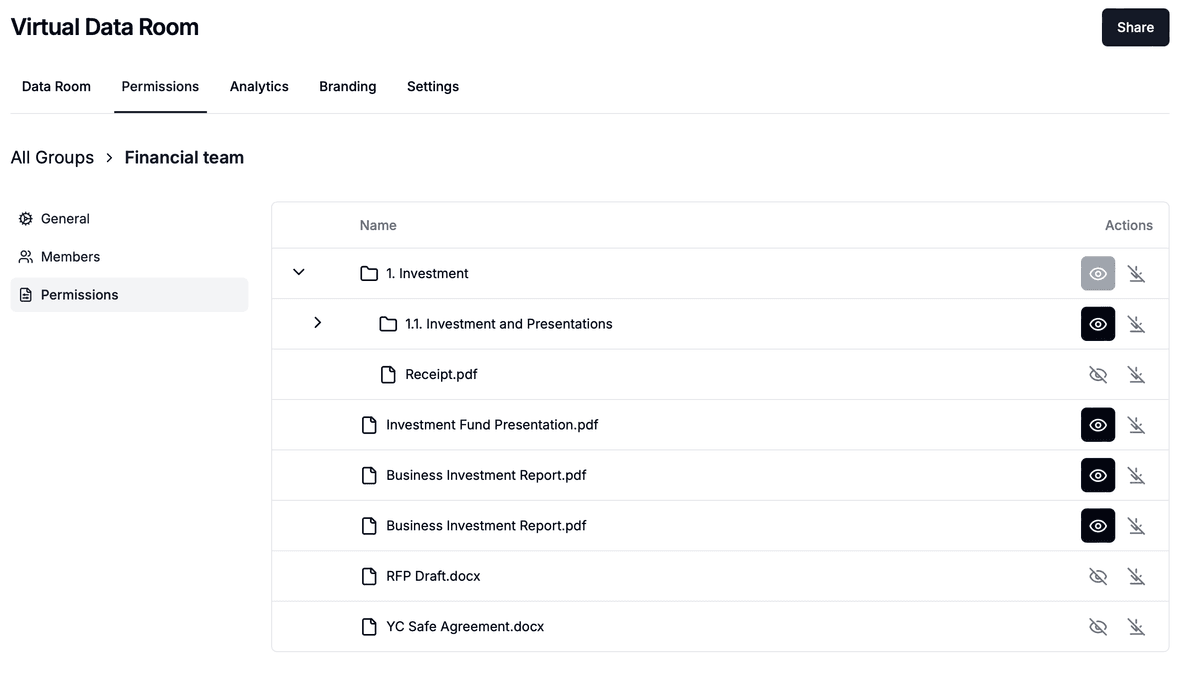
Access controls with MFA, role-based permissions, and scoped API tokens.
Network security with WAF, rate limiting, and intrusion detection.
Regular security audits including SOC 2 Type II annual audit and penetration testing.
Append-only audit logging for every data access and modification event.
Organizational safeguards
Privacy by design built into product specs, not added as afterthought.
Employee GDPR training for all staff with data access.
Data protection officer responsible for privacy compliance and DPA coordination.
Incident response procedures with 72-hour breach notification under Article 33.
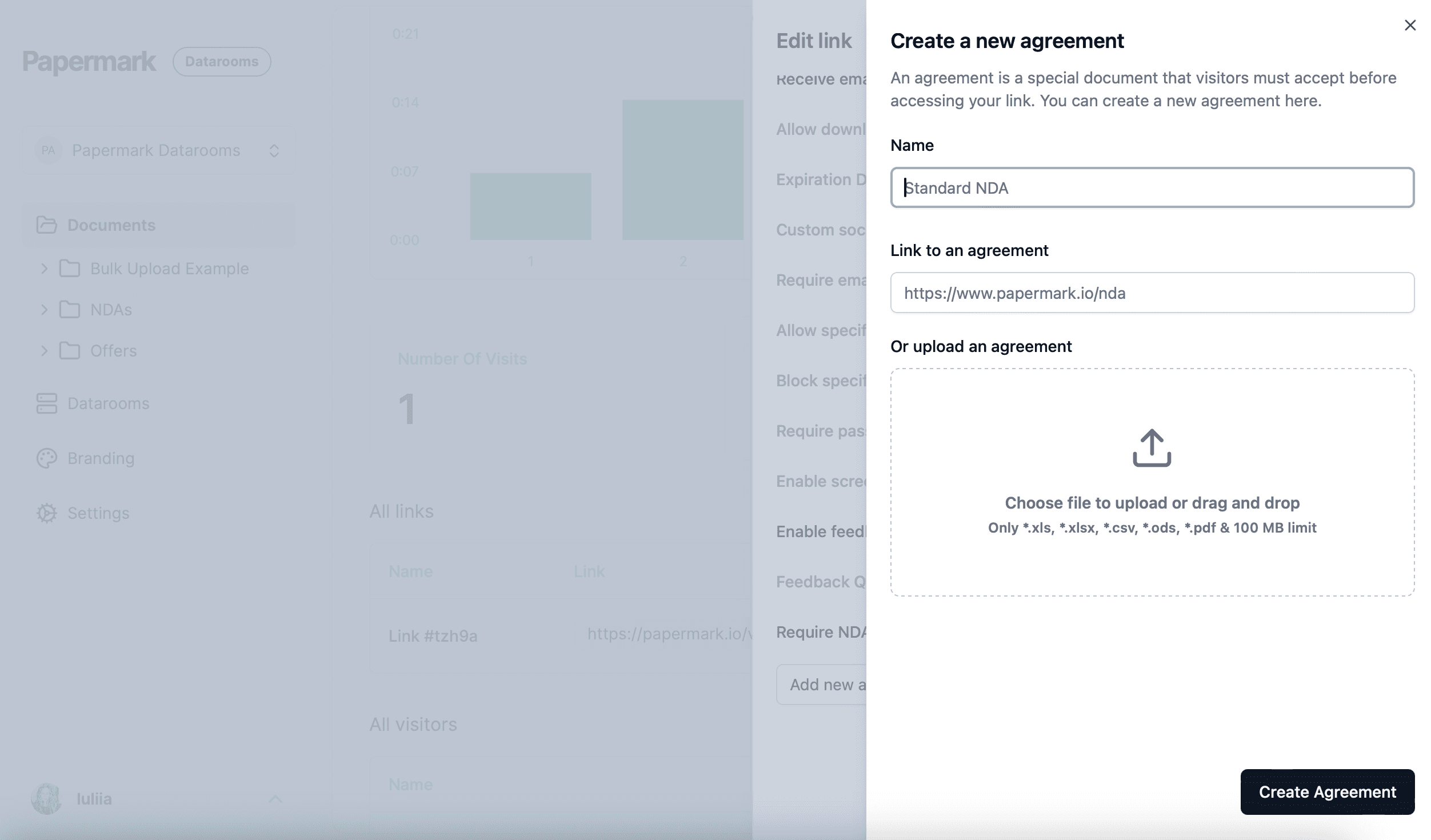
Data Processing Agreements (DPAs) available under signature for all enterprise customers.
DPA, sub-processors, and data residency
Three items make up the procurement-level GDPR documentation that EU buyers typically request during vendor assessments.
Data Processing Agreement (DPA)
A DPA is the legal contract between a data controller (customer) and a data processor (Papermark) that sets out the terms of processing, data subject rights, security obligations, and breach notification procedures under GDPR Article 28. Papermark provides a standard DPA available for review and signature, and supports customer-specific amendments for enterprise contracts.
Sub-processor list
Papermark maintains a public sub-processor list identifying every third party that processes customer data as part of service delivery (infrastructure providers, email delivery, analytics). For each sub-processor, the list documents the service provided, the data processed, and the jurisdiction of operation. Customers are notified in advance of any material sub-processor changes.
Data residency options
For customers requiring data to remain inside the EU (cross-border transfer restrictions post-Schrems II, regulated industries, sovereign data requirements), Papermark supports:
EU-region cloud deployment on the hosted Papermark platform for enterprise contracts.
Self-hosted deployment using the open-source Papermark code on customer-owned infrastructure in any jurisdiction.
Hybrid deployments where specific high-sensitivity data rooms are self-hosted while general workflows use the cloud platform.
GDPR articles mapped to Papermark features
GDPR article
Requirement
How Papermark implements
Art. 5
Principles of processing
Lawful basis documented, purpose-specified, minimized data collection
Art. 6
Lawful basis
Contract, legitimate interest, consent, legal obligation as applicable
Art. 12-14
Transparency and information
Privacy policy, cookie notice, account-level processing records
EU residency options, SCCs for international transfers
What GDPR compliance means for Papermark users
For EU-based customers. Papermark meets local data protection requirements, supports your compliance obligations, and provides the DPA and sub-processor documentation your legal team needs for vendor assessments.
For international customers processing EU data. Papermark's GDPR posture lets you run M&A, fundraising, and due diligence workflows involving EU residents without creating additional compliance risk.
For due diligence workflows. Legal and financial professionals can run cross-border diligence knowing the platform meets GDPR requirements for personal data processing.
For fundraising activities. Startups raising from European LPs can demonstrate GDPR compliance through their choice of VDR, which is increasingly a procurement requirement for institutional European LPs.
See it in the product
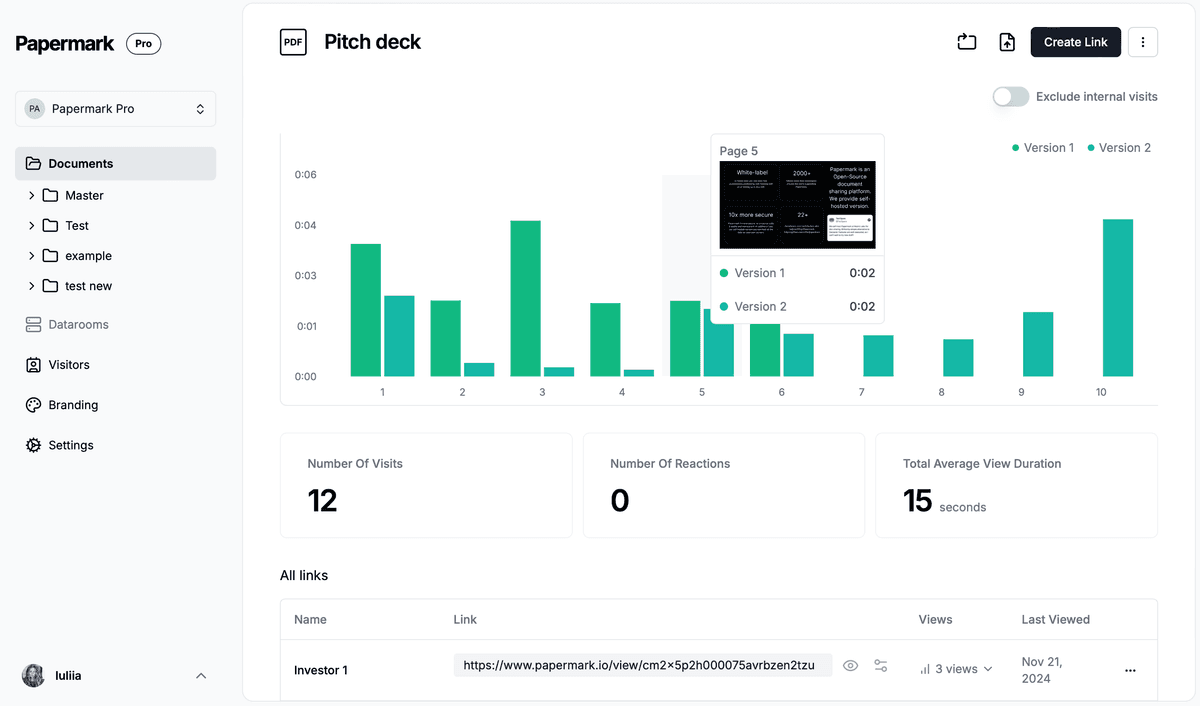
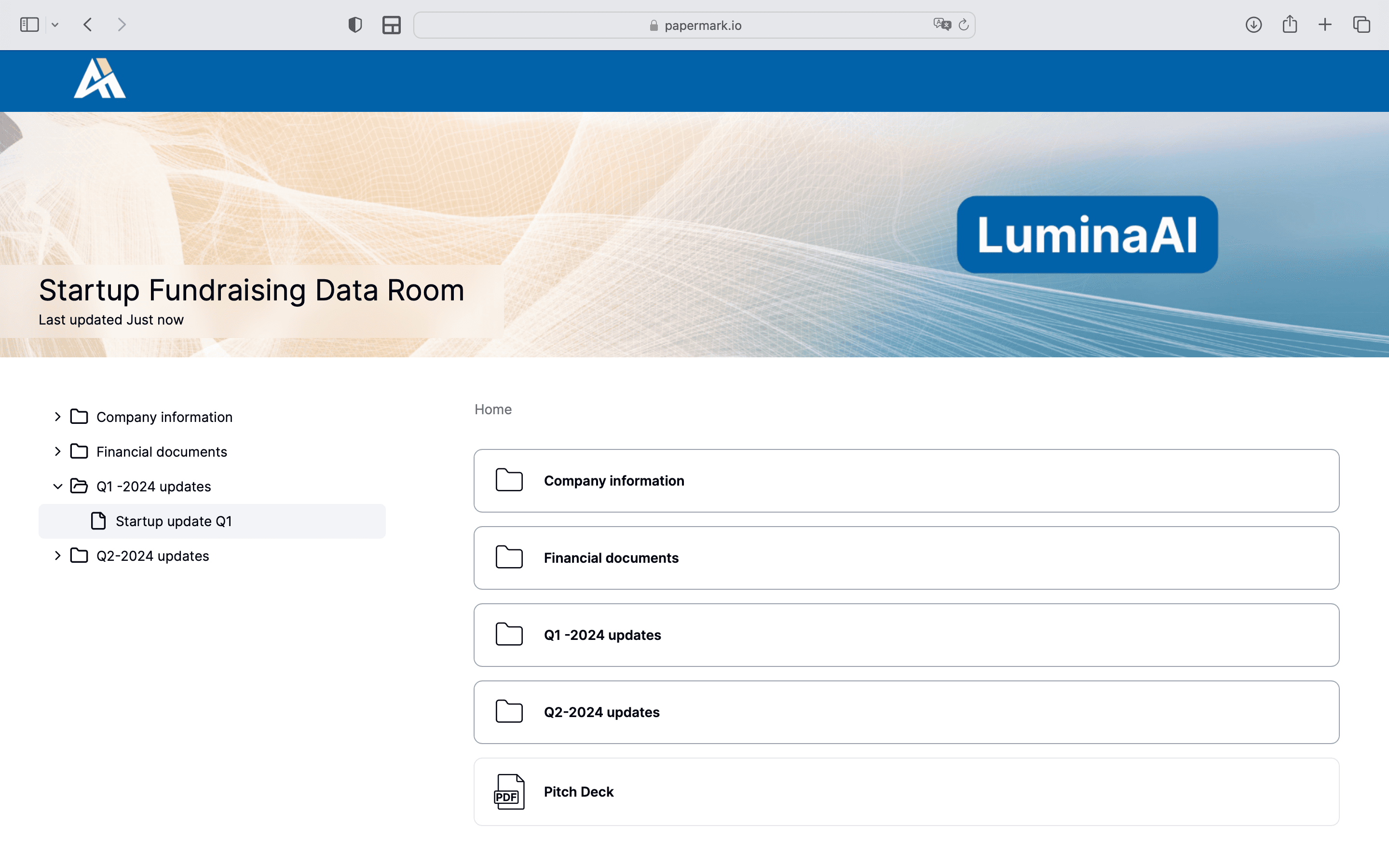
Page-by-page document analytics give controllers the audit trail Article 30 requires:
For the full list of certifications, hosting regions, encryption standards, and the public DPA and sub-processor list, visit the Papermark security page.