Everything about ShareFile: New Player or Old Competitor?
·7 min read
Marc Seitz
What is ShareFile?
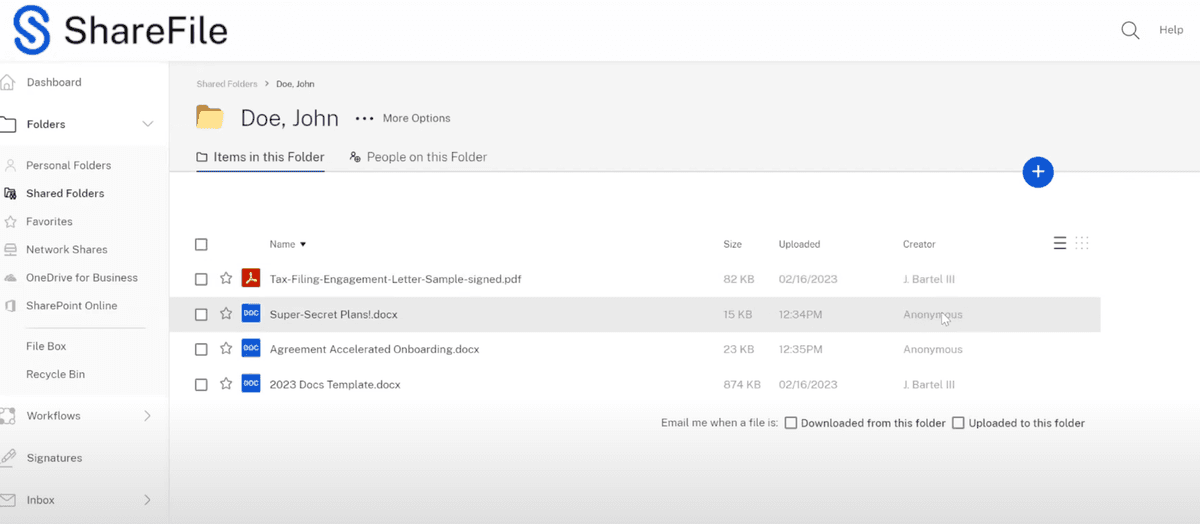
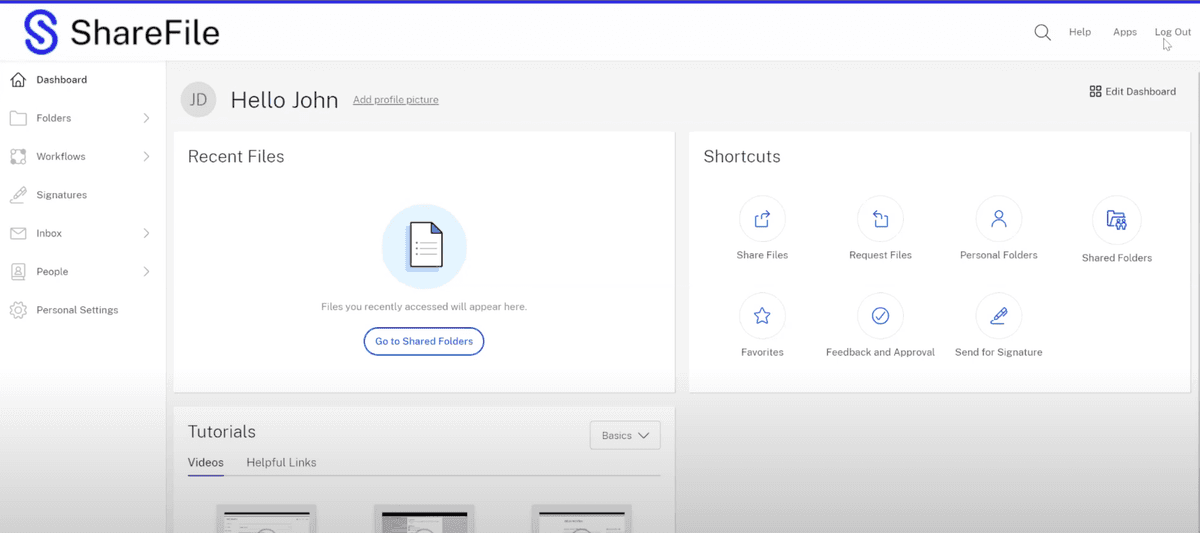
ShareFile is a secure file sharing and virtual data room platform owned by Progress Software Corporation. It provides businesses with tools for document sharing, collaboration, and workflow automation, with a focus on security and compliance features for regulated industries.
What is ShareFile used for?
ShareFile serves multiple business needs, but here are the primary use cases:
Secure document sharing - Enterprise-grade security for sensitive files
ShareFile was recently acquired by Progress Software Corporation (Nasdaq: PRGS) in October 2024 for $875 million. The acquisition significantly expanded Progress's Digital Experience portfolio, bringing:
Over 86,000 customers
More than $240M in annual revenue
AI-powered document collaboration capabilities
Progress Software Corporation is a trusted provider of AI-powered infrastructure software, serving over 4 million developers and technologists across hundreds of thousands of enterprises globally. The acquisition aligns with Progress's Total Growth Strategy, built on three pillars:
Invest and Innovate
Acquire and Integrate
Drive Customer Success
ShareFile's integration into Progress's portfolio enhances their ability to deliver efficient client and team collaboration solutions while maintaining a strong focus on document security and AI-powered features.
Why use ShareFile?
Organizations choose ShareFile for several reasons:
Enterprise security: Advanced encryption and access controls
Compliance support: Built-in regulatory compliance features
Integration capabilities: Connects with popular business tools
No self-hosting: Cannot host on private infrastructure
Complex interface: Steep learning curve for new users
Limited API access: Restricted integration capabilities
No free plan: No permanent free tier available
Looking deeper into these limitations in 2026:
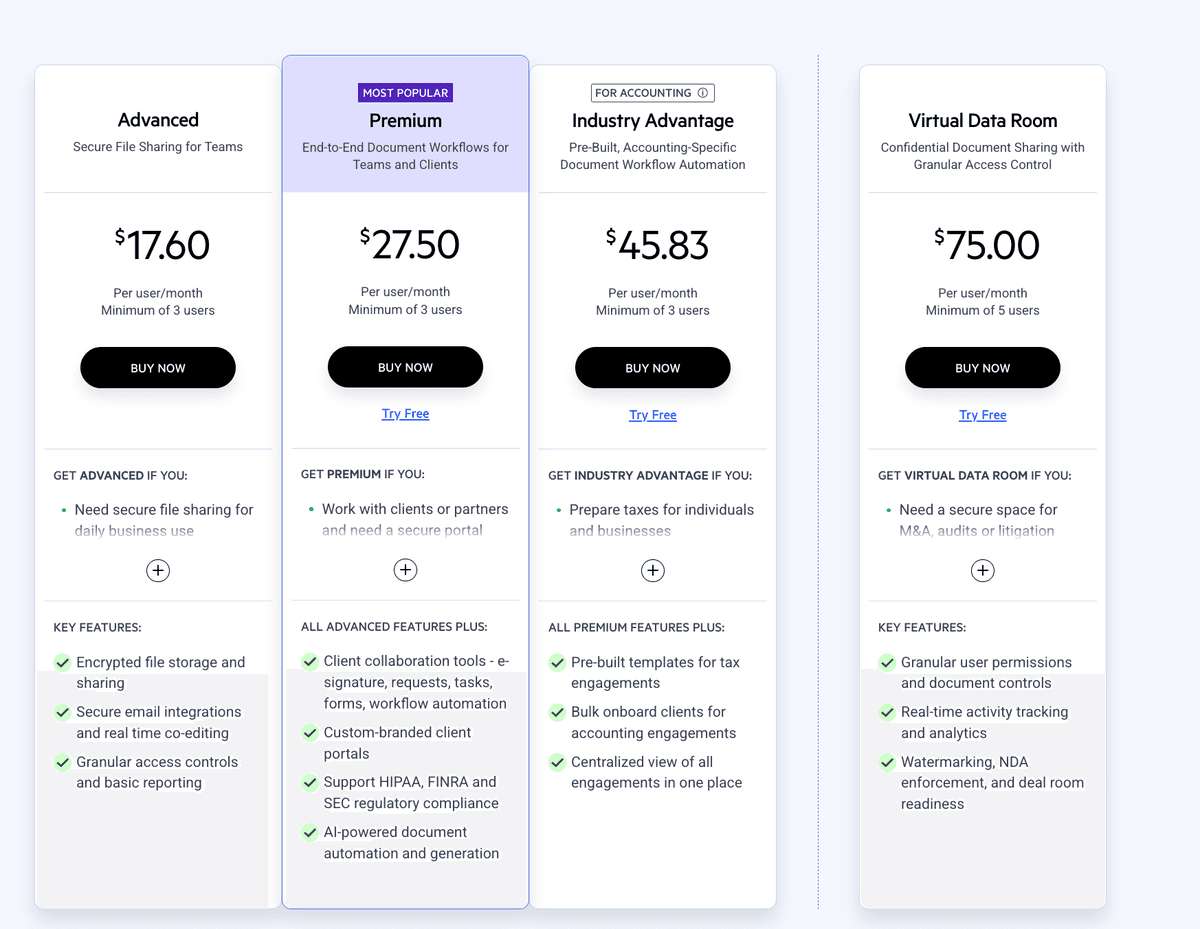
High total cost: VDR plan starts at $385/month, 5-user minimum
Storage restrictions: Limited storage based on plan tier
Limited analytics: Basic view tracking without page-by-page insights
Single domain: Limited branding and domain options
Complex setup: Requires extensive onboarding and training
Meet Papermark: The Modern ShareFile Alternative in 2026
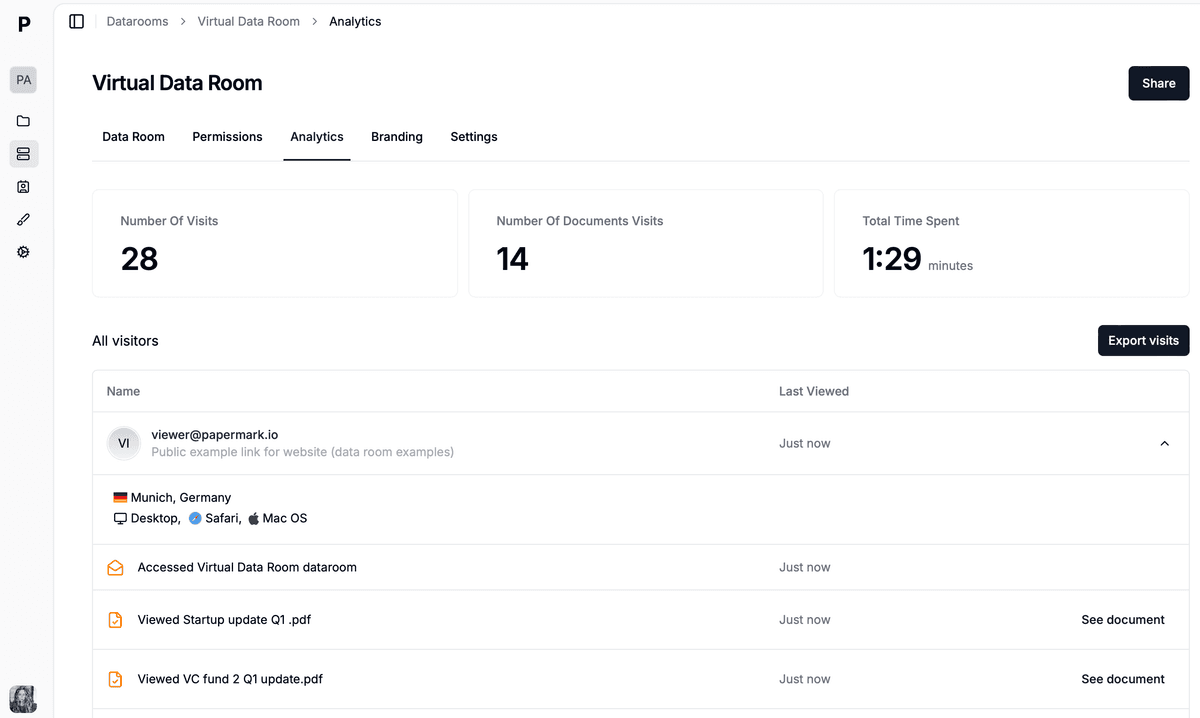
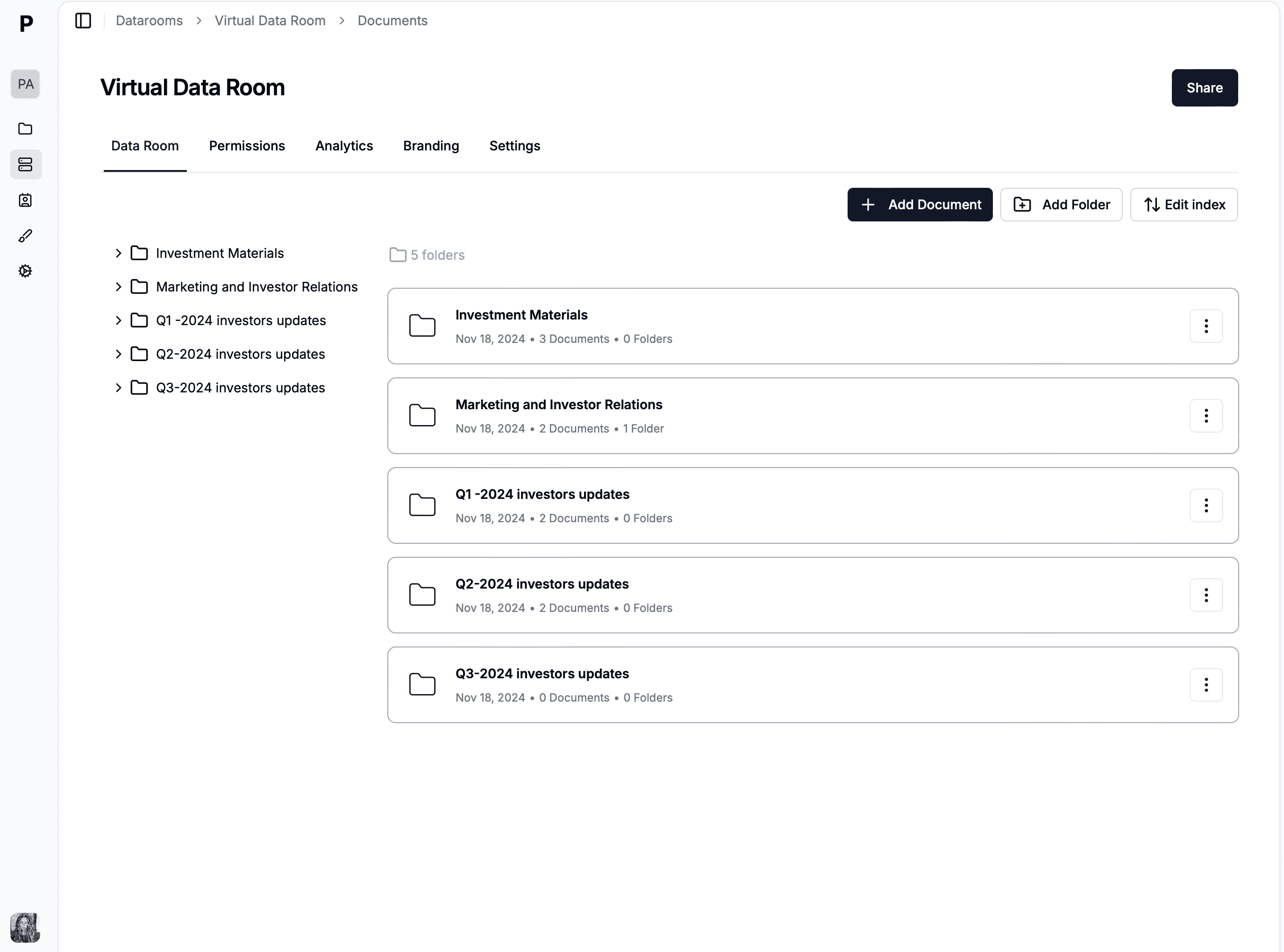
Papermark is revolutionizing document sharing and virtual data rooms with a modern, cost-effective approach. While ShareFile requires complex pricing and user minimums, Papermark offers unlimited viewers, advanced analytics, and transparent pricing - all with instant setup.
Read case study →
Papermark made our fundraising process seamless, providing a clean interface and document analytics we loved.
Lewis Carhart
Founder of CompAI
Why businesses choose Papermark over ShareFile
Transparent pricing: €149/month flat rate with 3 users included
Unlimited viewers: No per-user fees for external viewers
Unlimited storage: No restrictions on data rooms or storage
Multiple domains: Support for multiple custom domains
Self-hosting option: Deploy on your own infrastructure
Open source: Full transparency and customization
Instant setup: No complex onboarding needed
Free plan features
1 team member included
50 links
50 documents
Unlimited visitors
Page-by-page analytics
Document sharing controls
Password protection
Require email to view
30-day analytics retention
No credit card required
Papermark vs ShareFile comparison
Feature
Papermark Free
ShareFile Advanced
Starting price
Free forever
$54.45/month, 3-user minimum
Team members
1 included
3 minimum
Document limit
50 documents
Unlimited
Link limit
50 links
Unlimited
Visitors
Unlimited
Pay per user
Analytics
Page-by-page tracking
Basic view counts
Analytics retention
30 days
90 days
Document protection
Password + Email verify
Basic security
Sharing controls
Advanced permissions
Basic controls
Setup process
Instant, no credit card
Complex setup
Source code
Open source
Proprietary
FAQ
Is ShareFile free?
No, ShareFile doesn't offer a free plan. Advanced starts from $54/mo with a 3-user minimum, and the dedicated VDR plan is $385/mo with a 5-user minimum.
Can I white-label ShareFile?
ShareFile offers limited branding options but not full white-labeling capabilities.
How secure is ShareFile?
ShareFile provides enterprise-grade security with encryption, access controls, and compliance features.
Does ShareFile track document analytics?
Yes, ShareFile offers basic document tracking and analytics features.
Can I self-host ShareFile?
No, ShareFile doesn't offer self-hosting options.
Conclusion
ShareFile is a robust document sharing and virtual data room solution with strong security features and industry-specific capabilities. However, its per-user pricing model, minimum user requirements, and limited customization options may not suit all organizations. Modern alternatives like Papermark offer more flexible pricing, unlimited users, and enhanced customization capabilities.