




datarooms
Data room for Entrepreneur First in 2026: 10 files and no history
A data room for Entrepreneur First fundraising in 2026: 10 documents for a brand-new company, the offer of up to $250,000, and the 8% post-money SAFE.
A data room for Antler fundraising is a short room for a company that often does not exist on day one of the residency. Papermark is a secure, fully customizable, and developer-friendly data room for modern dealmakers. This guide covers the 12 documents the investment committee actually needs, why the cheque changes by city, and how to reuse the room when you raise outside Antler.
Antler is built for people who may not have a company, a cofounder, or a product yet. That is why a 200-file diligence room is the wrong shape. The data room has one job before the committee and a second job the week you start talking to investors who were not in the room.
A data room for Antler fundraising is the file set behind two decisions. The first is Antler's investment committee, which is looking at a team that may have incorporated weeks ago. The second is the pre-seed you raise after that, where the Antler cheque is already on the cap table and outside investors want to see it.
It is not a virtual data room for a sale. There is no bidder group and no four-month Q&A. There is often no revenue. The documents that matter are the ones that prove who owns the company, who owns the work, and what the residency investment actually is.
Build it in the second half of the residency, not the night before the committee. Twelve files take an afternoon once the company exists. They take a week if you are still chasing a cofounder for an IP assignment.
Do not copy a cheque from a blog post into your deck. Antler publishes terms by location, and they change when a local fund does. The only safe sentence in a data room is the one that matches your offer letter.
The UK is the clearest published example. Antler says it will invest up to £500,000 from inception. On day zero that is £210,000, split into £125,000 for 8.5% equity, a £40,000 service fee for workspace, infrastructure, legal, and residency support, and £85,000 on a convertible note with a most favored nation clause. The MFN converts at the best terms a new investor offers in the next round.
The rest of the £500,000 is not cash on day one. The Agreement for Rolling Capital matches 50% of external professional capital raised within 9 months, if that external raise is more than £50,000. The match is capped at £165,000 when you raise less than £1.5 million, and £330,000 when you raise £1.5 million or more. Family money and other accelerators do not count as the external capital that triggers it. Antler also describes Elevate, a growth fund that can invest up to £25 million at Series A. That is a later room, not this one.
| UK piece | Amount | What it is |
|---|---|---|
| Equity cheque | £125,000 | 8.5% at inception |
| Service fee | £40,000 | Deducted for residency support |
| MFN convertible | £85,000 | Converts on the next round's best terms |
| ARC match | Up to £330,000 | 50% of a qualifying external raise within 9 months |
Other cities are different cheques and different percentages. If you are not in the UK program, open that city's terms and replace this table. The data room structure below does not change. The numbers on the cap table do.
Four folders. Anything else is a distraction for a team that has been a company for a few weeks.
Company. Certificate of incorporation, a cap table that shows the Antler stake and the MFN convertible, and the signed offer so an outside investor is not reconstructing the fee. If the company is not incorporated yet, this folder holds the draft and a date. Do not pretend it is filed.
People and IP. A one-page note on each founder, the cofounder agreement, and an IP assignment from both founders and anyone who touched the product during the residency. Antler companies are often born in the program. The assignment has to cover that work, or the committee is investing in a company that does not own the code.
Product. A short deck, a roadmap for the next 2 quarters, and a demo or a written pilot if you have one. Pre-product teams should say so. An empty "traction" spreadsheet reads worse than a clear sentence that you are pre-revenue.
Round. How much you plan to raise after the committee, from whom, and how the ARC match would work if you are on the UK terms. One page. The point is that an outside cheque above £50,000 is what turns the match on, so the data room should not describe ARC as money you already have.
| Folder | Documents | Count |
|---|---|---|
| 01 Company | Incorporation, cap table, signed Antler terms | 3 |
| 02 People and IP | Founder notes, cofounder agreement, IP assignments | 3 |
| 03 Product | Deck, 2-quarter roadmap, demo or pilot note | 3 |
| 04 Round | Raise plan, use of funds, how the follow-on match works | 3 |
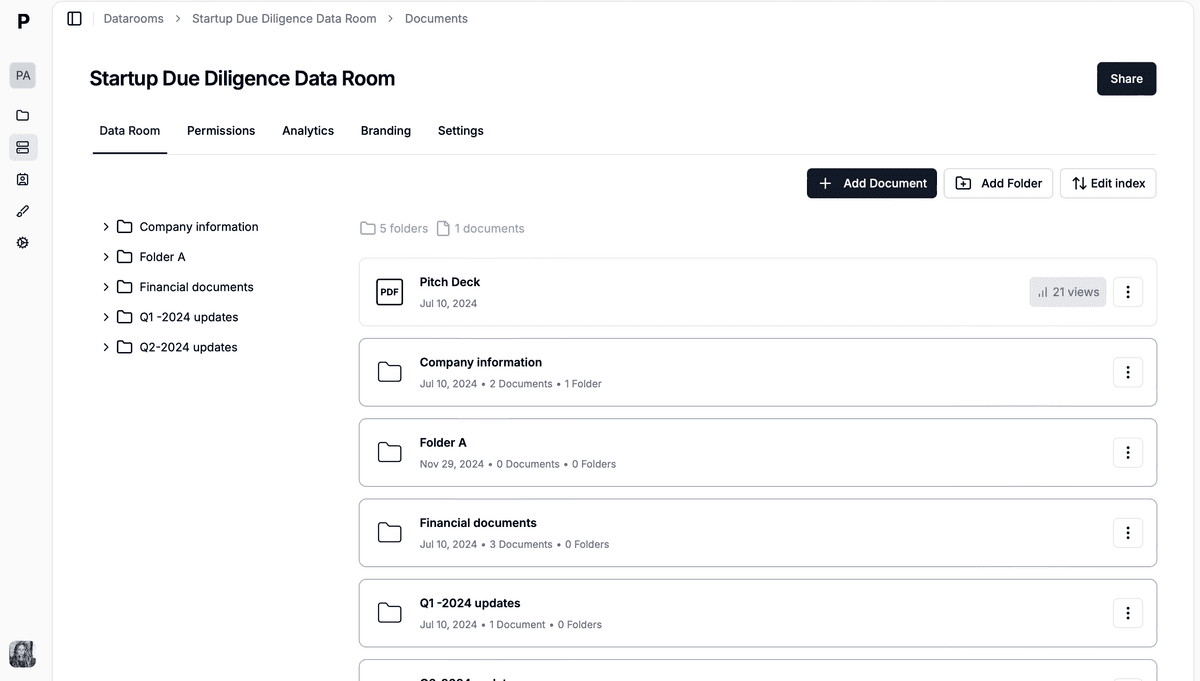
Twelve files. The cap table has to match the city you actually joined.
A data room for Entrepreneur First fundraising is the other day-zero pattern: individuals before a company. Antler adds a location-specific cheque and, in the UK, a match that depends on the outside round. The startup data room checklist is what you grow into once you have revenue.
The investment committee sees all 12 documents. They already know the terms. Outside investors, a week later, should see the deck first and the room after a meeting. They do not need your residency admin, and they do need the cap table, because 8.5% plus an MFN changes the round they are joining.
If the committee passes, keep the room and delete nothing. The next fund will ask for the same 12 files. The only edit is a line on the cap table that says Antler did not invest.
| Link | Reader | What they see |
|---|---|---|
| Committee | Antler investment committee | All 12 documents |
| Teaser | Angels and funds you have not met | Deck only |
| Investor | After a meeting | All 4 folders, watermarked |
Northwind is a hypothetical two-founder company formed in week 4 of an Antler UK residency. They have a prototype and no revenue. The offer in front of them is the published UK structure: £125,000 for 8.5%, the £40,000 service fee, and the £85,000 MFN convertible.
They build the 12-file room the week before the committee. The IP assignment covers the prototype built during the residency. The cap table shows 8.5% and the convertible as a separate line, not as extra equity today. The round page says they will raise £400,000 outside, which is above the £50,000 trigger, and that a 50% match would be £200,000 but the cap for a round under £1.5 million is £165,000. Writing that down stops a founder from telling an angel the match is uncapped.
The committee invests. Two weeks later the deck goes to 25 funds. Eight open the metrics slide, which at this stage is a product slide. Six get the investor link. One asks whether the £40,000 fee is on the cap table as dilution. It is not. It is a fee. The founders answer in the round folder so the next five do not ask.
Worked scenario. Share of reading time across the 6 funds that received the investor link after the committee.
The first is using another city's terms. An 8.5% UK cap table sent by a team on a different offer is a fact error, and it is the first thing a local partner checks.
The second is describing the ARC match as closed money. It pays when you raise qualifying external capital within 9 months. Until then it is a contract, and the data room should say so.
The third is skipping IP because "we only started six weeks ago." That is exactly when the assignment matters. The company has to own the work done in the residency.
The fourth is one link for the committee, the cohort, and every angel. Cohort mates do not need your raise plan.
A data room for your Antler fundraise should be 12 current files and two links. Papermark is a secure, fully customizable, and developer-friendly data room for modern dealmakers, with page-by-page analytics, dynamic watermarking, unlimited data room visitors, and transparent pricing (open-source and self-hosting available).
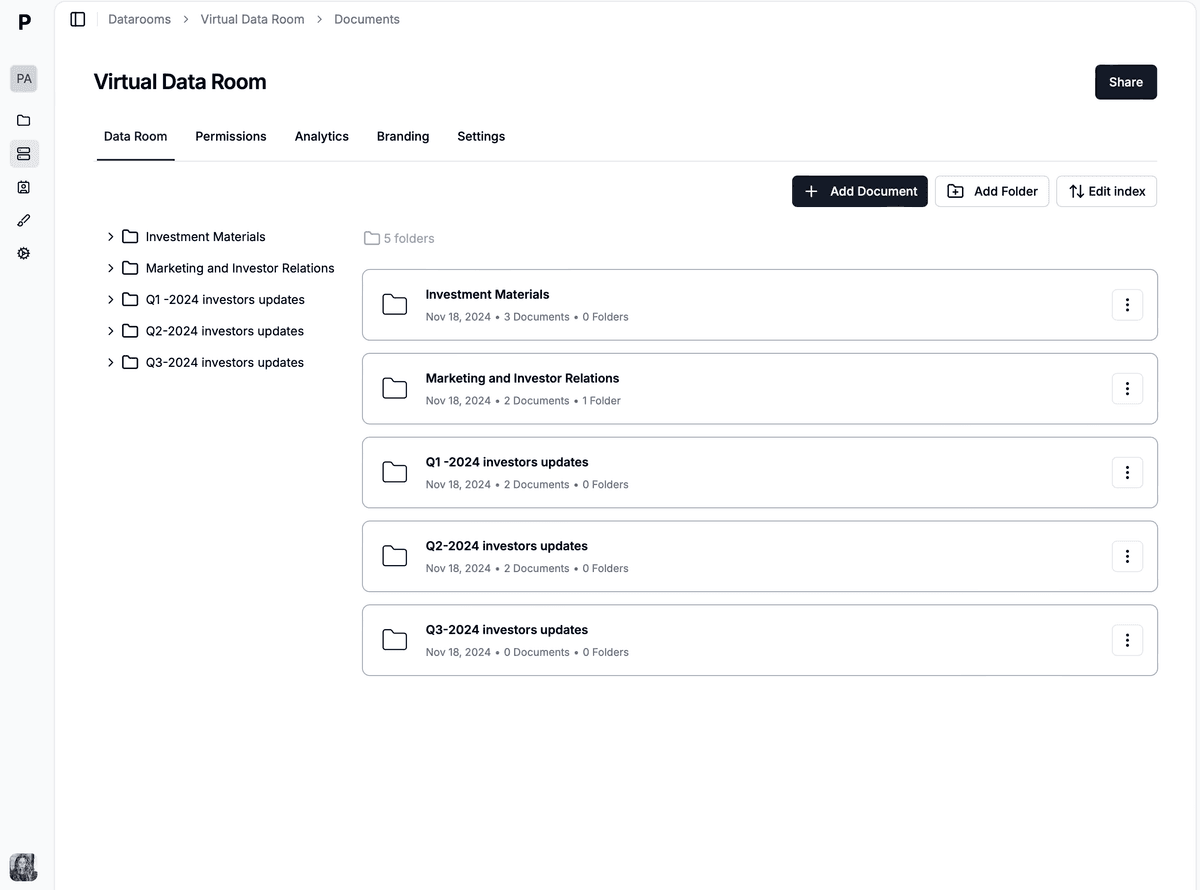
Four folders are enough when the company is a few weeks old.
The company is new. You may not have a bank history. Do not invent monthly financials. A clear pre-revenue note is better than a model with made-up cohorts.
The cheque is local. The cap table is only right if it matches your offer. The UK split is three lines, not one.
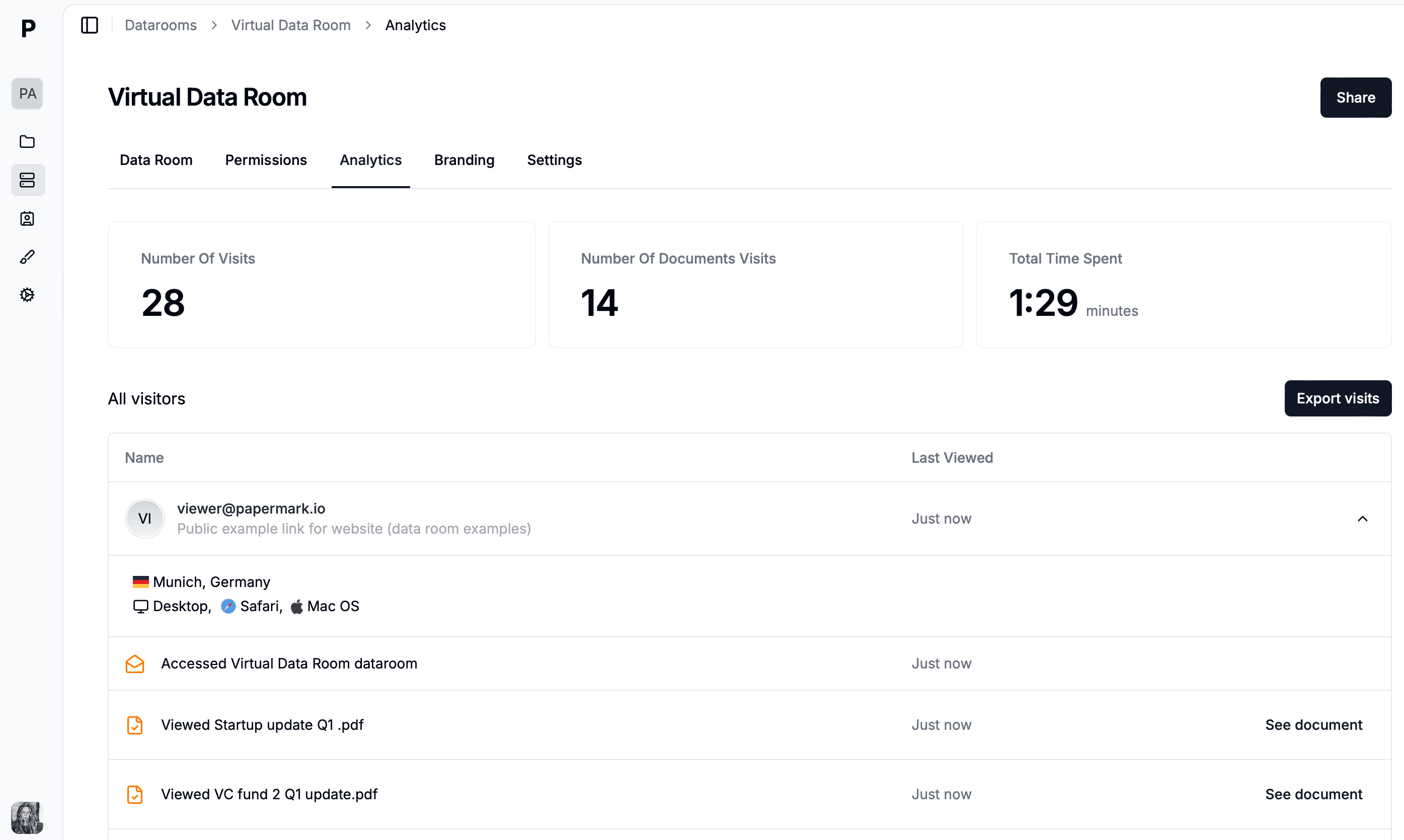
The next round triggers the match. Outside investors need to see the 8.5% and the rule for the follow-on. Page-by-page analytics tell you which of them actually opened the cap table.
You might not get the Antler cheque. The residency is not the investment. The same 12 files are what you send the next fund.
Create them the week the company is incorporated. Put the signed terms next to the cap table so the fee and the equity are not confused. Automatic file indexing on Data Rooms Plus matters once you add the outside SAFEs.
The committee link can be a named allowlist. The investor link uses dynamic watermarking and email verification, with granular permissions so the deck can be downloaded and the cap table cannot. Nobody should need an account.
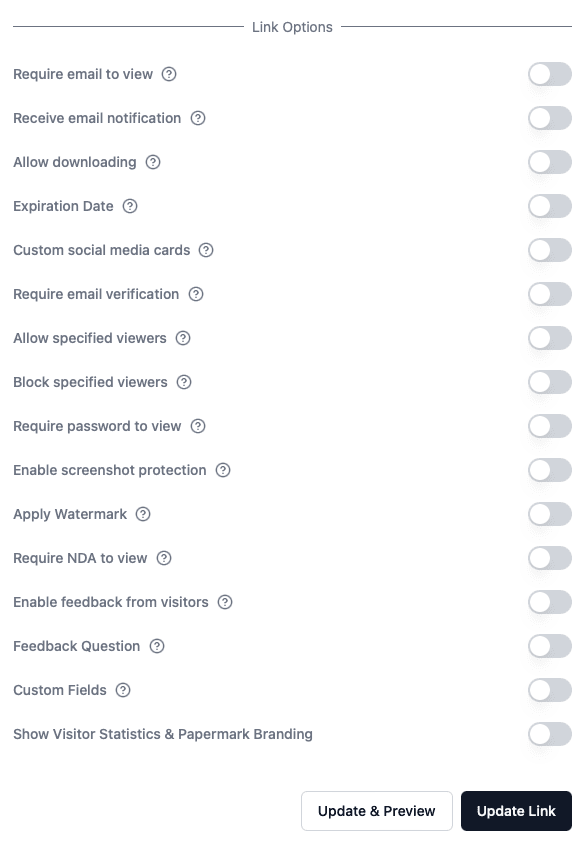
The committee and the angels are not the same link.
A custom domain takes minutes and is included on the Data Rooms plan. See custom branding. The first impression for a fund that did not sit through your residency is the link itself.
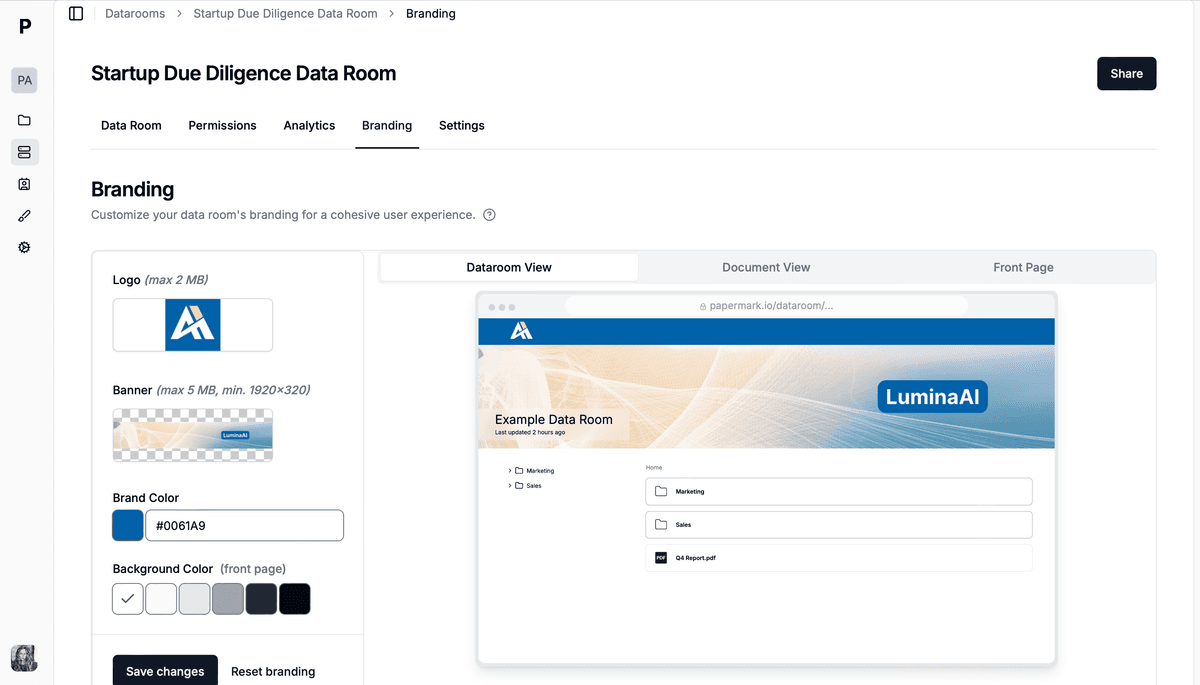
Your domain on the link, not a generic host.
When the committee is done, do not delete the room. Update the cap table, revoke the committee link if you want a clean slate, and send a fresh investor link. Data room freeze is for when that outside round closes, so you have a record of what you showed.
Tracked decks are free. A full room is €99/month on the Data Rooms plan, with a 7-day trial, 3 team members, unlimited data room visitors, and the public API, CLI, and MCP server. Plus at €249/month adds the audit log and Q&A. AI redaction starts at Premium, €549/month, and is also on Unlimited at €999/month. It is not on the €99 plan.
No credit card required.
A data room for Entrepreneur First fundraising in 2026: 10 documents for a brand-new company, the offer of up to $250,000, and the 8% post-money SAFE.
A data room for Seedcamp fundraising in 2026: 18 documents for a process that aims to finish in two weeks, and a first cheque usually between $350k and $1.25M.
Data room checklist 2026 with 40 essential documents for M&A, fundraising, and due diligence, staged by deal type, plus what buyers actually open first.