BlogData RoomsVC Firms Data Room Essentials: What to Include in 2026
VC Firms Data Room Essentials: What to Include in 2026
·4 min read
Marc Seitz
A VC firms data room is a secure online workspace used by venture capital firms for two distinct workflows: (1) LP fundraising, where the firm shares fund materials with prospective limited partners, and (2) deal diligence, where the firm reviews startup fundraising materials. Both workflows require granular permissions, page-by-page analytics, dynamic watermarking, and custom branding. Papermark supports VC workflows at €99/month flat with unlimited data rooms for both sides of the table.
Quick recap
VC firms use data rooms for two workflows: LP fundraising (sharing fund materials with LPs) and deal diligence (reviewing startup fundraising materials).
LP data room contents: PPM, fund terms (LPA), investment strategy memos, track record and performance history, portfolio company case studies, ESG and compliance posture, team bios, quarterly reports.
Deal data room contents: startup pitch decks, financial models, cap tables, customer contracts, legal formation, team details, IP.
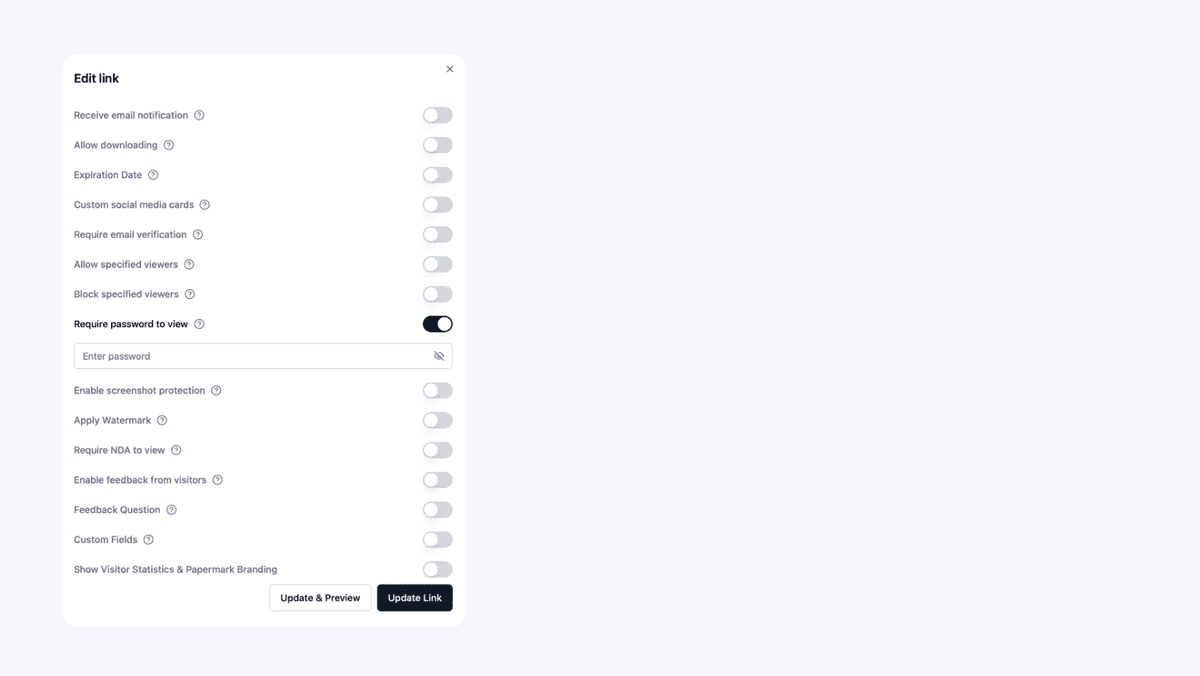
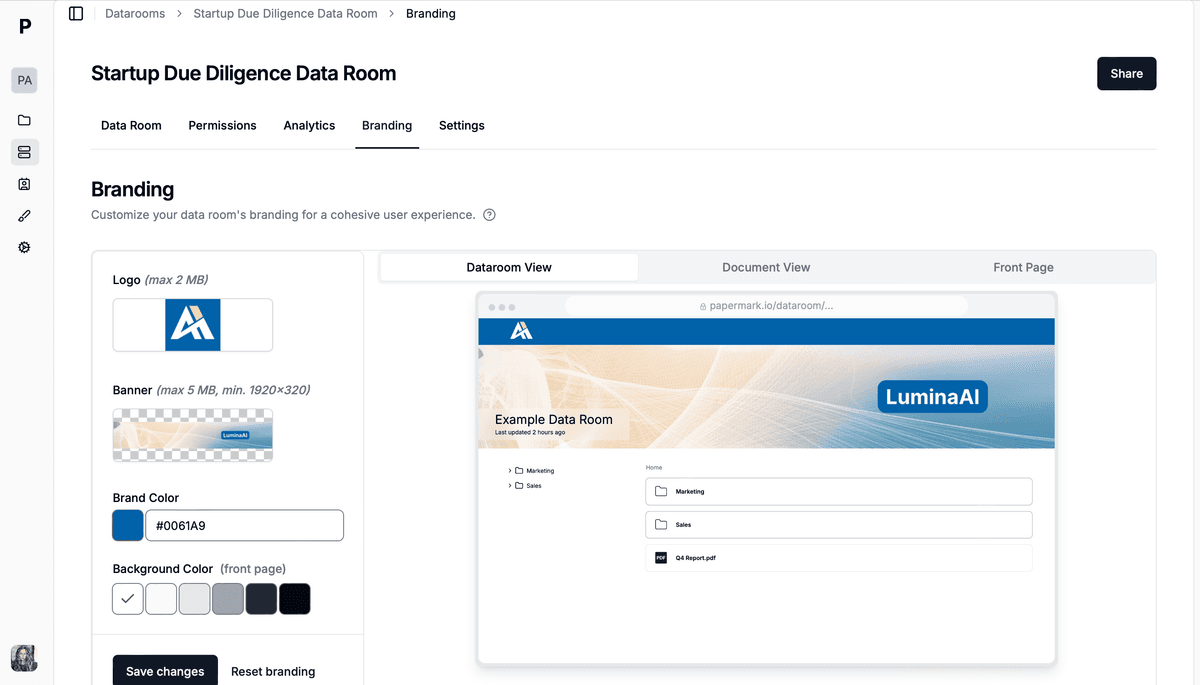
Essential features for VC: granular per-LP permissions, dynamic watermarking, page-by-page analytics, NDA enforcement, custom domains, unlimited data rooms.
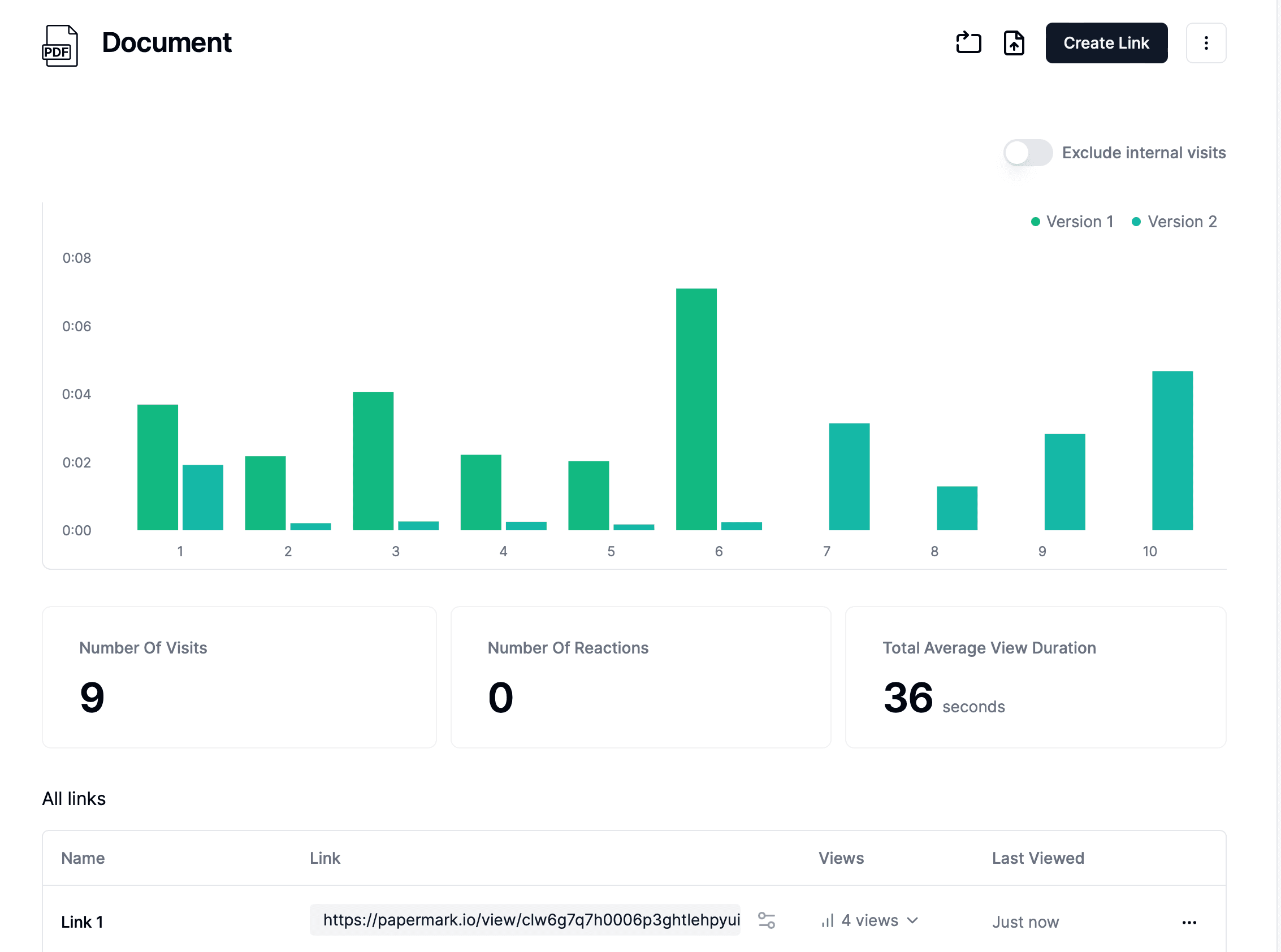
Why analytics matter: VCs use engagement data to read LP interest during fundraising and startup interest during deal follow-up.
Papermark is used by Icebreaker.vc, TBD VC, Backtrace Capital, DataPower VC, and other funds for their Fund raises and LP communications.
What is Data Room for VC Firms?
An investor data room for venture capital (VC) firms is a secure online repository where startups can store and share critical business documents with potential investors. This centralized location allows VC firms to access all necessary information about a startup’s business, financials, legal structure, and operational details. The primary purposes of an investor data room are to facilitate the due diligence process, ensure transparency, and streamline communication between startups and investors.
Quick Recap of Documents to Include
When preparing an investor data room, it's essential to include comprehensive and well-organized documents that provide potential VC investors with a clear and detailed understanding of your business, its potential, and its financial health. Here’s a list of crucial documents to include:
Document
Essential
Executive Summary
Detailed Business Plan
Market Analysis
Product Roadmap
Financial Projections
Cap Table
Full data room list at the end of the article including all essential and
nice to have documents.
Why VC Firms Need a Data Room
Creating an investor data room before embarking on fundraising efforts is crucial for several reasons:
1. Demonstrating Professionalism and Preparedness
A well-organized data room shows that your startup is serious, professional, and well-prepared, enhancing your credibility with potential investors.
2. Streamlining the Due Diligence Process
A comprehensive data room makes the due diligence process more efficient, saving time for both you and the investors by having all necessary documents readily available.
3. Building Trust with Investors
Transparency builds trust. Providing complete and accurate information about your business operations, financial health, and growth potential establishes credibility and trust with potential investors.
4. Highlighting Your Startup’s Strengths
A well-prepared data room allows you to present your startup’s strengths in a structured manner, showcasing market opportunity, product innovation, traction, and team capabilities effectively.
5. Facilitating Investment Decisions
Clear and organized information makes it easier for investors to evaluate your startup, compare it with others, and make faster investment decisions.
6. Minimizing Disruptions
Preparing a data room in advance minimizes disruptions to your day-to-day operations during the fundraising process, allowing your team to focus on building the business.
Real-World Example: Successful VC Fundraising with Data Rooms
See how Two leveraged data rooms to streamline their €13M Series A fundraise:
Creating an investor data room involves several key steps:
1. Choose a Data Room Provider
Select a secure and reliable data room provider. Consider the features, security, and user-friendliness of the provider. A detailed data room providers comparison can help in making an informed choice.
2. Organize Your Documents
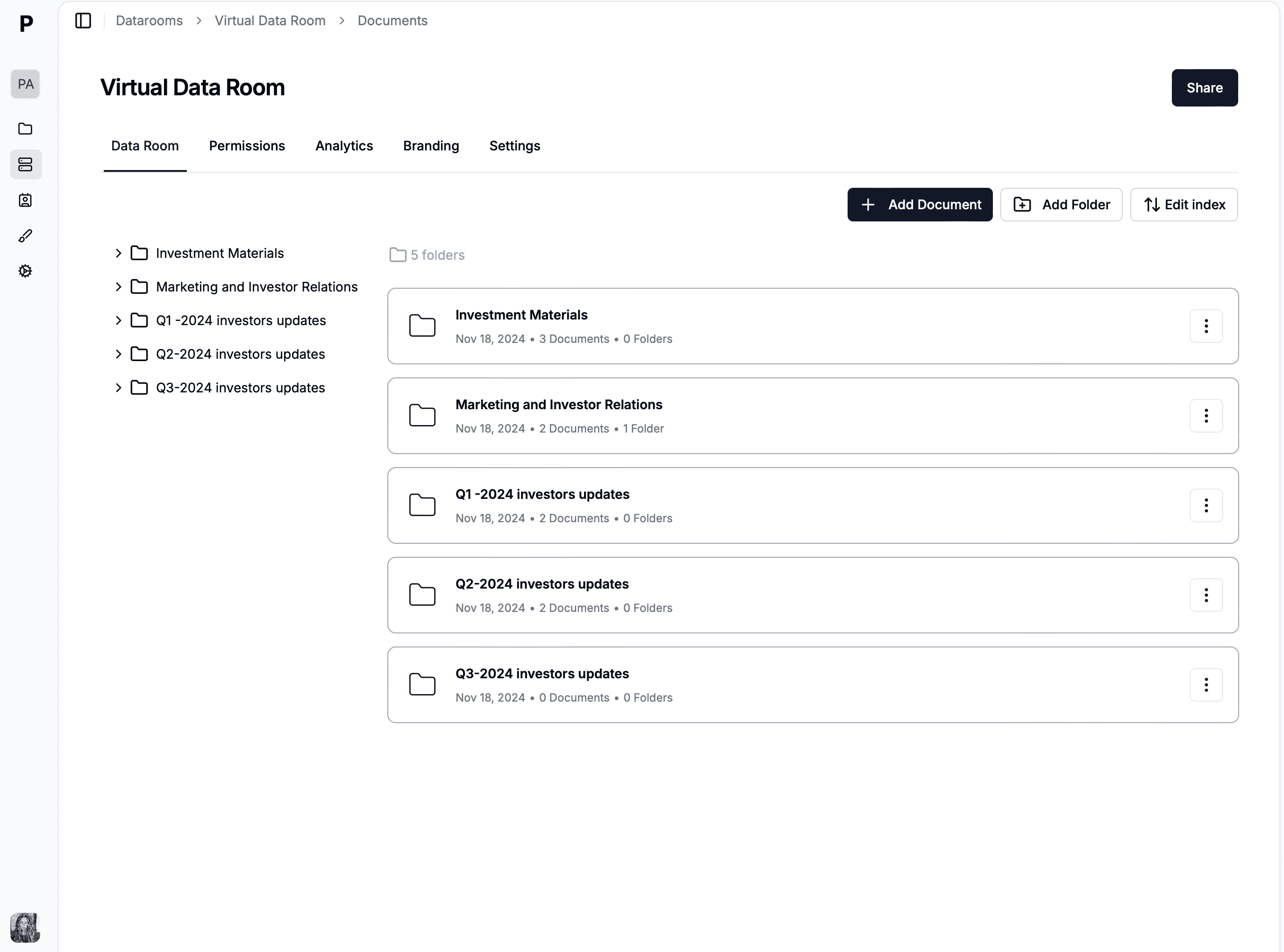
Create a clear and logical folder structure to categorize your documents, such as financials, legal documents, product information, team bios, and customer traction.
3. Prepare and Upload Documents
Gather all necessary documents and ensure they are up-to-date and accurate. Upload these documents to the data room, ensuring each file is named clearly and placed in the appropriate folder.
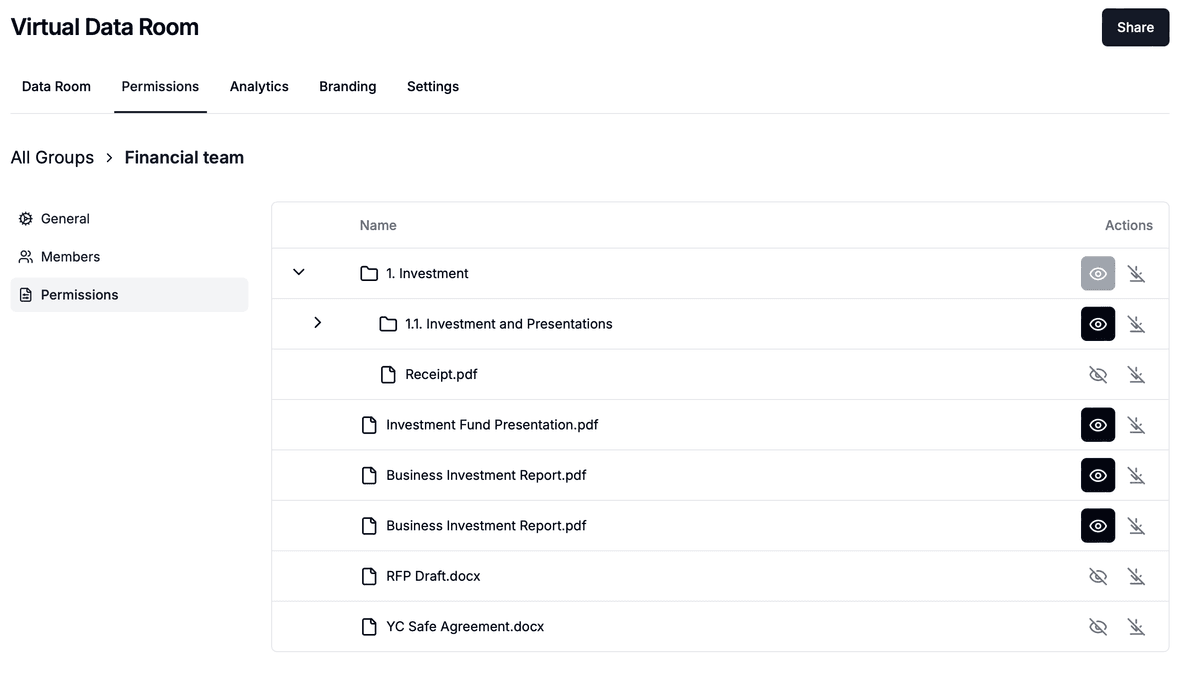
4. Set Permissions and Access Controls
Control who has access to your data room by setting permissions. Ensure that only authorized individuals can view or download sensitive information, with different access levels for different users.
5. Maintain and Update the Data Room
Regularly update the documents in your data room to reflect the latest information. Inform investors when significant updates are made.
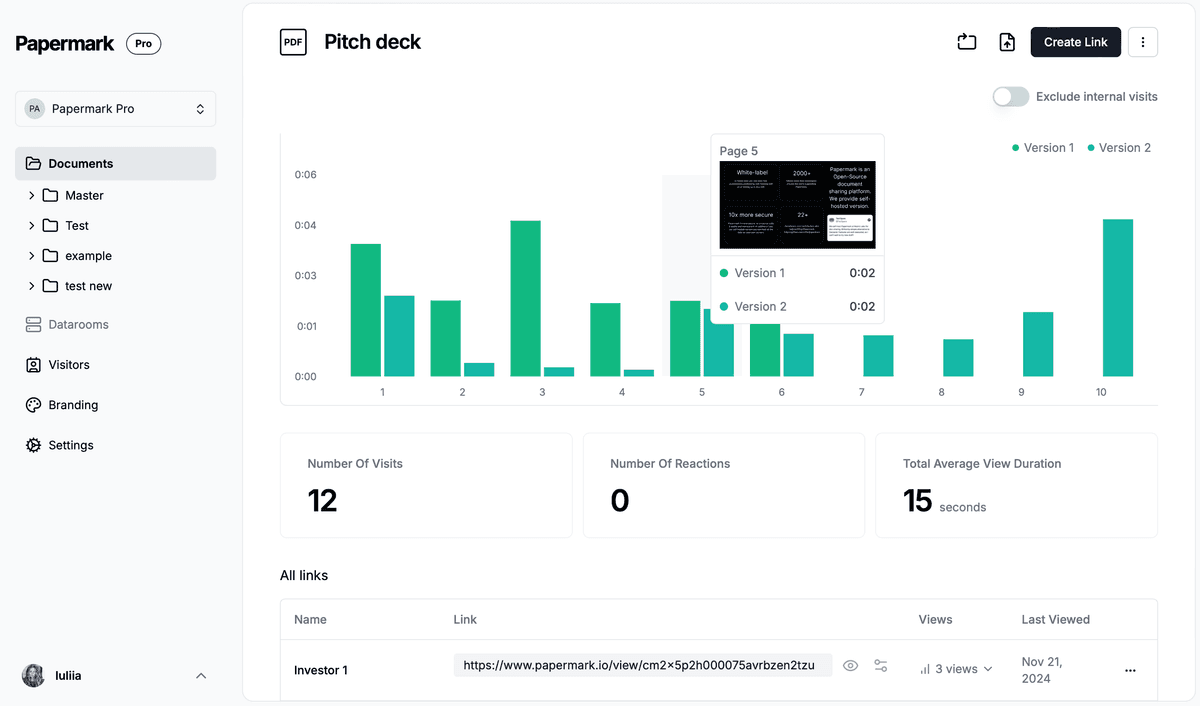
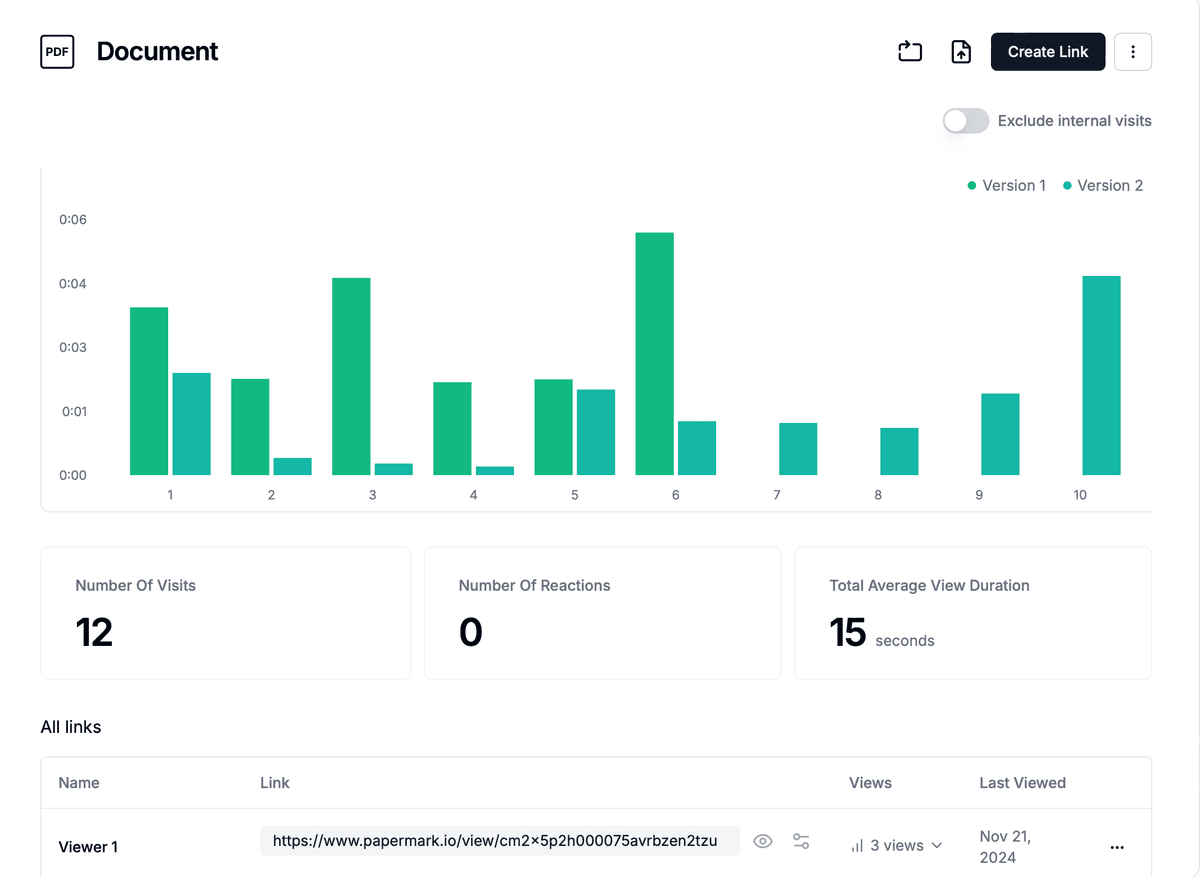
6. Track Activity and Engagement
Use tracking features provided by your data room service to monitor which documents are being viewed and by whom, gaining insights into investor interest and engagement.
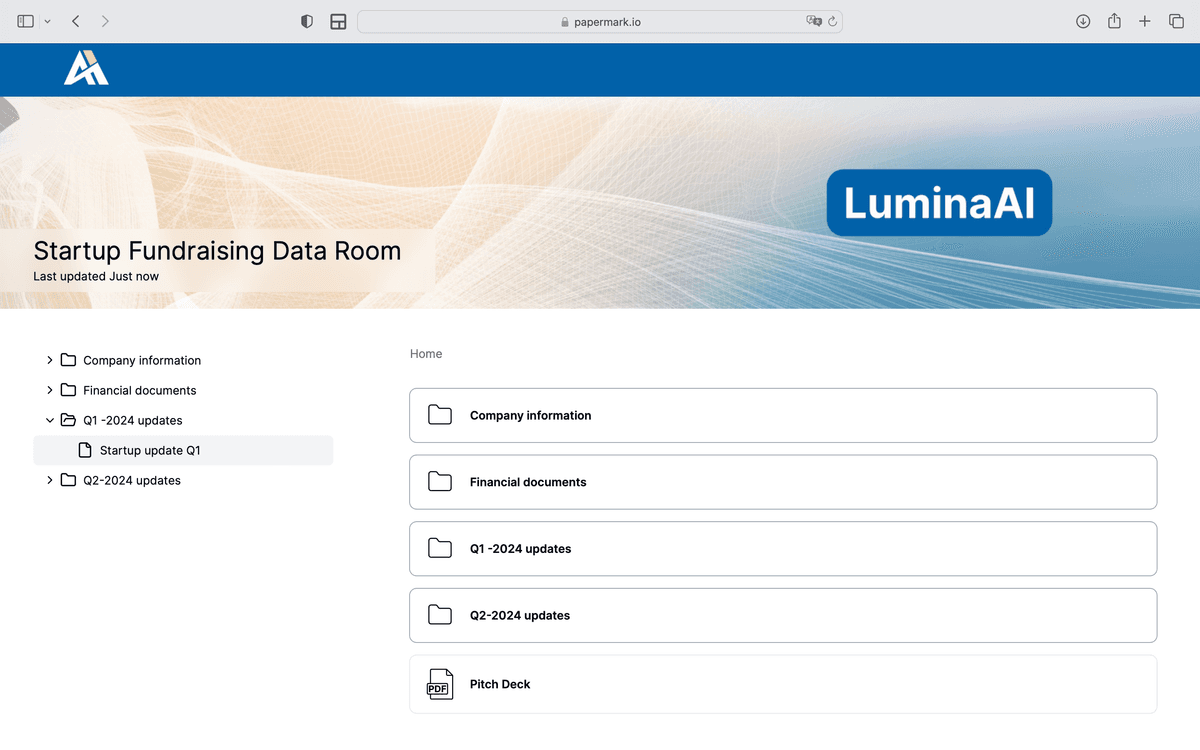
What an investor data room actually looks like
Below are visual examples of the documents and views VC investors expect to see in a Series A data room.
What to Include in an Investor Data Room for VC Firms
When preparing a data room for VC firms, it’s essential to include comprehensive and well-organized documents that provide potential investors with a clear understanding of your business. Here’s a list of crucial documents to include:
1. Company Overview
Executive Summary: A one-page document summarizing the key points of your business, similar to a pitch deck but in a written format.
Pitch Deck: A concise and visually appealing presentation outlining your business, market opportunity, value proposition, business model, traction, and financial projections.
2. Business Plan
Detailed Business Plan: A comprehensive document detailing your company’s mission, vision, market analysis, business model, go-to-market strategy, competitive analysis, and growth plans.
Market Research and Analysis: Data and reports that validate your market opportunity, including size, growth trends, customer segments, and competitive landscape.
3. Product Information
Product Roadmap: Timeline and milestones for product development, including current status and future plans.
Technical Documentation: Detailed information about your product’s technology, architecture, and development process.
User Guides and Manuals: Documentation that explains how your product works and how users can benefit from it.
4. Financial Information
Historical Financials: Income statements, balance sheets, and cash flow statements for the past periods, if available.
Financial Projections: Forward-looking financial statements, including projected income statements, balance sheets, cash flow statements, and key financial metrics.
Cap Table: A capitalization table showing the ownership structure, including founders, employees, and existing investors.
Funding History: Details of previous funding rounds, including amounts raised, valuation, and key investors.
5. Legal Documents
Incorporation Documents: Articles of incorporation, bylaws, and any amendments.
Shareholder Agreements: Agreements among the company’s shareholders.
Intellectual Property (IP) Documentation: Patents, trademarks, copyrights, and any IP licenses or agreements.
Contracts and Agreements: Key contracts with customers, suppliers, partners, and employees, including NDAs and employment agreements.
6. Team Information
Founders’ Bios and Resumes: Detailed biographies and resumes of the founding team and key executives.
Organizational Chart: Current organization structure, including key roles and responsibilities.
Advisors and Board Members: Information about advisors and board members, including their bios and roles.
7. Market and Customer Information
Customer Traction: Metrics and data showing customer growth, user engagement, and retention.
Sales and Marketing Strategy: Detailed strategies and plans for acquiring and retaining customers.
Customer Testimonials and Case Studies: Feedback and success stories from current customers.
8. Operational Information
Key Performance Indicators (KPIs): Metrics that track the company’s performance and progress.
Operational Processes: Information on critical business processes and workflows.
Technology Stack: Overview of the technology stack used in product development and operations.
9. Miscellaneous
Risk Factors: Identification and explanation of potential risks and how the company plans to mitigate them.
Use of Funds: Detailed plan for how the funds raised will be used to achieve key milestones and growth objectives.
Exit Strategy: Potential exit opportunities and strategies for investors.