14 Best Business Brokers in Seattle: Fees, Deal Sizes 2026
·12 min read
Marc Seitz
This guide lists 14 verified business brokers in Seattle and the wider Puget Sound region, with the deal sizes they handle, the sectors they focus on, and how fees are structured. Every firm here has an office in or immediately around the metro.
Seattle is an unusual brokerage market because three economies sit on top of each other: the software and cloud economy that produces SaaS companies and managed service providers, the older industrial base of aerospace suppliers, marine and seafood operators and specialty manufacturers, and the everyday service economy of construction trades, home services and healthcare practices.
Those three don't share advisors. A $900,000 auto repair shop in Ballard and a $40 million aerospace machining business in Kent are not the same transaction. IBA and Washington Business Brokers work the first end of that range; Cascadia Capital and Zachary Scott work the other. The buyer side is just as varied, with regional private equity chasing service businesses, out of state strategics chasing technology and industrial assets, and SBA backed searchers dominating the $1 million to $5 million band.
The 14 firms below are the Seattle shortlist. The full M&A advisors database adds every other adviser we have researched, so you can widen to a neighbouring metro or narrow to your own industry.
Quick list of business brokers in Seattle
IBA (International Business Associates): Oldest regional brokerage, founded 1975, $500,000 to $30 million.
Alexander Hutton: Seattle boutique bank advising founders and family businesses.
Cascadia Capital: Independent Seattle bank with industrials, healthcare and technology teams.
Zachary Scott: Downtown Seattle advisor with seafood and manufacturing depth.
CLA Meridian Capital: Long running practice covering consumer, industrials and technology.
Chinook Capital Advisors: Kirkland sell side firm, $5 million to $100 million.
Corum Group: Seattle technology M&A specialist founded in 1985.
Novelty Hill Capital: Bellevue bank covering food and beverage, technology and industrials.
Liberty Ridge Advisors: Seattle lower middle market bank for family businesses.
Exit Equity: Edmonds based CBI certified brokerage with a banking style process.
Freeman Lundt: Seattle and Tacoma sell side partnership operating since 1994.
Washington Business Brokers: Seattle firm selling companies with $2 million to $30 million revenue.
Murphy Business Sales Greater Seattle: Bothell office with an M&A division above $5 million.
First Choice Business Brokers Seattle Metro: University District office, Main Street to middle market.
How to get yes from business brokers in Seattle
Good brokers turn work down. A firm that closes eight or ten deals a year cannot spend six months on a business that will not sell, so the first meeting is as much them qualifying you as the reverse.
Clean books matter most. If personal expenses run through the company undocumented, or the last three tax returns disagree with the P&L, the broker knows diligence will fall apart. Add-backs are expected, but each needs a receipt behind it. Customer concentration is the other early question: if one account is 45 percent of revenue, say so first, because the buyer will find it anyway.
The third test is whether your document set is close to CIM ready. An owner who produces three years of financials, a lease and a customer list within a week signals a process that will move. A confidential sale also cannot run on emailed spreadsheets, so compare the best virtual data rooms before the broker asks how you plan to share files.
Have these ready before the first meeting:
Three years of tax returns plus a year to date P&L
A documented add-back schedule with support for each item
A revenue concentration summary by customer
Your lease, key contracts and any licence that transfers
An equipment and inventory list with values
An org chart showing which duties depend on you
Share that package as a trackable link rather than an attachment. You control who opens it, you can revoke access when a conversation ends, and you can see whether the broker actually read the financials before quoting a range.
No credit card required.
Papermark is our #1 VDR provider for M&A transactions right now. In two deals we used custom branding, dynamic watermarking, and granular permissions.
Plenty of people in this metro call themselves a business broker, and the gap between the top and bottom of the market is wide. Work through the filters below before signing, because a listing agreement usually runs 6 to 12 months.
Start with deal size. A firm that sells $600,000 restaurants won't have the relationships for a $25 million industrial process. Ask what their last five closings were worth.
IBBA or M&A Source membership: Both publish standards of practice and require continuing education.
CBI or M&AMI credential: Exit Equity, Freeman Lundt and Washington Business Brokers hold these.
Industry specialisation: Seafood, aerospace machining, managed IT and healthcare each have their own buyer pool.
Deal size band: Match the firm's typical enterprise value to yours before anything else.
Fee structure: Main Street brokers charge 8 to 12 percent; advisors add a $5,000 to $25,000 retainer.
Local buyer network: A good advisor names regional private equity buyers in your sector unprompted.
SBA fluency: Buyers using SBA 7(a) financing dominate the $1 million to $5 million band here.
Seller references: Ask for two owners who sold in the last 18 months, and ask about diligence, not marketing.
Timeline honesty: Expect 6 to 12 months to close, 30 to 90 days of it in due diligence.
Confidentiality process: Ask how they gate the CIM when a competitor requests information.
How to approach business brokers in Seattle
Treat broker selection as a short competitive process rather than one meeting. Talking to three or four firms usually changes your view of what the business is worth. Bring a two page written summary, because vague conversations produce vague opinions of value.
Shortlist by sector and size below, then narrow to three or four firms.
Send a blind summary first, with no company name, so you control when your identity is known.
Sign a mutual NDA before releasing financials, even to a broker you expect to hire.
Ask for a written opinion of value showing the multiple and the earnings base behind it.
Compare fees line by line: retainer, success fee schedule, minimum fee and tail period.
Ask who actually runs your deal, since the partner who pitches rarely answers buyer questions later.
Confirm how buyers get documents, whether a shared drive or a data room with NDA gating.
Agree a weekly written update on buyer activity before you sign.
#
Firm
Typical deal size
Focus sectors
1
IBA
$500K to $30M
Manufacturing, marine, retail
2
Alexander Hutton
Middle market
Manufacturing, tech, healthcare
3
Cascadia Capital
Middle market and up
Industrials, healthcare, tech
4
Zachary Scott
Middle market
Seafood, agriculture, logistics
5
CLA Meridian Capital
Middle market
Consumer, industrials, software
6
Chinook Capital Advisors
$5M to $100M
Manufacturing, distribution
7
Corum Group
Technology deals
Software, internet, IT
8
Novelty Hill Capital
Middle market
Food, tech, industrials
9
Liberty Ridge Advisors
Lower middle market
Diversified, family owned
10
Exit Equity
Lower middle market
Manufacturing, home services
11
Freeman Lundt
Small and lower middle
Manufacturing, IT, medical
12
Washington Business Brokers
$2M to $30M revenue
Seafood, trades, auto
13
Murphy Business Greater Seattle
$5M and up in M&A
Sector agnostic
14
First Choice Seattle Metro
Main Street to mid market
Sector agnostic
1. IBA (International Business Associates)
IBA is the longest established brokerage in the Pacific Northwest, working with privately held and family businesses across Washington, Oregon and Alaska. It runs on a pure success fee model, and its brokers are licensed real estate brokers, so they can handle deals where the premises transfer too.
Deal size: $500,000 to $30 million
Sectors: Manufacturing, distribution, construction, marine, retail, medical
Location: Bellevue headquarters, with offices in Seattle, Everett and Olympia
Notable: Founded 1975, more than 4,400 completed business sales
2. Alexander Hutton
Alexander Hutton is a boutique investment bank in the Smith Tower in downtown Seattle, working with entrepreneurs and family businesses on sell side M&A. The team is built largely from former operators, not career bankers.
Deal size: Middle market transactions
Sectors: Manufacturing, technology, business services, healthcare
Notable: 234 completed transactions totalling $4.5 billion in value
3. Cascadia Capital
Cascadia Capital is one of the largest independent investment banks headquartered in Seattle, serving founder owned, family owned and sponsor backed companies. Its dedicated industry teams suit owners whose buyer universe is national rather than regional.
Deal size: Middle market and above
Sectors: Business services, consumer, energy transition, food, healthcare, industrials
Zachary Scott is a downtown Seattle M&A advisor working with privately held middle market companies on sell side, buy side and complex mandates. Its published work skews toward the region's resource economy, including Alaskan seafood, Yakima hops and food manufacturing.
Meridian Capital has advised Pacific Northwest owners for more than three decades and now operates as CLA Meridian Capital, split into consumer, industrials, and technology and services verticals.
Deal size: Middle market
Sectors: Consumer, food, aerospace and defence, construction, software
Notable: More than 30 years advising middle market owners
6. Chinook Capital Advisors
Chinook Capital Advisors works with privately held and family owned Pacific Northwest companies preparing for a sale. It publishes a regional deal report covering the $5 million to $100 million band and reaches international buyers through the Alliance of International Corporate Advisors.
Deal size: $5 million to $100 million enterprise value
Sectors: Manufacturing, distribution, business services, technology, healthcare
Notable: More than 100 team transactions, 80 percent close rate on sell side work
7. Corum Group
Corum Group is a Seattle headquartered investment bank working only on technology M&A, which makes it the obvious first call for a software or IT infrastructure company here. Its process runs off a proprietary buyer database rather than a listing portal.
Deal size: Technology deals across horizontal, vertical and infrastructure software
Notable: Founded 1985, more than 500 closed technology transactions
8. Novelty Hill Capital
Novelty Hill Capital is a middle market investment bank in Bellevue's Skyline Tower advising on M&A, capital raises and strategic alternatives. It suits owners wanting a banker led process without a national platform.
Deal size: Middle market
Sectors: Food and beverage, technology, industrials, consumer products
Notable: More than 100 transactions and over $5 billion in closed value in 15 years
9. Liberty Ridge Advisors
Liberty Ridge Advisors is a Seattle boutique investment bank working in the lower middle market with family and founder owned companies across a wide range of industries.
Deal size: Lower middle market
Sectors: Diversified, family and founder owned businesses
Notable: Ranked in Axial's Top 25 Lower Middle Market Investment Banks, 2019 to 2022
10. Exit Equity
Exit Equity brings a structured investment banking process to lower middle market deals while keeping the engagement owner focused. It's licensed in 47 states, but its roots and buyer network are in the Pacific Northwest and its home office is in Edmonds.
Deal size: Lower middle market
Sectors: Manufacturing, technology, professional services, home services
Notable: Founded 2007, CBI certified with NACVA and CVA credentials
11. Freeman Lundt
Freeman Lundt is a sell side advisory partnership serving small business and lower middle market owners along the Seattle and Tacoma corridor. It also advises on commercial capital when a deal needs financing structured around it.
Notable: Operating since 1994, CBI and CM&AA credentialled, IBBA and AM&AA member
12. Washington Business Brokers
Washington Business Brokers sells companies generating roughly $2 million to $30 million in revenue across the Pacific Northwest and Alaska. Its closed list is a snapshot of what actually trades here, from seafood and tree care to plumbing, roofing and car washes.
Deal size: Companies with $2 million to $30 million revenue
Sectors: Seafood, restoration, trades, restaurants, auto repair
Notable: CPA, CBI and CBA credentials on the team, IBBA member since 2020
13. Murphy Business Sales Greater Seattle
The Greater Seattle office of Murphy Business Sales sits in Bothell and covers the north end of the metro. It runs a Main Street practice plus a lower middle market division for enterprise values above $5 million, backed by the national network's buyers.
Deal size: Main Street listings, plus an M&A division above $5 million
The Seattle Metro franchise of First Choice Business Brokers operates from the University District and handles Main Street and middle market listings, a reasonable starting point for smaller service and retail businesses.
Deal size: Main Street to middle market
Sectors: Sector agnostic, including retail and professional practices
Notable: IBBA member office in a network of 130 territories
Why you need secure document sharing in a Seattle sale
A broker run sale is a confidentiality problem before it's a marketing problem. Diligence here pulls three years of tax returns and financials, the add-back schedule, customer concentration by account, the lease and equipment list, key contracts, and in the industrial economy the supplier file as well: purchase orders, quality certifications, first article approvals and any licence or quota that has to transfer. That's why serious brokers gate everything: a blind teaser, then an NDA, then the CIM.
The people asking for that file are frequently your competitors. The likely buyer for a Kent aerospace machining business is another machining business holding work on the same programmes, the likely buyer for a Ballard or Alaskan seafood processor is a processor competing for the same harvest and the same crews, and a managed service provider will usually be bought by a larger regional MSP already quoting your customers. A Puget Sound sector is small enough that everyone knows everyone, so twenty NDAs can mean five direct competitors reading your margins.
What a leak costs here is people and customers. Machinists, licensed technicians and senior engineers are scarce in this metro, and a rumour that the company is for sale sends them straight to the firm down the road. A prime contractor or a large grocery or food service customer who hears about a sale second hand starts hedging its supply, and in a licensed business the agency that has to approve a transfer would rather hear it from you first. Email attachments cannot be recalled, cannot be watermarked, and tell you nothing about who actually opened them.
Data room for Seattle M&A
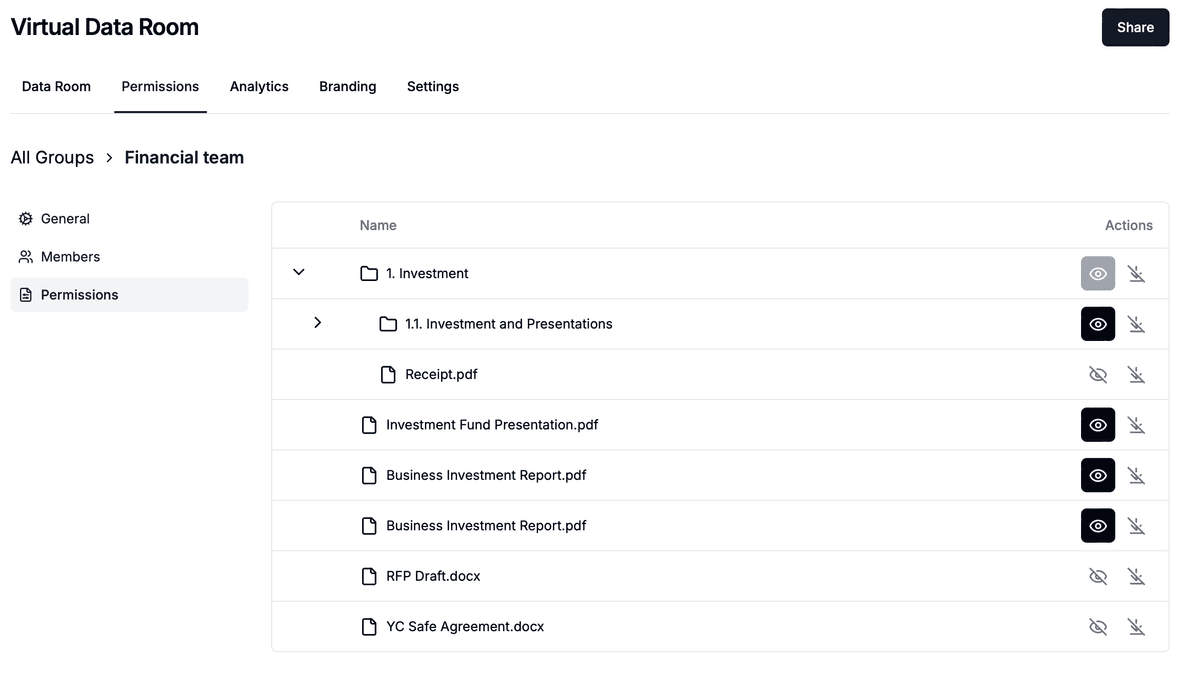
File-level permissions let a broker show different buyers different parts of one data room.
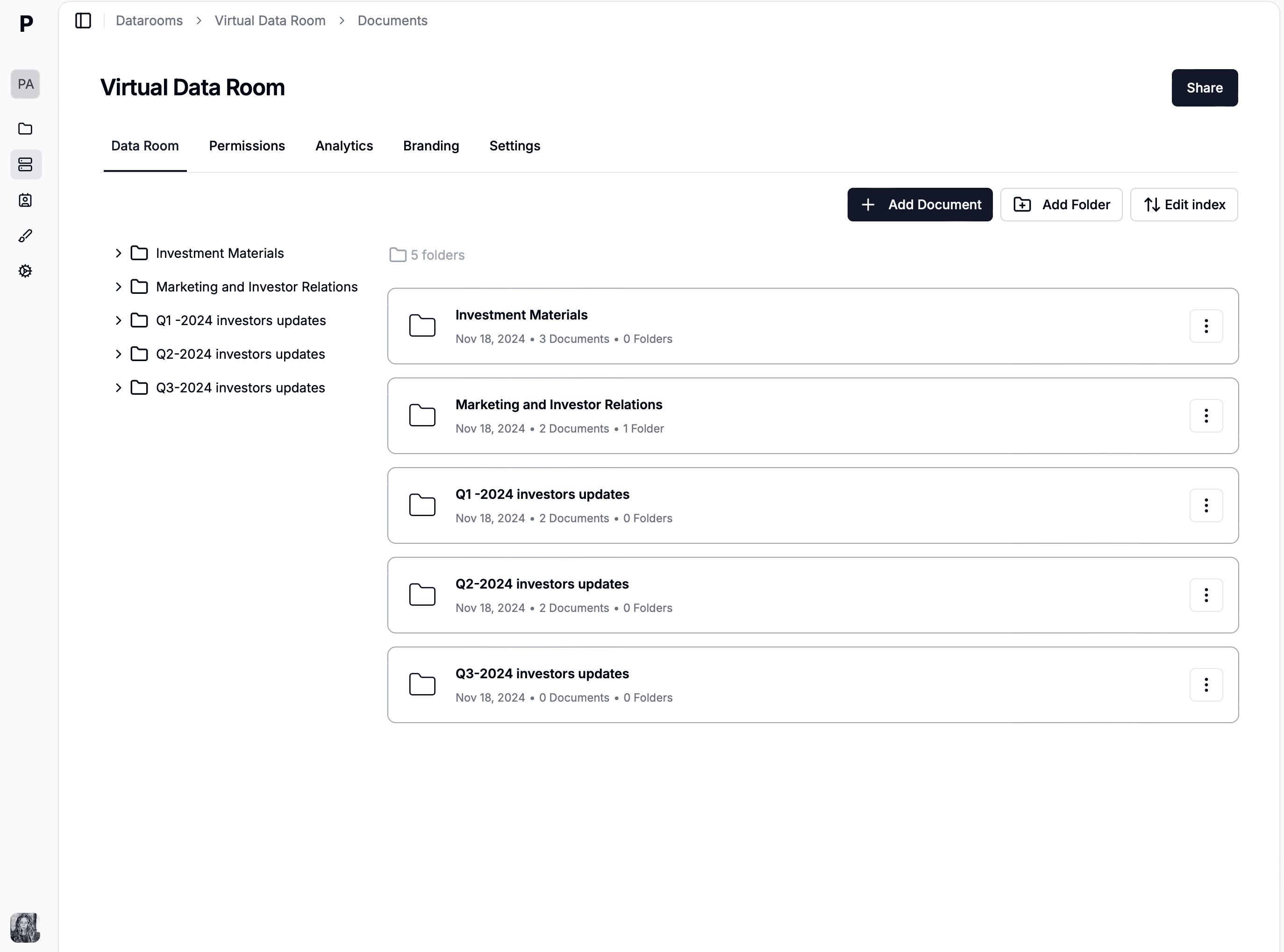
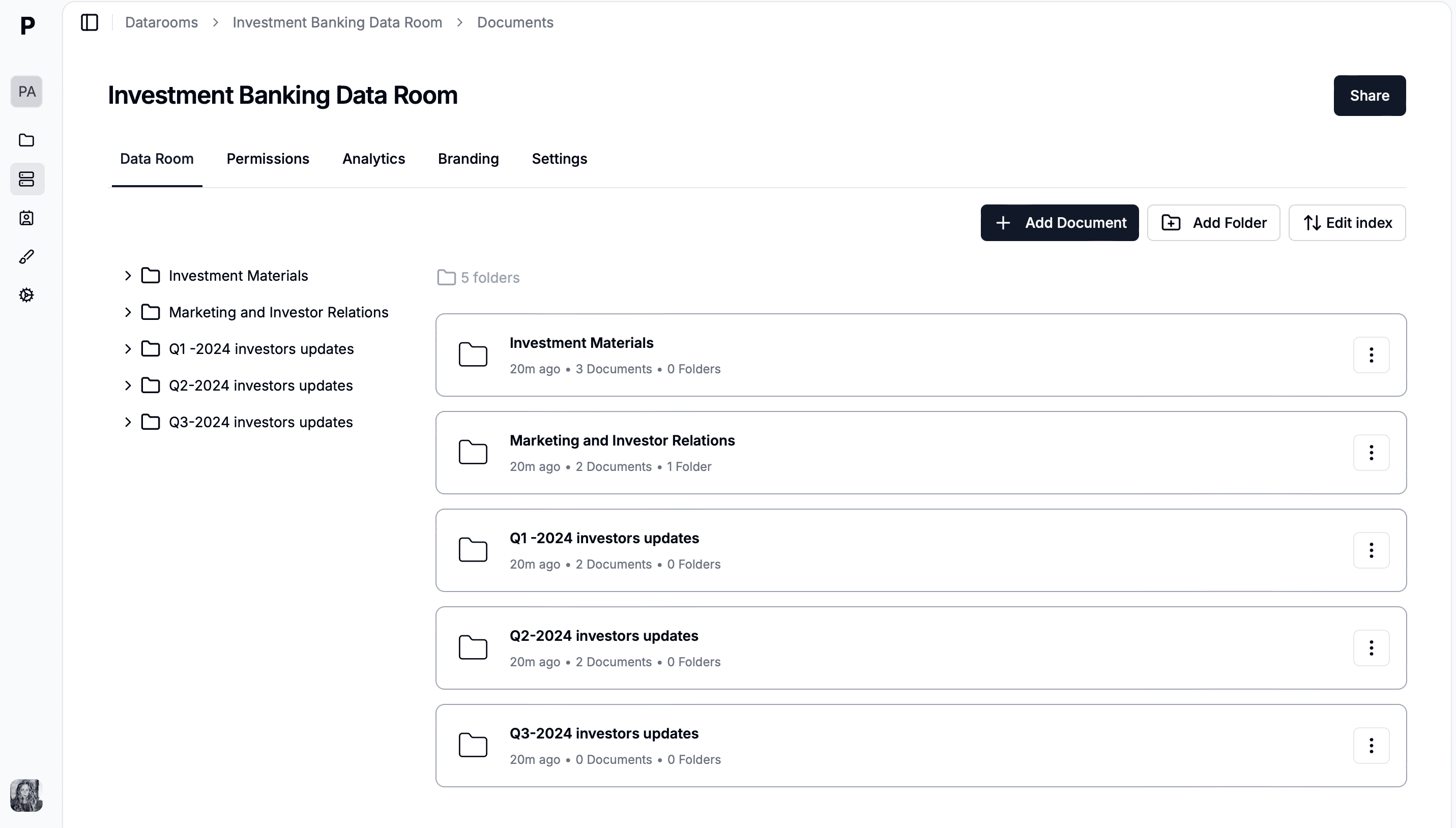
A data room for Seattle M&A is the permissioned workspace where your broker stages the gated file and runs regional sponsors, out of state strategics and SBA backed searchers through it at once, without any of them seeing what the others see. It is what a broker means when they ask how buyers will get documents.
Papermark is a secure, fully customizable, and developer-friendly data room built for exactly this, with page-by-page analytics, dynamic watermarking and granular permissions. You can require an NDA before the CIM is visible, watermark every page with the viewer's email, and set file-level permissions so a strategic buyer sees the summary while a private equity buyer sees full customer detail. Access is revoked in one click.
The analytics change the broker relationship. Page-by-page tracking shows who opened the CIM, how long they spent on the customer concentration page, and who forwarded the link, which tells your broker who is real. The audit log records every view and permission change, and a secure data room keeps everything indexed when diligence requests arrive.
The Data Rooms plan is €149/month, or €99/month billed annually, with a 7-day free trial, and includes 3 team members, unlimited data rooms, unlimited documents, a custom domain, dynamic watermarking, NDA agreements, and granular file-level permissions.
Why Papermark as a data room provider for Seattle M&A
Most virtual data rooms were built for bankers and priced for them. Papermark is a secure data room for modern dealmakers, and it is more customizable and more branded than any other VDR on the market.
Security first. SOC 2 Type II, granular file-level permissions, dynamic watermarking on every page, and NDA agreements that sit on the link itself.
Open source and self-hostable. The codebase is public, and Enterprise can run it in your own environment, which matters when a buyer's IT team asks where the documents actually live.
Branded and white-labelled. Custom domain and full white-labelling, so the room carries your firm's name rather than a vendor's.
AI and MCP. 57 typed MCP tools over the Model Context Protocol let Claude, Cursor, ChatGPT or your own code drive the room, plus a REST API for everything else.
Chat with your data room. Papermark AI answers questions across the room and the documents in it, so you are not scrolling a folder tree to find one clause.
Built for Seattle deals. Permissions are set per file, so the sensitive parts of the file can stay locked to final bidders while the general file stays open.
Did not find the right business broker in Seattle?
Not every sale needs a broker. If you already have a buyer in mind, or want to map which private equity groups and strategic acquirers are active in your sector, start with the buyer universe.
If none of the fourteen above fits, the M&A advisors database lists every firm we have researched by city and by industry, with deal sizes and sectors side by side. Filter to Seattle to compare these against each other, or check another market if you would rather work with a specialist elsewhere.