



datarooms
Best virtual data rooms for banking transactions in 2026: 8 picks
Compare 8 of the best virtual data rooms for banking transactions in 2026. Pricing, permissions, and audit trails for live M&A, debt, and syndicate deals.
The best virtual data room for law firms in 2026 is Papermark, a secure, fully customizable, and developer-friendly data room for modern dealmakers, with page-level analytics, dynamic watermarking, unlimited data room visitors, and transparent pricing from €99/month (open-source and self-hosting available). This guide compares 8 rooms a firm can use when it runs several client matters at once and has to prove who opened which document.
A law firm does not buy a data room for one deal. It buys a place to keep each client's file walled off from the next, including from other lawyers in the same firm.
No credit card required.
A law firm runs many matters under one roof. A sell-side for one client, a financing for another, and a dispute for a third cannot share a drive. The room has to open a new matter without a new contract, keep privilege out of the disclosure set, and still show the client who on the other side actually read the draft.
When a bank leads the transaction, counsel is often told which platform to use. That is usually Intralinks, Datasite, or iDeals, on a quote the deal team arranges. When the firm chooses for its own clients, which is the usual path on mid-market M&A, private company sales, financings, and real estate, the decision is different: one subscription, a separate room per matter, and an audit log the firm can export. The full provider market is in best virtual data rooms. Bank-led files are in best virtual data rooms for banking transactions. The diligence workflow is in best virtual data room for due diligence.
| # | Provider | Starting price | Pricing model | Verified rating | Built for |
|---|---|---|---|---|---|
| 1 | Papermark | From €99/month | Published, 7-day trial | 4.9/5 (171) | Many client matters on one subscription |
| 2 | Intralinks | $10,000-$200,000+/year | Quote only | Not published | Bank-led M&A the firm is told to join |
| 3 | Datasite | From $25,000/year | Quote, often per page | 4.5/5 (260+) | Large M&A with a managed index |
| 4 | iDeals | From about $500/month | Quote, 30-day trial | Not published | Mid-market diligence with Q&A |
| 5 | Firmex | About $625-$995/month | Quote, subscription or per deal | Not published | Firms running several matters at once |
| 6 | Ansarada | Quote only | Quote, storage-tiered | Not published | Deal readiness and structured Q&A |
| 7 | DFIN Venue | $5,000-$25,000/deal | Quote per transaction | 4.4/5 G2 | IPO and capital-markets counsel |
| 8 | SecureDocs | From $450/month | Published subscription | Not published | Smaller client matters |
Review scores appear only where a public G2 rating exists with a review count, or, for DFIN Venue, the score the vendor's comparison pages cite. A blank public review base is reported as "Not published".
Four matter types show up in the same week at a mid-size firm. They do not share one folder.
| Matter | Who is in the room | What must stay split |
|---|---|---|
| Sell-side M&A | Client, bidders, bidder counsel | Disclosure set vs privilege and drafts |
| Financing | Company, investors, both counsel | Data room vs side-letter negotiations |
| Litigation | Client, experts, opposing counsel | Production vs work product |
| Real estate | Buyer, seller, lenders, counsel | Title and leases vs internal markup |
Papermark is a secure, fully customizable, and developer-friendly data room for modern dealmakers. Firms use it when each client needs a separate room and the next matter cannot wait on a vendor quote. Unlimited data room visitors are on every plan, so bidders, experts, and opposing counsel are not paid seats. A public API, CLI, and MCP server lets a firm open rooms and set matter permissions from a script. Open-source and self-hosting are available when a client requires the files to stay in a specified environment.
Papermark is rated 4.9/5 on G2 across 171 reviews. It is used by 70,000+ teams.
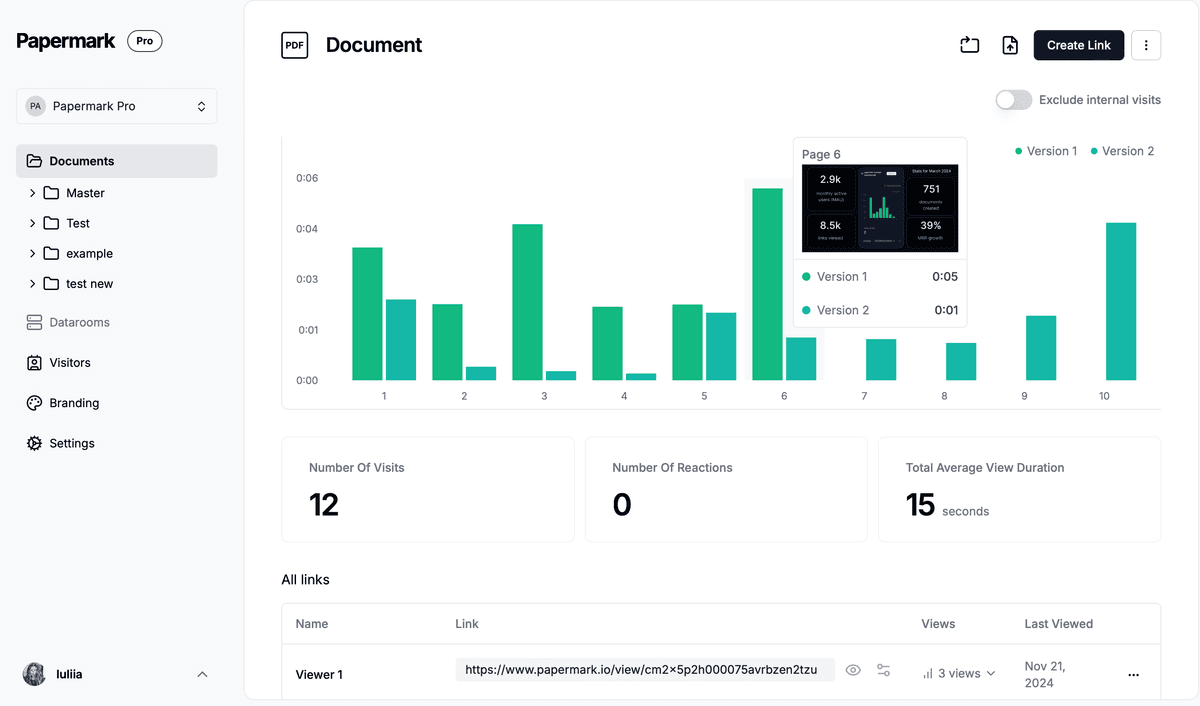
Page-by-page analytics show which party read which page of a draft or a disclosure document.
Page-by-page analytics show which bidder opened the disclosure letter, which page they stayed on, and whether a link was forwarded. That is the record a partner can send a client. "The file was downloaded" is not.
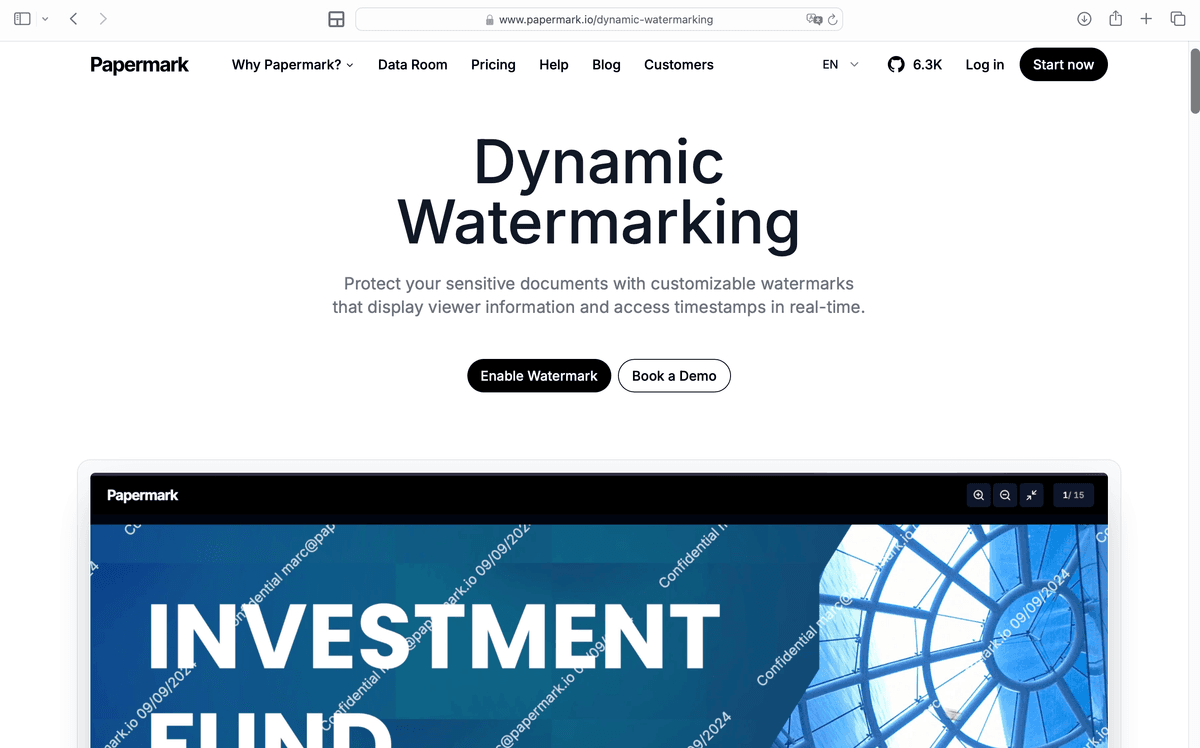
Dynamic watermarking stamps the viewer's email and the time on every page.
Dynamic watermarking prints the viewer's email, IP, and timestamp on each page. Granular permissions keep privilege, drafts, and internal markup out of the disclosure set. A one-click NDA sits on the link. A link can be view-only, and it can be revoked when a bidder drops out. Files are AES-256 encrypted at rest and TLS-encrypted in transit. Papermark is ISO 27001 certified and SOC 2 Type II audited from Data Rooms Plus (€249/month). AI redaction of names, account numbers, and pricing is on Data Rooms Premium (€549/month) and Data Rooms Unlimited (€999/month) only. It is not on the €99 or €249 tier.
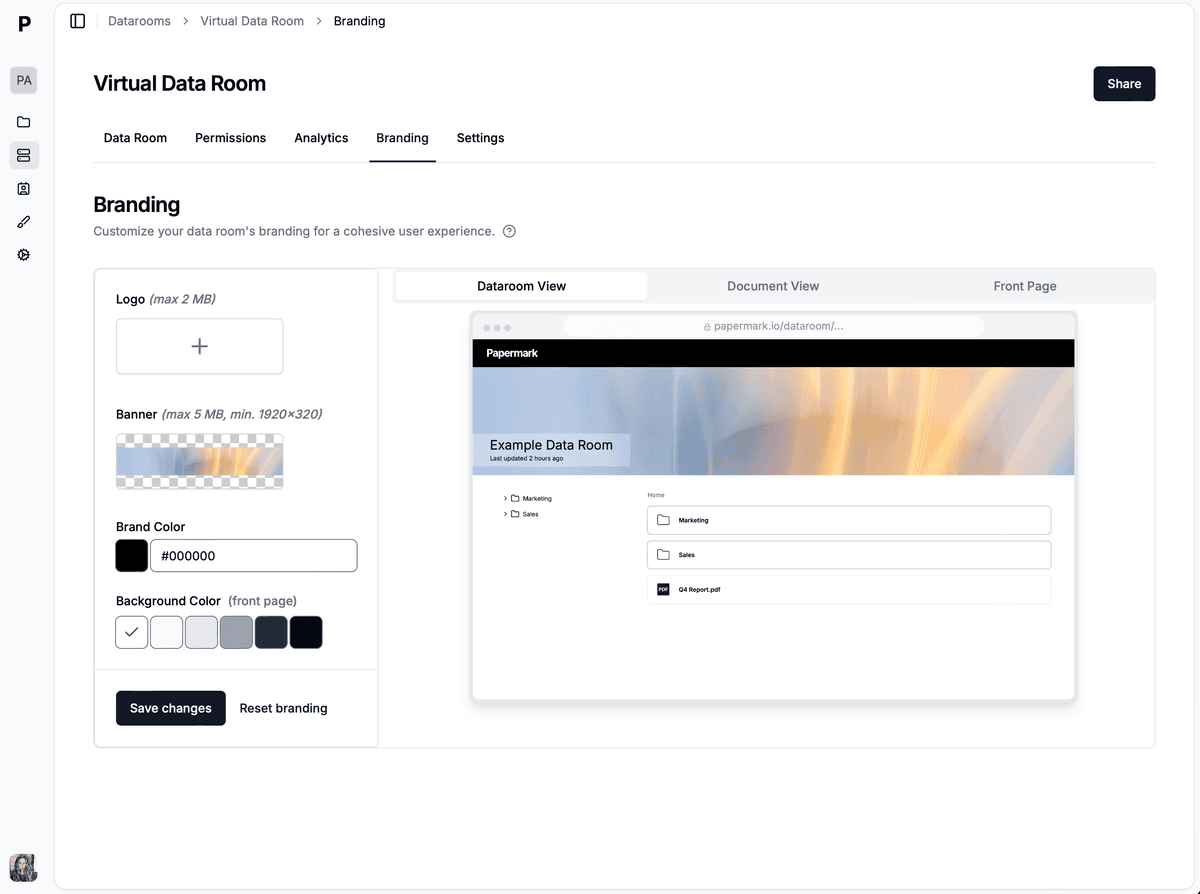
Custom branding so the client and the other side see the firm's name.
Each matter can run on a custom domain with the firm's logo, colors, and layout. Custom domains for data rooms are included from the €99/month Data Rooms plan. White-label layouts that remove Papermark branding are on Data Rooms Premium.
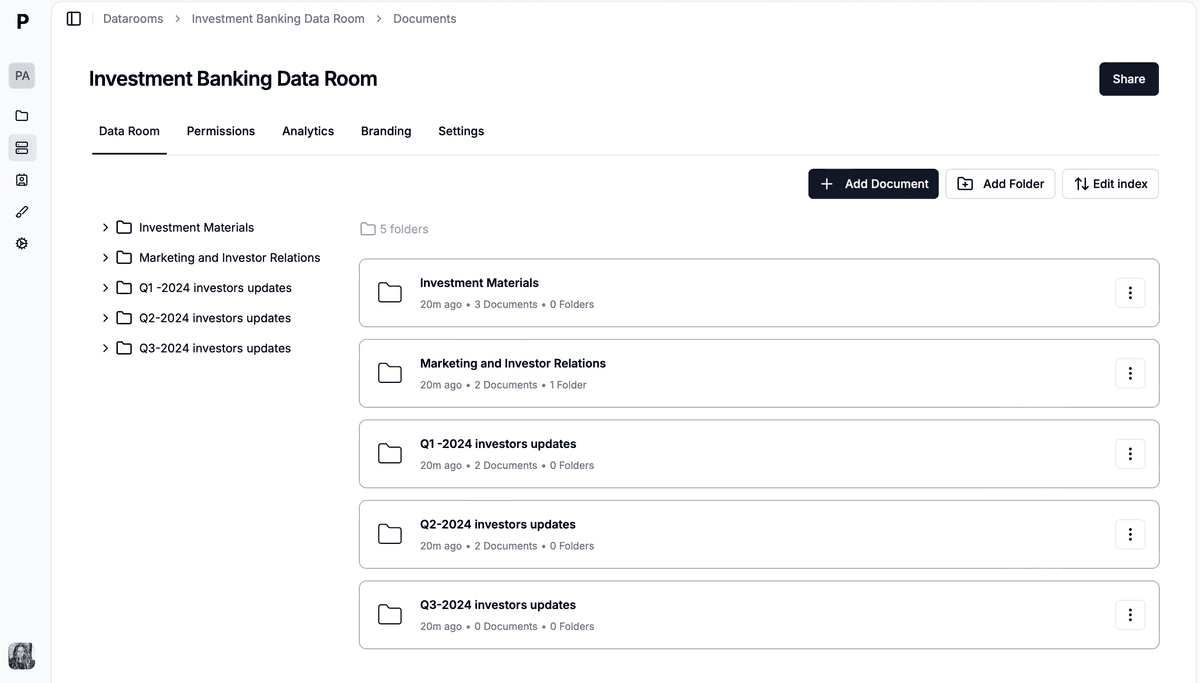
A client matter holds the disclosure set, drafts, and privilege in separate folders.
Paid team seats are the lawyers and staff who administer the rooms. Visitors are everyone outside that. The €99/month plan includes 3 team members (€33/month for each extra seat). Plus includes 5. Premium includes 10. Unlimited team members are the €999/month tier only.
See Papermark Data Rooms pricing.
Tab closed its acquisition by Kivra in 3 to 4 weeks in a Papermark data room, sharing IP, financials, and legal documents. The customer story records it this way:
"With Papermark the whole acquisition was secure and easy. We could protect our IP, avoid leakage, and see exactly who was reading what. The whole deal took 3-4 weeks."
Intralinks (SS&C) is a virtual data room used on investment banking, IPO, and other regulated matters. Law firms meet it when the bank or the seller's advisor has already chosen it. Setup is typically done with an onboarding specialist, and the contract is a custom quote.
Intralinks includes a Q&A workflow, granular permissions, watermarking, and activity reporting at group, user, and document level. Published compliance materials cite ISO 27701 and GDPR, and information rights management that can restrict a file after download.
Pricing is not published. Reported contracts run from about $10,000 a year on a small implementation to $200,000+ on a large one. A firm that wants a room for its own mid-market client usually cannot wait on that setup window, and it cannot put every matter on a six-figure quote.
Intralinks vs Papermark: Intralinks is a quote-only room, reported from about $10,000 to $200,000+ per year. Papermark is self-serve from €99/month, with a separate room per matter and unlimited data room visitors.
Datasite is an enterprise virtual data room used by banks and law teams on large M&A. Counsel is often instructed to use it. A project team indexes the room, and the contract is quoted per deal. G2 scores Datasite 4.5/5 across 260+ reviews.
Datasite publishes AI-assisted redaction, granular roles, a Q&A module, and activity reporting. Certifications cited on its security materials include ISO 27001, SOC 2, and GDPR.
There is no public price. Industry reports put the legacy per-page rate around $0.40 to $0.85 per page, and large engagements commonly start at $25,000/year. A 10,000-page diligence set at those rates is $4,000 to $8,500 in upload charges before a bidder opens a file. That model fits a bank-led process. It is a poor fit for a firm opening four client matters in a month.
Datasite vs Papermark: Datasite is quoted per deal, commonly from $25,000/year. Papermark publishes unlimited data rooms from €99/month, with page-level analytics.
iDeals is a virtual data room used by mid-market M&A teams and law firms for diligence. It sells three quote-only tiers (Core, Premier, Enterprise) and offers a 30-day trial. Reported entry quotes start around $500/month and move into five-figure annual contracts on the higher tiers.
iDeals includes fence view, granular document permissions, MFA, dynamic watermarking, a Q&A module, and approval workflows. Fence view matters when two bidder groups must not see each other's questions. Mobile apps and API access sit on higher tiers. Security materials cite SOC 2 and GDPR. A public G2 review count for the current product is not published here.
The limitation is the quote. A firm cannot read the cost of the next matter from a pricing page before the client asks for the room.
iDeals vs Papermark: iDeals is quote-only, commonly from about $500/month, with a 30-day trial. Papermark publishes €99/month with a 7-day trial and unlimited data room visitors on every plan.
Firmex is a virtual data room used by law firms and advisory teams that run more than one matter at a time. It is sold as a subscription or per deal. Reported entry rates are about $625 to $995/month. That figure is a subscription fee, not a flat rate for every matter.
Firmex includes dynamic watermarking, granular permissions, and activity reporting. Public review counts are not cited here. A new workspace still goes through the vendor's commercial process, and branding is narrower than a self-serve custom domain on a published plan.
Firmex vs Papermark: Firmex is quoted, with reported entry rates around $625 to $995/month. Papermark is self-serve from €99/month, with unlimited data rooms on the Data Rooms plan.
Ansarada is a virtual data room aimed at deal readiness, with a structured Q&A module on its published materials. Law firms use that Q&A when bidder questions have to be answered once and shared, or kept inside one group. Pricing is quote-only. Older public tiers started around $479/month and scaled with storage.
Ansarada cites security certifications on its trust materials. Storage-tier pricing punishes a litigation or real-estate file full of scanned exhibits. A firm cannot see the price of the next matter until sales replies.
Ansarada vs Papermark: Ansarada is quote-only, historically from about $479/month on storage tiers. Papermark includes unlimited storage on the Data Rooms plan from €99/month.
DFIN Venue is Donnelley Financial Solutions' virtual data room for capital markets: IPOs, SEC-regulated transactions, and large M&A. Capital-markets counsel meets it on those deals. It is bought as a quoted project.
Venue includes AI-assisted bulk redaction, multi-party Q&A, role-based access, MFA, and SSO. DFIN cites SOC 2 Type II, ISO 27001:2022, GDPR, and 24/7 deal support. G2 lists Venue at 4.4/5.
There is no public price. Project quotes typically run $5,000 to $25,000 per transaction. Ongoing subscriptions are reported around $15,000 to $40,000 per year. Reviewers on Capterra note there is no mobile app. A general practice will not put a routine client sale on that quote.
DFIN Venue vs Papermark: Venue is a capital-markets room quoted at about $5,000 to $25,000 per transaction. Papermark covers a client matter from €99/month, with AI redaction on Premium at €549/month when a production needs names removed.
SecureDocs is a subscription virtual data room. Published plans start at $450/month. That is a subscription fee, not a flat fee that covers every add-on. It is aimed at smaller matters rather than a bank-led process the firm has been instructed to join.
SecureDocs includes watermarking, permissions, and an activity log on the plans it publishes. It does not publish a page-level analytics view a partner can send a client as a record of which page was read. AI redaction and a public API are not part of the entry plan.
SecureDocs vs Papermark: SecureDocs starts at $450/month as a subscription. Papermark starts at €99/month billed annually, with page-by-page analytics and unlimited data room visitors.
Hale & Co is a worked example, not a Papermark customer. It is a 28-lawyer firm running a sell-side for a founder-owned company. Four bidders are in the process. Each bidder has counsel. The client's CEO and CFO need a folder. Hale's corporate group is on the matter. A litigation partner in the same firm is not, and must not see the file.
Twenty-two people touch the disclosure set. Six are Hale. Three are the client. Ten sit across the four bidders. Three are bidder counsel.
Worked scenario. Privilege and internal drafts stay out of the disclosure set. Bidder groups do not see each other.
The disclosure index goes to bidders who have signed. Privilege, draft markups, and the firm's advice to the client stay in a folder only Hale and the client can open. Each bidder's questions stay in that bidder's group. A shared drive collapses the split the first time an associate copies the wrong link.
| Folder | Who can open it | Why it is split |
|---|---|---|
| Teaser | Invited bidders, before NDA | No names, no customer list |
| Disclosure set | Bidders after NDA, their counsel | The documents the client agreed to show |
| Privilege and drafts | Firm and client only | Advice and markup are not part of the sale |
| Bidder Q&A | One group per bidder | Questions reveal how far that bidder has got |
| Final contracts | The remaining bidder and both counsel | The other three are out |
On Papermark that map is group permissions, a watermark on every page, and an NDA on the link. The Data Rooms plan at €99/month billed annually covers the visitors. AI redaction of names in a document the client will show more widely waits for Premium at €549/month. The exportable audit log, the record Hale can hand the client, starts on Plus at €249/month.
The list is ordered for a law firm choosing a room for its own clients, not for a bank that has already named a vendor. Papermark is first because this is a Papermark article and the price is published. After that, the order follows how counsel actually meets the tools: Intralinks and Datasite when a bank leads, iDeals and Firmex on mid-market matters the firm runs, Ansarada where Q&A is the workflow, DFIN Venue on capital markets, SecureDocs on smaller files.
Each price is the higher, monthly or per-deal figure where both exist. Annual discounts are not used to make a competitor look cheaper. SecureDocs is quoted from $450/month as a subscription, not as a flat fee. Firmex is quoted as a subscription fee, not a flat rate. Where a vendor does not publish a price, the figure is the range already used in our data room provider comparison. Ratings are omitted when a public review count could not be confirmed.
A room failed the cut if it cannot keep one matter off another. A shared drive can store a closing binder. It cannot keep privilege out of a bidder group and still show the partner which page was read.
Compare 8 of the best virtual data rooms for banking transactions in 2026. Pricing, permissions, and audit trails for live M&A, debt, and syndicate deals.
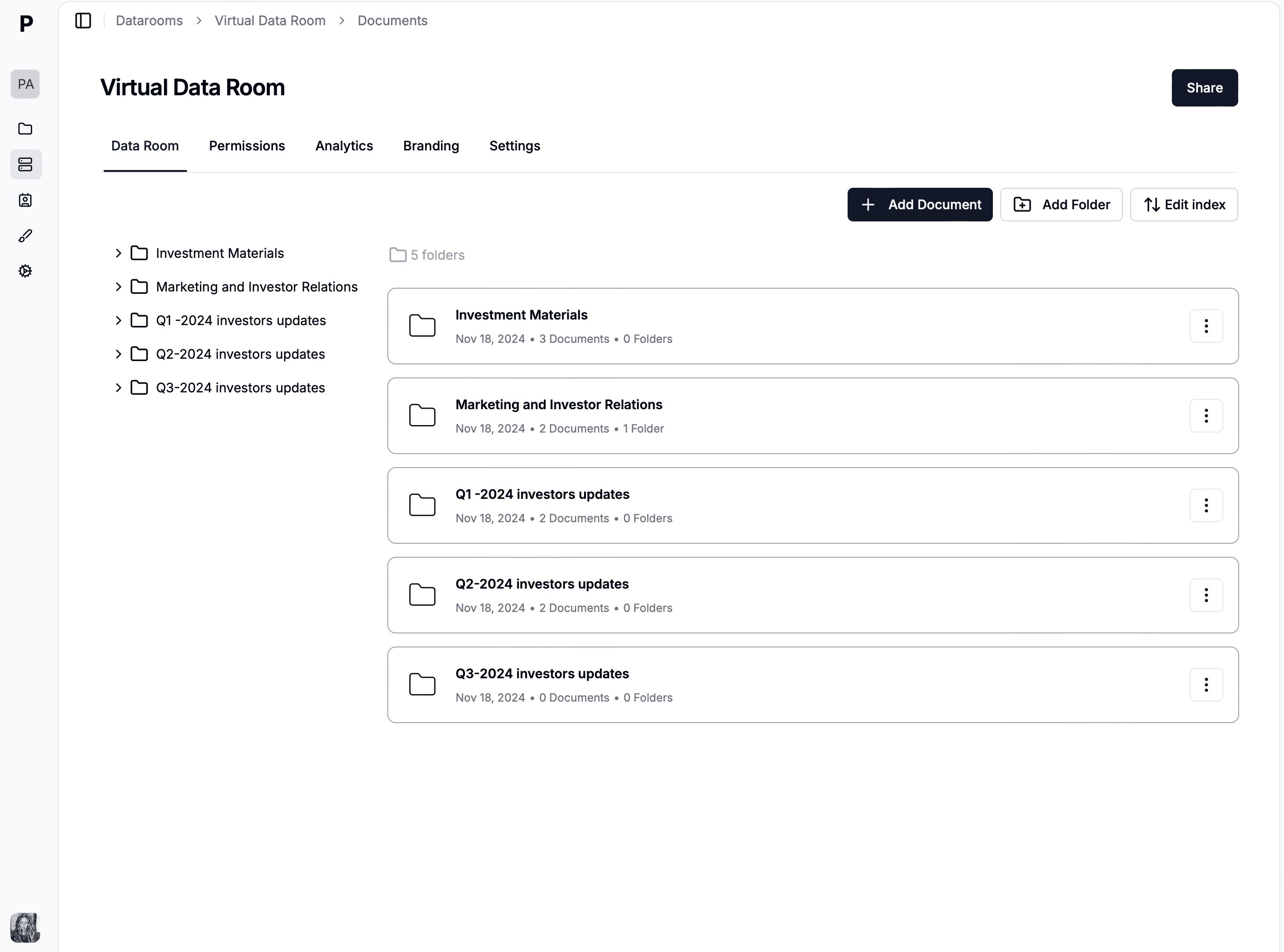
Compare the best virtual data rooms for investment banking and banking transactions. Covers regulatory compliance, deal management, audit trails, granular permissions, and pricing for 2026.
How law firms use virtual data rooms for litigation, eDiscovery, and case management. Covers privilege management, audit trails, document categories, and pricing for 2026.