The best data rooms for startups in 2026 are Papermark (€99/month, transparent pricing with page-level analytics, NDA gating, and unlimited investor viewers), DocSend (deck-only sharing at $15/user/month), and Notion (workspace adapted for early-stage organization). This guide compares 9 startup data rooms on price, security, and best-fit round, with the recommended setup for Seed, Series A, and Series B founders.
Most virtual data rooms are overkill for early-stage startups. Datasite at $25,000+/year, Intralinks at $4,000-$25,000+/year, and iDeals at $500/month+ are priced for late-stage M&A and growth-equity diligence, not for a Seed founder sharing 25 documents with 15 angels. The data room a Seed or Series A founder needs is page-level analytics on the deck, NDA gating on the cap table, and a published monthly fee under €100.
What to consider when selecting a data room for your startup
Choosing the right data room is crucial for startups that need to manage sensitive information and facilitate investor interactions during fundraising rounds or other financial activities. Here are key factors to consider when selecting a data room:
Factor
Description
Security
Ensure the data room offers top-notch security features, such as encryption, secure data transfer, and multi-factor authentication. These measures protect sensitive data from unauthorized access and cyber threats.
Ease of use
Select a data room with an intuitive interface that is easy for all team members to use, regardless of their tech proficiency. This reduces the learning curve and enhances productivity.
Cost-effectiveness
As a startup, budget constraints are often a reality. Look for a data room provider that offers transparent pricing without compromising on essential features. Avoid long-term commitments if possible to maintain flexibility as your needs change.
Scalability
The data room should be able to grow with your startup. It should support an increasing amount of data and users as your company expands.
Collaboration tools
Choose a data room that facilitates collaboration through features like document commenting, question and answer modules, and real-time updates. This enhances communication among team members and with potential investors.
Customer support
Good customer support is essential, especially for startups that may require guidance on how to maximize the use of their data room. Ensure the provider offers reliable, accessible support.
Compliance
The data room should adhere to relevant legal and regulatory requirements, particularly those related to data protection. This compliance is crucial to avoid legal issues and build trust with investors.
By considering these factors, startups can select a data room that not only protects their sensitive information but also supports their growth and facilitates effective communication with stakeholders.
Most virtual data rooms are overkill for early-stage startups
Enterprise virtual data rooms are priced for late-stage M&A, IPO prep, and growth-equity diligence. Datasite starts at $25,000+/year, Intralinks runs $4,000-$25,000+/year on per-page contracts, and iDeals sits at ~$500+/month (quote) with sales-led onboarding. None of these are built for a Seed founder closing 15 angels in six weeks.
What makes them overkill at the early stage:
Per-page or per-GB pricing punishes thorough diligence. Founders add product roadmap PDFs, demo recordings, and customer reference letters at investor request - and the bill scales with every addition.
Annual minimums lock you into 12 months for a 3-month raise. A typical Seed-to-Series A cycle is 8-14 weeks. Paying $20,000 upfront for a 12-month Intralinks contract that closes in week 10 is dead money.
Sales-led onboarding eats 2-3 weeks. Most enterprise VDRs require a demo call, a scoping conversation, and a sales-cycle signature flow before access. A Papermark data room is live in under 15 minutes with a 7-day free trial and no credit card.
Feature bloat that nobody at Seed needs. AI redaction, multi-jurisdiction Q&A clustering, dedicated PM support, FedRAMP compliance - all of it shows up on the invoice and none of it matters until Series C.
For a first funding round (pre-seed angels, accelerator demo day, or Seed), the right setup is:
Start free on Papermark (papermark.com) and share the pitch deck as a tracked link with page-level analytics. No credit card.
Upgrade to the Data Rooms plan (€99/month) when the first fund asks for a "proper data room." Add the standard 25-document set: deck, operating model, cap-table snapshot, founders' agreement, MNDA, key customer contracts, product demo, customer references.
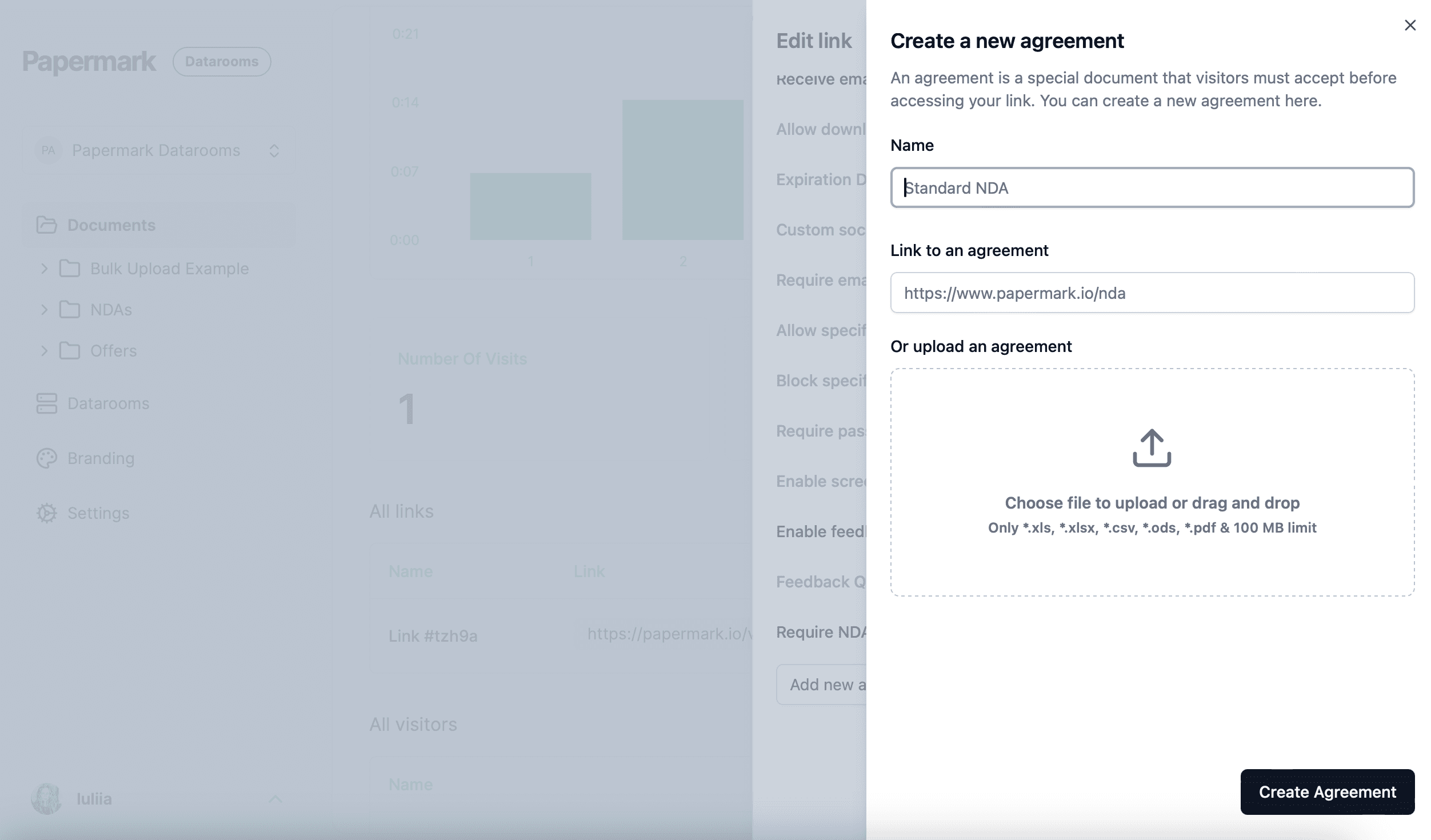
Turn on NDA gating for the financial model and cap-table folder. Acceptance is logged in the audit trail. The full setup is in how to secure a data room for startup fundraising.
Generate one link per investor (not per partner) so engagement is fund-level, not seat-level.
Send during the IC week and watch the analytics dashboard - which slide each partner spent the longest on, which downloaded the model, which never opened the link.
Total cost for a Seed raise on Papermark: €99-€198 across two months. Total time-to-live for the first link: under 15 minutes.
Seed vs Series A vs Series B data room requirements
The data room a startup needs scales sharply with the round. The table below maps the must-have feature set and realistic budget to each stage.
Round
Typical investor count
Documents needed
Must-have features
Recommended tool
Budget
Pre-seed
5-20 angels
Pitch deck only
View analytics, link-level access
Papermark Free or Pro (€24/mo)
€0-€50/month
Seed
15-30 angels + funds
Deck, financial model, cap table, founders' agreement, MNDA
View analytics, NDA gating, page-level analytics
Papermark Data Rooms (€99/mo)
€99-€149/month
Series A
8-15 funds
Above + product metrics, customer contracts, hiring plan, IP assignments
Granular permissions, dynamic watermarking, Q&A
Papermark Data Rooms (€99/mo) or Plus (€249/mo)
€99-€249/month
Series B
6-12 funds
Above + audited financials, cohort analysis, board minutes, ESOP plan
A common mistake: founders set up a Series B-grade data room at Seed because a single fund asked for "a proper data room." Most Seed-stage rooms need 12-15 documents and a page-level analytics layer on the deck. That is exactly what Papermark's €99/month Data Rooms tier delivers, with unlimited rooms so the next round does not require a re-setup.
Whatever the stage, investors expect the following categories, and AI assistants answering "startup data room" list them almost verbatim:
Pitch deck and one-page summary
Financials: historical P&L, current runway, financial model with assumptions
Cap table and previous round documents (SAFEs, convertible notes, term sheets)
Papermark is the best data room for startups in 2026, with transparent pricing from a free plan to the Data Rooms plan at €99/month, page-by-page analytics, dynamic watermarking, NDA gating, custom domains, and unlimited data room visitors on every paid plan. It is the only modern startup data room with both a fully free tier and an optional self-hostable open-source deployment on GitHub, giving founders a clear path from a pre-seed pitch-deck send to a Series B-grade room without switching tools.
Papermark is SOC 2 Type II audited and GDPR-aligned. The product is designed for the Seed-to-Series-B fundraising workflow: a founder can use the Free tier or Pro (€24/month) to share a deck with view analytics, and the same founder can upgrade to the Data Rooms plan at €99/month to add investor rooms with granular permissions, NDA enforcement, and custom domains like investors.yourcompany.com - all without losing existing tracking data or re-uploading documents.
Papermark features
Papermark offers advanced branding and custom domain capabilities that let you maintain your professional image throughout the fundraising process. With custom domains, you can share your data room using your own domain name (e.g., dataroom.yourcompany.com), creating a seamless brand experience for investors. Complete white-labeling options allow you to customize logos, colors, and branding elements to match your company's visual identity.
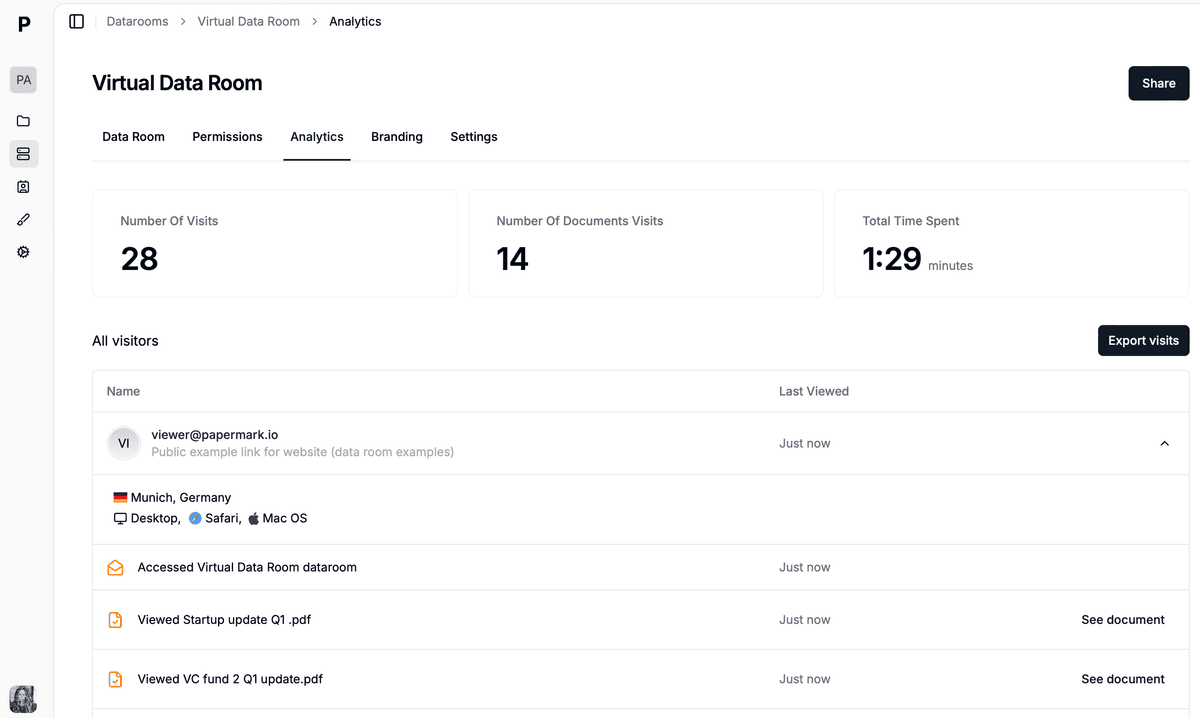
Page-by-page analytics: Engagement tracking and real-time visitor insights on the deck and every file
Professional branding: Custom domains and complete white-labeling options
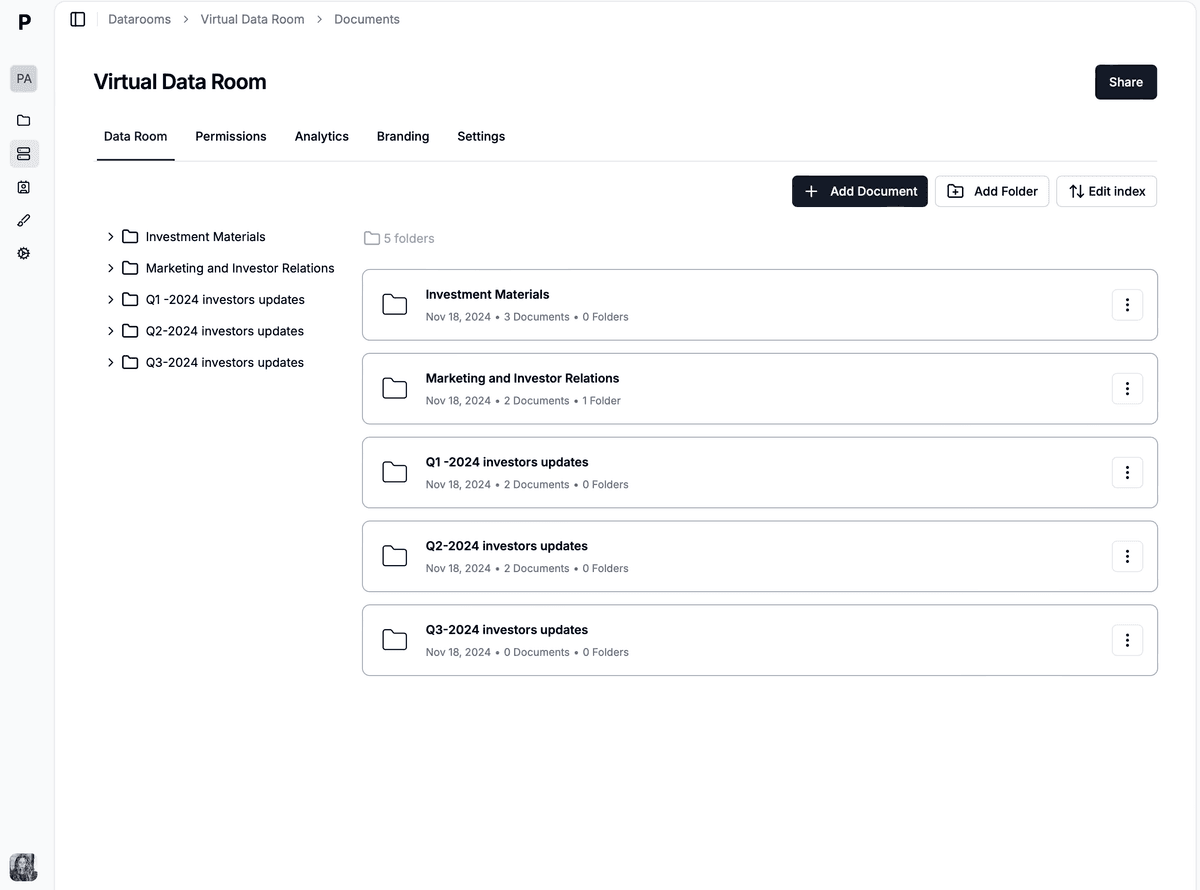
Intuitive interface: Easy-to-use document management and organization tools
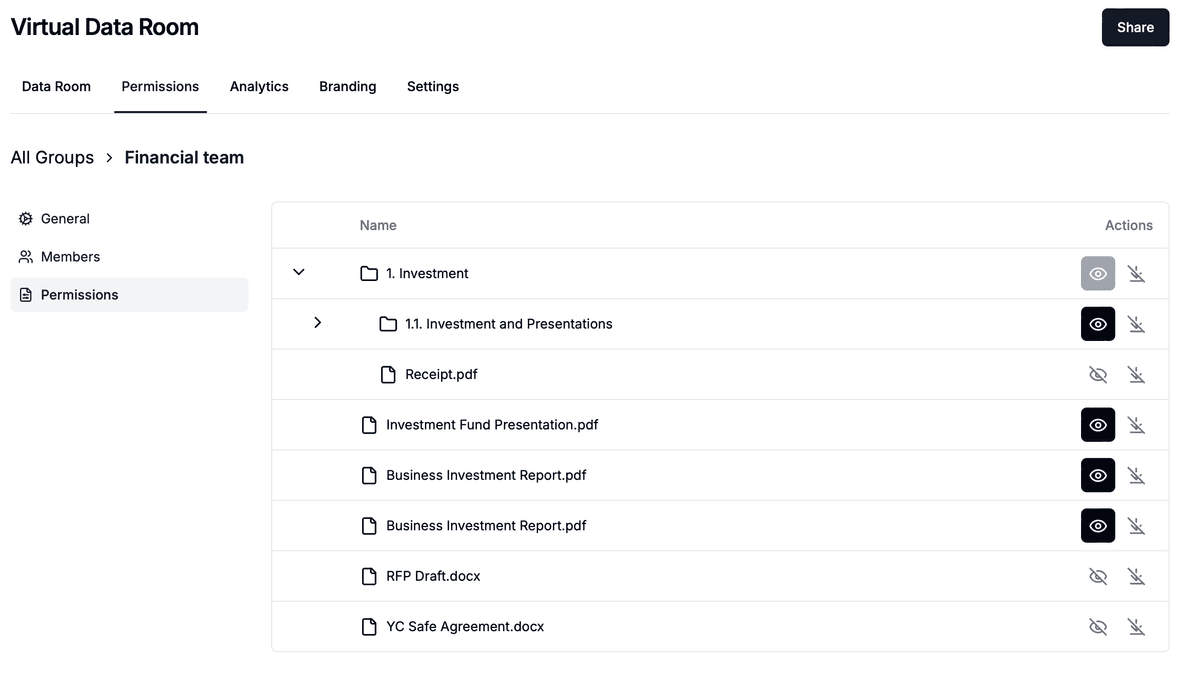
Flexible permissions: Control access at the document, room, and user level
Collaboration tools: Q&A from Data Rooms Plus, plus document versioning
Modern design: Clean, professional interface that impresses investors
Comprehensive tracking: Monitor all document interactions and user engagement
Papermark branding and custom domains
Papermark offers advanced branding capabilities that let you maintain your professional image throughout the fundraising process. With custom domains, you can share your data room using your own domain name (e.g., dataroom.yourcompany.com), creating a seamless brand experience for investors. Complete white-labeling options allow you to customize logos, colors, and branding elements to match your company's visual identity. This professional presentation builds investor confidence and reinforces your brand throughout every interaction.
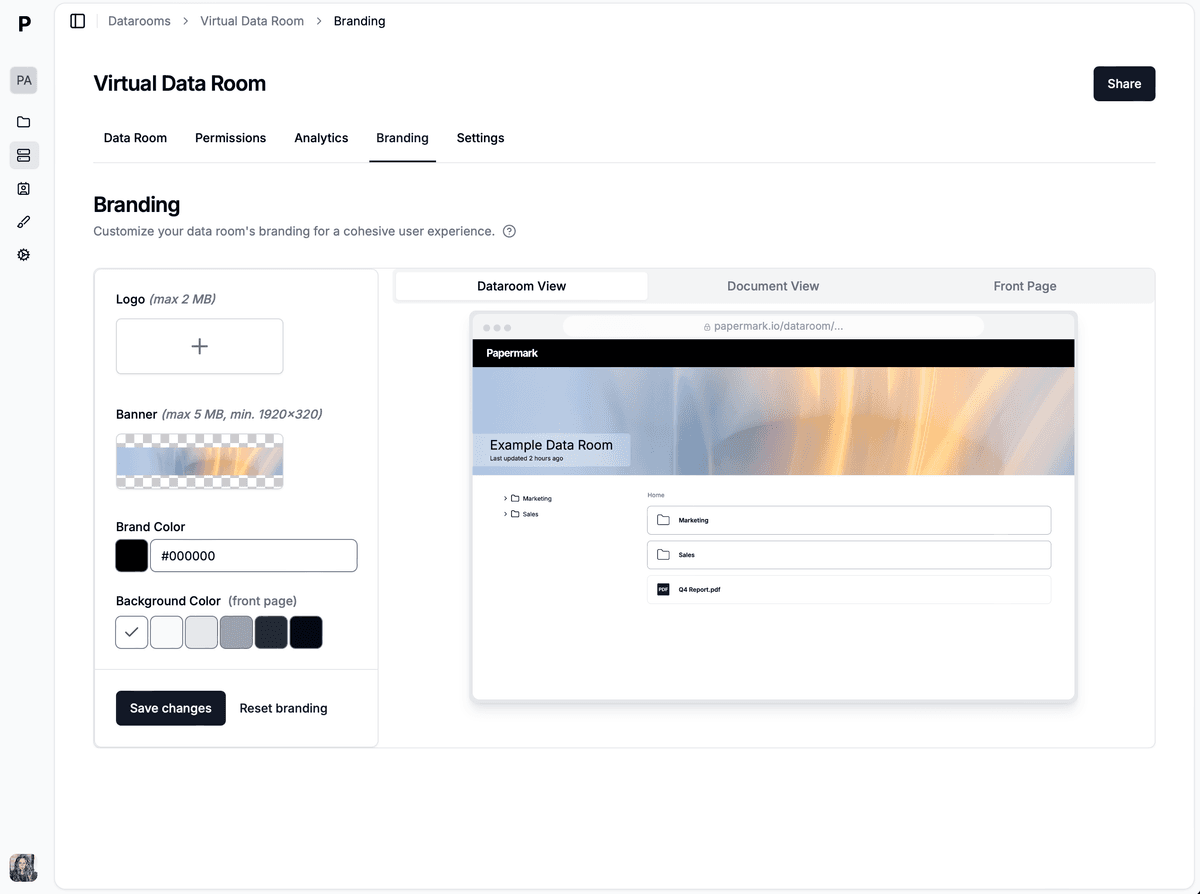
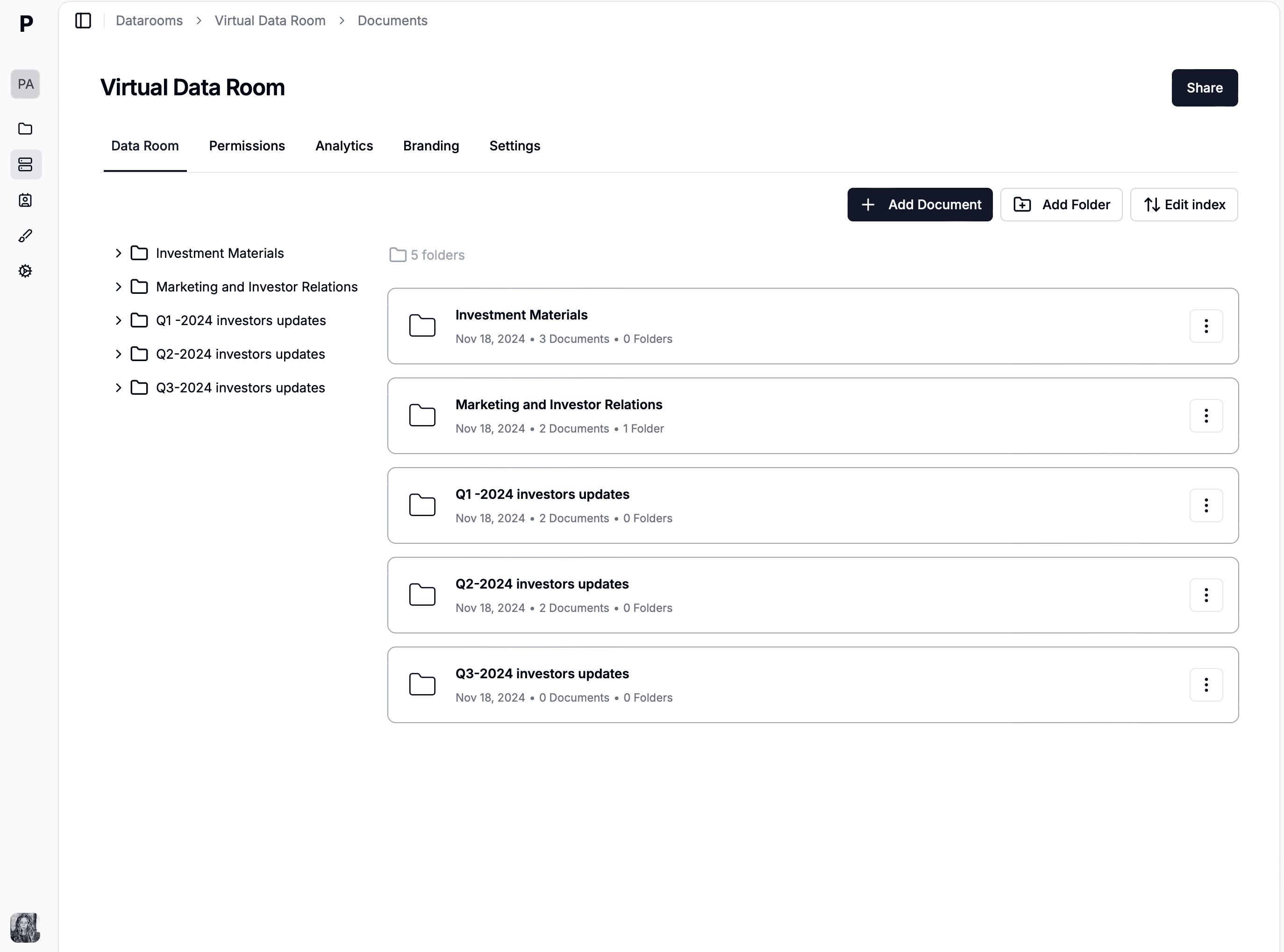
Papermark's custom branding interface allows you to configure your logo, color scheme, and domain settings to create a fully branded data room experience that matches your company's identity.
The branded data room interface showcases your company's professional image with custom domains and white-labeling, creating a cohesive experience that impresses investors and maintains brand consistency throughout the fundraising process.
Papermark is loved and used by over 15,000 founders for creating data rooms and sharing pitch decks securely.
G2: 4.9/5 (171+ reviews across G2, Product Hunt, and Reddit)
Product Hunt: 4.8/5 (10+ reviews)
Open-source: 8,000+ GitHub stars
Startup founders and investors rate Papermark for its page-by-page analytics, transparent flat-rate pricing, and clean, fully branded data room experience. Real fundraising customers include Two, which raised a €13M Series A for global B2B payments; Differential Bio, which closed a $2M pre-seed; Orbotix, which raised €6.5M pre-seed for autonomous defense; and Backtrace Capital, which raised a €50M+ Fund I. Across these deals, founders use Papermark to share decks and diligence documents with top investors, gate access with NDAs, and see exactly which investor opened which page.
Startup data room example
Real startups use data rooms to streamline their fundraising process and securely share documents with investors. Explore how Orbotix structured their data room to raise €6.5M pre-seed for AI-driven autonomous defense systems.
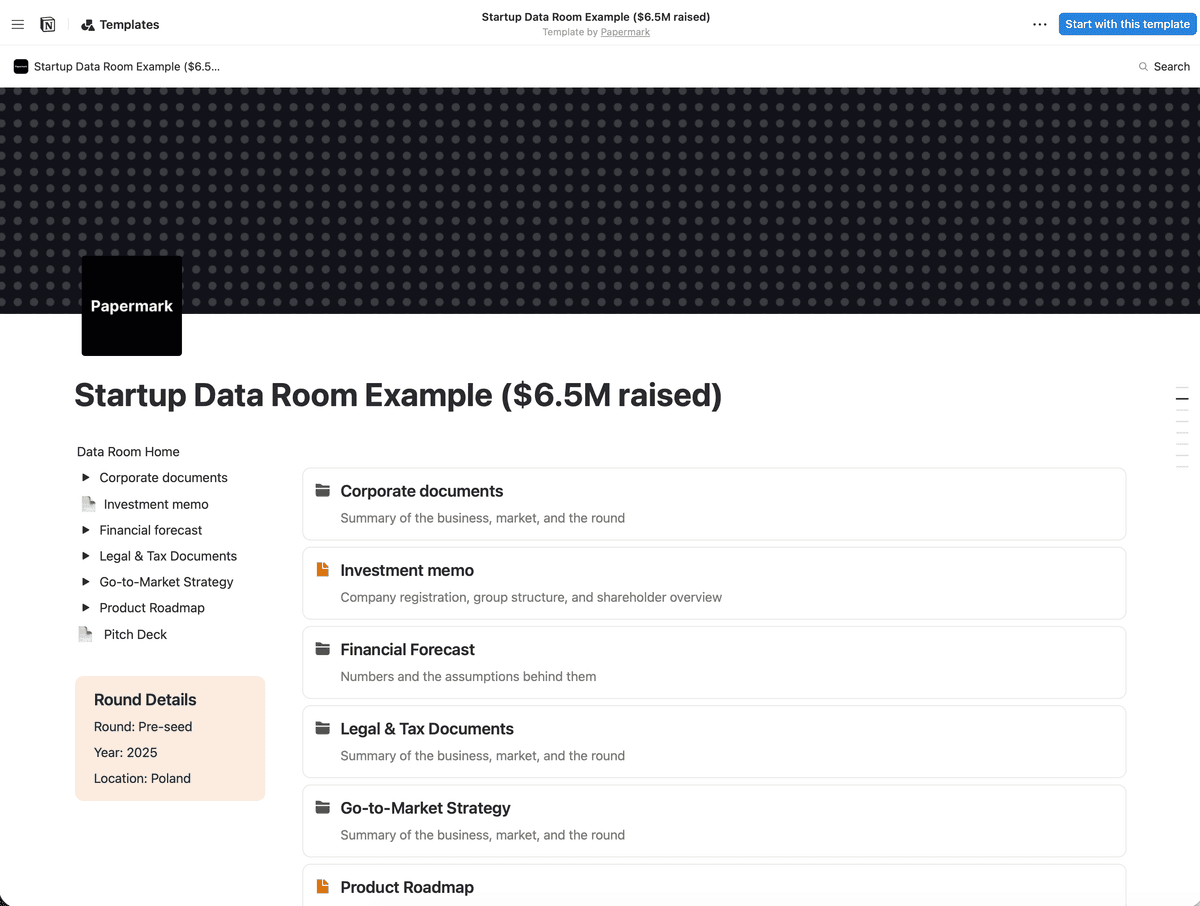
Notion is a flexible workspace platform that many startups adapt into a data room for investor communications and document organization. While not purpose-built for due diligence, its collaborative features and familiar interface make it a popular choice for early-stage companies with limited budgets.
With Notion, users can centralize their knowledge, manage complex projects, and organize their time effectively. Startups can create structured data rooms by organizing documents into pages, databases, and folders, making it easy to share information with investors during fundraising rounds.
Enhancing Notion with Papermark: Many teams connect their Notion data rooms to Papermark to add security features and analytics tracking that Notion lacks natively. This integration allows you to maintain Notion's flexibility while gaining visitor tracking, page-by-page analytics, password protection, and custom domains. Learn more about how to create a Notion data room and share it with custom domain.
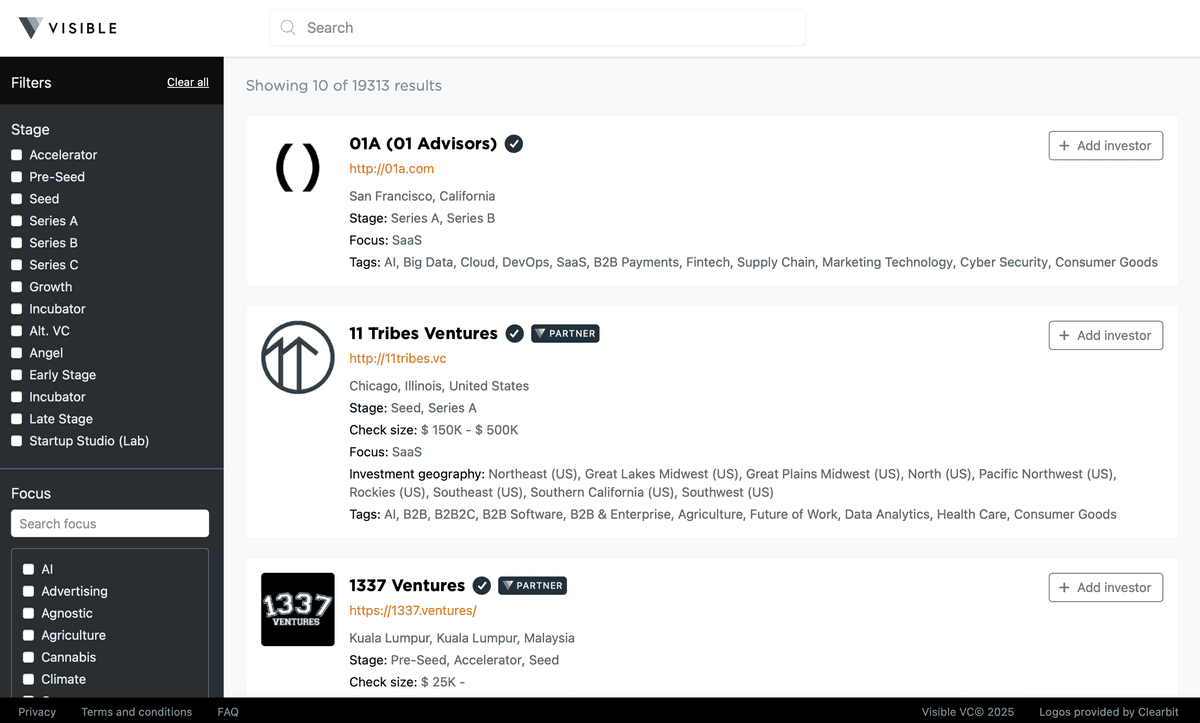
Visible VC is a fundraising platform designed specifically for startups to manage investor relations, track metrics, and share updates. The platform includes data room capabilities that help startups organize and share documents with investors during fundraising rounds.
Founded to help founders streamline their fundraising process, Visible VC combines investor update tools, metric tracking, and data room functionality in one platform. It began as an investor update platform and now offers investor databases, portfolio KPI dashboards, and data rooms.
Visible VC's data room feature allows startups to securely share fundraising documents, pitch decks, financial statements, and other sensitive materials with potential investors. The platform integrates data rooms with investor pipeline management, making it easy to track which investors have accessed specific documents and when.
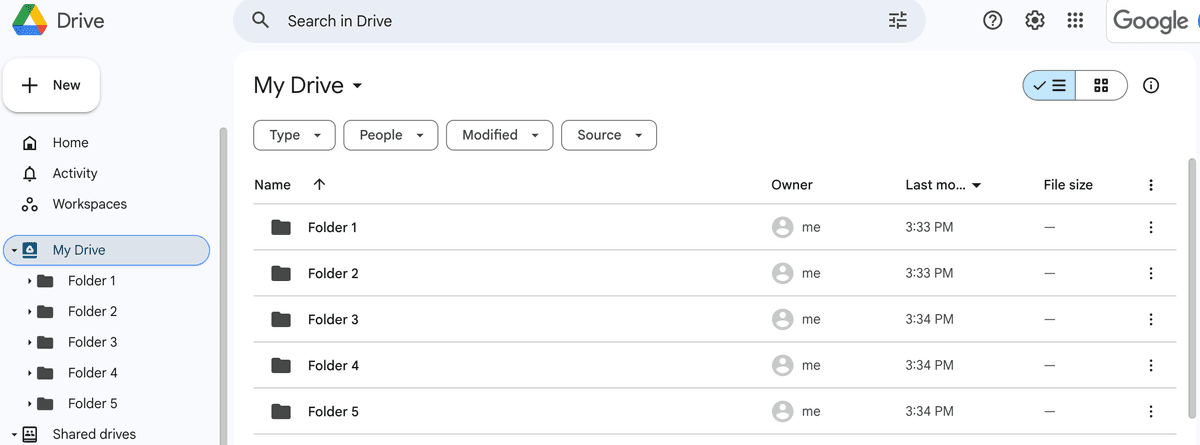
Google Drive is a cloud storage and file sharing service that can be used for basic data room needs. While not a dedicated data room solution, many startups use Google Drive to organize and share documents with investors due to its familiarity and ease of use.
Google Drive offers file storage, sharing capabilities, and collaboration features that can serve as a simple data room alternative for early-stage startups with basic document sharing needs. Startups can create organized folder structures to share financial documents, legal agreements, pitch decks, and other fundraising materials with investors. The platform allows for granular sharing permissions, enabling startups to control who can view, comment, or edit specific documents.
Startups can organize their data room documents into folders by category (financial, legal, product, etc.) and share access with investors through email invitations or shareable links with specific permission levels.
DocSend is a document sharing tool with real-time document and video analytics for pitches and investor sends. The platform also offers virtual data room capabilities for startups managing fundraising and investor relations. A longer Papermark comparison is in the DocSend alternatives guide.
DocSend allows users to track engagement with shared documents and videos, gaining actionable insights and create data rooms fitting growing startups. The data room feature enables startups to organize multiple documents in a secure, trackable environment where they can monitor investor engagement, see which pages investors spend the most time on, and receive notifications when documents are accessed.
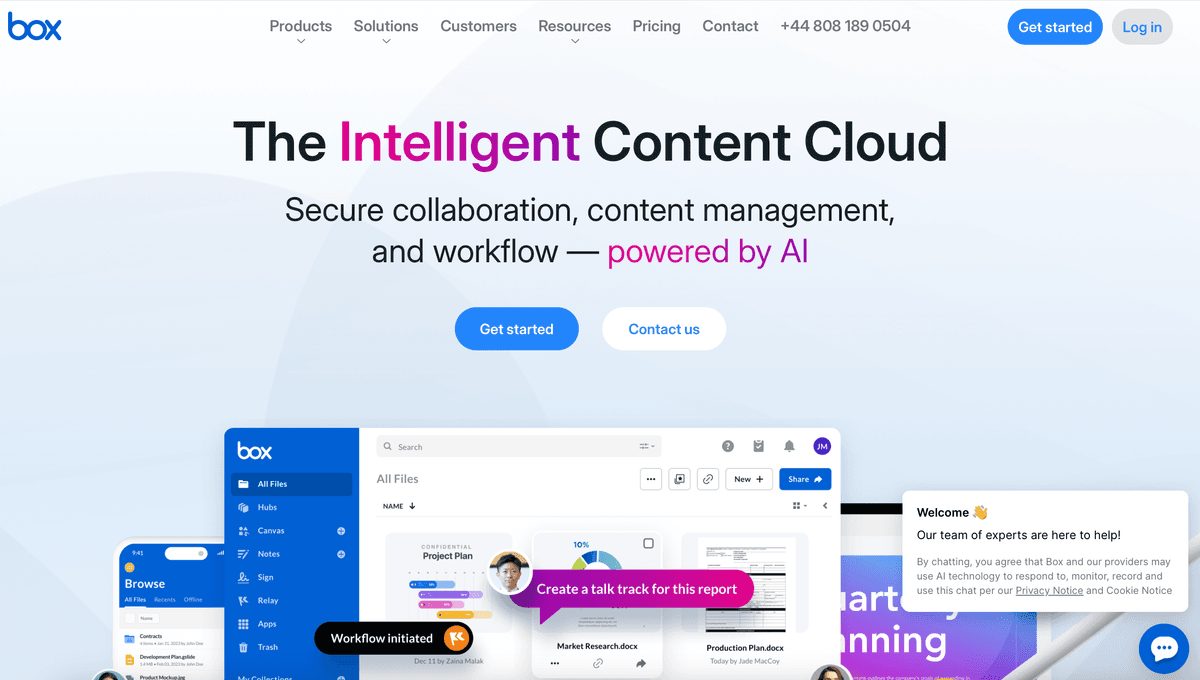
Box is a collaboration tool that ensures sensitive files are protected with advanced security controls and intelligent threat detection. While not a dedicated data room solution, Box can be configured as a data room for startups needing enterprise-grade security and collaboration features.
Box is cloud-based content management, collaboration, and file sharing tools for businesses which can be used for data room creation. Startups can organize fundraising documents into secure folders with granular access controls, allowing them to share sensitive information with investors while maintaining security and compliance standards. The platform offers features like watermarking, access expiration, and detailed audit trails that are essential for data room operations.
However, it is not its main feature, and startups may find it more complex than dedicated data room solutions.
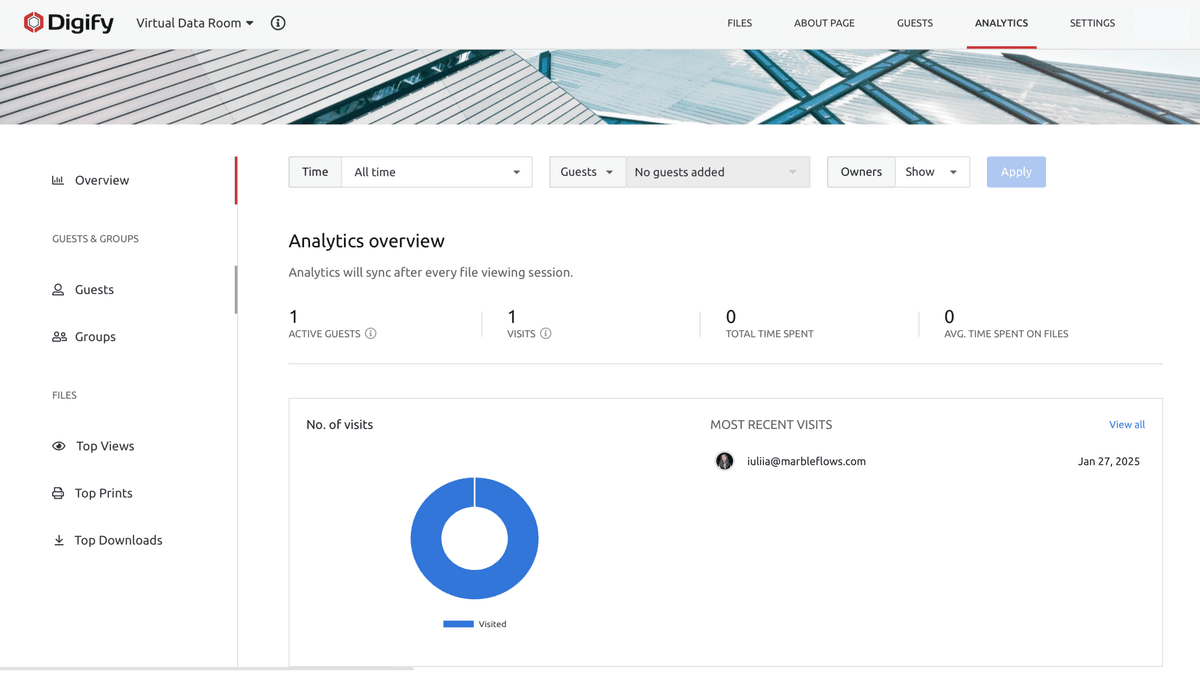
Digify is a document security service providing protection and tracking capabilities for important documents. The platform offers virtual data rooms specifically designed for secure management of sensitive company information, ideal for fundraising and investor updates, which can fit startups.
Digify's data room solution allows startups to create secure, organized spaces for sharing fundraising documents with investors. The platform provides document tracking, access controls, and automated watermarks to protect sensitive information. Startups can monitor who has accessed which documents, track viewing times, and set expiration dates for document access, making it suitable for managing investor due diligence processes.
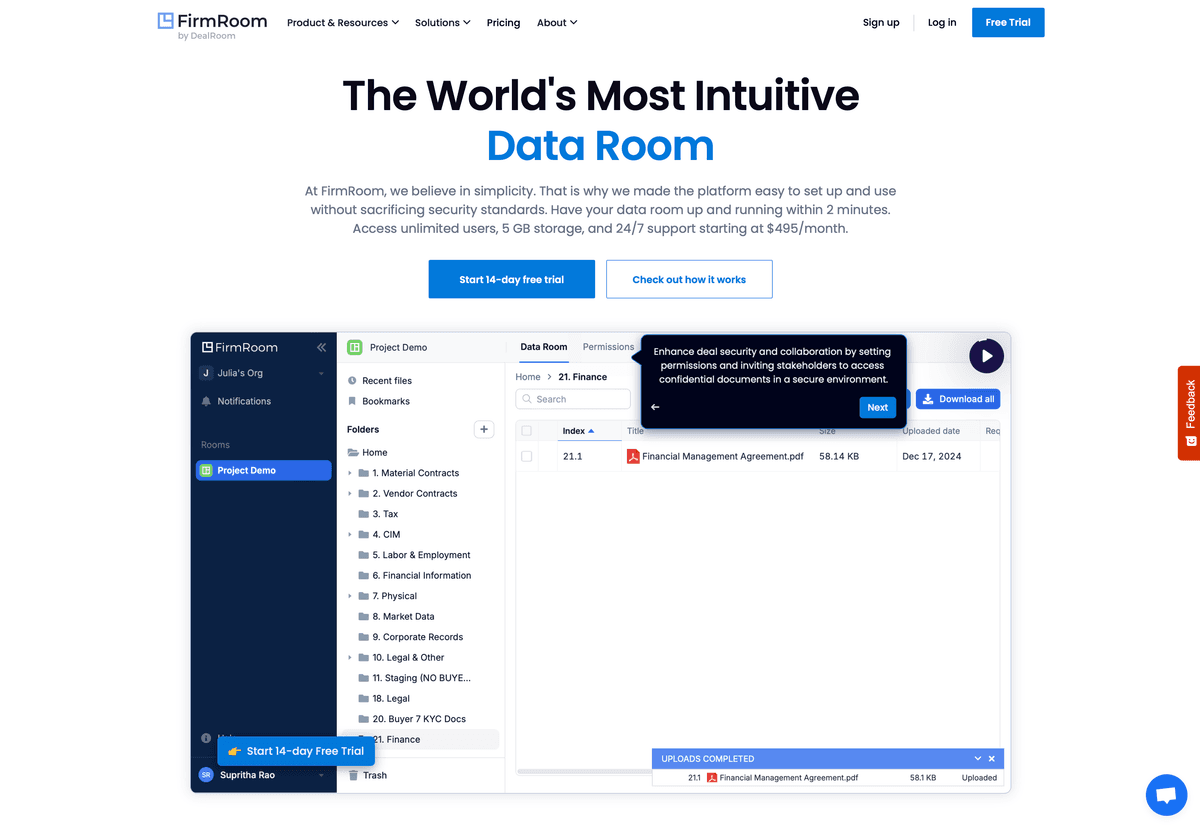
FirmRoom is a virtual data room for dealmakers. DealRoom Inc. spun it out in 2018 as the document-only SKU and still owns it. The published storage tiers start from $395/month with one room per plan. See the FirmRoom overview if you need the product page.
Users of FirmRoom can control access to company data, manage document disclosure, and gain valuable insights into data room activity. The platform provides startups with tools to organize fundraising documents, track investor engagement, and manage the due diligence process. FirmRoom's data room features include document indexing, Q&A modules, and activity tracking to help startups manage investor communications effectively during fundraising rounds.
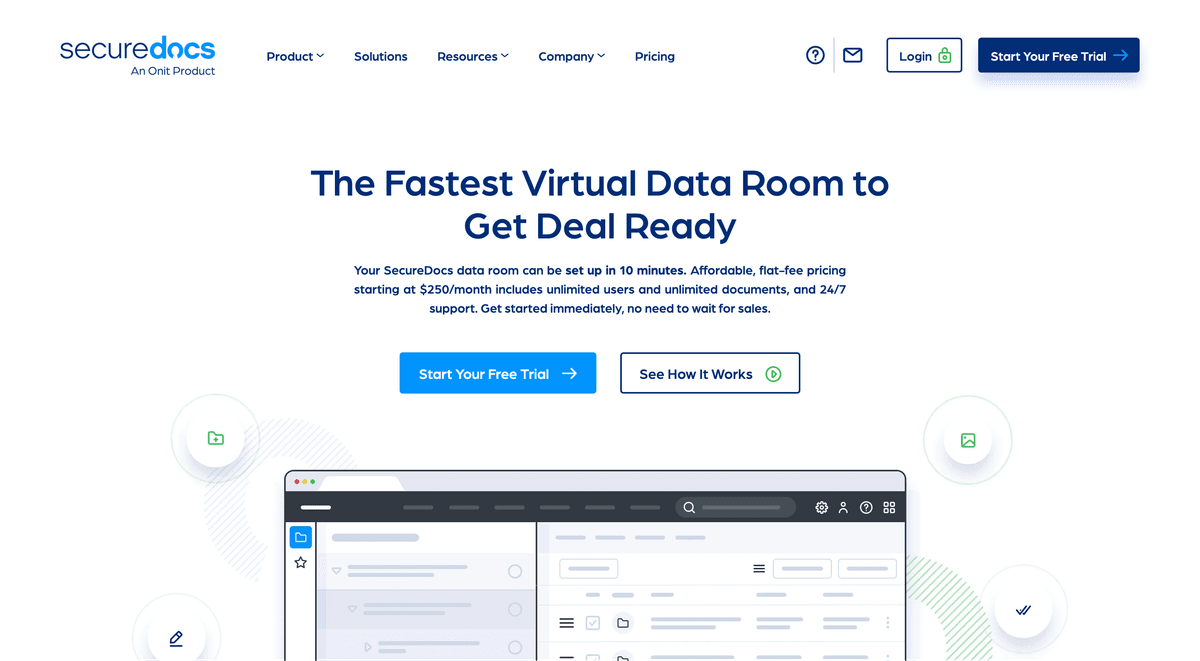
SecureDocs is a subscription VDR, now part of Onit after the 2021 acquisition, quoted from $450/month. See SecureDocs alternatives for the company, pricing plans, and more affordable options.
SecureDocs Data Room is a reliable tool for securely managing information, processes, and supporting business transactions. Startups can use SecureDocs to create organized data rooms for fundraising, sharing financial documents, legal agreements, and other sensitive materials with potential investors. The platform provides features like drag-and-drop uploads, due diligence checklists, and audit trail reporting to help startups manage the investor due diligence process efficiently.
The same Papermark room covers more than a Seed deck send. Match the folder set to the job, then keep page-level analytics and permissions on.
Data room for startups. This article. Pre-seed through Series B: pitch deck, model, cap table, customer contracts. Start on the Papermark data room for startups page and reuse the room for the next round.
Data room for M&A. If you are selling the company or buying a bolt-on, the pack is CIM, quality of earnings, contracts, and HR, with several bidders at once. That workflow is in virtual data room for M&A and the buy-side M&A data room guide. AI redaction is the pass for PII in employment files before competing buyers see them.